Rumpelstiltskin
 78
78

Rumpelstiltskin
The presentation of Rumpelstiltskin in this edition moves beyond the simple retelling, offering a framework for understanding the tale's enduring psychological grip. The focus on the implicit pacts and the arbitrary nature of the imp's power is particularly sharp. One notable strength is the contextualization within the Grimms' broader folklore project, placing the story within its 1812 publication context. However, the scholarly overlay, while valuable, occasionally overshadows the raw, almost primal, fear that the original narrative evokes. The exploration of the name-discovery as a symbolic victory over an unknown, malevolent force is well-articulated. Ultimately, this edition serves as a robust academic lens on a familiar fable.
📝 Description
78
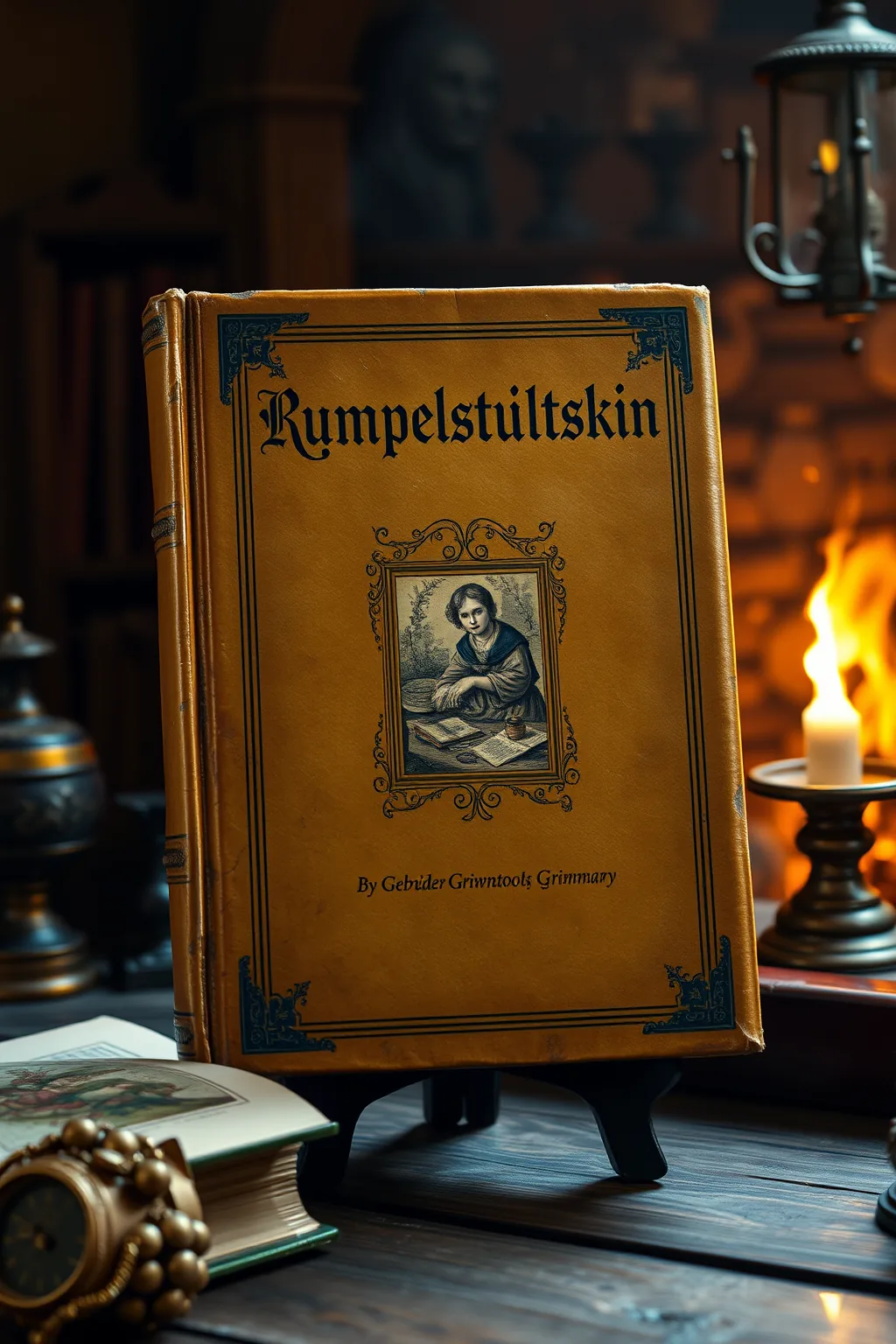
This 1812 edition of Rumpelstiltskin examines the tale's occult philosophy and psychological depth.
This scholarly edition of the Brothers Grimm's Rumpelstiltskin focuses on its allegorical and psychological dimensions, moving beyond the surface narrative. It interprets the story as a commentary on primal fears, the nature of pacts, and the consequences of unchecked ambition. The text is derived from the Brothers Grimm's original compilation, presenting a version for readers interested in the tale's deeper meanings.
The book is intended for students of folklore, comparative mythology, and depth psychology. It engages readers who seek archetypal patterns in traditional stories and who wish to understand the symbolic language of fairy tales. The edition also appeals to those who value critical and historical scholarship applied to world literature.
First published by the Brothers Grimm in 1812, their collection preserved German oral traditions during a period of nationalistic and romantic interest in heritage. Jacob and Wilhelm Grimm's work emerged from the German Romantic movement, which saw folk culture as a repository of national identity. Their collection became a cornerstone for folklore studies.
Within occult philosophy, Rumpelstiltskin's act of spinning straw into gold is often viewed through an alchemical lens, representing the transmutation of base matter into value, or even the manipulation of psychic energy for material gain. The imp's bargain for the firstborn child speaks to themes of soul contracts and the inevitable price of power obtained through supernatural means. This interpretation connects the tale to traditions that explore the symbolic language of fairy tales as maps for understanding psychological and spiritual processes, particularly concerning ambition and its consequences.
💡 Why Read This Book?
• Gain insight into the archetypal struggle against overwhelming odds, learning how the narrative structure of Rumpelstiltskin, as compiled by the Brothers Grimm in 1812, reflects universal patterns of desperate pacts and their consequences. • Understand the symbolic value of transformation and its esoteric implications, examining the motif of spinning straw into gold as a metaphor for alchemical processes or the dangerous pursuit of unattainable goals. • Explore the power of knowledge and nomenclature, analyzing how the discovery of Rumpelstiltskin's name represents a critical breakthrough in overcoming hidden or destructive entities, a concept explored in various esoteric traditions.
⭐ Reader Reviews
Honest opinions from readers who have explored this book.
❓ Frequently Asked Questions
What is the original publication date of the Brothers Grimm's Rumpelstiltskin?
The tale of Rumpelstiltskin was first published in 1812 as part of the Brothers Grimm's *Children's and Household Tales*.
Who translated or edited this specific edition of Rumpelstiltskin?
This edition draws upon the work of the Brothers Grimm, with B. Watts and Jacob Grimm specifically noted in its lineage.
What is the primary esoteric interpretation of Rumpelstiltskin?
Esoterically, Rumpelstiltskin is often interpreted as a symbol of the shadow self or the hidden costs of ambition, with the pact representing dangerous bargains made for material gain.
What does the act of spinning straw into gold symbolize in Rumpelstiltskin?
Spinning straw into gold symbolizes the alchemical transformation of the mundane or base into something of immense value, often achieved through unnatural or forbidden means.
Why is discovering Rumpelstiltskin's name so significant?
Discovering Rumpelstiltskin's name is significant because it represents the power of knowledge and identification to disarm or overcome unknown, often malevolent, forces.
Is Rumpelstiltskin considered a Hermetic text?
While not a primary Hermetic text, Rumpelstiltskin contains themes of transformation and hidden knowledge that resonate with Hermetic principles, particularly alchemy and the power of true names.
🔮 Key Themes & Symbolism
The Alchemical Bargain
The core of Rumpelstiltskin lies in the impossible task of spinning straw into gold, a potent symbol of alchemical transformation. This edition frames it not just as a magical feat but as a representation of dangerous ambition and the Faustian pacts individuals might make to achieve wealth or power. The imp's intervention highlights the idea that such transformations often come with unforeseen and devastating costs, echoing themes found in alchemical literature concerning the corrupting influence of ill-gotten gains or unnatural processes.
The Power of True Names
The climax of the tale, where the miller's daughter finally guesses Rumpelstiltskin's name, underscores the esoteric principle that knowing the true name of a spirit or entity grants power over it. This concept is prevalent in many magical traditions, from ancient Egyptian spells to Kabbalistic practices. The imp's subsequent fury and departure signify the vulnerability of beings whose power is contingent on anonymity. This theme explores the relationship between identity, knowledge, and control.
Primal Fears and Sacrificial Pacts
Beneath the narrative surface, Rumpelstiltskin taps into primal human fears: the loss of control, the threat to offspring, and the binding nature of promises made under duress. The imp's demand for the firstborn child is a stark representation of the ultimate sacrifice, a theme explored in ancient mythologies and ritual practices. The story examines the psychological weight of these pacts and the desperate measures one might take to avert such dire consequences, reflecting deep-seated anxieties about fate and destiny.
💬 Memorable Quotes
Direct passages from the work, attributed to the author.
““What does the little man want with me? I have never seen him before in my life.””
— This utterance reflects the shock and confusion of the protagonist upon the imp's first appearance. It emphasizes the intrusion of the uncanny into the mundane, a classic trope in folklore and occult narratives.
““The imp snatched the child with a greedy look and vanished with it in the air.””
— This chilling depiction of the imp fulfilling his pact underscores the dire consequences of the bargain. It represents the ultimate price paid for the magical solution, a stark reminder of the story's darker undercurrents.
““At last the man cried out, 'It is Rumpelstiltskin!'””
— This is the central moment of revelation. The discovery of the name signifies the breaking of the imp's power, illustrating the principle that knowledge and identification can overcome hidden threats.
💡 Key Ideas
Editorial paraphrase of the work's core concepts — not direct quotes.
“I haven't any more wool, and I can't spin any more, and I don't care about it, whether it's done or not.”
This quote, spoken by the miller's daughter, signifies a point of utter despair and relinquishment. It marks the moment where she abandons hope and conventional means, setting the stage for an extraordinary, potentially dangerous, intervention.
“When the miller told the king that he had a daughter who could spin straw into gold, the king's fancy was pleased thereby, and he said, ‘She is to be brought to me immediately.’”
This passage highlights the immediate and often arbitrary nature of desire and power. The king's 'fancy' is enough to set in motion events with life-altering consequences, demonstrating how external forces can dictate personal fates based on whims.
🌙 Esoteric Significance
Tradition
While not explicitly a Hermetic or Gnostic text, Rumpelstiltskin resonates strongly with principles found in Western Esotericism, particularly alchemy and the lore of elemental spirits. The imp's ability to transmute straw into gold mirrors alchemical aims of transforming base metals into gold, often involving perilous spiritual or material bargains. The narrative also echoes traditions concerning the power of true names and the potential dangers of interacting with otherworldly or elemental beings, a common theme in grimoires and magical philosophies.
Symbolism
The central symbol is the transformation of straw into gold, representing the alchemical pursuit of perfection or wealth through unnatural means. Rumpelstiltskin himself can be seen as an archetype of the shadow self, a hidden, destructive force that offers power at a terrible price. His demand for the firstborn child symbolizes the ultimate sacrifice, a concept explored in various mythologies and ritualistic practices where potent gains require profound loss. The discovery of his name signifies the triumph of reason and knowledge over chaotic, unnamed forces.
Modern Relevance
Contemporary thinkers in depth psychology, particularly those influenced by Jungian archetypes, frequently analyze Rumpelstiltskin as a representation of the shadow, repressed desires, or the consequences of Faustian bargains in modern life. Practitioners of modern witchcraft and esoteric traditions might still draw on the theme of true names as a means of spiritual or psychological control. The tale's enduring appeal lies in its potent symbolism for navigating personal ambition, the hidden costs of success, and the power dynamics inherent in seemingly miraculous solutions.
👥 Who Should Read This Book
• Students of folklore and comparative mythology seeking to understand the archetypal structures and cross-cultural resonances of fairy tales. • Depth psychology practitioners and enthusiasts interested in analyzing the symbolic language of the subconscious as expressed through classic narratives. • Readers exploring the esoteric dimensions of common stories, particularly themes of alchemy, pacts, and the power of nomenclature within symbolic systems.
📜 Historical Context
The tale of Rumpelstiltskin, first appearing in print in the Brothers Grimm's *Children's and Household Tales* in 1812, emerged from a rich tradition of German folklore. Jacob and Wilhelm Grimm were deeply involved in the burgeoning field of philology and Romantic nationalism, collecting oral traditions to preserve what they saw as the authentic spirit of German culture. This period, marked by the Napoleonic Wars, fueled a desire to define and celebrate German identity through its heritage. The Grimms' meticulous cataloging and scholarly notes placed them at the forefront of folklore studies, influencing subsequent generations of collectors and analysts. Their work competed implicitly with other forms of nationalistic expression, favoring the organic, ancient narratives of the common people over more manufactured cultural artifacts. Contemporaries like Johann Gottfried Herder had already championed folk songs and tales as expressions of 'Volksgeist' (spirit of the people), a concept the Grimms embraced.
📔 Journal Prompts
The imp's demand for the firstborn child—reflect on the symbolic weight of such a sacrifice in the context of achieving impossible goals.
Rumpelstiltskin's power being tied to his unknown name—consider how knowledge or identification can disarm perceived threats in your own life.
The transformation of straw into gold—analyze this motif as a metaphor for ambition and its potential hidden costs.
The miller's daughter's desperate situation—explore the narrative function of extreme duress in driving unconventional choices.
The imp's ultimate defeat upon his name being spoken—contemplate the power dynamics between known and unknown entities.
🗂️ Glossary
Alchemical Transformation
In an esoteric context, the process of changing base substances into more valuable ones, often mirroring spiritual purification or the attainment of enlightenment, but also carrying symbolic weight for dangerous, unnatural power acquisition.
Archetype
A universal, inherited pattern of thought or image derived from the collective unconscious, as described by Carl Jung, which structures psychic experience and manifests in myths, fairy tales, and dreams.
Elemental Spirit
A supernatural being believed to inhabit or control a fundamental element of nature (earth, air, fire, water), often depicted as capricious or potentially dangerous to humans.
Faustian Bargain
A deal with the devil or a similar supernatural entity, typically in exchange for worldly gains like knowledge, power, or wealth, often leading to ultimate damnation or ruin.
Folklore
The traditions, customs, beliefs, and stories of a community, passed down through generations, typically by word of mouth.
True Name
In magical and esoteric traditions, the belief that knowing the authentic name of a person, spirit, or object grants power or control over it.
Shadow Self
In Jungian psychology, the unconscious aspect of the personality that the conscious ego does not identify in itself; the darker, repressed, or rejected parts of the psyche.
🔮 Readers Also Liked
Browse all →








More Free Magic & Ritual Books
View all →