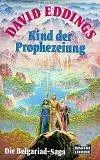
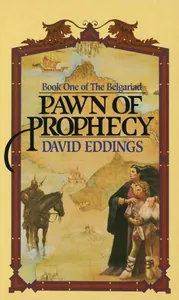
Pawn of Prophecy

 74
74

Pawn of Prophecy
The initial deployment of Garion into a world of prophecy feels less like a carefully constructed arcane system and more like a narrative convenience. Eddings excels at pacing, propelling the reader through the initial setup with a relentless forward momentum that, while effective, sometimes sacrifices deeper thematic exploration. A specific point of interest is the early introduction of the sorceress Polgara, whose ancient knowledge and veiled motivations hint at the larger cosmological conflicts to come. Her presence suggests a depth that the immediate plot, focused on Garion's awakening, has yet to fully realize. The limitation lies in the somewhat conventional portrayal of prophecy, which leans heavily on foreknowledge rather than intricate symbolic interplay. Nevertheless, Pawn of Prophecy succeeds in establishing a compelling entry point into a vast, mythic conflict.
📝 Description
74
### What It Is Pawn of Prophecy is the inaugural volume in David Eddings' The Belgariad series, a fantasy saga that, while often categorized as high fantasy, contains elements that intrigue readers of esoteric philosophy. Published in 2010, it introduces a world rich with ancient prophecies, divine interventions, and a brewing conflict that spans millennia. The narrative centers on Garion, an unassuming farm boy whose life becomes inextricably linked to a quest to recover a stolen artifact vital to the balance of power.
### Who It's For This book appeals to seasoned fantasy readers familiar with epic scope and intricate world-building. Beyond that, it offers a gateway for those interested in exploring archetypal narratives and the concept of predestination as explored through fictional constructs. Individuals drawn to stories where destiny plays a significant role, and where characters grapple with powers beyond their immediate understanding, will find fertile ground here.
### Historical Context While The Belgariad series began much earlier, the 2010 publication date for Pawn of Prophecy suggests a renewed or continued interest in Eddings' work. The broader fantasy genre, particularly in the late 20th century when the series originated, saw a rise in authors exploring themes of good versus evil, epic quests, and the influence of ancient magic. Eddings' contribution sits alongside contemporaries like Robert Jordan and Tad Williams, who also crafted expansive worlds with deep mythologies and complex character arcs. The enduring popularity of such works speaks to a persistent human fascination with grand narratives of fate and heroism.
### Key Concepts The narrative is steeped in the concept of the 'Will of the Gods,' a divine force that guides events and manipulates mortal lives towards a predetermined outcome. This is contrasted with the agency of individuals, who must choose their path even when seemingly bound by prophecy. The series also features a sophisticated magical system, though its mechanics are often secondary to its role in advancing the plot and fulfilling ancient pacts. The interplay between destiny and free will forms a central philosophical current.
💡 Why Read This Book?
• Gain an understanding of how archetypal hero's journey narratives are structured within the fantasy genre, exemplified by Garion's initial reluctance and eventual acceptance of his fated role. • Explore the dynamic between divine will and individual choice, a core theme introduced through the pronouncements of the gods and the characters' reactions to them. • Witness the foundational elements of a complex magical system and the lore surrounding the 'Will of the Gods,' as first presented in this 2010 publication of the series' beginning.
⭐ Reader Reviews
Honest opinions from readers who have explored this book.
❓ Frequently Asked Questions
When was Pawn of Prophecy first published?
Pawn of Prophecy, the first book in The Belgariad series, was first published in 2010, marking a significant entry into the epic fantasy genre for that year.
What is the central artifact in Pawn of Prophecy?
The central artifact is the Orb of Aldur, a powerful object of immense significance to the balance of the world and the fulfillment of ancient prophecies.
Who are the main divine powers influencing the story?
The primary divine powers are the two gods, Belar (god of warriors) and Torak (god of evil), whose eternal conflict drives much of the overarching narrative.
What is the role of the sorceress Polgara in the story?
Polgara is a powerful sorceress and guardian who watches over Garion, guiding him and protecting him as he begins to understand his destiny.
Does Pawn of Prophecy introduce a rigid prophecy system?
The book introduces the concept of prophecy as a guiding force, but it emphasizes the interplay with character choices, suggesting destiny is not entirely immutable.
What is the significance of the 'Will of the Gods' in the narrative?
The 'Will of the Gods' represents a cosmic force or destiny that influences events, often through subtle manipulations and the guiding of key individuals towards specific outcomes.
🔮 Key Themes & Symbolism
The Gods' Will and Mortal Agency
The narrative grapples with the pervasive influence of the 'Will of the Gods,' a concept suggesting a predetermined cosmic order. This divine imperative is not presented as an absolute, unchangeable fate but rather as a guiding force that interacts with the choices of mortals. Characters like Garion are born into a world shaped by this Will, yet their decisions and actions are crucial in fulfilling or deviating from the grand design. The book explores the tension between destiny and free will, questioning the extent to which individuals are masters of their own lives versus pawns in a larger, divine game.
The Orb of Aldur
This ancient artifact is central to the plot, representing a focal point of power and a critical element in the ongoing struggle between the gods. Its theft and subsequent quest for recovery drive the initial narrative arc of Pawn of Prophecy. The Orb is more than just a magical item; it symbolizes the balance of power and the integrity of the world. Its presence and the efforts to reclaim it highlight the stakes involved in the cosmic conflict between divine forces, underscoring its esoteric importance as a tangible manifestation of celestial power.
Archetypal Quest and Heroism
Pawn of Prophecy employs the classic archetypal quest structure, wherein an unassuming protagonist is thrust into extraordinary circumstances. Garion's journey from a simple farm boy to a figure of destiny mirrors ancient heroic myths. The narrative emphasizes the development of courage, loyalty, and self-discovery as Garion confronts external threats and internal doubts. This aligns with perennial philosophies that examine the stages of the hero's journey as a metaphor for spiritual or psychological growth, making the story relevant beyond its fantasy setting.
Ancient Prophecies and Their Fulfillment
The story is deeply rooted in ancient prophecies, particularly those concerning the conflict between the gods Torak and Belar. These prophecies serve as a narrative engine, dictating the roles of key characters and the major events that must transpire. The book explores the nature of prophecy itself – whether it is an immutable decree or a set of potentials that characters must actively work to realize. This theme delves into the esoteric concept of foreknowledge and its impact on human action and belief systems.
💬 Memorable Quotes
“The Orb of Aldur was gone, and with it, the peace of the world.”
— This statement encapsulates the immediate crisis that launches the narrative. It highlights the Orb's significance not just as a magical object, but as a linchpin for global stability and divine order.
“He was a farm boy, and he knew nothing of gods or kings or sorcerers.”
— This quote establishes Garion's initial humble origins and his profound ignorance of the larger powers at play, setting the stage for his dramatic transformation and the epic scope of his destiny.
“Polgara had watched over him since he was a baby, a silent guardian.”
— This introduces the enigmatic sorceress Polgara and her protective role. It hints at a deeper, hidden history and a deliberate, long-term plan involving Garion's upbringing.
“The Will of the Gods moved in mysterious ways, but it always moved towards its end.”
— This paraphrased concept speaks to the inexorable nature of divine influence in the story, suggesting that despite mortal efforts or perceived deviations, events are guided towards a predetermined conclusion.
“The ancient pacts between gods and men were not easily broken.”
— This suggests a foundational layer of cosmic law and obligation within the narrative's mythology. It implies that the actions of both divine and mortal beings are bound by historical agreements and their consequences.
🌙 Esoteric Significance
Tradition
While not explicitly belonging to a single esoteric tradition, The Belgariad series, including Pawn of Prophecy, draws heavily on archetypal narratives found in comparative mythology and perennial philosophy. Its exploration of a cosmic duality (Torak vs. Belar) echoes Gnostic dualism and Zoroastrianism. The concept of a guiding divine will and the importance of ancient prophecies aligns with elements found in Hermeticism and certain schools of Western esotericism that emphasize fate and divine providence.
Symbolism
The Orb of Aldur serves as a potent symbol of divine power, cosmic balance, and the integrity of creation. Its theft represents a disruption of this order. The duality of the gods, Torak (often associated with darkness, ambition, and tyranny) and Belar (associated with light, justice, and order), embodies the fundamental conflict between opposing forces, a common motif in esoteric thought. The prophecy itself acts as a symbolic map of destiny, guiding characters and readers through the unfolding cosmic drama.
Modern Relevance
Contemporary fantasy authors continue to explore themes of prophecy, divine intervention, and the struggle against overwhelming evil, demonstrating the enduring appeal of these concepts. The series' focus on archetypal heroism and the interplay between destiny and free will remains relevant for readers interested in psychological and spiritual journeys. Modern esoteric practitioners might find value in analyzing the symbolic structures and mythological frameworks within the narrative as illustrations of broader esoteric principles concerning cosmic order and individual purpose.
👥 Who Should Read This Book
• Fans of epic fantasy seeking a foundational narrative with clear archetypal structures and a compelling quest. • Readers interested in exploring themes of destiny versus free will within a fictional context, examining how characters respond to preordained roles. • Those drawn to mythic storytelling and the exploration of divine conflict, who appreciate narratives where ancient prophecies shape the course of events.
📜 Historical Context
The Belgariad series, initiated with Pawn of Prophecy in 2010 for this edition, emerged from a rich vein of post-Tolkien epic fantasy. While Eddings' style is often more accessible than some of his contemporaries, the genre in the late 20th century was characterized by expansive world-building and intricate mythologies. Authors like Stephen R. Donaldson, with his *The Chronicles of Thomas Covenant*, were exploring darker, more complex thematic territory. Eddings, however, often focused on a more traditional good-versus-evil dynamic, albeit with nuanced characters. The reception of the series generally favored its engaging plot and character development, with critics noting its classic fantasy appeal. While not directly tied to a specific intellectual movement, the series tapped into a persistent cultural fascination with prophecy and divine intervention, themes explored across various philosophical and religious traditions.
📔 Journal Prompts
The Orb of Aldur's significance to world stability.
Garion's perception of his own destiny versus the Will of the Gods.
Polgara's role as a guardian and her long-term objectives.
The nature of the ancient pacts between gods and mortals.
Reflections on the duality represented by Torak and Belar.
🗂️ Glossary
The Will of the Gods
A pervasive, guiding force or divine imperative that influences the events and destinies of mortals within the narrative's world. It represents a form of cosmic destiny.
Orb of Aldur
A powerful, ancient artifact central to the story's conflict, representing the balance of power and world order. Its recovery is a primary objective.
Torak
One of the primary gods, often depicted as a malevolent or tyrannical deity representing darkness and evil, locked in eternal conflict with Belar.
Belar
The god of warriors and a principal deity representing light, justice, and order, in opposition to Torak.
Prophecy
Ancient predictions concerning future events, particularly the cosmic struggle between gods and the fate of key individuals, which drive the narrative's plot.
Sorceress
A female practitioner of magic, often possessing ancient knowledge and significant power, such as Polgara, who plays a crucial role in guiding the protagonist.
Ancient Pacts
Historical agreements or covenants made between divine beings and mortals, which establish foundational rules and obligations within the world's mythology.