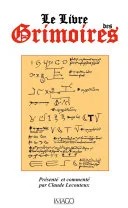
Le Livre des grimoires
 73
73

Le Livre des grimoires
Claude Lecouteux's *Le Livre des grimoires* offers a scholarly dissection of European magical texts that eschews sensationalism for rigorous historical inquiry. The strength of this work lies in its meticulous cataloging and analysis of grimoires, providing a much-needed academic perspective on a subject often shrouded in myth. Lecouteux masterfully situates these texts within their historical and cultural milieu, demonstrating how magic was perceived and practiced across different strata of society. However, the book’s academic rigor, while commendable, can also be its limitation; readers seeking practical magical instruction will find none here. A particularly insightful section examines the evolution of the 'Goetia' tradition, tracing its lineage and transformations through various manuscript versions. This is not a book to be skimmed, but to be studied by those with a genuine interest in the history of Western esotericism. It serves as an essential reference for understanding the grimoire's place in history.
📝 Description
73
### What It Is Le Livre des grimoires, first published in 2008, is Claude Lecouteux's extensive compilation and analysis of magical texts, primarily focusing on European grimoires and related esoteric traditions. Rather than presenting spells for immediate use, the work functions as a scholarly examination of the historical and cultural context surrounding these magical manuals. Lecouteux traces the lineage of grimoires, exploring their origins, evolution, and the societal attitudes towards magic that shaped their content and reception.
### Who It's For This volume is aimed at serious students of Western esotericism, occult history, and comparative religion. It will appeal to those who seek a deeper understanding of the historical underpinnings of magical practices rather than a simple how-to guide. Readers interested in medieval and early modern European culture, the history of witchcraft accusations, and the development of ceremonial magic will find this an invaluable resource for scholarly research and informed contemplation.
### Historical Context Claude Lecouteux's work situates the grimoire tradition within the broader landscape of European intellectual and spiritual history, particularly from the medieval period through the Renaissance and beyond. He examines how these texts, often containing instructions for summoning spirits or performing specific rituals, emerged from a milieu where magical beliefs were interwoven with religious doctrine and folk practices. The book implicitly engages with scholarly debates about the nature of magic, distinguishing between learned magic, folk magic, and demonology, and how these categories shifted over time. The early 20th-century occult revival, while not the primary focus, provides a backdrop for understanding the continued interest in these older magical traditions.
### Key Concepts The book delves into concepts such as the nature of spirits and their classification, the importance of divine names and angelic hierarchies in magical operations, and the role of talismans and amulets. Lecouteux also explores the transmission of magical knowledge through manuscript culture, the challenges of deciphering archaic language, and the symbolic meanings embedded within ritualistic actions. The very concept of the 'grimoire' as a distinct genre of magical literature, containing codified instructions and theoretical frameworks, is a central theme, highlighting its evolution from earlier magical papyri and hermetic texts.
💡 Why Read This Book?
• Gain an understanding of the historical evolution of grimoires, tracing their development from medieval manuscripts to printed texts, a process Lecouteux details extensively. • Learn about the specific social and intellectual currents that gave rise to and sustained the grimoire tradition in Europe, particularly highlighting the period around the 17th century. • Discover the academic approach to analyzing magical texts, differentiating between historical practice and modern interpretations, as Lecouteux demonstrates with his scholarly examination of primary sources.
⭐ Reader Reviews
Honest opinions from readers who have explored this book.
❓ Frequently Asked Questions
What is the primary focus of Claude Lecouteux's *Le Livre des grimoires*?
The book primarily focuses on the scholarly study and historical analysis of European grimoires, examining their origins, content, and cultural context rather than providing practical magical instruction.
When was *Le Livre des grimoires* first published?
Claude Lecouteux's *Le Livre des grimoires* was first published in 2008, making it a relatively modern academic contribution to the study of historical magical texts.
Who is Claude Lecouteux and what is his background?
Claude Lecouteux is a French medievalist and historian specializing in magic, folklore, and esoteric traditions. His academic background lends significant credibility to his work on grimoires.
Does *Le Livre des grimoires* contain actual spells or rituals?
No, the book does not contain spells or rituals intended for practical use. Instead, it analyzes the historical texts that do contain them, exploring their structure and meaning.
What historical periods does *Le Livre des grimoires* cover?
The book covers a broad sweep of European history, with a significant emphasis on the medieval period and the Renaissance, exploring how magical beliefs and practices evolved over these centuries.
Is this book suitable for beginners in occult studies?
It is suitable for beginners who are interested in the historical and academic study of occultism. Those seeking immediate practical application of magic might find it less direct, as it prioritizes historical context.
🔮 Key Themes & Symbolism
The Grimoire as Historical Artifact
Lecouteux treats grimoires not as living spellbooks, but as historical documents reflecting the beliefs, fears, and aspirations of their times. He meticulously examines their structure, language, and the cultural milieu from which they emerged, often pointing to their roots in medieval scholasticism and popular demonology. The transmission of these texts through manuscript culture, and their later printed forms, are key aspects of this theme, highlighting how knowledge was preserved and altered over centuries.
Spirituality and Demonology
A central theme is the complex relationship between Christian theology, angelic hierarchies, and demonic entities as depicted in grimoires. Lecouteux explores how these texts catalogued and attempted to control supernatural beings, often drawing from biblical and apocryphal sources. The book details the specific names, seals, and operational methods associated with various spirits, illustrating a worldview where the divine and the infernal were intricately mapped and potentially negotiated.
The Evolution of Magical Practice
The work traces the lineage and transformation of magical practices across different eras. Lecouteux investigates how techniques for divination, conjuration, and talismanic magic evolved, differentiating between learned magic influenced by Hermeticism and Kabbalah, and more popular forms of folk magic. The book shows how the very definition and perception of 'magic' shifted, often subject to condemnation by religious authorities, yet persistently circulating.
Manuscript Culture and Textual Transmission
Understanding how magical knowledge was disseminated before the advent of mass printing is crucial. Lecouteux emphasizes the role of scribes, the challenges of textual corruption, and the selective copying of magical texts. The physical form of the manuscript, its marginalia, and its circulation among specific groups are examined as vital elements in understanding the grimoire tradition's continuity and fragmentation.
💬 Memorable Quotes
“The grimoire is a manual of magic, a compendium of knowledge inherited from antiquity and the Middle Ages.”
— This highlights Lecouteux's view of grimoires as historical repositories of occult lore, emphasizing their deep roots in earlier traditions and their function as instructional texts for magical practitioners.
“The classification of spirits and demons followed a precise hierarchy, mirroring celestial orders.”
— This points to the structured, often theological, framework within which magical texts operated, suggesting that the organization of the supernatural world was as important as the methods for interacting with it.
“The power of divine names and sacred syllables was central to the efficacy of spells.”
— This interpretation underscores the linguistic and phonetic aspects of ritual magic, indicating that the correct utterance of certain words or names was believed to hold inherent supernatural force.
“Manuscript circulation meant that magical knowledge was often fragmented and subject to interpretation by each new scribe.”
— This emphasizes the challenges in studying historical magic, as the transmission of texts was imperfect, leading to variations and a less standardized understanding of practices over time.
“The perception of magic was often intertwined with both learned philosophy and popular superstition.”
— This captures the complex social standing of magic, showing it was not a monolithic practice but existed across different intellectual levels, from scholarly circles to common folk beliefs.
🌙 Esoteric Significance
Tradition
This work fits within the broad lineage of Western Esotericism, specifically concerning the history of ceremonial magic and grimoire traditions. It draws upon, but also critically examines, the lore associated with Hermeticism, Kabbalah, and medieval demonology. Lecouteux’s approach is less about initiation into a specific school and more about understanding the historical development and textual transmission of magical knowledge that influenced various esoteric paths.
Symbolism
Key symbols include the pentagram and hexagram, often used for protection or invocation, and the complex sigils or seals attributed to various spirits, which served as their unique identifiers and keys to summoning. Angelic names and divine appellations also function symbolically, representing conduits of divine power or authority that the magician sought to channel or command.
Modern Relevance
Contemporary practitioners of ceremonial magic, occult historians, and scholars of religion continue to draw upon Lecouteux's meticulous research. His work provides a foundational understanding for modern occultists seeking to engage with the historical roots of their practices, offering critical context for figures like Aleister Crowley or modern reconstructive magical orders who study and sometimes adapt older grimoire traditions.
👥 Who Should Read This Book
• Students of Western Esotericism: Those seeking a deep historical and academic understanding of magical texts and practices prevalent in Europe. • Medieval and Renaissance Historians: Researchers interested in the intellectual history, religious beliefs, and cultural practices of these periods, particularly concerning non-orthodox traditions. • Comparative Religion Scholars: Individuals studying the intersection of religion, magic, and folklore, and how different cultures have conceptualized the supernatural and its manipulation.
📜 Historical Context
Claude Lecouteux's *Le Livre des grimoires* emerges from a long tradition of medievalist scholarship that began to seriously engage with occult texts in the late 19th and early 20th centuries. While figures like Eliphas Lévi were synthesizing esoteric traditions, Lecouteux’s approach, first appearing in 2008, is rooted in a more modern, critical historical methodology. He situates the grimoire tradition within the intellectual currents of late medieval and Renaissance Europe, a period marked by the flourishing of Hermeticism and Neoplatonism, often in dialogue with, or sometimes in opposition to, orthodox religious doctrines. The book implicitly addresses the historical tension between learned magic and folk practices, and how both were viewed by church and state authorities. Unlike earlier popularizations, Lecouteux focuses on the textual history and the societal reception of these works, engaging with scholars who have studied similar phenomena, such as the history of witchcraft or demonological treatises.
📔 Journal Prompts
The significance of divine names in grimoire operations.
Analyze the evolution of spirit classifications across different grimoires.
Reflect on the role of manuscript culture in shaping magical traditions.
Consider the societal anxieties reflected in demonological sections of grimoires.
The function of sigils and seals in invoking supernatural entities.
🗂️ Glossary
Grimoire
A type of magical textbook, typically containing instructions for invoking spirits, performing rituals, and creating talismans, popular in Europe from the Middle Ages onward.
Goetia
A branch of magic concerned with the evocation of demons, often detailing their names, ranks, seals, and powers, famously cataloged in texts like the Lesser Key of Solomon.
Talismans
Objects inscribed with symbols or sigils, believed to possess magical properties and to attract specific influences or provide protection, often consecrated through ritual.
Sigil
A symbol or sign, often unique to a spirit or entity, used in magical rituals for invocation, identification, or as a focus of power.
Hermeticism
A philosophical and religious tradition based on writings attributed to Hermes Trismegistus, emphasizing esoteric knowledge, alchemy, astrology, and divine cosmology.
Kabbalah
A system of Jewish mysticism and esoteric interpretation of scripture, often involving complex cosmologies, divine emanations, and mystical practices.
Demonology
The study of demons or beliefs about demons. In the context of grimoires, it refers to the systematic cataloging and understanding of demonic entities.