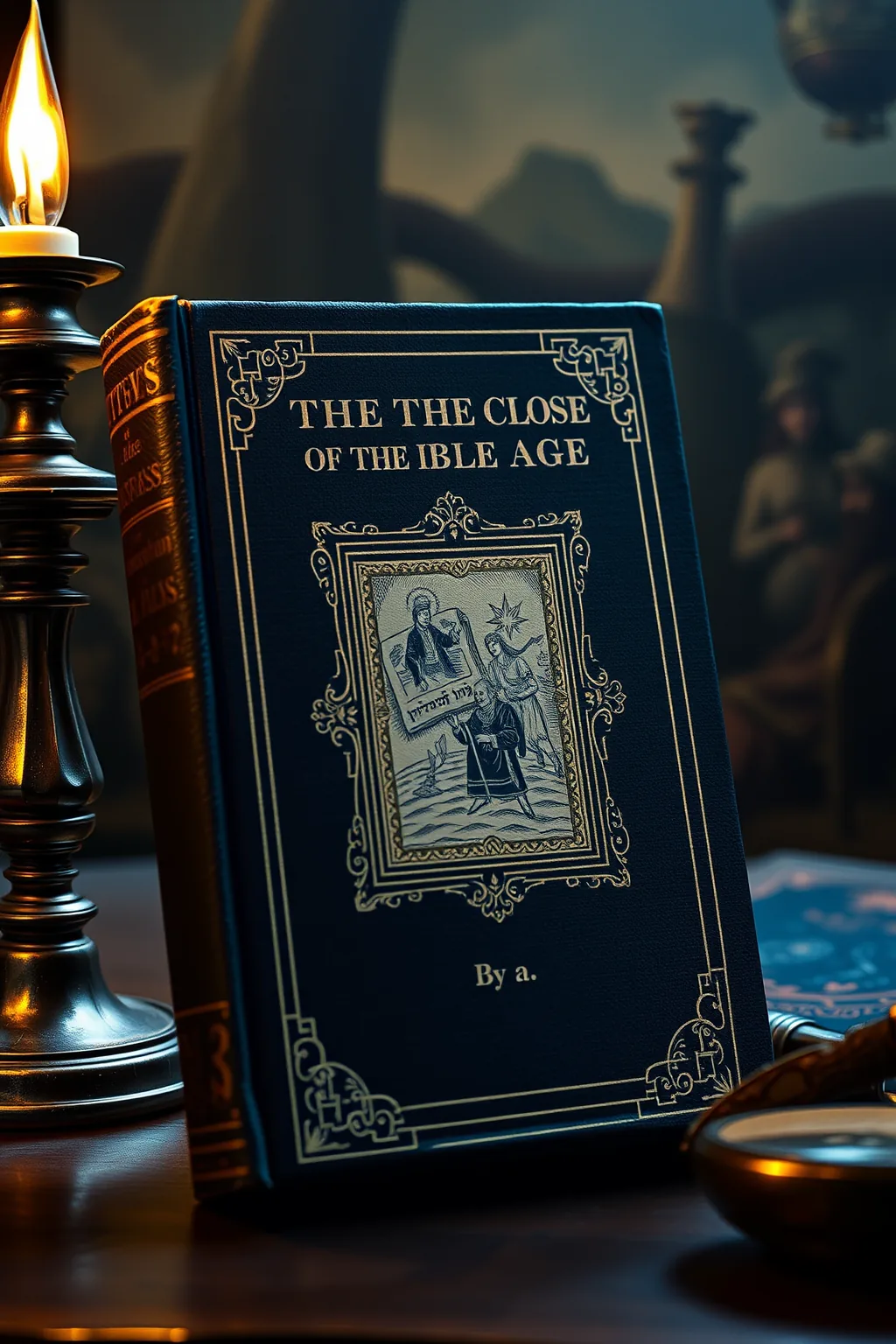
The Jews at the close of the Bible Age
 61
61

The Jews at the close of the Bible Age



Authored by an unknown hand, 'The Jews at the Close of the Bible Age' offers a startlingly incisive look into the spiritual crucible of ancient Judaism. Eschewing dry historical recitation, this text plunges into the heart of esoteric Jewish thought, revealing the mystical undercurrents that informed prophecy and practice. It masterfully decrypts the symbolic language of the era, providing insights into the nascent stages of Kabbalistic awareness. For the serious student of esoteric traditions, this work is an invaluable, if cryptic, guide to the hidden dimensions of a pivotal historical moment. Its strength lies in its ability to illuminate the profound spiritual currents that often remain obscured in conventional historical narratives, making it essential reading for scholars and mystics alike.
📝 Description
61
This anonymous work from the early 20th century examines Jewish life before the Second Temple's fall.
Written by an unknown author, 'The Jews at the Close of the Bible Age' examines the spiritual and mystical currents within Judaism in the period leading up to the destruction of the Second Temple. The text explores the esoteric traditions that were developing during this era, suggesting they formed the basis for later Kabbalistic thought. It focuses on hidden symbolism and divine dialogues that influenced Jewish history and destiny.
The book aims to illuminate the metaphysical foundations of this civilization as it stood on the brink of significant transformation. It invites readers to consider the divine within the everyday, the nature of the covenant, and the prophetic messages heard in sacred places. The author presents this not as a simple historical record but as a guide for those interested in the spiritual development of the Jewish people and the unseen forces influencing existence.
This book fits within the broader study of Jewish mysticism, particularly the development of ideas that would later coalesce into Kabbalah. It addresses a period seen by many esotericists as crucial for the formation of concepts related to divine emanations, the structure of the cosmos, and the hidden meanings within scripture. The focus on 'esoteric currents' and 'divine dialogues' places it in conversation with traditions that seek a deeper, non-literal understanding of religious texts and practices.
💡 Why Read This Book?
Uncover the veiled mystical traditions of ancient Judaism. 'The Jews at the Close of the Bible Age' offers profound insights into the esoteric currents and symbolic language that shaped Jewish spiritual evolution before the Temple's fall. Ideal for seekers of hidden knowledge, scholars of Kabbalah, and practitioners seeking to connect with the roots of divine wisdom.
⭐ Reader Reviews
Honest opinions from readers who have explored this book.
❓ Frequently Asked Questions
What is the primary focus of this book?
The book primarily focuses on the esoteric and mystical dimensions of Jewish life and thought during the period leading up to the end of the Bible Age, emphasizing spiritual currents and hidden symbolism.
Is this book suitable for beginners in Kabbalah?
While challenging, the book offers foundational insights into the roots of Kabbalistic thought. Beginners may find it beneficial alongside introductory texts for a deeper historical and spiritual context.
Who is the intended audience for this text?
The intended audience includes scholars of Jewish history and mysticism, practitioners of Kabbalah, and spiritual seekers interested in the esoteric underpinnings of ancient religious traditions.
What historical period does 'The Bible Age' refer to in this context?
In this context, 'The Bible Age' refers to the period roughly encompassing the Second Temple era, concluding around 70 AD, a pivotal time for Jewish history and spiritual development.
Does the book discuss specific Kabbalistic concepts?
While not a systematic Kabbalah manual, it alludes to and lays the groundwork for later Kabbalistic concepts through its exploration of symbolism, divine presence, and esoteric interpretation of scripture.
🔮 Key Themes & Symbolism
Nascent Mystical Currents
This theme explores the subtle yet potent spiritual energies and nascent mystical traditions that permeated Jewish society during the late Second Temple period. It explores how prophecies were interpreted, how the divine presence was sought and experienced, and how individuals grappled with the spiritual implications of their covenantal relationship with God. The text hints at an underlying spiritual architecture, a proto-Kabbalistic framework guiding individuals toward deeper communion and understanding of cosmic order, revealing the spiritual fervor that anticipated profound revelations.
Symbolic Language of the Divine
The book meticulously examines the body of symbolism employed by the ancient Israelites to articulate their understanding of the divine and its interaction with the material world. It reveals how everyday objects, rituals, and scriptural narratives were imbued with profound esoteric meaning, serving as keys to unlock deeper spiritual truths. This exploration highlights the belief that the physical realm served as a veil, and that true understanding lay in deciphering the divine language encoded within creation, guiding the reader to perceive the sacred in the ordinary.
The Covenant and Divine Providence
Central to the text is the exploration of the Abrahamic covenant and its unfolding significance in the lives of the Jews at the close of the Bible Age. It posits that this covenant was not merely a historical agreement but a living, dynamic force, intricately woven with divine providence. The book investigates how the understanding of this covenant shaped collective and individual spiritual destinies, suggesting a divine hand guiding events and individuals toward a predetermined spiritual destiny, emphasizing the profound interconnectedness of the people with the divine plan.
💬 Memorable Quotes
Direct passages from the work, attributed to the author.
“In the silence, the traces of Sinai resonate.”
— This highlights the enduring spiritual power of ancient revelations; even in quiet contemplation, the profound spiritual truths given at Mount Sinai can be perceived and understood anew.
“Every stone bears the imprint of the celestial.”
— This speaks to the idea of divine immanence, suggesting that all aspects of the physical world, even the most mundane elements like stones, carry a sacred or divine essence.
“The path to wisdom is paved with paradox.”
— This implies that understanding profound spiritual or esoteric truths often involves embracing seemingly contradictory concepts, as divine wisdom transcends simple logic.
“To know the name is to touch the infinite.”
— This refers to the potent spiritual significance attributed to divine names in esoteric traditions, suggesting that comprehending a divine name grants access to a greater understanding of the divine essence.
💡 Key Ideas
Editorial paraphrase of the work's core concepts — not direct quotes.
The veil thins where the spirit yearns.
This quote suggests that heightened spiritual desire and sincere seeking can lead to a greater perception of the divine or hidden realities, as if the boundary between worlds becomes less opaque.
🌙 Esoteric Significance
Tradition
This work is deeply rooted in the esoteric traditions of early Judaism, serving as a precursor and foundational text for the development of Kabbalah. It explores the nascent stages of Jewish mysticism, focusing on the symbolic interpretation of scripture, the understanding of divine immanence, and the quest for direct spiritual experience. The text presages later Kabbalistic concepts by hinting at hidden levels of reality, the significance of divine names, and the interconnectedness of the earthly and celestial realms, providing a vital link to the mystical heritage.
Symbolism
The book is rich with symbolism, drawing from the Hebrew Bible and ancient Jewish practices. Key symbols include the Temple as a microcosm of the cosmos, the divine presence (Shekhinah) in its manifestations, the significance of numbers and letters in divine communication, and the spiritual journey of the soul. It interprets these symbols not merely as decorative elements but as potent conduits of divine truth, essential for understanding the hidden architecture of creation and the path to spiritual illumination.
Modern Relevance
In contemporary times, 'The Jews at the Close of the Bible Age' offers a crucial perspective on the enduring quest for spiritual meaning. For those interested in the roots of Western esotericism, particularly Kabbalah, it provides essential historical and conceptual context. The book’s exploration of divine providence, symbolic language, and the human desire for connection with the transcendent resonates deeply with modern spiritual seekers navigating a complex world, offering timeless wisdom and a deeper understanding of humanity's eternal spiritual journey.
👥 Who Should Read This Book
This book is a profound offering for scholars of ancient Judaism, particularly those focused on the Second Temple period and the origins of Jewish mysticism. It is essential for practitioners and students of Kabbalah seeking to understand the historical and spiritual foundations of their tradition. Spiritual seekers interested in comparative religion and the esoteric underpinnings of faith will find useful insights. While its anonymous nature and esoteric focus may present a challenge, diligent readers will be rewarded with a unique perspective on a central era of spiritual evolution, clear the hidden pathways of divine connection.
📜 Historical Context
The period at the close of the Bible Age, roughly encompassing the centuries leading up to and including 70 AD, was a time of immense spiritual and political upheaval for the Jewish people. Situated within the Hellenistic and Roman empires, this era witnessed a complex interplay of external cultural influences and fervent internal religious life. It was a crucible where diverse streams of thought converged, including Pharisaic, Sadducean, and Essene traditions, alongside the burgeoning messianic expectations and nascent mystical explorations that would later form the bedrock of Kabbalah. The destruction of the Second Temple in 70 AD marked a cataclysmic turning point, profoundly shaping Jewish identity and spiritual practice for millennia. This book situates itself within this transformative epoch, exploring the esoteric currents and hidden meanings that resonated amidst the historical seismic shifts, offering a glimpse into the spiritual landscape that preceded this monumental event.
📔 Journal Prompts
Reflect on a time when you felt the 'veil thinning' in your own spiritual practice. What circumstances or feelings contributed to this?
How does the concept of 'divine imprint' on the mundane resonate with your personal experiences or beliefs?
Consider a paradox you've encountered in spiritual or philosophical study. How did embracing it lead to deeper understanding?
What ancient revelation or teaching from any tradition do you feel still 'resonates' powerfully today? Why?
How do you interpret the idea of 'knowing a name' in a spiritual context, beyond its literal meaning?
🗂️ Glossary
Shekhinah
The dwelling or settling of the divine presence of God. In Jewish mysticism, it is often personified as a feminine aspect of God and represents God's immanence and closeness to creation.
Proto-Kabbalah
Refers to the early, often uncodified, mystical and esoteric traditions within Judaism that predated the formal development of Kabbalah as a distinct system of thought.
Divine Immanence
The belief that God is present and active within the universe and the material world, rather than being transcendent and entirely separate from it.
Covenant
A sacred agreement or promise, particularly referring to the covenant between God and the people of Israel, which forms a central theme in Jewish theology and history.
Esoteric Interpretation
A method of interpreting texts or phenomena that seeks to uncover hidden, spiritual, or mystical meanings beyond their literal or exoteric (outward) sense.
This book appears in 1 collection
🔮 Readers Also Liked
Browse all →








From the “Kabbalah” Collection
View all →








More Free Kabbalah & Jewish Mysticism Books
View all →