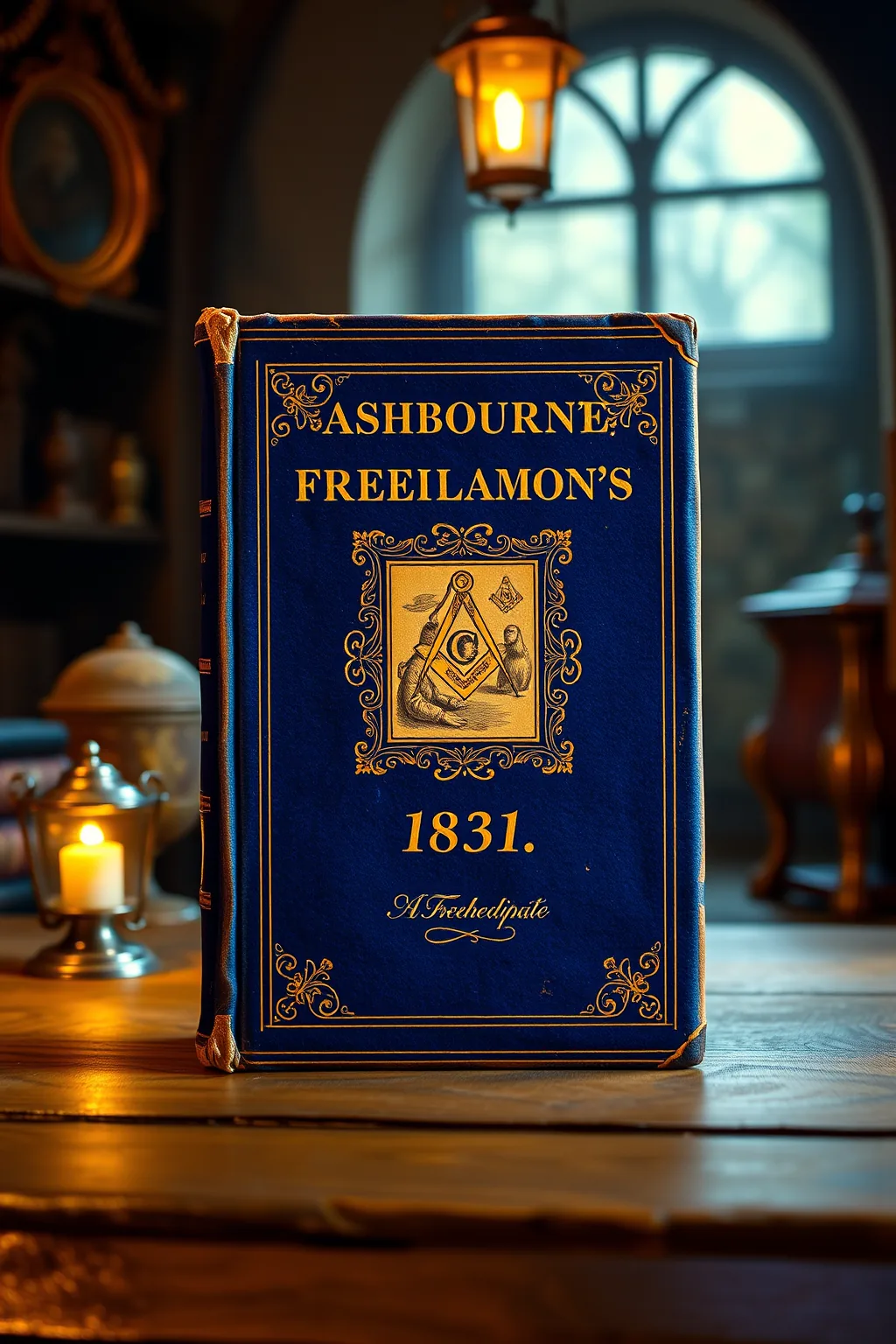
Washbourne H A Freemason's Pocket Companion 1831
 73
73

Washbourne H A Freemason's Pocket Companion 1831


Isolde Whitaker, Sacred Texts Editor — The "Washbourne H.A. Freemason's Pocket Companion" (1831) is an invaluable artifact for anyone serious about the esoteric dimensions of Freemasonry. Its strength lies in its unadorned presentation of foundational Masonic tenets and symbolism, offering a clear, albeit historically contextualized, view of the craft's moral and spiritual architecture. The text provides essential insights into the allegorical language and philosophical underpinnings that have guided generations of Masons. It is particularly resonant for scholars of Western esotericism and practitioners seeking to deepen their understanding of historical Masonic practice. This pocket companion serves as an authoritative, accessible entry point into the heart of Masonic wisdom.
📝 Description
73
Published in 1831, the 'Washbourne H.A. Freemason's Pocket Companion' details Masonic practices and symbolism.
This 1831 volume, attributed to an unknown author, presents Masonic teachings from a 19th-century perspective. It focuses on the philosophical and symbolic aspects of the craft, aiming to guide the earnest student toward understanding. The text covers Masonic symbolism, allegory, and the moral implications of the brotherhood.
It serves as a guide for those seeking deeper comprehension of Masonic tenets. The book uses coded language and parables to convey its message, emphasizing the aspirant's internal search for truth. The writing reflects a serious intellectual approach to Masonic study, inviting readers to consider the esoteric dimensions of Freemasonry.
This pocket companion belongs to the tradition of Masonic esoteric literature that flourished in the 18th and 19th centuries. Such works often sought to interpret Masonic rituals and symbols not merely as social or fraternal customs, but as keys to spiritual or philosophical truths. They drew upon diverse sources, including Kabbalah, Hermeticism, and Neoplatonism, to imbue Masonic degrees with deeper meaning. The focus on 'enlightenment' and the 'geometry of the soul' places it within this stream of thought, which aimed to provide a systematic path for personal transformation through symbolic understanding.
💡 Why Read This Book?
Delve into the authentic heart of 19th-century Freemasonry. This pocket companion offers a direct conduit to the symbolic language and philosophical inquiries of past brethren. It's essential for esoteric scholars, spiritual seekers aiming to understand hidden traditions, and practitioners desiring a deeper connection to the historical roots and esoteric underpinnings of the Craft.
⭐ Reader Reviews
Honest opinions from readers who have explored this book.
❓ Frequently Asked Questions
Is this book a historical document or a modern interpretation?
This is an authentic historical document from 1831, providing a direct glimpse into Freemasonry as practiced and understood in that era, rather than a modern commentary or interpretation.
What kind of knowledge can be found within its pages?
It contains foundational Masonic teachings, ritualistic explanations, symbolic interpretations, moral philosophy, and ethical guidance relevant to Freemasons of the time, offering insights into esoteric allegories.
Who was the author, Washbourne H.A.?
The author is listed as 'Unknown' in many records, suggesting the work might have been compiled or edited by a committee, or the name is a pseudonym, adding to its mystique and esoteric nature.
Is this book suitable for non-Freemasons?
While written for Masons, it is highly valuable for anyone interested in the history of secret societies, Western esotericism, symbolism, and philosophical traditions. It offers a unique academic and spiritual perspective.
What is the historical significance of the 1831 publication date?
The 1831 date places the text within a significant period of Masonic development and public discourse in the 19th century, offering insights into how Masonic principles were articulated and disseminated.
Does the book contain actual Masonic rituals?
It provides explanations and allegorical interpretations of Masonic principles and ceremonies rather than verbatim ritualistic scripts, focusing on the philosophical and symbolic aspects.
🔮 Key Themes & Symbolism
The Geometry of the Soul: Masonic Allegory and Inner Transformation
This theme explores how Masonic teachings, as presented in the 1831 companion, utilize architectural and geometric metaphors to represent the process of inner refinement and spiritual development. The 'rough ashlar' and 'perfect ashlar' become symbols of the unformed and perfected self, respectively, with rituals and lessons acting as the tools and guidance for this transformative work. The text invites contemplation on how external structures and symbolic tools mirror the internal construction of virtue and wisdom, guiding the aspirant towards a more perfect union with the divine.
The Language of Symbols: Deciphering Esoteric Masonic Signatures
The companion serves as a lexicon for the rich symbolic language of Freemasonry. It studies the deeper meanings behind common Masonic emblems – the square, compasses, plumb line, level – revealing their philosophical and ethical implications. These symbols are presented not as mere decorative elements, but as keys to unlocking profound truths about morality, the cosmos, and the human condition. Understanding this symbolic grammar is crucial for grasping the esoteric undercurrents of Masonic philosophy and its connection to ancient wisdom traditions.
Brotherhood and the Quest for Light: The Philosophical Foundation
This theme examines the core tenets of Masonic brotherhood as presented in the text, focusing on mutual support, moral rectitude, and the collective pursuit of 'Light' – representing knowledge, truth, and spiritual illumination. The companion elucidates how the Masonic lodge functions as a microcosm of an ideal society, where individuals are bound by shared principles and a common journey towards enlightenment. It highlights the philosophical commitment to self-improvement and the betterment of humanity through shared endeavor and the dissemination of moral and spiritual understanding.
💬 Memorable Quotes
Direct passages from the work, attributed to the author.
“The rough ashlar must be brought to perfection.”
— This powerful metaphor signifies the ongoing process of self-improvement and spiritual refinement, transforming the unpolished individual into a virtuous and enlightened being.
“Seek, and ye shall find.”
— A timeless injunction to actively pursue knowledge and truth, underscoring the proactive role of the aspirant in their spiritual and intellectual journey.
“The level and the plumb rule teach us of equality and rectitude.”
— These tools symbolize the Masonic ideals of universal brotherhood and upright moral conduct, essential principles for navigating life ethically.
“Where Light is sought, Darkness must retreat.”
— This speaks to the transformative power of knowledge and wisdom, informative the path and dispelling ignorance and confusion.
“Through Labour, Truth is found.”
— Emphasizes that genuine understanding and wisdom are not passively received but are the fruits of diligent effort and dedicated study.
🌙 Esoteric Significance
Tradition
This companion is deeply rooted in the Western Esoteric Tradition, specifically within the framework of Hermeticism, Neoplatonism, and Kabbalistic thought, which have historically influenced Masonic philosophy. It represents an effort to synthesize ancient wisdom with practical moral and spiritual instruction, positioning Freemasonry as a vehicle for personal gnosis and ethical development. The emphasis on symbolism and allegory aligns with the esoteric principle of 'as above, so below,' suggesting a correspondence between the macrocosm and the microcosm.
Symbolism
The text is rich with Masonic symbolism, interpreting iconic emblems like the square, compasses, level, and plumb line not just as tools of stonemasons but as profound allegories for moral conduct, divine order, and spiritual aspiration. It explores the geometric and architectural metaphors used to represent the building of character and the 'temple' of the self, connecting these to universal principles of harmony, balance, and truth. These symbols act as mnemonic devices and keys to deeper spiritual understanding.
Modern Relevance
Despite its 19th-century origins, the "Washbourne H.A. Freemason's Pocket Companion" retains significant relevance for contemporary students of esotericism and philosophy. Its exploration of timeless themes such as self-mastery, ethical living, the pursuit of knowledge, and the nature of brotherhood continues to resonate. For modern practitioners and scholars, it offers an authentic historical perspective, providing valuable insights into the evolution of Masonic thought and its enduring capacity to guide individuals on a path of personal growth and spiritual seeking.
👥 Who Should Read This Book
This esoteric companion is a vital resource for a diverse audience. **Esoteric Scholars and Historians** will find it an indispensable primary source for understanding 19th-century Masonic thought and practice. **Spiritual Seekers and Philosophers** will appreciate its exploration of universal moral and metaphysical principles couched in symbolic language. **Practicing Freemasons** seeking to deepen their understanding of the Craft's historical underpinnings and esoteric dimensions will find immense value. **Students of Secret Societies** will gain crucial insights into the organizational and philosophical structures of fraternal orders during a key historical period. It is for anyone drawn to the contemplative and symbolic aspects of human wisdom traditions.
📜 Historical Context
Published in 1831, the "Washbourne H.A. Freemason's Pocket Companion" emerged during a period of significant growth and public fascination with Freemasonry in England and across the globe. The early 19th century was an era where Masonic lodges served not only as fraternal organizations but also as centers for intellectual discourse, moral instruction, and the preservation of esoteric traditions. This was a time when Enlightenment ideals continued to influence philosophical thought, and the symbolic language of Masonry offered a unique framework for exploring concepts of reason, virtue, and universal brotherhood. The companion's existence reflects the desire to codify and disseminate Masonic knowledge in a portable, accessible format, catering to the expanding membership and the public's curiosity about the Craft's hidden dimensions.
📔 Journal Prompts
Reflect on the concept of the 'rough ashlar' and 'perfect ashlar' in your own life. What 'tools' or practices are you using to shape yourself?
Choose one Masonic symbol discussed in the text (e.g., square, compasses, level) and write about its personal meaning and application in your daily life.
Consider the ideal of Masonic brotherhood. How can the principles of mutual support and shared pursuit of truth be applied in your own social circles?
The text emphasizes the pursuit of 'Light.' What does 'Light' represent to you, and what steps can you take to bring more of it into your life?
How does the allegorical language of the companion help you to understand abstract philosophical or spiritual concepts?
🗂️ Glossary
Ashlar
In Freemasonry, an 'ashlar' refers to a stone. The 'rough ashlar' symbolizes the unrefined individual, while the 'perfect ashlar' represents the person who has achieved moral and spiritual perfection through Masonic teachings and self-discipline.
Gnosis
A Greek term meaning 'knowledge,' often referring to spiritual or mystical knowledge. In an esoteric context, it implies intuitive understanding or direct experience of divine truths, rather than mere intellectual assent.
Hermeticism
A philosophical and religious tradition based on the writings attributed to Hermes Trismegistus. It emphasizes the unity of all things, the principle of 'as above, so below,' and the pursuit of wisdom through alchemical and astrological practices.
Neoplatonism
A philosophical system developed by Plotinus, building on Plato's ideas. It posits a transcendent, ultimate reality (The One) from which all existence emanates, and emphasizes the soul's journey back to this divine source through contemplation and virtue.
Kabbalah
A mystical tradition within Judaism that explores the divine nature and the relationship between God and the created world through symbolic interpretation of scripture and esoteric diagrams, notably the Tree of Life.
This book appears in 2 collections
🔮 Readers Also Liked
Browse all →







From the “Secret Societies” Collection
View all →



More Free Freemasonry & Secret Societies Books
View all →
![The Freemasons' quarterly (magazine and) review [afterw.] The Freemasons ...](/img/thumb/the-freemasons-quarterly-magazine-and-review-afterw-the-freemasons-freemasons-magazine.webp)