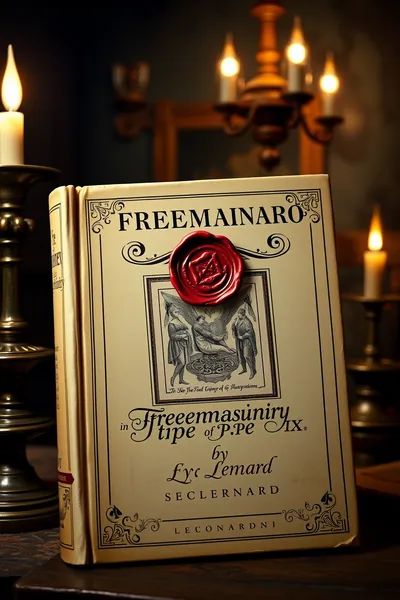
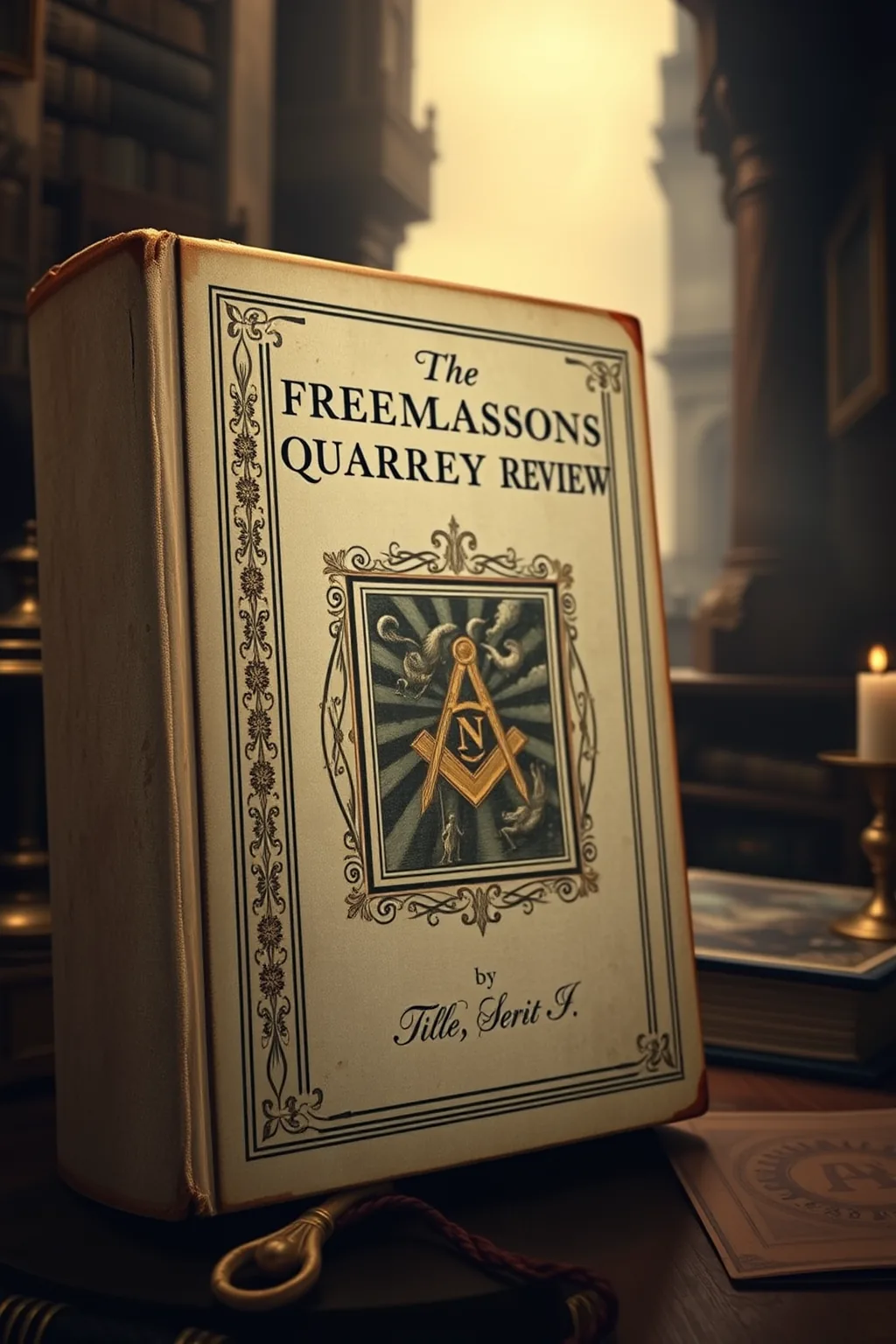
The Freemasons Quarterly Review Vol XV Series II London March 31st 1848
 78
78

The Freemasons Quarterly Review Vol XV Series II London March 31st 1848

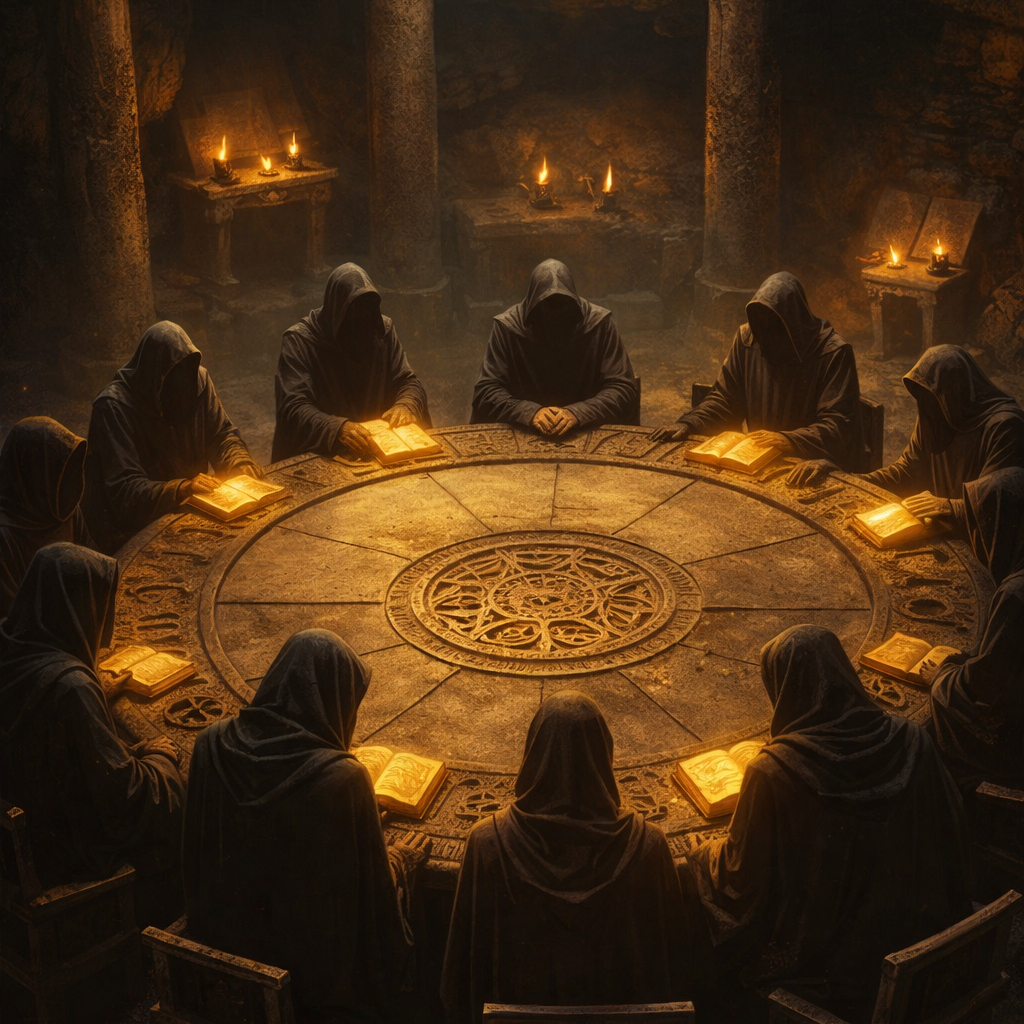

Aurelia Blackwood, Occult Philosophy Critic: This 1848 installment of The Freemasons Quarterly Review is a potent elixir for the discerning mind, offering a rich tapestry of esoteric insights. It masterfully navigates the symbolic language of Freemasonry, revealing layers of meaning often obscured to the uninitiated. The articles within this volume are particularly adept at exploring the philosophical and spiritual dimensions, transcending mere procedural accounts to touch upon universal truths. Its strength lies in its ability to connect ancient wisdom with the practicalities of Masonic practice, making it an invaluable resource for both seasoned practitioners and earnest seekers of hidden knowledge. This is a must-read for anyone fascinated by the enduring mystique of fraternal orders.
📝 Description
78
The Freemasons Quarterly Review, Volume XV, Series II, published March 31st, 1848, examines Masonic symbolism.
This 1848 issue of The Freemasons Quarterly Review presents Masonic teachings from a mid-19th century perspective. It contains discussions on the philosophical aspects and symbolic language central to Freemasonry. The articles aim to connect readers with esoteric knowledge through examinations of ritual, allegory, and the search for enlightenment. It is written for those interested in the deeper meanings within Masonic practices. The review encourages contemplation on the ethical and spiritual structures of fraternal organizations. It addresses themes of morality, fellowship, and personal development as understood within the context of Freemasonry.
Readers will find detailed discussions on the philosophical underpinnings of Masonic ritual and allegory. The content seeks to illuminate the symbolic architecture of existence, fostering introspection. It engages with questions of brotherhood and self-mastery through the lens of one of history's significant fraternal orders. The publication offers a window into how these ideas were articulated and debated in the Victorian era.
This review is part of a tradition of esoteric literature that seeks to decode hidden meanings within established symbolic systems. Emerging in the mid-19th century, it reflects a period where fraternal orders like Freemasonry were often seen as repositories of ancient wisdom. The text engages with concepts that connect the individual's inner life with broader cosmological principles, a common thread in Western esotericism. It treats Masonic symbolism not as mere historical artifact but as a living language for spiritual understanding.
💡 Why Read This Book?
This volume offers a direct portal into the intellectual and spiritual currents of mid-19th century Freemasonry. It's essential for scholars of secret societies, practitioners seeking deeper ritualistic understanding, and spiritual seekers drawn to the symbolic richness of fraternal orders. Discover the philosophical underpinnings that have shaped generations and unlock profound insights into the human condition.
⭐ Reader Reviews
Honest opinions from readers who have explored this book.
❓ Frequently Asked Questions
What is the primary focus of this specific volume?
This volume predominantly focuses on the philosophical and symbolic aspects of Freemasonry as understood in 1848, exploring rituals, allegories, and the ethical teachings within the fraternity, offering a glimpse into its esoteric underpinnings.
Is prior knowledge of Freemasonry required to understand this review?
While prior knowledge enhances comprehension, the review is written to be accessible to serious students of esoteric history and symbolism, offering context and explanations for core concepts.
What is the historical period of this publication?
This publication is from March 31st, 1848, placing it squarely within the Victorian era, a time of significant intellectual and spiritual exploration, particularly concerning ancient mysteries and fraternal organizations.
Are there any practical applications for modern readers?
Yes, the timeless ethical principles, lessons in self-improvement, and the exploration of universal symbolism offer profound guidance and inspiration for contemporary personal growth and philosophical inquiry.
Who is considered the 'author' of this publication?
The author is listed as 'Unknown' as it is a compilation of articles and contributions from various individuals within the Masonic community of the time, characteristic of such quarterly reviews.
🔮 Key Themes & Symbolism
The Architecture of the Soul
This theme explores the Masonic concept of building a spiritual temple within oneself. It explores how rituals and symbols are not mere ceremonies but allegorical blueprints for moral and intellectual construction. The review examines the stages of this inner work, drawing parallels between the physical tools of the craftsman and the virtues required for spiritual development. It posits that true enlightenment is achieved through diligent application of moral principles and the pursuit of knowledge, much like a stonemason meticulously shapes and places each element to create a lasting structure.
The Unveiling of Light
Central to Masonic philosophy is the journey from darkness to light, symbolizing the transition from ignorance to enlightenment. This theme explores the various degrees and symbolic representations used to guide the aspirant through this transformative process. It discusses how 'light' represents divine wisdom, truth, and understanding, and how the rituals are designed to gradually reveal these profound concepts. The review highlights the importance of seeking this inner light through contemplation, fellowship, and adherence to ethical conduct, portraying Freemasonry as a path to useful the human spirit.
The Language of Symbols
This theme examines the profound significance of symbols within Freemasonry, not as mere decorative elements, but as a potent language designed to convey complex philosophical and spiritual truths that transcend literal interpretation. The review likely explores key symbols such as the square, compasses, plumb line, and level, interpreting their many-sided meanings related to morality, rectitude, and divine order. It suggests that by understanding and internalizing these symbols, members can access deeper levels of wisdom and connect with universal principles governing existence.
💬 Memorable Quotes
Direct passages from the work, attributed to the author.
“Within the Lodge, shadows yield to the quest for illumination.”
— This highlights the Masonic ideal of seeking truth and spiritual understanding within the structured environment of the fraternity, moving from ignorance to enlightenment.
“The trowel spreads the cement of brotherly love.”
— This refers to the symbolic use of the trowel to unite Masons, emphasizing the importance of harmony, fellowship, and mutual support within the order.
“Each stone must be prepared ere it finds its rightful place.”
— This speaks to the individual's preparation and self-improvement required to contribute to the collective 'building' of the Masonic community and the spiritual temple.
“Allegory is the key to unlock the deeper mysteries.”
— This emphasizes that the true meaning of Masonic teachings is often conveyed through symbolic stories and metaphors, requiring contemplation to grasp their profound significance.
“The compasses circumscribe our desires, guiding virtuous action.”
— This illustrates the symbolic use of the compasses to represent self-control, temperance, and the ethical boundaries that should govern one's conduct in all aspects of life.
🌙 Esoteric Significance
Tradition
This volume is deeply rooted in the Western Esoteric Tradition, specifically within the framework of Speculative Freemasonry. It engages with concepts of Hermeticism, Neoplatonism, and Kabbalistic symbolism, interpreting them through the lens of Masonic ritual and allegory. The emphasis is on inner transformation, the pursuit of gnosis (spiritual knowledge), and the understanding of divine principles as they manifest in the human experience and the cosmos.
Symbolism
The text is replete with Masonic symbolism, including the tools of operative stonemasons reinterpreted for spiritual construction (e.g., the square for morality, the compasses for temperance). Other key symbols likely explored include the Blazing Star, the Pillars of Solomon's Temple, and the Apron, each carrying layers of meaning pertaining to divine order, human aspiration, and the journey towards enlightenment.
Modern Relevance
The enduring philosophical and ethical teachings within this volume offer profound relevance today. In an age of rapid information and often superficial connection, the emphasis on self-discipline, brotherhood, the pursuit of truth, and the development of character provides a grounding counterpoint. The exploration of symbolism continues to resonate with those seeking deeper meaning and a framework for personal growth beyond material pursuits.
👥 Who Should Read This Book
This volume is a reference for serious students of Freemasonry, offering historical context and philosophical depth. Scholars of secret societies and Western Esotericism will find invaluable primary source material here. Seekers of spiritual and moral guidance will discover timeless wisdom embedded within the Masonic allegory. Practitioners of Masonic rituals may use this to deepen their understanding of the symbolic language and philosophical underpinnings of their work, enriching their personal journey.
📜 Historical Context
Published in the important year of 1848, this edition of The Freemasons Quarterly Review emerges from a period of profound societal change and intellectual ferment across Europe and America. The Victorian era was marked by a burgeoning interest in science, industry, and social reform, yet it also saw a concurrent fascination with the esoteric, the mystical, and the hidden histories of ancient orders. Freemasonry, already well-established, played a significant role in the social and intellectual landscape, attracting men from various walks of life who sought moral upliftment, philosophical discourse, and a sense of brotherhood. This review reflects the era's desire to codify and disseminate its understanding of Masonic principles, often blending philosophical inquiry with historical accounts and interpretations of ritual symbolism, contributing to the ongoing discourse on secret societies and their role in shaping individual character and societal values.
📔 Journal Prompts
Reflect on a time you felt you moved from 'darkness' to 'light' in your understanding of a concept or situation.
Consider the Masonic symbols of the square and compasses. How can you better apply their principles of morality and temperance in your daily life?
What 'stone' in your life requires further preparation or shaping before it can be properly 'placed' in your personal temple?
If allegory is a key to deeper mysteries, what personal allegory can you create to understand a challenging aspect of your life?
How can the concept of 'brotherly love,' as symbolized by the trowel, be more actively cultivated in your relationships and community?
🗂️ Glossary
Lodge
The physical or symbolic meeting place of a Masonic fraternity, serving as a sanctuary for ritual, instruction, and fellowship.
Allegory
A story, poem, or picture that can be interpreted to reveal a hidden meaning, typically a moral or political one. In Freemasonry, it's a primary vehicle for teaching.
Degree
A stage or level of initiation and learning within a Masonic or fraternal order, each revealing progressively deeper teachings and symbolism.
Esoteric
Intended for or likely to be understood by only a small number of people with a specialized knowledge or interest; relating to the hidden, inner meaning of something.
Gnosis
A Greek term meaning 'knowledge,' often referring to spiritual or mystical insight, particularly within Gnostic traditions and certain esoteric philosophies.
This book appears in 2 collections
🔮 Readers Also Liked
Browse all →



From the “Secret Societies” Collection
View all →




More Free Freemasonry & Secret Societies Books
View all →