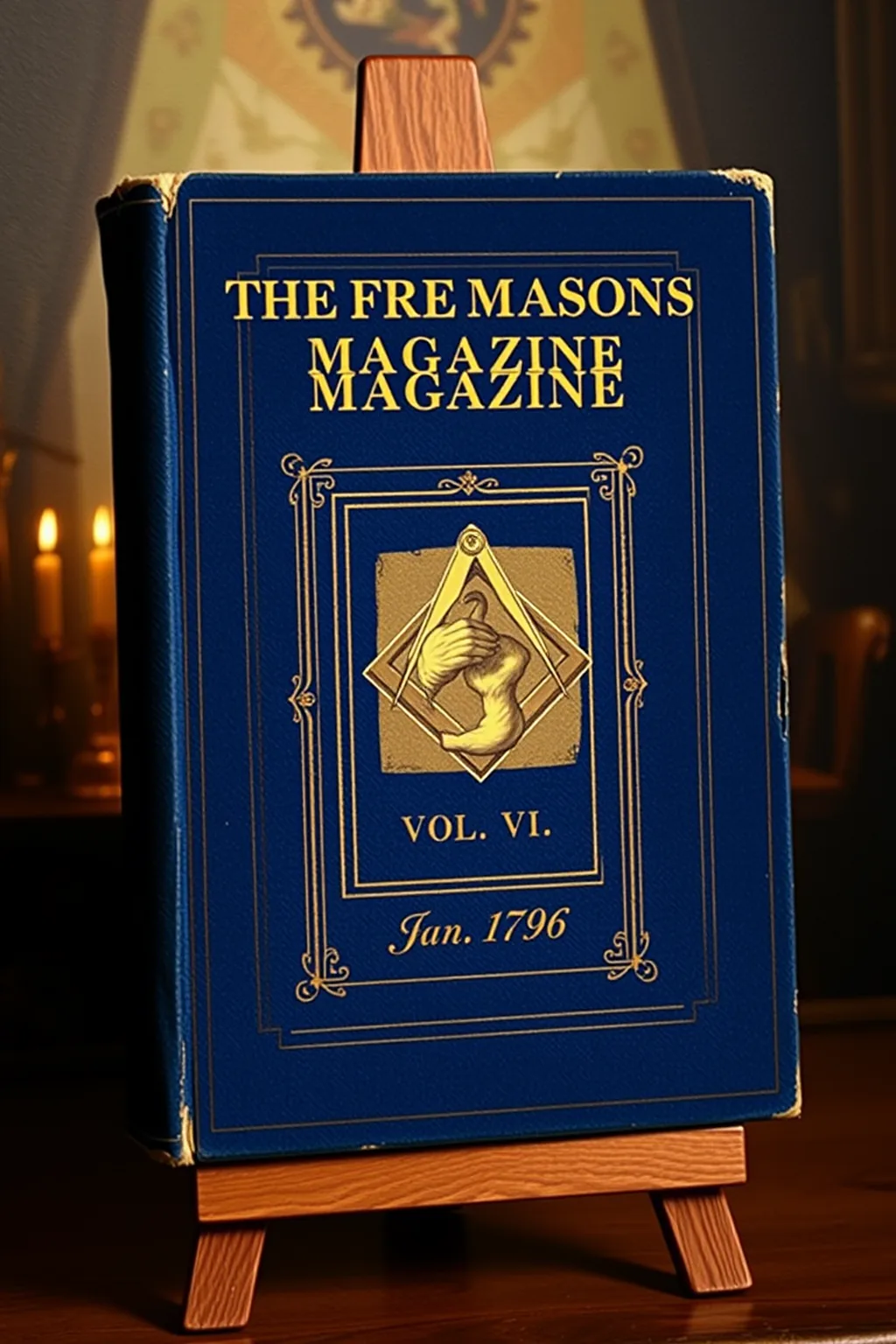
The Freemasons Magazinne Vol VI London Jan Jun 1796
 74
74

The Freemasons Magazinne Vol VI London Jan Jun 1796


Sophia Crane (Associate Editor) — 'The Freemasons Magazine Vol VI' stands as a beacon of early Masonic discourse, offering invaluable insights into the fraternity's philosophical and ethical foundations during a pivotal era. Its unknown author(s) meticulously weave together discussions on virtue, allegory, and the symbolic language that underpins Masonic ritual. This volume is particularly potent for its exploration of the 'Great Architect' and the moral architecture of the individual. It is a rich resource for historians of secret societies, practitioners seeking to connect with the roots of their craft, and anyone fascinated by the enduring power of symbolic instruction. A truly illuminating collection for the discerning seeker.
📝 Description
74
Published in London between January and June 1796, Volume VI of The Freemasons Magazine offers a window into early Masonic thought.
This volume presents a collection of writings from the first half of 1796, focusing on the intellectual currents within Freemasonry. It discusses moral philosophy, the use of celestial symbolism, and the allegorical progression associated with Masonic initiations. The writing style reflects the Georgian era, aiming to engage serious students of hidden traditions and practitioners seeking greater insight into Masonic practices.
The magazine contains veiled discussions of truths, presented through allegory and metaphor. It invites readers to undertake an intellectual and spiritual inquiry. This publication is more than a periodical; it is an artifact reflecting intellectual and spiritual inquiry, a record of the ongoing search for knowledge and understanding. Its contents weave together early Masonic ideas with Enlightenment principles and enduring mystical concepts.
This publication emerges from a period where Freemasonry was actively engaging with Enlightenment ideals and continuing older esoteric traditions. The writings likely reflect a synthesis of Rosicrucian influences, Hermetic philosophy, and Kabbalistic ideas, common in esoteric circles of the time. It shows how these diverse streams of thought were being interpreted and applied within the context of Masonic degrees and moral instruction, aiming for a form of personal enlightenment.
💡 Why Read This Book?
Uncover the foundational principles and hidden symbolism of Freemasonry from a crucial period in its history. This volume offers direct access to early Masonic thought, perfect for scholars, practitioners seeking historical context, and seekers of profound philosophical insights into self-improvement and universal truths. Engage with a unique window into a world of allegory and moral instruction.
⭐ Reader Reviews
Honest opinions from readers who have explored this book.
❓ Frequently Asked Questions
What is the primary focus of this volume?
The primary focus is the philosophical, moral, and symbolic teachings of Freemasonry as presented in early Masonic periodicals, offering insights into the fraternity's early doctrines and practices.
Is prior knowledge of Freemasonry required to understand this volume?
While prior knowledge enhances comprehension, the magazine's content is accessible to dedicated seekers and scholars interested in the historical and philosophical aspects of Freemasonry, with its allegorical nature providing layers of meaning.
What time period does this volume cover?
This volume specifically covers the first half of the year 1796, offering a snapshot of Masonic thought and discourse during the late Georgian era in London.
Who is the intended audience for this publication?
The intended audience includes Freemasons seeking historical context, scholars of secret societies and Western esotericism, and individuals interested in the philosophical and moral development of the Enlightenment period.
Are there any specific rituals or ceremonies detailed within this volume?
While not a procedural manual, the volume delves into the philosophical underpinnings and allegorical interpretations of Masonic rituals and ceremonies, enriching understanding of their symbolic purpose.
🔮 Key Themes & Symbolism
The Architect and the Craft
This theme explores the profound philosophical concept of the 'Great Architect of the Universe' as understood by early Freemasons. It studies how this abstract divine principle was integrated into Masonic teachings, serving as a reference for moral instruction and the pursuit of spiritual enlightenment. The volume examines the metaphorical application of building and construction to the individual's inner development, portraying Freemasonry as a spiritual edifice built through virtuous living and the acquisition of wisdom. This section illuminates the fraternity's role in fostering a sense of cosmic order and personal responsibility within its members, drawing parallels between the physical act of building and the construction of a moral character.
Allegory and Symbolic Language
Central to the volume is the intricate set of Masonic allegory and its rich symbolic language. The texts unravel the deeper meanings embedded within the rituals, tools, and narratives of Freemasonry, demonstrating how these elements serve as vehicles for transmitting profound philosophical and ethical concepts. Readers will discover how common objects and actions are imbued with esoteric significance, guiding initiates through stages of moral and spiritual progression. This theme highlights the deliberate use of veiled communication, designed to stimulate contemplation and personal revelation, reflecting a tradition of knowledge passed down through metaphor and symbol rather than direct exposition.
Moral Philosophy and Self-Cultivation
This volume powerfully underscores Freemasonry's commitment to moral philosophy and the relentless pursuit of self-cultivation. It presents a detailed exploration of virtues such as temperance, fortitude, prudence, and justice, framing them not merely as abstract ideals but as practical tools for constructing a well-lived life. The texts advocate for a continuous process of introspection and self-improvement, encouraging members to refine their character and contribute positively to society. The magazine serves as a guide for ethical conduct, emphasizing the importance of brotherhood, charity, and the diligent application of Masonic principles to everyday existence, fostering a harmonious inner and outer world.
💬 Memorable Quotes
Direct passages from the work, attributed to the author.
“Light is the pursuit of every virtuous soul.”
— This aphorism highlights the Masonic quest for knowledge, wisdom, and spiritual illumination as the ultimate goal of an ethically guided life.
“Within the Lodge, we lay the foundation for a nobler edifice of the self.”
— This metaphor illustrates that the structured environment of the Masonic Lodge is designed to facilitate personal growth and the construction of a superior moral and spiritual character.
“True Masonry is a covenant of brotherhood, built on the bedrock of shared principles.”
— This emphasizes that the essence of Freemasonry lies in the strong bonds of fellowship and the common adherence to guiding ethical and philosophical tenets.
“Allegory is the key that unlocks the hidden chambers of wisdom.”
— This statement underscores the importance of symbolic storytelling and metaphorical language in Freemasonry as the primary means of imparting profound, often esoteric, knowledge.
💡 Key Ideas
Editorial paraphrase of the work's core concepts — not direct quotes.
The square, the level, and the plumb-line teach us more than mere carpentry.
This quote signifies that Masonic tools possess a deeper, symbolic meaning beyond their practical use, representing moral principles like rectitude, equality, and uprightness in life.
🌙 Esoteric Significance
Tradition
This volume is deeply rooted in the Western Esoteric Tradition, specifically within the framework of Speculative Freemasonry. It draws upon Hermeticism, Neoplatonism, and Kabbalistic concepts, albeit often implicitly, to explore themes of divine order, cosmic harmony, and the individual's journey towards enlightenment. The Masonic system itself acts as a symbolic vehicle for these ancient philosophical currents, translating abstract principles into accessible allegorical narratives and ritualistic experiences aimed at spiritual transformation.
Symbolism
The magazine is replete with rich Masonic symbolism, interpreting tools like the square, compasses, and trowel not just as implements but as profound moral and spiritual signifiers. It explores the allegorical meanings of architectural elements, celestial bodies, and the progression through degrees, all of which represent stages of inner development and the unveiling of hidden truths. This symbolic language serves as a powerful mnemonic device and a framework for understanding the intricate relationship between the material and spiritual realms, guiding the initiate towards a deeper comprehension of universal laws.
Modern Relevance
The perennial wisdom contained within 'The Freemasons Magazine Vol VI' retains significant relevance for modern seekers. Its emphasis on moral integrity, self-discipline, the pursuit of knowledge, and the cultivation of brotherhood offers timeless guidance for reading through the complexities of contemporary life. For practitioners of esoteric disciplines, it provides invaluable historical context and a deeper understanding of the symbolic roots that continue to inform various spiritual paths. The volume serves as a potent reminder that the quest for inner truth and ethical living remains a constant human endeavor, transcending historical eras.
👥 Who Should Read This Book
This volume is essential for Freemasons eager to connect with the historical and philosophical underpinnings of their Craft. Scholars of Western Esotericism, secret societies, and intellectual history will find it an invaluable primary source. Seekers of profound philosophical insights into moral development and the nature of truth will be richly rewarded. Practitioners of related esoteric traditions may discover useful connections and historical context for their own practices. Even the curious general reader with an interest in the intellectual currents of the Enlightenment and the enduring legacy of symbolic systems will find much to ponder and explore within its pages.
📜 Historical Context
Published in London between January and June 1796, 'The Freemasons Magazine Vol VI' emerges from the heart of the late Georgian era, a period characterized by the intellectual ferment of the Enlightenment and the burgeoning influence of Romanticism. This was a time when secret societies, particularly Freemasonry, held significant sway in societal and intellectual circles, attracting individuals from diverse backgrounds seeking philosophical discourse, moral betterment, and a sense of shared purpose. The magazine reflects the era's fascination with reason, order, and the potential for human progress, while also hinting at the deeper, more mystical currents that ran beneath the surface of rationalism. Its content provides a valuable lens through which to understand the social, cultural, and philosophical range of late 18th-century Britain and the evolving role of esoteric traditions within it.
📔 Journal Prompts
Reflect on a Masonic symbol you are familiar with. What is its deeper, allegorical meaning beyond its literal interpretation?
Consider the concept of the 'Great Architect of the Universe'. How does this idea influence your own understanding of purpose and creation?
In what ways can the virtues of temperance, fortitude, prudence, and justice be practically applied to your daily life?
How does the idea of building a 'nobler edifice of the self' resonate with your personal goals for growth and self-improvement?
Explore a personal experience where allegory or symbolism helped you understand a complex idea or emotion.
🗂️ Glossary
Lodge
In Freemasonry, a 'Lodge' refers to both the physical meeting place of a Masonic chapter and the collective body of its members, serving as the fundamental unit of the fraternity.
Degree
A 'Degree' in Freemasonry represents a level of initiation and instruction, symbolizing stages of spiritual and moral advancement for the candidate.
Allegory
An 'Allegory' is a literary or visual device in which characters, events, or settings represent abstract ideas or moral qualities, used extensively in Masonic teachings.
Speculative Freemasonry
'Speculative Freemasonry' refers to the philosophical and symbolic interpretation of Masonic rituals and traditions, as opposed to its operative (craftsman) origins.
Esoteric
'Esoteric' pertains to knowledge or teachings intended for a select group of individuals, often involving inner meaning, symbolism, and spiritual insight.
This book appears in 2 collections
🔮 Readers Also Liked
Browse all →






From the “Secret Societies” Collection
View all →



More Free Freemasonry & Secret Societies Books
View all →