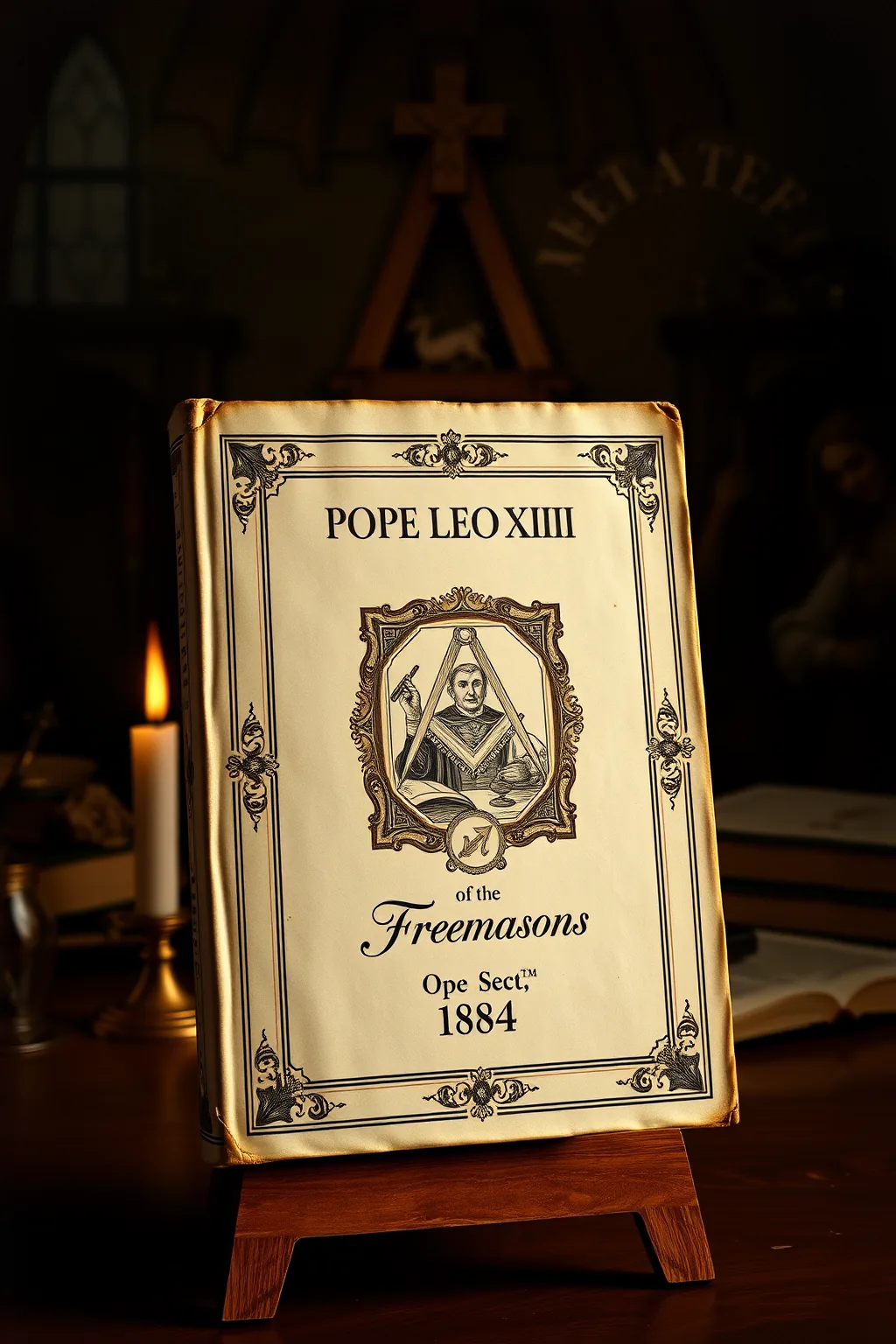
Pope Leo XIII On The Sect Of The Freemasons 1884
 74
74

Pope Leo XIII On The Sect Of The Freemasons 1884

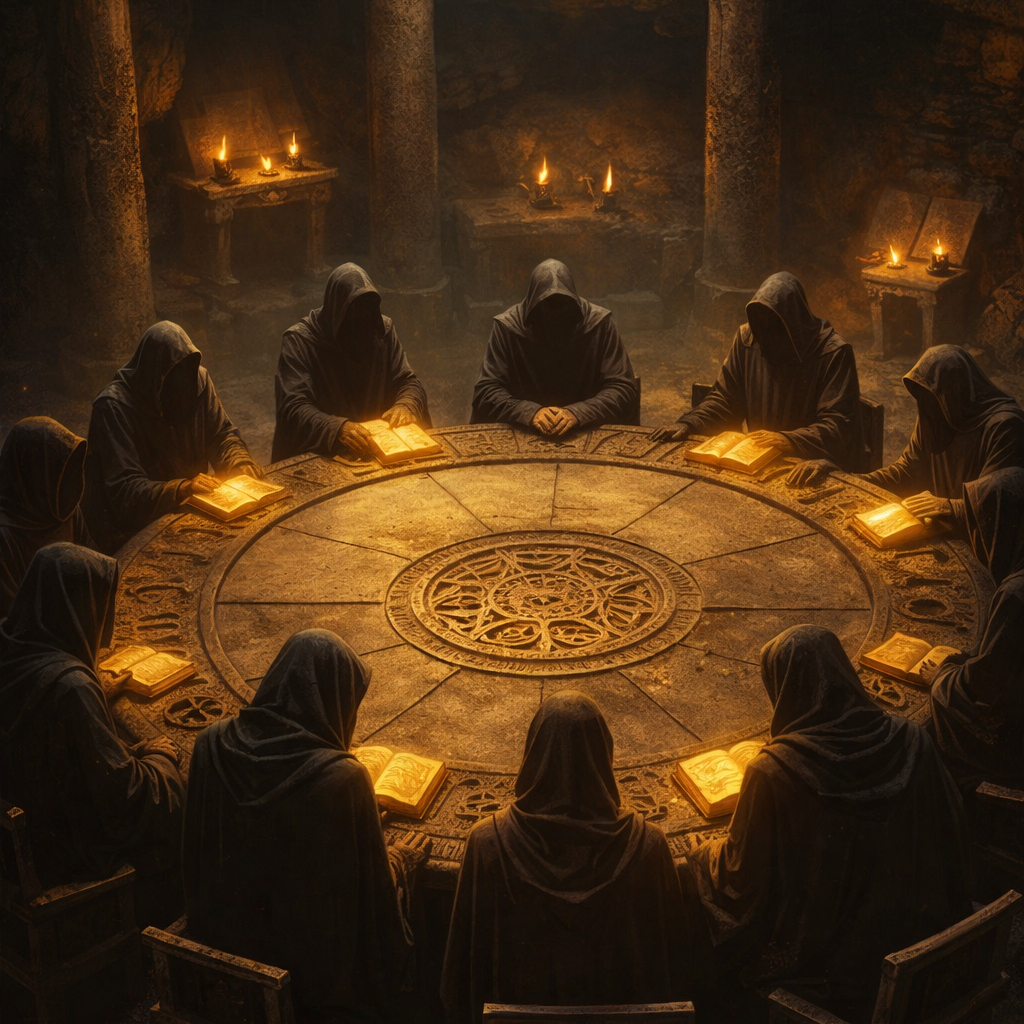

By Silas Hawthorne (Hermetic Studies Editor) — Pope Leo XIII's 1884 pronouncement on Freemasonry is a cornerstone text for understanding historical critiques of esoteric orders. While framed within a theological context, it offers invaluable insights into the perceived threats and hidden machinations attributed to secret societies during a period of significant societal change. The Pope’s pronouncements, though critical, inadvertently illuminate the very elements of mystery and influence that drew adherents to such groups. This work is essential for scholars of religious history, occultism, and the sociology of secret societies, providing a unique, albeit adversarial, perspective on the enduring power of symbolism and initiation.
📝 Description
74
Pope Leo XIII addressed the Freemasons in 1884, detailing the Church's view of their secret society.
In 1884, Pope Leo XIII issued a papal encyclical concerning the Masonic Order. This document, written from the Vatican, presents the Catholic Church's perspective on Freemasonry during a period when secret societies were viewed with suspicion. The text examines the perceived rituals, symbolism, and hidden knowledge associated with the Masons, suggesting they influenced society from behind the scenes.
Leo XIII discusses Masonic philosophy, its stated goals, and how these were seen to conflict with Catholic teachings. The encyclical also touches on the spiritual concerns raised by the Church regarding this organization. It functions as a historical record of the Church's stance on Freemasonry and a commentary on the relationship between established religious institutions and esoteric groups. The work is relevant for understanding historical religious and societal dynamics.
This text belongs to the tradition of Catholic condemnations of purportedly heretical or dangerous secret societies that emerged in the 18th and 19th centuries. It stands as a formal statement from a major religious authority during a time when groups like Freemasonry were widely believed to possess secret doctrines and exert covert influence. The encyclical engages with ideas of hidden knowledge and arcane wisdom as perceived threats to established religious and social order, reflecting broader historical anxieties about Gnosticism and occultism.
💡 Why Read This Book?
Uncover the historical Vatican perspective on a powerful, secretive organization. Explore the theological and philosophical debates surrounding Freemasonry in the late 19th century. Gain insight into the perceived dangers of hidden knowledge and its influence on society. This text is crucial for seekers of occult history, religious scholars, and practitioners interested in the dynamics between established power and clandestine movements.
⭐ Reader Reviews
Honest opinions from readers who have explored this book.
❓ Frequently Asked Questions
What was Pope Leo XIII's primary concern regarding Freemasonry?
Pope Leo XIII's primary concern was the perceived threat Freemasonry posed to the Catholic Church's authority and its doctrine, viewing it as a clandestine sect promoting naturalism and undermining religious and social order.
Does this text reveal specific Masonic rituals or secrets?
No, this text focuses on the Church's interpretation and condemnation of Masonic principles and aims rather than revealing specific operational secrets or rituals, which were believed to be hidden.
What is the historical context of this document?
Published in 1884, this encyclical emerged during a period of intense societal and political change in Europe, where secret societies were often viewed with suspicion by established powers and religious institutions.
Who is the intended audience for this work?
The intended audience includes Catholic clergy, faithful, and those interested in the historical relationship between the Church and Freemasonry, particularly those seeking to understand the Church's doctrinal stance.
Is this a neutral historical account of Freemasonry?
No, this document is a formal papal encyclical from the Catholic Church, presenting a critical and condemnatory perspective on Freemasonry from a theological and hierarchical viewpoint.
🔮 Key Themes & Symbolism
Theological Opposition to Esotericism
This theme explores the profound theological chasm between the Catholic Church's established doctrine and the perceived esoteric tenets of Freemasonry. Pope Leo XIII articulates a forceful critique, highlighting how Masonic principles, such as naturalism and the pursuit of 'light' outside divine revelation, were seen as fundamentally antithetical to Christian faith. The text examines the Church's perspective on secret societies as potential conduits for spiritual deception and as challenges to its singular authority in matters of truth and salvation. It underscores the historical tension between institutionalized religion and alternative spiritual pathways.
The Power of Hidden Knowledge and Influence
The discourse studies the pervasive fear and fascination surrounding hidden knowledge, a hallmark of secret societies like Freemasonry. Pope Leo XIII outlines the belief that such orders accumulated esoteric wisdom, wielding it to subtly influence political, social, and moral landscapes. The text emphasizes the perceived danger of this concealed power, suggesting that its clandestine nature allowed for the propagation of ideas detrimental to societal stability and religious orthodoxy. It reflects a historical apprehension regarding the impact of veiled agendas on the visible world.
Symbolism and the Unseen Order
Pope Leo XIII's critique implicitly acknowledges the symbolic language and ritualistic practices that form the bedrock of Freemasonry. While condemning these elements from a theological standpoint, the text indirectly highlights their importance in conveying esoteric concepts and fostering a sense of exclusive community. The encyclical grapples with the Church's interpretation of Masonic symbols as potentially pagan or heretical, contrasting them with Christian iconography. This theme invites readers to consider how symbolic systems can be used to transmit veiled meanings and create distinct organizational identities.
💬 Memorable Quotes
Direct passages from the work, attributed to the author.
“The sect of Freemasons... aims at destroying all religion.”
— A stark declaration of the perceived ultimate goal of Freemasonry, highlighting the Church's view of it as an anti-religious force seeking to dismantle spiritual foundations.
“The doctrines of Freemasonry are in direct opposition to the doctrines of Christ.”
— This highlights the fundamental theological conflict, asserting that Masonic teachings represent a diametrically opposed philosophical and spiritual path to Christianity.
“The natural law is the rule of their conduct.”
— This points to the Church's critique of Freemasonry's reliance on natural law, implying a rejection of divine law and a focus on humanistic principles.
“We must therefore use all our strength to oppose them.”
— An urgent call to action, demonstrating the perceived necessity for the Catholic Church to actively combat the influence and spread of Freemasonry.
💡 Key Ideas
Editorial paraphrase of the work's core concepts — not direct quotes.
We must, therefore, guard against the insidious nature of these societies.
This quote captures the Pope's warning about the subtle and pervasive danger attributed to Freemasonry, urging vigilance against its perceived corrupting influence.
🌙 Esoteric Significance
Tradition
This document is primarily significant within the context of Western Christian esoteric and anti-esoteric discourse. While not an esoteric text itself, it represents a major institutional voice (the Catholic Church) commenting upon and condemning a prominent esoteric tradition (Freemasonry). It illuminates the historical clash between revealed religion and the pursuit of hidden knowledge through initiation and symbolism, offering a critical external perspective on esoteric practices and beliefs.
Symbolism
Pope Leo XIII's critique, while condemnatory, indirectly acknowledges the importance of symbolism within Freemasonry. The text implies that Masonic symbols are not benign but are instead vehicles for conveying dangerous, anti-Christian doctrines. The Church viewed the adoption and interpretation of specific symbols (though not detailed in this specific text, the general concern is evident) as part of a systematic effort to create an alternative spiritual framework, distinct from and opposed to Christian iconography and dogma.
Modern Relevance
In an age where conspiracy theories and discussions of hidden power structures persist, Pope Leo XIII's pronouncements offer a historical lens through which to examine enduring anxieties about secret societies. For scholars of occultism, religious history, and political science, it provides a critical perspective on how established institutions perceive and react to clandestine groups. Its relevance lies in understanding the historical roots of anti-Masonic sentiment and the perennial human fascination with veiled knowledge and influence, even in secularized societies.
👥 Who Should Read This Book
This profound historical document is essential for several audiences. **Scholars of religious history and occultism** will find it important for understanding the Catholic Church's historical stance on Freemasonry and secret societies. **Practitioners of esoteric traditions** can gain perspective on external critiques and the historical dialogue surrounding their practices. **Seekers of hidden knowledge** and those interested in the interplay of power, religion, and clandestine organizations will discover a unique viewpoint. **Beginners** exploring the history of secret societies will find this a foundational text for understanding one of the most significant condemnations of Freemasonry.
📜 Historical Context
Published in 1884, Pope Leo XIII's encyclical 'Humanum Genus' (often referenced in discussions of his views on Freemasonry) emerged during a tumultuous period in European history. The late 19th century was characterized by the rise of secularism, nationalism, and significant political upheavals that challenged traditional religious and monarchical powers. Freemasonry, with its emphasis on fraternity, reason, and often, a deistic or agnostic worldview, was viewed by many in the established clergy as a significant threat. The Church saw secret societies as breeding grounds for revolutionary ideas and as organized forces working to undermine its spiritual and temporal authority. This encyclical reflects a deep-seated anxiety within the Vatican about the growing influence of these 'naturalistic' philosophies and the perceived erosion of Christian society.
📔 Journal Prompts
What does Pope Leo XIII identify as the 'naturalistic' principles of Freemasonry, and how do they contrast with his understanding of divine revelation?
Consider the concept of 'hidden knowledge' discussed in the text. What are the perceived dangers and allure of such knowledge throughout history?
How might the symbolism employed by secret societies be interpreted by both adherents and external critics, as suggested by this document?
Reflect on the historical context of 1884. How did the socio-political climate influence the Church's perception of organizations like Freemasonry?
In what ways does Pope Leo XIII's critique of Freemasonry reflect broader tensions between institutional authority and alternative spiritual or philosophical movements?
🗂️ Glossary
Sect
In this context, referring to a group that has broken away from a larger religious body or one perceived as heretical and clandestine, often with its own distinct doctrines and practices.
Naturalism
A philosophical viewpoint that denies any supernatural or spiritual reality, asserting that only the natural world and its phenomena exist and are knowable.
Esoteric
Intended for or likely to be understood by only a small number of people with a specialized knowledge or interest, often relating to mystical or occult subjects.
Clandestine
Kept secret or done secretively, especially because illicit or unauthorized; referring to the hidden and often conspiratorial nature attributed to secret societies.
Doctrine
A set of beliefs held or taught by a Church, political party, or other group; in this case, the theological and philosophical teachings of the Catholic Church and those attributed to Freemasonry.
This book appears in 2 collections
🔮 Readers Also Liked
Browse all →







From the “Secret Societies” Collection
View all →




More Free Freemasonry & Secret Societies Books
View all →