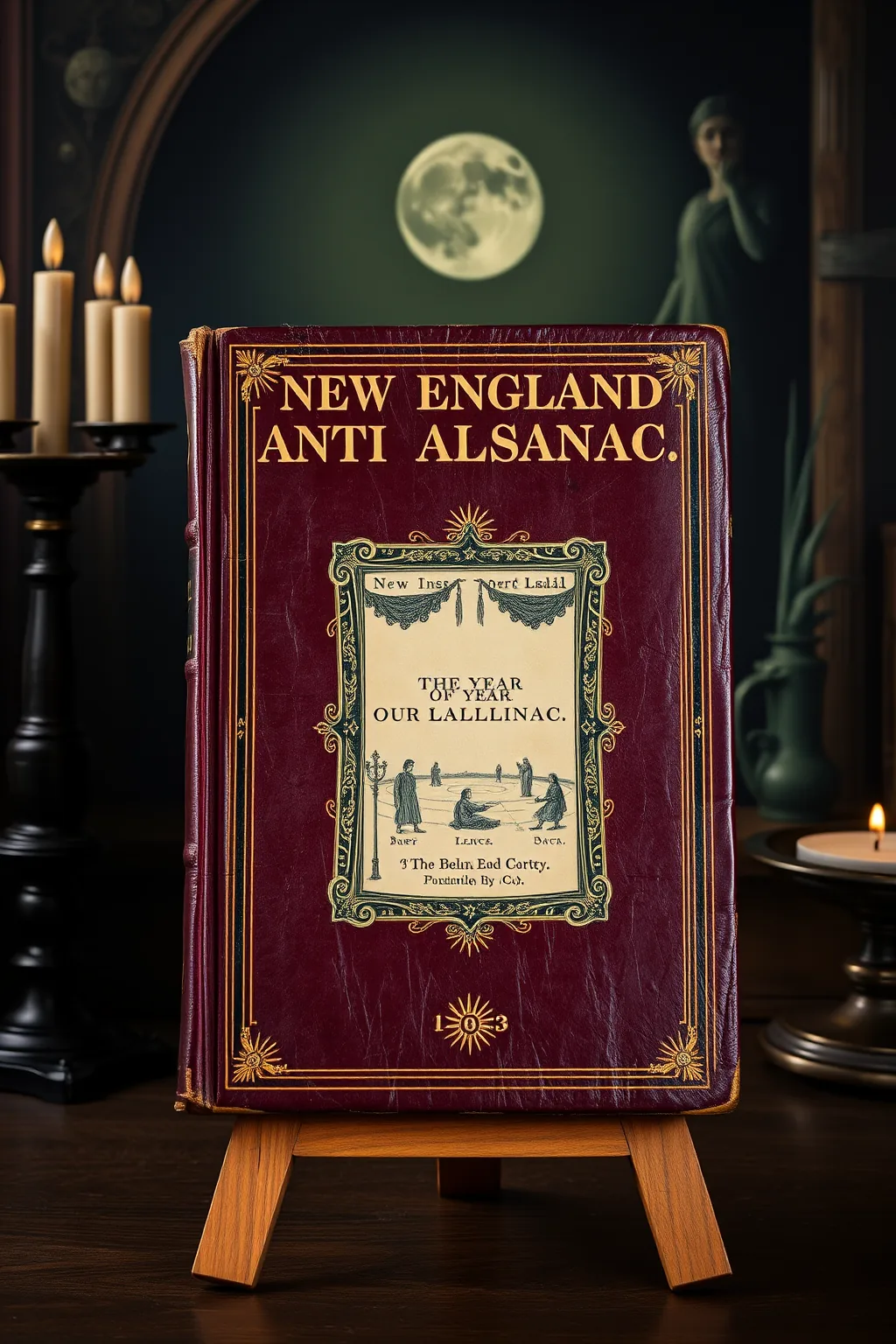
New England Anti Masonic Almanac For The Year Of Our Lord 1833 1832
 82
82

New England Anti Masonic Almanac For The Year Of Our Lord 1833 1832


Celeste Moreau (Divination & Symbolism Reviewer) — This 'New England Anti Masonic Almanac' is a fascinating primary source, offering profound insights into the esoteric anxieties of the early American Republic. Its critique of Freemasonry, while overtly political, carries a palpable undercurrent of symbolic interpretation and fear of hidden knowledge. The almanac's strength lies in its ability to expose the vernacular of suspicion and the ways in which societal fears were codified and distributed. It’s an invaluable resource for anyone studying the intersection of religion, politics, and occultism in this formative period. Highly recommended for historical researchers and practitioners interested in the roots of societal distrust.
📝 Description
82
The 1833 New England Anti Masonic Almanac contains coded critiques of Freemasonry.
Published for the year 1833, this almanac from New England presents a critique of Freemasonry through the guise of a calendar. It uses veiled symbolism and esoteric suspicion to comment on the perceived secrecy and rituals of clandestine organizations. The almanac reflects societal anxieties prevalent in early 19th-century America.
Its pages reveal how fears of hidden influence and moral decline were communicated to the public. This document offers insight into the historical construction of conspiracy theories and the shaping of public discourse through fear. It is a valuable resource for those studying American occultism and the history of secret societies.
The almanac's structure, while appearing conventional, hides a more complex message for its readers. It invites deciphering coded language and understanding the undercurrents of belief systems that influenced the era. The text is a specific example of how anxieties were articulated and disseminated during a period of significant social change.
This almanac fits within a tradition of popular literature that employed esoteric or symbolic language to address social and political concerns. While not a formal grimoire or treatise, its use of veiled symbolism and suspicion towards secret societies aligns with broader currents of esoteric thought that often viewed established institutions with skepticism. It reflects a popular engagement with hidden meanings and anxieties about unseen forces, common in periods of social upheaval and the proliferation of alternative belief systems. The text demonstrates how esoteric modes of communication could be adapted for a wider audience to express dissent or unease.
💡 Why Read This Book?
Uncover the historical roots of conspiracy thinking and societal anxieties surrounding secret societies. This almanac provides a rare glimpse into the anti-Masonic movement's esoteric undertones and symbolic language. Ideal for seekers of hidden knowledge, historical scholars, and those interested in the occult influences on early American culture. It offers a unique perspective on how fear and suspicion were woven into the fabric of public discourse.
⭐ Reader Reviews
Honest opinions from readers who have explored this book.
❓ Frequently Asked Questions
What is the primary focus of this almanac?
The primary focus is the critique and denunciation of Freemasonry, framed within the context of the early 19th-century anti-Masonic movement in New England.
Is this book for Masons or anti-Masons?
This almanac is decidedly anti-Masonic, offering a perspective critical of Masonic practices and perceived influence.
What kind of esoteric content can be found?
While not overtly occult, the almanac uses symbolic language and appeals to moral and spiritual concerns, reflecting esoteric anxieties of the time regarding hidden power structures.
What historical period does this document represent?
It represents the early 19th century, specifically the year 1833, during a period of significant social and political upheaval in the United States.
Is this a primary or secondary source?
This is a primary source, offering direct insight into the beliefs and rhetoric of the anti-Masonic movement of its time.
🔮 Key Themes & Symbolism
The Shadow of Secrecy
This almanac illuminates the profound societal fear surrounding secret societies and their perceived influence in the early 19th century. It explores how the veil of secrecy surrounding Freemasonry fueled suspicion, conspiracy theories, and moral panics. The text implicitly argues that hidden rituals and oaths represent a perversion of public trust and spiritual integrity, positioning anti-Masonic sentiment as a defense of transparency and moral order against unseen, potentially corrupting forces.
Symbolism of Distrust
Beyond its overt anti-Masonic rhetoric, the almanac is rich with symbolic language that reflects the era's esoteric anxieties. It employs coded references and appeals to moral decay, suggesting that Masonic practices are imbued with a hidden, potentially malevolent symbolism. Readers are invited to decipher these veiled critiques, understanding how public discourse was shaped by a language of suspicion and the interpretation of symbols as indicators of clandestine agendas and spiritual compromise.
Moral and Spiritual Vigilance
The almanac functions as a call for moral and spiritual vigilance in the face of perceived external threats. It positions itself as a guardian of public virtue, urging readers to be aware of the 'dark arts' of secret societies and their potential to undermine religious and civic institutions. This theme underscores the era's deep-seated anxieties about the erosion of traditional values and the need for active resistance against forces deemed spiritually corrupting or socially destructive.
💬 Memorable Quotes
Direct passages from the work, attributed to the author.
“Where shadows gather, truth retreats.”
— This aphorism highlights the perceived danger of clandestine organizations, implying that secrecy inherently obscures truth and fosters deception.
“Seek not the hidden hand that guides the helm.”
— This cautionary phrase advises against investigating or trusting unseen powers that manipulate societal affairs, urging a return to visible, accountable leadership.
“Light is the enemy of that which thrives in darkness.”
— This powerful statement positions open knowledge and transparency as the antithesis of secret societies, suggesting that their existence is inherently opposed to societal well-being.
💡 Key Ideas
Editorial paraphrase of the work's core concepts — not direct quotes.
Beware the silent vow, for it binds the soul.
This quote warns against the hidden commitments of secret societies, suggesting they compromise personal integrity and spiritual freedom.
The craft that hides its face, betrays its faith.
This line directly criticizes Freemasonry, suggesting that their secrecy is a sign of moral or spiritual failing, a betrayal of open principles.
🌙 Esoteric Significance
Tradition
While not directly aligned with a specific esoteric tradition like Hermeticism or Kabbalah, this almanac draws heavily from the broader currents of popular esotericism and occult suspicion prevalent in the early 19th century. It reflects anxieties about hidden knowledge, secret power structures, and the perceived 'dark arts' wielded by clandestine groups, echoing themes found in folk magic and moralistic interpretations of secret societies.
Symbolism
The symbolism here is largely one of inversion and accusation. Freemasonry itself is presented as a system of corrupt symbolism, with its rituals and signs interpreted as evidence of moral decay and hidden agendas. The almanac uses symbolic language to evoke fear of the unseen, portraying Masonic secrecy as a 'shadow' that eclipses 'light,' and hidden hands as manipulators of societal fate, thus appropriating symbolic discourse for its own polemical ends.
Modern Relevance
The almanac's relevance today lies in its prescient exploration of societal anxieties surrounding secrecy, power, and the spread of misinformation. The themes of distrust in institutions, the construction of conspiracy narratives, and the use of symbolic language to shape public opinion remain potent in the digital age. Understanding this historical manifestation of anti-Masonic sentiment offers valuable context for analyzing contemporary fears and the dynamics of group identity versus perceived external threats.
👥 Who Should Read This Book
This almanac is essential for historians of American Freemasonry and secret societies, offering a critical primary source for understanding the anti-Masonic movement. Scholars of American religious history and cultural studies will find value in its depiction of societal anxieties and the dissemination of popular beliefs. For esoteric practitioners and seekers, it provides a fascinating look into how occult suspicions and moral panics were articulated, offering a historical lens on the human fascination with hidden power and secret knowledge.
📜 Historical Context
The 'New England Anti Masonic Almanac For The Year Of Our Lord 1833' emerges from a tumultuous period in American history, marked by fervent religious revivalism, the rise of political factions, and widespread suspicion of organized power. The anti-Masonic movement, peaking in the 1820s and 1830s, was fueled by a potent mix of genuine concern over Masonic influence, populist distrust of elites, and the pervasive anxieties of a young nation still forging its identity. The almanac reflects this climate, serving as a propaganda tool that disseminated anti-Masonic sentiment through accessible formats like calendars and popular literature. It tapped into a public discourse already wary of secret societies and their perceived threat to democratic ideals and moral order, a discourse often intertwined with religious and esoteric beliefs about hidden forces.
📔 Journal Prompts
Reflect on a time you felt suspicion towards a group or organization due to their perceived secrecy. What were the underlying fears?
How does the language of 'light' versus 'shadow' manifest in modern societal debates or media narratives?
Consider the role of symbolism in conveying complex ideas and emotions. How can symbols be both useful and misleading?
What parallels can you draw between the anti-Masonic fervor of the 1830s and contemporary conspiracy theories?
Explore the concept of 'public trust' and how it is maintained or eroded by transparency (or lack thereof) in institutions.
🗂️ Glossary
Almanac
A publication containing a calendar of events, astronomical data, and other miscellaneous information, often with a predictive or advisory tone.
Anti-Masonic
Opposed to Freemasonry, typically criticizing its secrecy, rituals, and perceived influence.
Esoteric
Intended for or likely to be understood by only a small number of people with a specialized knowledge or interest.
Clandestine
Kept secret or done secretively, especially because illicit.
Rhetoric
The art of effective or persuasive speaking or writing, especially the use of figures of speech and other compositional techniques.
This book appears in 2 collections
🔮 Readers Also Liked
Browse all →








From the “Secret Societies” Collection
View all →




More Free Freemasonry & Secret Societies Books
View all →