New England Anti Masonic Almanac For The Year Of Our Lord 1832 1831
 79
79

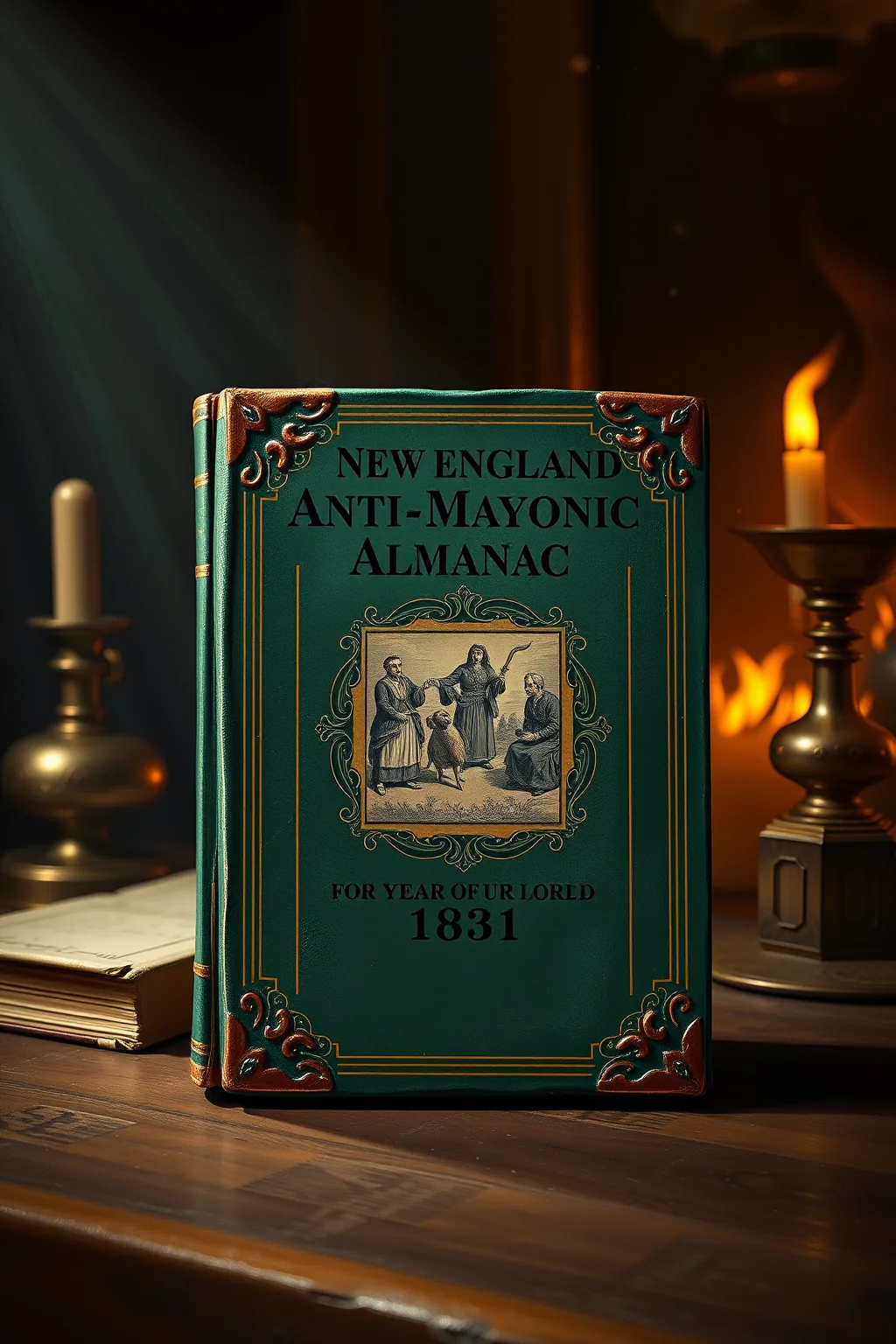
New England Anti Masonic Almanac For The Year Of Our Lord 1832 1831


Ophelia Vance (Mystical Literature Reviewer) — This 'New England Anti Masonic Almanac' is a treasure trove for scholars of esotericism and secret societies. While ostensibly a critique of Freemasonry, its true value lies in the subtle, almost alchemical, infusion of astrological insights and societal anxieties that reveal a potent undercurrent of mystical thought prevalent in 1830s New England. The anonymous author, with a sharp pen and an eye for symbolic meaning, crafts a document that transcends simple polemic, offering a fascinating window into the era's spiritual landscape. Ideal for researchers of American occultism and those interested in the historical perception of esoteric orders.
📝 Description
79
The 1832 New England Anti Masonic Almanac reveals fervent anti-Masonic sentiment and mystical beliefs of early America.
Published anonymously for 1832, this almanac captures the intense anti-Masonic feeling prevalent in early 19th-century New England. It criticizes Freemasonry, detailing perceived secret rituals and hierarchies. More than just political discourse, the almanac integrates the era's spiritual outlook. It includes astrological forecasts and traditional almanac information alongside subtle criticisms of secret societies. The text suggests these groups held hidden sway over society and the wider universe.
This work is a valuable primary resource for anyone studying the connections between religion, politics, and occult interests in the early United States. It prompts readers to uncover its complex messages and consider the implications of secret knowledge and social direction. It offers a look into the period's anxieties about hidden power structures.
This almanac sits within a tradition of popular esoteric literature that blended practical information with mystical speculation. It reflects a time when astrological charts and folk beliefs were commonly integrated into everyday life and public discourse. The anti-Masonic current itself often drew on ideas of hidden conspiracies and secret, malevolent forces, common tropes in certain esoteric and conspiratorial writings of the era. Its anonymous nature also aligns with a practice where authors might disseminate controversial or unconventional ideas without direct personal attribution.
💡 Why Read This Book?
Uncover the hidden spiritual currents of 19th-century America. This almanac provides a rare, critical lens on Freemasonry, interwoven with astrological lore and veiled esoteric commentary. It's essential for seekers of historical occultism, scholars of secret societies, and anyone fascinated by the intersection of faith, politics, and hidden knowledge in the early United States.
⭐ Reader Reviews
Honest opinions from readers who have explored this book.
❓ Frequently Asked Questions
What is the primary focus of this almanac?
The primary focus is the anti-Masonic sentiment of early 19th-century New England, presented through the lens of an almanac, incorporating astrological observations and critiques of Freemasonry.
Who was the author of this almanac?
The author is unknown, adding to the mystique and offering a collective voice of anti-Masonic sentiment rather than a single individual's perspective.
What kind of esoteric themes are present?
While critical of Freemasonry, the almanac subtly incorporates astrological predictions, cyclical timekeeping, and hints at hidden societal influences, reflecting the era's mystical worldview.
Is this book suitable for beginners in occult studies?
It is best suited for those with some background knowledge or a keen interest in historical occultism and secret societies, as it requires careful interpretation of its context and veiled language.
What historical period does this almanac cover?
It specifically covers the year of our Lord 1832, with references likely drawing from the preceding year, 1831, reflecting the immediate socio-political and spiritual climate.
🔮 Key Themes & Symbolism
The Shadow of the Square and Compasses
This theme looks at the pervasive fear and suspicion surrounding Freemasonry in early America. The almanac acts as a conduit for this public anxiety, framing Masonic rituals and structures as potentially subversive, not just politically, but spiritually. It explores the perception of hidden knowledge being hoarded, and the societal implications of secret oaths and allegiances. The critique goes beyond surface-level accusations, hinting at deeper concerns about spiritual corruption and the manipulation of cosmic or societal forces.
Astrological Currents and Societal Cycles
Intertwined with its anti-Masonic stance, the almanac utilizes astrological observations and the traditional almanac format to frame events and societal trends within a larger cosmic order. This reflects a common belief of the era where celestial movements were seen as directly influencing earthly affairs and human destiny. The almanac's predictions, however veiled, suggest an attempt to decode these celestial messages and apply them to the perceived machinations of secret societies, offering a combination of divination and social commentary.
Veiled Symbolism and Esoteric Critique
Beyond overt condemnation, the almanac employs subtle symbolism and coded language, typical of esoteric discourse. Readers are invited to look beyond the literal to understand the underlying spiritual and philosophical critiques being leveled. The text may contain allegorical references, veiled allusions to biblical prophecies, or numerological interpretations, all serving to imbue the anti-Masonic message with a deeper, more mystical resonance. This approach reveals an author attuned to the power of metaphor and hidden meaning in shaping public perception and understanding.
💬 Memorable Quotes
Direct passages from the work, attributed to the author.
“Where shadows lengthen, wisdom may lie concealed.”
— This hints at the idea that true knowledge or understanding might be found in unconventional or hidden places, perhaps even within the very secrecy being criticized.
“The year turns, and with it, the ebb and flow of hidden tides.”
— This references the cyclical nature of time (almanac theme) and suggests that societal forces, possibly linked to secret societies, are subject to these natural cosmic or historical rhythms.
“Beware the craftsman who works only by secret light.”
— A metaphorical warning against those who operate outside public view or transparency, implying their work may be flawed or dangerous.
“The compass points not always towards truth's true north.”
— A pointed critique of Masonic symbolism, suggesting that their guiding principles or direction may be misguided or lead to falsehood.
💡 Key Ideas
Editorial paraphrase of the work's core concepts — not direct quotes.
The stars above bear witness to earthly machinations.
This quote suggests a belief in celestial observation of human affairs, implying that hidden actions within secret societies are not beyond divine or cosmic scrutiny.
🌙 Esoteric Significance
Tradition
This almanac aligns with the broader currents of folk esotericism and millenarian thought prevalent in early 19th-century America. It draws upon astrological traditions for predictive purposes and reflects a worldview where societal events are interpreted through a lens of divine or cosmic influence. The critique of Freemasonry can be seen as part of a larger historical trend of scrutinizing perceived secret knowledge and its potential for both illumination and corruption within various esoteric and religious traditions.
Symbolism
The core symbolism revolves around the critique of Masonic emblems, such as the square and compasses, suggesting they may not represent virtue but rather hidden agendas. The almanac likely employs celestial symbols (planets, constellations) to imbue its predictions and criticisms with cosmic authority. The very act of creating an almanac for a specific year is symbolic of charting time and destiny, a practice deeply rooted in ancient esoteric traditions seeking to understand and work through the cycles of existence.
Modern Relevance
In an age still grappling with the influence of powerful organizations and the dissemination of information, the 'New England Anti Masonic Almanac' offers a historical parallel to contemporary concerns about transparency and hidden power. Its exploration of how societal anxieties are channeled through critique of secret groups and the use of symbolic language remains relevant. For modern esotericists, it provides a valuable case study in the historical evolution of anti-secret society sentiment and the integration of astrological and folk beliefs into public discourse.
👥 Who Should Read This Book
This almanac is a compelling read for several audiences. **Occult Historians and Scholars of Secret Societies** will find it an invaluable primary source, offering direct insight into anti-Masonic sentiment and the era's esoteric worldview. **Seekers of Esoteric Americana** will appreciate its combination of political critique, astrological lore, and veiled symbolism, revealing the spiritual undercurrents of early American life. **Practitioners of Divination and Astrologers** might find its historical use of celestial observation and calendrical prediction insightful. **General Readers** with a curiosity for forgotten history and the complex interplay between societal fears and esoteric beliefs will also be captivated by its rich, albeit critical, perspective.
📜 Historical Context
The early 19th century in New England was a period of intense religious fervor, burgeoning democracy, and significant social upheaval. The rise of the Anti-Masonic Party reflected a deep-seated suspicion of secret societies, particularly Freemasonry, which was perceived by many as an exclusive, elitist, and potentially dangerous organization operating outside the purview of democratic accountability. This period saw a proliferation of almanacs, which served as vital sources of information, entertainment, and cultural expression for a wide audience, often blending practical advice with astrological predictions and social commentary. This particular almanac emerges from this fertile ground, utilizing the popular format to disseminate its anti-Masonic message and reflect the era's anxieties about hidden power structures and their perceived influence on both earthly and cosmic order.
📔 Journal Prompts
How does the concept of 'hidden knowledge' manifest in today's society, and what parallels can be drawn to the anti-Masonic sentiments of 1832?
Reflect on a time you felt suspicion towards an organization or group due to their perceived secrecy. What were your underlying concerns?
If you were to create an almanac today critiquing a modern societal trend, what themes and symbols would you incorporate?
Consider the astrological symbols or cycles mentioned in the almanac. How might these have influenced the author's perception of Freemasonry?
What does the almanac's critique of the 'compass' suggest about the author's understanding of guidance, direction, and morality?
🗂️ Glossary
Almanac
A publication containing astronomical and meteorological information, often including calendars, tide tables, and other useful data, traditionally used for agricultural and navigational purposes, but also for social commentary.
Esotericism
Belief systems, practices, and knowledge that are typically intended for or understood by only a small number of people with specialized knowledge or initiation.
Anti-Masonic
Relating to or characterized by opposition to Freemasonry, often fueled by beliefs that the organization is secretive, anti-Christian, or a threat to democratic values.
Astrology
The study of the movements and relative positions of celestial bodies interpreted as having an influence on human affairs and the natural world.
Clandestine
Kept secret or done secretively, especially because illicit or not approved of; implying secrecy and often a degree of illegitimacy or impropriety.
This book appears in 2 collections
🔮 Readers Also Liked
Browse all →







From the “Secret Societies” Collection
View all →







More Free Freemasonry & Secret Societies Books
View all →