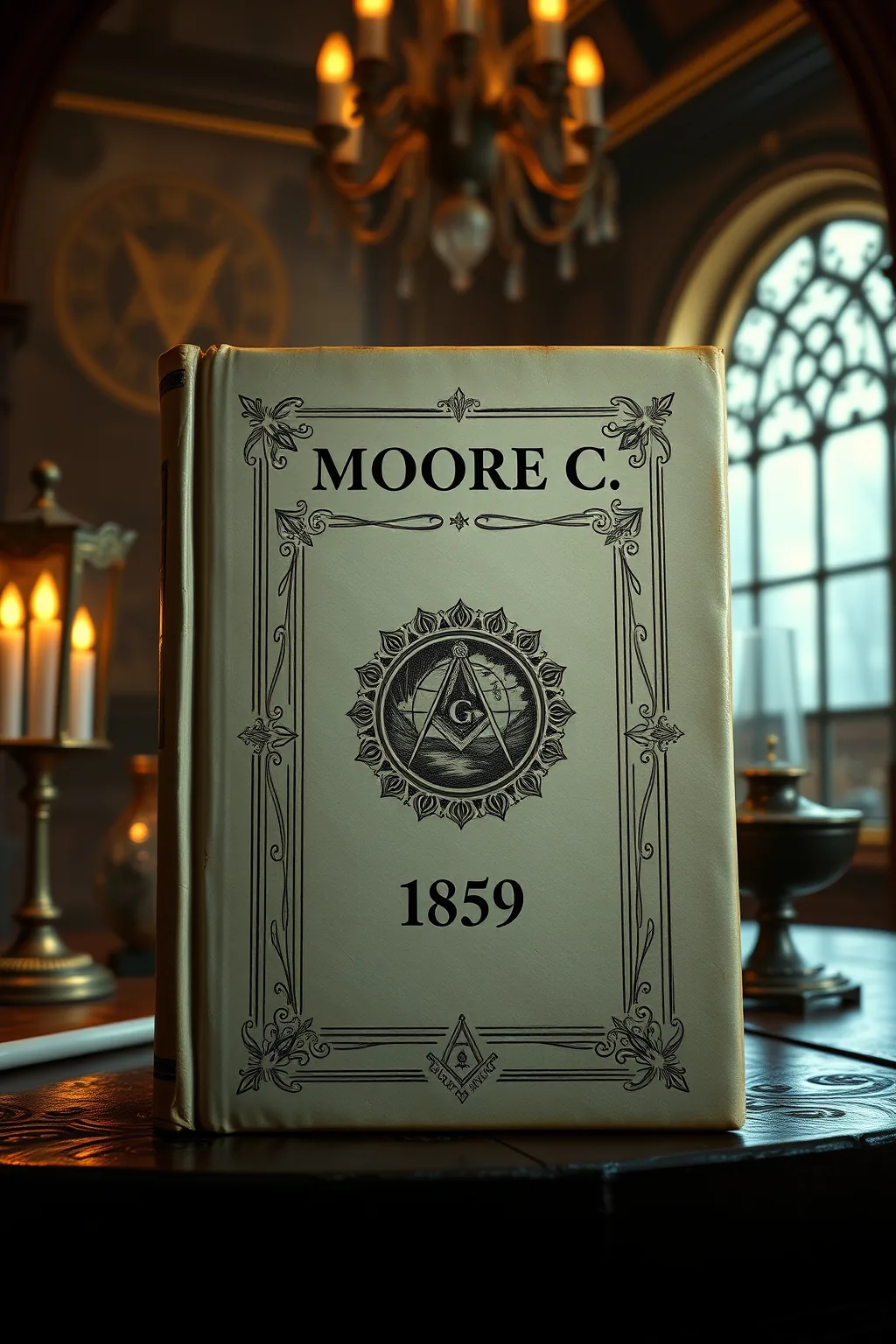
Moore C The Craftsman And Freemasons Guide 1859
 79
79

Moore C The Craftsman And Freemasons Guide 1859


Aurelia Blackwood (Occult Philosophy Critic) — 'The Craftsman and Freemasons Guide' is a compelling artifact for anyone delving into the esoteric dimensions of Freemasonry. Published in 1859, it offers a window into the symbolic language and philosophical underpinnings that were paramount during its era. Its strength lies in its earnest portrayal of Masonic principles as pathways to moral and spiritual growth, framed through rich allegory. While the author remains anonymous, the text itself speaks with authority, revealing the hidden knowledge sought by serious students and practitioners. It’s an indispensable resource for understanding the historical esoteric landscape of the Craft.
📝 Description
79
Published in 1859, 'The Craftsman and Freemasons Guide' examines the esoteric dimensions of Masonic ritual.
This 1859 text, attributed to an unknown author, aims to illuminate the esoteric principles within Freemasonry. It moves beyond simple procedural descriptions to discuss the philosophical ideas that underpin the fraternity. The book details the symbolism, allegorical meanings, and moral teachings that have informed Masonic practice over generations. Readers will find discussions of hidden knowledge, geometric concepts, and the spiritual framework of the Brotherhood. It speaks to both active Masons seeking a deeper understanding and those outside the order curious about its inner workings.
The guide presents Freemasonry as a system where everyday life connects to the sacred. It frames personal development through the symbolic lens of the operative stonemason's tools. For individuals interested in uncovering the concealed significances within Masonic traditions, this book provides a difficult but illuminating route to greater insight and recognition of its lasting impact.
This guide emerges from the 19th-century flourishing of esoteric thought, particularly within fraternal orders like Freemasonry. It situates Masonic teachings within a broader context of Hermeticism and Neoplatonism, traditions that seek hidden correspondences between the material and spiritual worlds. The book's focus on symbolism and allegory aligns with the esoteric method of interpreting texts and rituals for their deeper, often spiritual, meanings. It reflects a period where secret societies were often seen as repositories of ancient wisdom, offering a path to personal transformation through structured degrees and symbolic instruction.
💡 Why Read This Book?
Uncover the veiled symbolism and philosophical depth of Freemasonry. This 1859 guide offers a unique glimpse into the esoteric traditions and moral teachings that have shaped the Craft. Ideal for seekers of hidden knowledge, Masonic scholars, and practitioners wishing to enrich their understanding of ritual and allegory. Explore the spiritual architecture of the Brotherhood and embark on a journey of self-discovery.
⭐ Reader Reviews
Honest opinions from readers who have explored this book.
❓ Frequently Asked Questions
What is the primary purpose of 'The Craftsman and Freemasons Guide'?
This guide serves as an esoteric manual, illuminating the symbolic language, philosophical teachings, and moral lessons inherent in Freemasonry. It aims to deepen understanding beyond superficial ritual.
Is this book suitable for non-Masons?
Yes, while it details Masonic principles, its exploration of symbolism, allegory, and personal development offers valuable insights for anyone interested in comparative religion, philosophy, or esoteric traditions.
What historical period does this book represent?
The book originates from 1859, a period of significant intellectual and spiritual exploration within Freemasonry, reflecting Victorian-era interpretations of its ancient wisdom.
Does the book reveal secret Masonic rituals?
While it delves into the symbolic meanings and philosophical aspects of Masonic practices, it does not typically expose verbatim secret rituals, focusing instead on their esoteric interpretations.
Who is the intended audience for this guide?
The primary audience includes Freemasons seeking a deeper understanding of their fraternity, as well as scholars, students of esotericism, and individuals interested in the historical and philosophical dimensions of secret societies.
🔮 Key Themes & Symbolism
The Architect's Divine Blueprint
This theme explores the concept of the Great Architect of the Universe as a cosmic designer, imbuing the physical world and human endeavors with divine order and purpose. The book interprets Masonic symbols as representations of this universal intelligence and the principles of creation, urging the craftsman to align their work and life with these sacred blueprints. It studies how the symbolic tools of the craft become metaphors for spiritual construction, guiding the individual towards building a virtuous character and a more harmonious existence, reflecting the divine order in their own microcosm.
The Alchemical Journey of Self-Transformation
Within the framework of Freemasonry, 'The Craftsman and Freemasons Guide' subtly alludes to an alchemical process of spiritual refinement. The rituals and symbols are presented not merely as external forms but as catalysts for internal transformation. The rough ashlar being hewn into a perfect ashlar mirrors the alchemical purification of base metals into gold. This theme emphasizes the Masonic quest for enlightenment as a journey of self-discovery, where trials and lessons serve to transmute ignorance and vice into wisdom and virtue, akin to the Great Work of spiritual alchemy.
The Unveiling of Sacred Geometry and Cosmic Harmony
This theme highlights the profound connection between Masonic symbolism and the principles of sacred geometry, which were believed to underpin the very fabric of the cosmos. The book suggests that the dimensions, proportions, and arrangements of Masonic symbols are not arbitrary but are derived from ancient understandings of universal laws and celestial harmony. By studying these geometric forms, the craftsman is invited to perceive the underlying order of the universe, recognizing that the microcosm of the Lodge reflects the macrocosm of the cosmos, fostering a sense of unity and interconnectedness.
💬 Memorable Quotes
Direct passages from the work, attributed to the author.
“The square ensures our actions are just and true.”
— Here, the square represents fairness, honesty, and the principle of acting with probity. It signifies the importance of conducting oneself with impartiality and according to principles of justice in all dealings.
“Wisdom is the light that guides the craftsman's hand.”
— This emphasizes the intellectual and spiritual pursuit of knowledge as essential for skillful work and moral development. True craftsmanship, in this context, requires not only manual dexterity but also profound understanding.
💡 Key Ideas
Editorial paraphrase of the work's core concepts — not direct quotes.
The plumb-line teaches us to walk upright.
This quote emphasizes the moral imperative of integrity and righteousness, suggesting that the Masonic tool of the plumb-line symbolizes the need for ethical conduct and adherence to divine law in all aspects of life.
The level reminds us of equality amongst men.
This quote points to the Masonic ideal of brotherhood and the inherent worth of every individual, regardless of social standing. It highlights the concept of universal fraternity and mutual respect.
Through labor, we build not just structures, but character.
This quote expresses the dualistic nature of Masonic work, where physical construction serves as a metaphor for the ongoing process of moral and spiritual self-improvement and the cultivation of virtue.
🌙 Esoteric Significance
Tradition
This guide is deeply rooted in the Western Esoteric Tradition, particularly drawing upon Hermetic philosophy, Neoplatonism, and the symbolic language of alchemy and Kabbalah, as interpreted through the lens of Freemasonry. It positions Masonic ritual and symbolism as a system of spiritual instruction aimed at the inner transformation of the individual, mirroring the Great Work of achieving enlightenment and spiritual perfection.
Symbolism
The book intricately decodes Masonic symbols, viewing them as keys to unlocking profound truths. The tools of the operative craftsman—the square, compass, plumb-line, level—are reinterpreted as allegorical instruments for moral rectitude, divine proportion, uprightness, and equality. The geometric patterns and architectural motifs within Masonic lore are presented as manifestations of sacred geometry, reflecting cosmic order and divine intelligence, guiding the practitioner towards understanding universal principles.
Modern Relevance
In contemporary times, 'The Craftsman and Freemasons Guide' remains relevant for its exploration of timeless themes: personal growth, ethical living, and the search for meaning through symbolism. It offers a valuable perspective for modern practitioners seeking to deepen their understanding of Masonic philosophy and for scholars interested in the historical evolution of esoteric thought. Its emphasis on introspection and the pursuit of wisdom through allegory continues to resonate with those exploring spiritual paths outside conventional religious frameworks.
👥 Who Should Read This Book
This guide is a treasure for the dedicated Freemason seeking to explore the philosophical depths of their fraternity beyond the ritualistic surface. It will captivate scholars of secret societies, comparative religion, and Western esotericism, offering historical context and symbolic interpretation. Individuals drawn to the study of allegory, sacred geometry, and the alchemical path of self-transformation will find clear insights. For the earnest seeker of hidden knowledge and personal enlightenment, this book provides a venerable, albeit challenging, roadmap through the symbolic range of an ancient and enduring tradition.
📜 Historical Context
Published in 1859, 'The Craftsman and Freemasons Guide' emerges from a vibrant period of Masonic expansion and intellectual engagement in the Victorian era. This era saw a significant interest in the esoteric, occult, and philosophical dimensions of Freemasonry, moving beyond its purely social or charitable aspects. Writers and thinkers of the time often sought to interpret Masonic symbolism through lenses of ancient mystery traditions, Hermeticism, and Neoplatonism. The book reflects this trend, presenting Masonic tenets not just as moral precepts but as profound allegories for spiritual development and cosmic understanding. Its anonymous authorship is typical of many works from this period, often disseminated to share knowledge within the fraternity without direct attribution, preserving an air of collective wisdom and tradition.
📔 Journal Prompts
Reflect on how the symbol of the plumb-line in Freemasonry can guide your daily actions towards integrity. How do you measure your own uprightness?
Consider the 'rough ashlar' and 'perfect ashlar' as metaphors for your personal journey. What 'chiseling' and 'polishing' does your character require?
Explore the concept of the 'Great Architect of the Universe' as presented in Masonic lore. What does this symbol of divine order mean to you personally?
How does the symbolism of the level in Freemasonry inform your understanding of equality and brotherhood in your community and beyond?
Journal about a time when you experienced a profound moment of 'illumination' or 'enlightenment' through study or contemplation, akin to the craftsman's pursuit of wisdom.
🗂️ Glossary
Ashlar
In Freemasonry, an 'ashlar' refers to a stone. The 'rough ashlar' represents the uncultivated state of man, while the 'perfect ashlar' symbolizes the improved state achieved through education, moral discipline, and Masonic instruction.
Allegory
A story, poem, or picture that can be interpreted to reveal a hidden meaning, typically a moral or political one. Masonic teachings heavily utilize allegory to convey complex spiritual and ethical principles.
Symbolism
The use of symbols to represent ideas and qualities by giving them symbolic meanings that are different from their literal sense. Freemasonry is rich in symbolic language and practices.
Hermeticism
A religious, philosophical, and esoteric tradition based on writings attributed to Hermes Trismegistus. It emphasizes principles like 'As above, so below,' and the interconnectedness of all things.
Neoplatonism
A philosophical system originating with the philosopher Plotinus in the 3rd century AD, based on Plato's teachings. It emphasizes the concept of 'The One' as the ultimate source of all existence and the soul's journey towards it.
This book appears in 2 collections
🔮 Readers Also Liked
Browse all →








From the “Secret Societies” Collection
View all →


More Free Freemasonry & Secret Societies Books
View all →