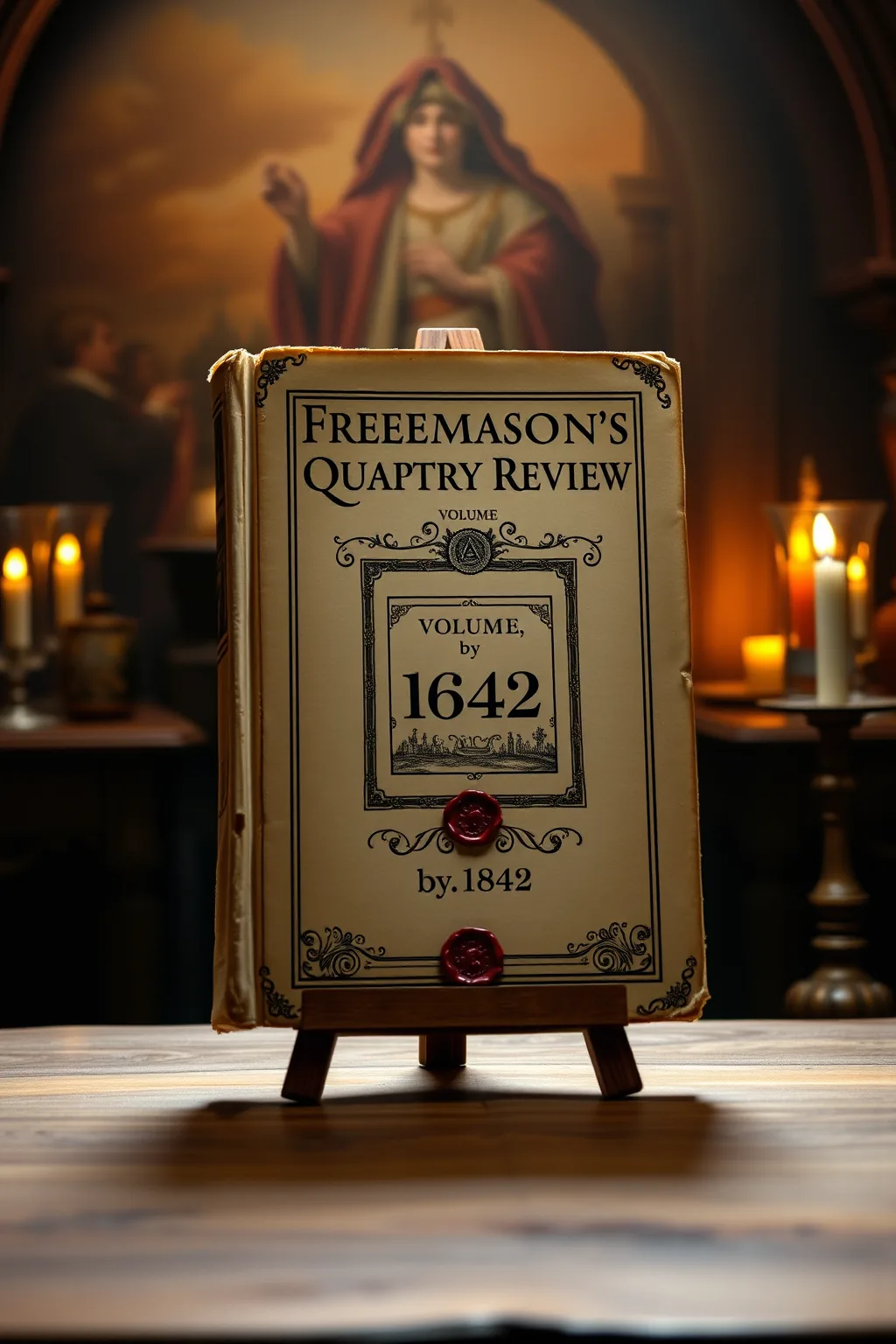
Freemasons Quarterly Review (mag) 1842
 76
76

Freemasons Quarterly Review (mag) 1842

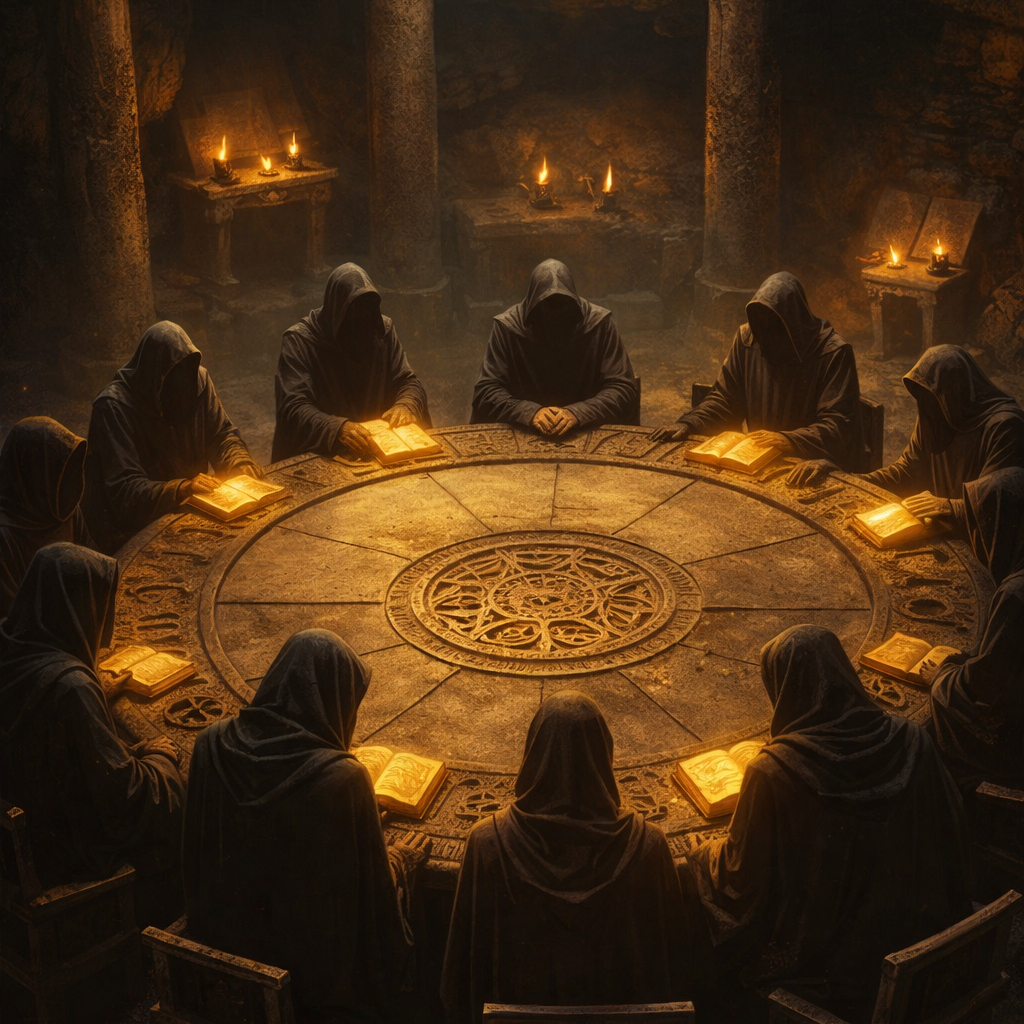

Celeste Moreau (Divination & Symbolism Reviewer) — The Freemasons Quarterly Review, 1842, is a treasure trove for serious students of esoteric traditions. This volume masterfully unpacks the symbolic language of Freemasonry, revealing its profound philosophical and spiritual dimensions. The articles here offer not just historical context but direct access to the intellectual currents that shaped Masonic thought, emphasizing allegory, geometry, and the pursuit of inner illumination. Its strength lies in its scholarly yet accessible approach to complex ideas, making it ideal for those seeking to understand the 'why' behind Masonic practices. A vital read for practitioners and scholars alike interested in the lineage of Western esotericism.
📝 Description
76
The 1842 volume of the Freemasons Quarterly Review offers a direct look at Masonic thought from the mid-19th century.
This collection from the Freemasons Quarterly Review, published in 1842, presents Masonic discourse from a specific historical moment. It contains articles discussing the philosophical aspects of Freemasonry, the symbolic meaning within its rituals, and the traditions that shaped the fraternity. The writings address concepts such as the "Great Architect's design," celestial mechanics, and the moral guidance provided to Masons. Readers will find discussions on the allegorical language and symbolic structures that are central to Masonic teachings. The volume aims to provide understanding of these elements for those interested in the order's intellectual and spiritual dimensions. It touches upon the pursuit of moral improvement through the study of sacred geometry and symbolic lore, inviting both new and experienced members to engage with these topics.
Published in 1842, this volume of the Freemasons Quarterly Review belongs to a period where Masonic societies were actively articulating their philosophical and spiritual tenets. Esoteric traditions often seek hidden meanings within established systems, and Freemasonry, with its allegorical rituals and symbolic language, provided fertile ground for such interpretation. This review reflects an internal effort to document and explain these aspects, positioning Masonic practice within a broader quest for knowledge and self-understanding that characterized many 19th-century esoteric movements. It engaged with concepts that resonated with broader Hermetic, Neoplatonic, and alchemical ideas prevalent in esoteric circles of the time.
💡 Why Read This Book?
Unlock the esoteric heart of Freemasonry. This 1842 volume offers profound insights into its symbolism, philosophy, and spiritual teachings. Ideal for seekers of hidden knowledge, scholars of secret societies, and practitioners looking to deepen their understanding of ancient wisdom traditions. Discover the allegorical language and ethical frameworks that have guided initiates for centuries.
⭐ Reader Reviews
Honest opinions from readers who have explored this book.
❓ Frequently Asked Questions
What is the primary focus of the 1842 edition of the Freemasons Quarterly Review?
The 1842 edition primarily focuses on philosophical discussions, ritualistic interpretations, historical accounts, and the dissemination of Masonic knowledge, emphasizing the moral and spiritual development of its members through allegory and symbolism.
Is this review suitable for individuals new to Freemasonry?
While it offers foundational insights, the depth of discussion assumes some familiarity. However, its rich allegorical content can still be highly rewarding for inquisitive beginners willing to engage with symbolic language.
What historical period does this volume represent within Freemasonry?
This volume represents the mid-Victorian era, a period of significant growth and intellectual development within Freemasonry, where public engagement and philosophical exploration were prominent.
Does the review discuss specific Masonic rituals or degrees?
Yes, the review often delves into the symbolism and allegorical meanings inherent in various Masonic degrees and rituals, providing commentary and interpretation for initiates and scholars.
Can this publication be considered an esoteric text?
Absolutely. The Freemasons Quarterly Review frequently explores the deeper, symbolic, and philosophical layers of Freemasonry, which are inherently esoteric in nature, focusing on hidden meanings and spiritual truths.
🔮 Key Themes & Symbolism
The Architectonic Path: Geometry, Symbolism, and Divine Design
This theme explores the profound connection between sacred geometry, architectural principles, and the divine blueprint as understood within Masonic philosophy. It looks at how geometric forms and mathematical ratios are not merely aesthetic elements but represent cosmic order and the underlying structure of creation. Readers will discover how these principles are woven into Masonic rituals and teachings, serving as a visual and conceptual language for understanding the universe and humanity's place within it. The exploration emphasizes the idea that by understanding and applying these universal laws, the initiate can align themselves with the Great Architect's grand design, fostering spiritual growth and moral rectitude.
Allegory and the Inner Temple: Unveiling the Mysteries of the Soul
Central to Masonic teachings is the use of allegory as a vehicle for conveying profound spiritual truths. This theme examines how Masonic rituals and narratives function as allegorical journeys, guiding the aspirant towards self-discovery and the construction of their 'inner temple.' The articles within this volume illuminate the symbolic tools and operative principles used to excavate the hidden chambers of the soul, revealing the path to moral purification and intellectual enlightenment. It underscores the belief that true Masonic progress lies not in external actions but in the internal transformation and refinement of character, achieved through contemplation and the understanding of symbolic wisdom.
The Light of Knowledge: Tradition, Enlightenment, and Masonic Pedagogy
This theme investigates the role of tradition, the pursuit of enlightenment, and the pedagogical methods employed within Freemasonry. It highlights how the Fraternity serves as a conduit for ancient wisdom, transmitting essential knowledge across generations through carefully crafted rituals and teachings. The emphasis is on the Masonic quest for light—both intellectual and spiritual—as a means to dispel ignorance and elevate the human condition. Readers will find discussions on how Masonic education aims to foster critical thinking, ethical reasoning, and a deeper understanding of universal truths, preparing members to be agents of positive change in the world.
💬 Memorable Quotes
Direct passages from the work, attributed to the author.
“The square binds us to duty, the compass to our fellow man's embrace.”
— This highlights the core Masonic virtues: the square representing moral rectitude and adherence to principles, and the compass symbolizing fraternity and universal brotherhood.
“Within the Temple of the Heart, true masonry is wrought.”
— This profound statement points to the internal nature of Masonic work, asserting that genuine spiritual development and character building occur within the individual's inner self.
“Each symbol, a whispered secret of the cosmos.”
— This evocative line suggests that Masonic symbols are not mere decorations but contain deep, hidden meanings that reveal the fundamental truths of the universe.
💡 Key Ideas
Editorial paraphrase of the work's core concepts — not direct quotes.
Wisdom is the purest light, useful the path from darkness to understanding.
This quote emphasizes the Masonic pursuit of knowledge and enlightenment as the guiding force that dispels ignorance and leads to spiritual and intellectual clarity.
The pursuit of Truth is the eternal labour of the enlightened soul.
This quote underscores the ongoing and lifelong commitment required for spiritual and intellectual growth, framing the search for truth as the ultimate endeavor.
🌙 Esoteric Significance
Tradition
This volume is deeply rooted in the Western Esoteric Tradition, particularly within the lineage of Hermeticism, Kabbalah, and Christian Mysticism that has historically informed Freemasonry. It engages with concepts of divine geometry, the microcosm reflecting the macrocosm, and the alchemical transformation of the self. The texts explore the symbolic representation of spiritual truths, aiming to guide the aspirant through a process of inner illumination and moral perfection, mirroring the alchemist's quest for the philosopher's stone.
Symbolism
The core of the esoteric significance lies in its wide range of symbolism. Key symbols like the square, compass, plumb line, level, and the Blazing Star are not merely operative tools but potent allegorical representations of moral virtues, cosmic order, and spiritual aspirations. The Review unpacks the layered meanings of these symbols, revealing their connection to ancient traditions and their role in the initiate's journey toward understanding the divine and one's place within the universal architecture.
Modern Relevance
The esoteric insights presented in this 1842 Review remain remarkably relevant. In an age often characterized by superficiality and disconnection, these texts offer a profound exploration of introspection, ethical living, and the search for deeper meaning. The emphasis on symbolism as a language of the soul and the pursuit of inner transformation provides timeless wisdom for anyone seeking to cultivate wisdom, fraternity, and a more profound connection to the universe, transcending mere ritual into a lived philosophy.
👥 Who Should Read This Book
This volume is a compelling read for a diverse audience. **Scholars** of secret societies, Western esotericism, and Victorian intellectual history will find invaluable primary source material. **Masonic practitioners** seeking to deepen their understanding of the philosophical and allegorical dimensions of their Craft will discover rich insights. **Seekers of hidden knowledge** and those interested in the intersection of spirituality, philosophy, and symbolism will be captivated by its depth. Even **beginners** with an earnest curiosity about the historical and symbolic underpinnings of Freemasonry will find a rewarding, albeit challenging, exploration.
📜 Historical Context
Published in 1842, this volume of the Freemasons Quarterly Review emerges from the heart of the Victorian era, a period characterized by rapid industrialization, burgeoning scientific inquiry, and a profound societal interest in morality, spirituality, and intellectual pursuits. Freemasonry itself was a significant social and cultural force, attracting men from various strata of society eager to engage with its philosophical underpinnings and fraternal bonds. This era saw a keen interest in historical scholarship, the revival of ancient mysteries, and the exploration of symbolic languages as pathways to understanding. The Review served as a vital platform for Masonic discourse, debating the tenets of the Craft, sharing historical findings, and articulating the philosophical and ethical frameworks that guided its members. It reflects a time when the 'mysteries' were not solely relegated to the hidden corners of society but were actively discussed and interpreted within intellectual circles, seeking to reconcile ancient wisdom with the evolving modern world.
📔 Journal Prompts
Reflect on a symbol from your own life that holds deep personal meaning. What does it represent, and how did its significance develop?
Consider the concept of the 'inner temple.' How might one begin to construct or refine their own inner spiritual and moral architecture?
What does 'light' mean to you in both an intellectual and spiritual sense? How do you pursue it in your daily life?
How can the principles of geometry and order, as discussed in relation to Masonic symbolism, be applied to bring structure and harmony to personal challenges?
Explore the idea of allegory. Can you identify an everyday situation or story that carries a deeper, symbolic message beyond its literal narrative?
🗂️ Glossary
G.A.O.T.U.
Abbreviation for the Great Architect of the Universe, the supreme being or divine power recognized in Masonic philosophy, representing the creative and ordering principle of all existence.
Ashlar
A stone, either rough or perfect, used in building. In Masonry, the rough ashlar represents the unrefined state of man, while the perfect ashlar symbolizes the individual who has undergone moral and spiritual refinement.
Plumb Line
A tool used in operative masonry to ensure verticality. In speculative Masonry, it symbolizes uprightness of conduct and the principle of acting justly in all things.
Level
A tool used in operative masonry to establish a horizontal plane. In speculative Masonry, it represents equality and fraternity among all men, regardless of social standing.
Tessellated Pavement
A floor covering of checkered pattern, typically black and white, symbolizing the duality of existence (light and darkness, good and evil) and the harmonious balance required in life.
This book appears in 2 collections
🔮 Readers Also Liked
Browse all →




From the “Secret Societies” Collection
View all →






More Free Freemasonry & Secret Societies Books
View all →