Freemasonry and the Vatican - Léon de Poncins

 71
71

Freemasonry and the Vatican - Léon de Poncins

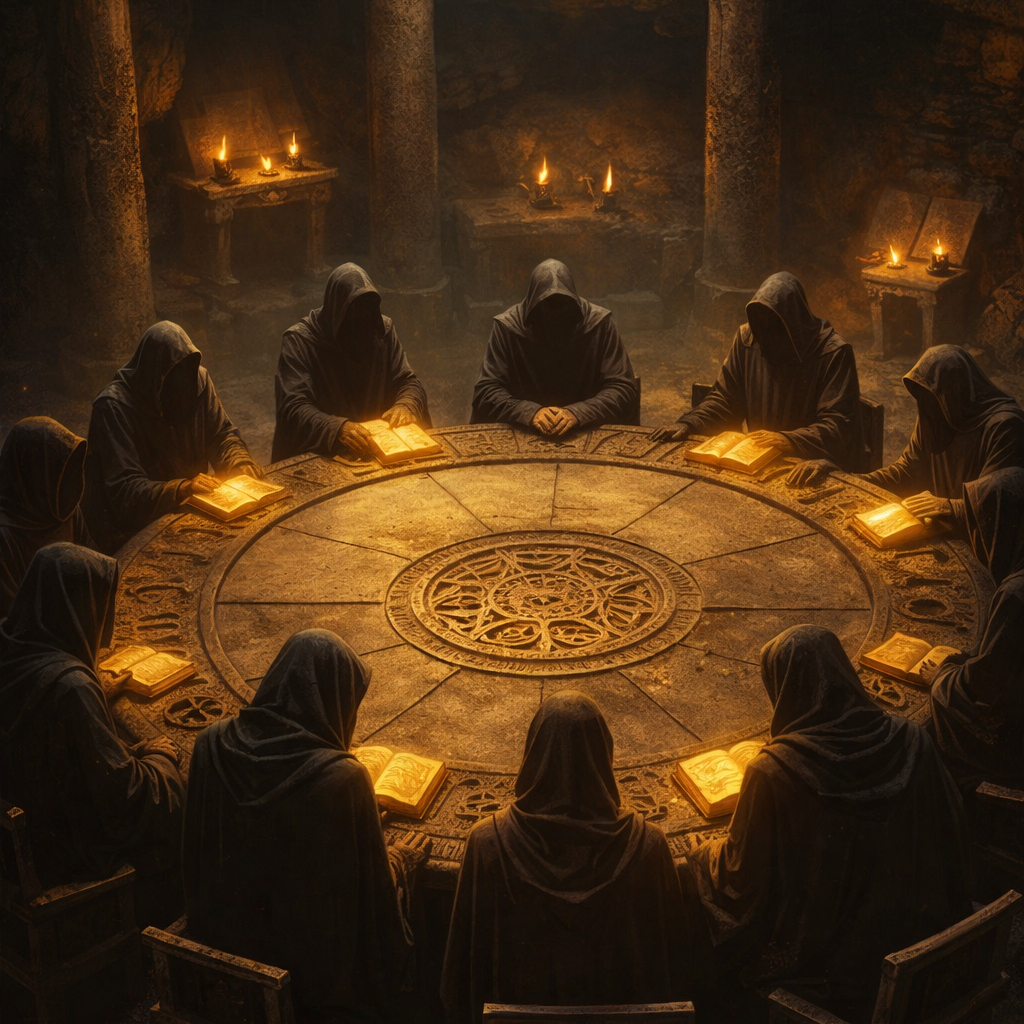

Silas Hawthorne (Hermetic Studies Editor) — This seminal work by Léon de Poncins offers an unparalleled glimpse into the esoteric battleground between Freemasonry and the Vatican. It transcends mere historical account, delving into the symbolic warfare and philosophical conflicts that define their alleged relationship. Poncins masterfully elucidates the hidden currents of power and spiritual influence at play, making this essential reading for serious students of secret societies and traditional politics. Its strength lies in its unwavering focus on the metaphysical dimensions, providing profound insights for initiates and scholars alike.
📝 Description
71
Léon de Poncins investigated alleged connections between Freemasonry and the Vatican.
This book examines the supposed historical and spiritual relationship between Freemasonry and the Catholic Church, as presented by Léon de Poncins. The author traces alleged secret communications and symbolic exchanges between these two powerful institutions across centuries. Poncins sought to expose what he viewed as hidden agendas influencing global power and spiritual direction.
The text focuses on the philosophical ideas, symbolic language, and spiritual consequences of this perceived clandestine dialogue. It invites readers to look beyond official statements and fraternal commitments to understand deeper currents. The work aims to illuminate a convergence of history and mysticism, offering a particular view on governance and spiritual quests.
This work fits within a tradition of esoteric literature that scrutinizes the hidden influences and symbolic languages of major institutions. Like other authors in this vein, Poncins sought to reveal underlying spiritual or occult forces shaping historical events. The book operates on the premise that official narratives obscure deeper, often secret, workings. It engages with the idea that significant historical movements are guided by concealed knowledge and coded symbolism, a common concern in occult and conspiracy literature.
💡 Why Read This Book?
This book is a vital key for seekers of hidden truths and scholars of esoteric history. It unravels the complex, often veiled, relationship between two of the world's most influential institutions. If you are drawn to the mysteries of secret societies, traditionalist thought, or the interplay of spiritual and temporal power, this work offers essential, often provocative, insights into the unseen architecture of influence.
⭐ Reader Reviews
Honest opinions from readers who have explored this book.
❓ Frequently Asked Questions
What is the primary focus of this book?
The book investigates the alleged historical and philosophical connections, as well as potential conflicts, between Freemasonry and the Vatican, exploring themes of hidden knowledge and spiritual influence.
Who is Léon de Poncins?
Léon de Poncins is an author known for his works on secret societies and traditionalist politics, often exploring esoteric themes and the hidden forces shaping historical events.
Is this book a factual historical account?
While drawing on historical events, the book delves into esoteric interpretations and symbolic analyses, aiming to reveal deeper, often hidden, truths rather than a purely empirical historical record.
What esoteric traditions are discussed?
The book engages with the esoteric traditions associated with Freemasonry and touches upon the spiritual and philosophical underpinnings of Catholicism, examining their potential interactions.
What is the 'Política Tradicional' mentioned in the subjects?
'Política Tradicional' refers to a perspective that emphasizes traditional political structures, spiritual authority, and enduring philosophical principles, often contrasting them with modern secular ideologies.
🔮 Key Themes & Symbolism
The Esoteric Dialogue
This theme explores the concept of a hidden, symbolic dialogue between Freemasonry and the Vatican, not necessarily through overt communication, but through shared archetypes, spiritual aims, and opposing worldviews. It suggests that beneath the surface of historical events lies a profound metaphysical exchange, where symbols and rituals from both traditions carry potent, often veiled, meanings that influence the spiritual and political landscape.
The Battle for the Soul of Civilization
This theme posits a fundamental conflict between the spiritual principles championed by traditional Vatican doctrine and the purportedly more material or secular aims of Freemasonry. It frames their relationship as an ongoing struggle for the allegiance of humanity's spiritual and intellectual life, where hidden forces and esoteric doctrines are wielded as potent weapons in this grand cosmic and terrestrial drama.
Symbolism and Hidden Knowledge
Central to the book is the exploration of the body of symbolism employed by both Freemasonry and the Vatican. This theme looks at how these symbols serve as conduits for hidden knowledge, esoteric wisdom, and spiritual truths. It examines how understanding this symbolic language is crucial to deciphering the true intentions and philosophical underpinnings of both institutions, revealing layers of meaning beyond their exoteric presentations.
💬 Memorable Quotes
Direct passages from the work, attributed to the author.
“The true battle is fought not on the physical plane, but on the spiritual.”
— This highlights the book's focus on metaphysical conflict, implying that the most significant struggles for power and influence occur in the field of ideas, beliefs, and spiritual forces.
“Symbolism is the language of the soul.”
— This emphasizes the profound and intuitive nature of symbols, suggesting they communicate directly with our deeper consciousness, bypassing rational intellect.
“Tradition holds the keys to forgotten wisdom.”
— This points to the idea that ancient traditions contain essential knowledge and spiritual insights that have been lost or obscured in modern times.
“The veil of secrecy conceals profound truths.”
— This suggests that the mysterious or hidden aspects of certain organizations are not necessarily nefarious, but may protect invaluable esoteric knowledge.
💡 Key Ideas
Editorial paraphrase of the work's core concepts — not direct quotes.
Behind every visible institution, there is an invisible one.
This quote suggests that official pronouncements and structures mask deeper, often hidden, organizational principles and influences that truly guide events.
🌙 Esoteric Significance
Tradition
The book draws heavily from the Traditionalist School of thought, which emphasizes perennial wisdom found across various ancient religions and esoteric traditions. It seeks to identify common spiritual principles and critiques the perceived descent into materialism and secularism. Its esoteric significance lies in its attempt to interpret historical and institutional dynamics through the lens of these timeless spiritual laws and hidden hierarchies.
Symbolism
Central to the book's esoteric value is its deep dive into the symbolic language of both Freemasonry and the Catholic Church. It interprets symbols not merely as decorative elements but as potent carriers of spiritual meaning, archetypal truths, and hidden doctrines. The analysis aims to reveal how these shared or contrasting symbol systems function as keys to understanding the underlying spiritual and philosophical orientations of these powerful institutions.
Modern Relevance
In an age increasingly dominated by secularism and fragmented belief systems, this work offers a compelling reminder of the enduring power of tradition and the potential for hidden spiritual forces to shape our world. It encourages a critical examination of societal structures and encourages readers to look beyond surface appearances to understand the deeper currents of influence and meaning that still operate today, resonating with those who seek a more profound understanding of reality.
👥 Who Should Read This Book
This book is indispensable for serious scholars of secret societies, Freemasonry, and religious history. It will deeply resonate with traditionalist thinkers and those interested in comparative religion and esotericism. Seekers of hidden knowledge and practitioners of occult studies will find its analysis of symbolism and veiled influences particularly informative. While beginners might find the material dense, those with a foundational interest in metaphysical and historical mysteries will be rewarded with clear insights.
📜 Historical Context
Written during a period of significant ideological upheaval and philosophical re-evaluation, Léon de Poncins' work emerges from an era marked by the decline of traditional monarchies, the rise of secularism, and a burgeoning interest in esoteric and occult movements. The early to mid-20th century was a time when the perceived clash between religious authority and burgeoning secret societies was a topic of intense debate and suspicion. The author's perspective is deeply rooted in traditionalist thought, which often views historical change as a deviation from divinely ordained order. This context is crucial for understanding the book's critical stance and its exploration of what it perceives as clandestine forces working against established spiritual and social hierarchies.
📔 Journal Prompts
How do you perceive the interplay between visible institutions and their hidden influences in your own life or community?
What symbols in your daily life hold deeper, perhaps unspoken, meanings for you?
In what ways do you see the 'battle for the soul of civilization' manifesting in contemporary society?
How might understanding esoteric traditions enrich our interpretation of historical events?
Reflect on a time when you felt a connection to 'forgotten wisdom' or ancient traditions.
🗂️ Glossary
Esotericism
A broad range of spiritual, mystical, and occult traditions that emphasize inner knowledge and personal transformation, often through symbolic interpretation and hidden teachings.
Perennialism
A philosophical perspective that asserts a common mystical core underlies all religions and esoteric traditions, often referred to as the 'Perennial Philosophy'.
Traditionalism
A philosophical current emphasizing the importance of enduring spiritual and social principles derived from ancient traditions, often critiquing modern secularism and materialism.
Archetype
A universal, archaic symbol or motif that derives its meaning from the collective unconscious and is a recurring theme in literature, mythology, and art.
Exoteric
Referring to teachings or doctrines that are publicly known or intended for a general audience, in contrast to esoteric or hidden knowledge.
This book appears in 2 collections
🔮 Readers Also Liked
Browse all →




From the “Secret Societies” Collection
View all →






More Free Freemasonry & Secret Societies Books
View all →