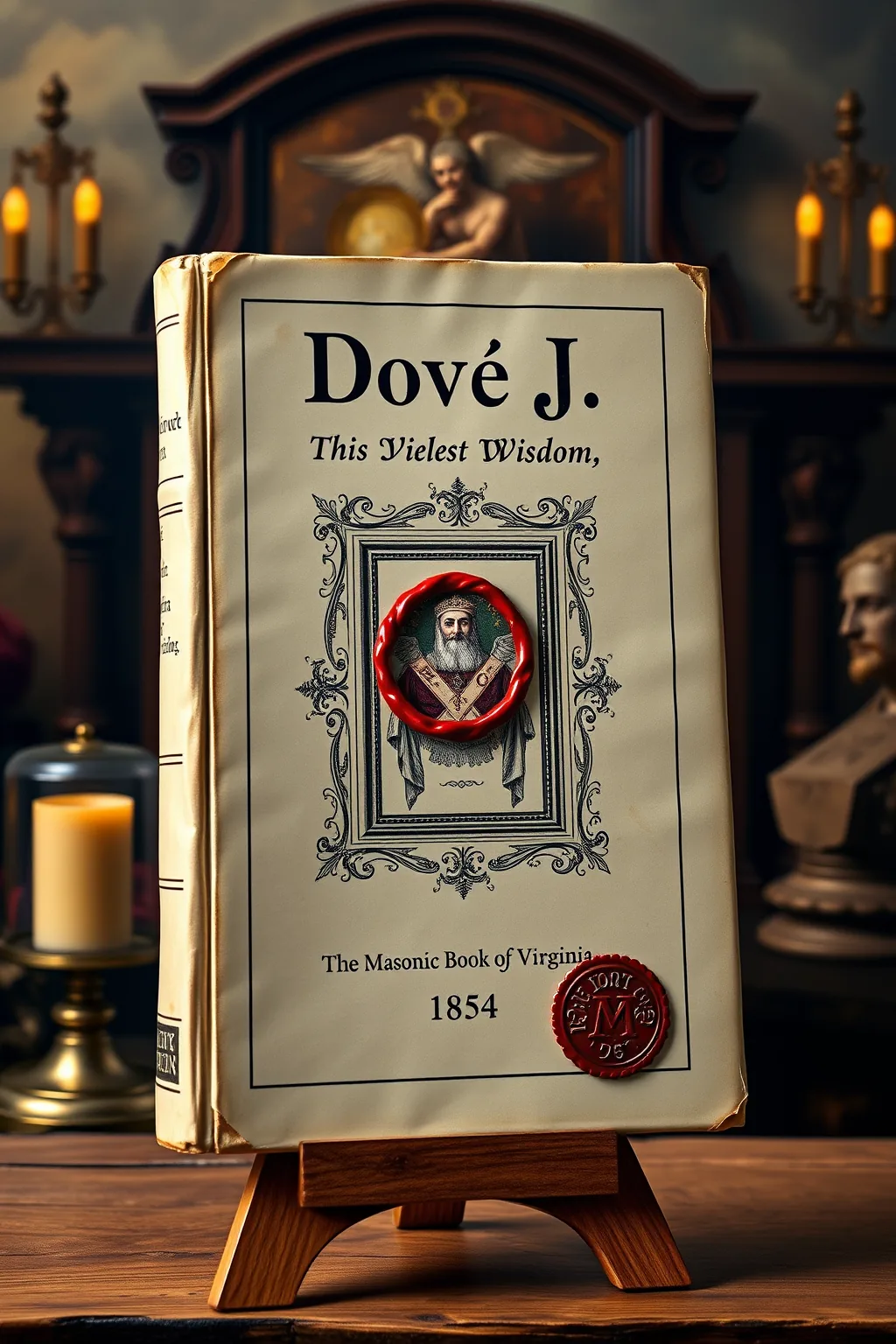
Dove J The Masonic Text Book Of Virginia 1854
 74
74

Dove J The Masonic Text Book Of Virginia 1854


By Silas Hawthorne (Hermetic Studies Editor) — "Dove J The Masonic Text Book of Virginia 1854" is an indispensable artifact for serious students of esoteric Freemasonry. Its 1854 publication date situates it at a pivotal moment, offering an unvarnished glimpse into the symbolic and philosophical underpinnings of the Craft in America. This text masterfully decodes the allegorical language, revealing layers of meaning often obscured by time. Its strength lies in its comprehensive approach, detailing not just the mechanics of rituals but the profound ethical and spiritual tenets they represent. Essential for scholars, ritualists, and any practitioner seeking a foundational understanding of Masonic esotericism.
📝 Description
74
Published in 1854, 'Dove J The Masonic Text Book of Virginia' details 19th-century Virginian Masonic practices.
This text from 1854 details the esoteric aspects of Freemasonry as practiced in Virginia during the mid-19th century. It goes beyond simple ritual descriptions to explain the symbolic and allegorical language central to the Craft. Readers will find detailed accounts of Masonic rites and degrees, along with the moral and spiritual teachings associated with them.
The book focuses on the internal structure of Masonic knowledge, particularly concerning self-understanding and universal principles as they were understood and passed down in Virginian lodges. It is intended for those with a serious interest in Masonic symbolism and philosophy, including Freemasons seeking a deeper grasp of their tradition. The work touches on themes of brotherhood, virtue, and the pursuit of knowledge.
It offers a direct link to the intellectual and spiritual currents within Freemasonry during that specific period and region. The content suggests a tradition of seeking enlightenment through carefully transmitted symbols and teachings.
This book sits within the tradition of Masonic esoteric literature, which often interprets ritual and symbolism as vehicles for philosophical and spiritual instruction. Such texts typically aim to illuminate the 'mysteries' of the Craft, framing Masonic practice as a path toward personal enlightenment and understanding of universal principles. It reflects a period where Masonic lodges were significant centers for the transmission of moral and philosophical ideas, often couched in allegory and symbol, connecting to older traditions of Western esotericism.
💡 Why Read This Book?
Delve into the foundational esoteric teachings of Virginian Freemasonry from 1854. This book offers a rare window into the symbolic language, moral philosophy, and spiritual underpinnings of the Craft. Ideal for Masonic practitioners seeking deeper understanding, historians of secret societies, and spiritual seekers interested in the perennial wisdom embedded within fraternal orders.
⭐ Reader Reviews
Honest opinions from readers who have explored this book.
❓ Frequently Asked Questions
What is the primary focus of this Masonic text?
The primary focus is to provide a comprehensive guide to Masonic rituals, symbolism, and philosophical teachings as practiced in Virginia in 1854, emphasizing moral and spiritual development.
Is this book suitable for individuals new to Freemasonry?
While it offers foundational knowledge, its depth and historical context make it most rewarding for those with some familiarity or a serious academic interest in Freemasonry.
What kind of symbolism can be found within its pages?
Readers will encounter rich allegorical symbolism drawn from ancient traditions, architecture, geometry, and celestial phenomena, all used to illustrate moral and spiritual truths.
Does the book discuss specific Masonic degrees?
Yes, it meticulously details the ceremonies, lectures, and symbolic meanings associated with various Masonic degrees prevalent in the mid-19th century.
What is the historical significance of this 1854 text?
It serves as a crucial historical document, offering insights into Masonic practices and philosophical discourse in Virginia during a formative period of American Freemasonry.
🔮 Key Themes & Symbolism
The Architecture of the Soul
This theme explores the Masonic concept of building oneself into a better person, akin to constructing a spiritual edifice. It examines how rituals and symbols serve as blueprints and building materials for cultivating inner virtue, moral strength, and a connection to the divine. The text illustrates how the physical tools and actions within Masonic ceremonies are metaphors for the internal work of refining character and achieving spiritual perfection.
Allegory and Hidden Meanings
The book is a detailed look in Masonic allegory, revealing how seemingly simple rituals and symbols are imbued with profound, layered meanings. It emphasizes the importance of deciphering these hidden narratives to access deeper spiritual truths and philosophical insights. Readers are guided to look beyond the literal to the symbolic, understanding that the true essence of Freemasonry lies in its ability to teach universal principles through veiled language.
The Quest for Light
Central to this theme is the Freemason's journey from darkness to light, representing the pursuit of knowledge, truth, and spiritual enlightenment. The text outlines how Masonic teachings guide the initiate through stages of understanding, progressively revealing greater truths about oneself, the universe, and the Creator. This journey is depicted as a lifelong endeavor, marked by continuous learning and the application of moral principles.
💬 Memorable Quotes
Direct passages from the work, attributed to the author.
“We are building a spiritual temple within.”
— This speaks to the internal nature of Masonic work, framing personal growth and moral development as the true construction, rather than any physical edifice.
“Light is the symbol of truth and knowledge.”
— This concisely explains a core tenet of Freemasonry, where the pursuit of illumination is synonymous with the acquisition of wisdom and understanding.
“Brotherhood is the foundation of our fraternity.”
— This emphasizes the essential social and ethical bond that underpins Masonic practice, stressing unity, mutual support, and shared purpose among members.
“Let virtue be your unerring guide.”
— This is a direct exhortation to live a life guided by moral principles, underscoring the paramount importance of ethical conduct in the Masonic path.
💡 Key Ideas
Editorial paraphrase of the work's core concepts — not direct quotes.
The square teaches us to square our actions.
This quote highlights the practical, ethical application of Masonic symbolism, emphasizing that the tools of the craft are meant to guide behavior and ensure virtuous conduct in daily life.
🌙 Esoteric Significance
Tradition
This text is firmly rooted in the Western Esoteric Tradition, specifically within the context of speculative Freemasonry. It draws heavily on Hermeticism, Kabbalah, and Neoplatonic philosophy, using their symbolic language and conceptual frameworks to elucidate Masonic principles. The emphasis on moral allegory, spiritual transformation, and the pursuit of divine knowledge aligns with the core aims of these ancient wisdom traditions.
Symbolism
The book is replete with potent symbolism, including the square, compasses, plumb line, level, and the tracing board. These are not merely decorative elements but represent crucial ethical precepts and cosmic principles. The symbolism extends to architectural metaphors, celestial bodies, and geometric forms, each meticulously explained to convey lessons on virtue, justice, temperance, and the interconnectedness of all things. The "lost word" and the journey of the initiate are central symbolic narratives.
Modern Relevance
Despite its 19th-century origins, the esoteric wisdom contained within "Dove J The Masonic Text Book of Virginia" remains profoundly relevant. Its teachings on self-improvement, ethical conduct, the pursuit of knowledge, and the cultivation of brotherhood resonate deeply in contemporary society. For those seeking a structured path to personal growth and a deeper understanding of timeless philosophical concepts, the symbolic language and allegorical lessons offer enduring guidance for reading through the complexities of modern life.
👥 Who Should Read This Book
This important work is essential for Freemasons of all degrees seeking to deepen their understanding of ritual and symbolism. It is important for historians of secret societies and fraternal organizations interested in the development of American Freemasonry. Spiritual seekers and students of Western Esotericism will find a rich repository of philosophical insights and allegorical wisdom. While accessible to dedicated beginners, its true depth will be appreciated by those with a serious commitment to exploring the symbolic and mystical dimensions of self-discovery and universal truths.
📜 Historical Context
Published in 1854, "Dove J The Masonic Text Book of Virginia" emerges from a period of significant growth and intellectual ferment within American Freemasonry. The mid-19th century saw the fraternity deeply interwoven with the social fabric, influencing civic life and providing a framework for moral and philosophical education. This era was marked by a strong emphasis on ritualistic precision and the exploration of esoteric meanings, often drawing from European Masonic traditions and ancient philosophical schools. The text reflects a desire to codify and disseminate these teachings, ensuring a consistent understanding and practice within the lodges of Virginia. It stands as a proof of the enduring appeal of structured, symbolic learning in a rapidly changing nation, offering a window into the intellectual field of American fraternalism.
📔 Journal Prompts
Reflect on a symbol from this text that appeals to your personal journey. How does its meaning apply to your life?
Consider the concept of 'building a spiritual temple.' What are the 'materials' you need to gather and the 'tools' you must use?
How can the Masonic principles of virtue and brotherhood be better integrated into your daily interactions and community?
What does the journey from 'darkness to light' signify in your own life? What steps have you taken, and what remains to be explored?
Analyze the use of allegory in the text. How can you apply a more symbolic or allegorical perspective to understand challenges or opportunities you face?
🗂️ Glossary
Ashlar
Refers to both a rough, unhewn stone and a smooth, finished stone, symbolizing the initiate's journey from a state of nature to one of moral and spiritual refinement through Masonic instruction.
Tracing Board
A symbolic representation, often a floor cloth or drawing, used in Masonic lodges to illustrate the principles and allegories of a particular degree, serving as a visual aid for instruction.
The Great Architect
A non-denominational term used in Freemasonry to refer to the Supreme Being or Creator, acknowledging a divine power without specifying a particular religious doctrine.
Square
A Masonic symbol representing morality, justice, and honesty; it instructs Masons to 'square their actions' by the square of virtue.
Compass
A Masonic symbol representing temperance and restraint; it teaches Masons to circumscribe their desires and keep their passions within due bounds.
This book appears in 2 collections
🔮 Readers Also Liked
Browse all →








From the “Secret Societies” Collection
View all →





More Free Freemasonry & Secret Societies Books
View all →