Cushing C H The Masonic Manual & St. Louis Guide 1886

 74
74

Cushing C H The Masonic Manual & St. Louis Guide 1886

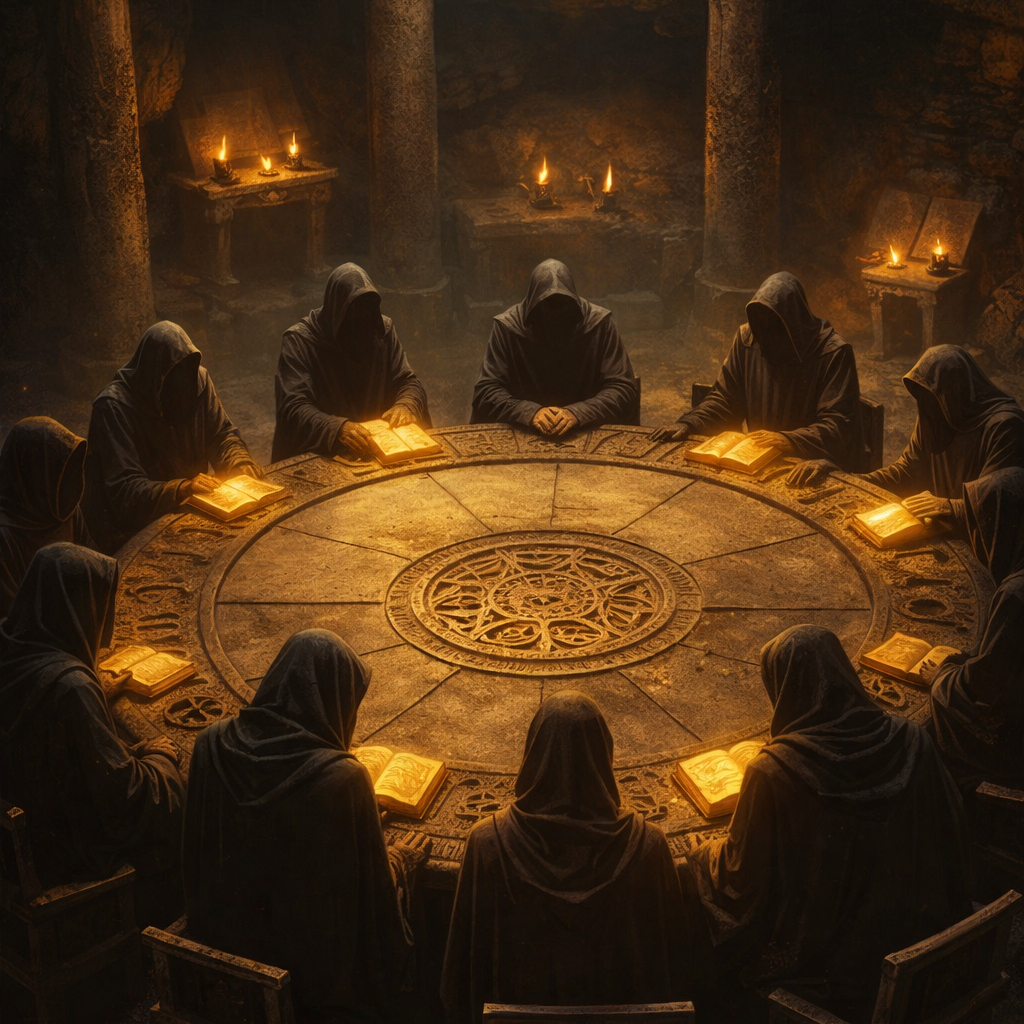

Marcus Thorne (Esoteric Sciences Reviewer) — "The Masonic Manual & St. Louis Guide, 1886" is a remarkable artifact for the serious student of Freemasonry. Beyond its historical value, it offers a potent glimpse into the esoteric interpretations prevalent in the late Victorian era. The text skillfully interweaves practical guidance with profound allegorical meaning, revealing the symbolic architecture of Masonic ritual. Its strength lies in its comprehensive yet accessible approach, making complex philosophical concepts digestible for both neophytes and seasoned practitioners. This is not a superficial glance but a deep dive into the heart of Masonic teachings, essential for anyone seeking to understand its spiritual and mystical dimensions.
📝 Description
74
Published in 1886, Cushing's Masonic Manual & St. Louis Guide offers a look at Freemasonry from the late 19th century.
This volume from 1886 is a guide to Freemasonry and also includes information relevant to St. Louis at the time. It covers the symbolic language and ritualistic practices of the fraternity. The text explains the philosophical ideas behind Masonic degrees through allegorical stories, aiming to show a path for personal growth and spiritual understanding. It reflects the esoteric thought of the late 1800s and is intended for students, initiates, and those interested in Freemasonry.
The book details the structure of the Masonic brotherhood and the metaphysical principles it is built upon. It promises to reveal deeper insights into historical mysteries and the ongoing search for truth. This compendium acts as a tool for accessing ideas and practices that connect with enduring spiritual questions. It is a valuable item for collections focused on occult and philosophical subjects.
This manual belongs to the tradition of Masonic literature that emerged in the 19th century, a period of significant interest in esoteric societies and their philosophical underpinnings. It aligns with a broader European and American esoteric current that sought to interpret ancient traditions through symbolic and allegorical frameworks. The text's focus on personal transformation through ritual and philosophy places it within a lineage of practical mysticism that views spiritual development as an interior pursuit.
💡 Why Read This Book?
This volume is essential for those drawn to the esoteric traditions of Freemasonry. It provides a unique historical lens through which to examine Masonic symbolism and philosophy, offering profound insights into personal growth and spiritual development. Ideal for scholars, practitioners seeking deeper understanding, and seekers of hidden knowledge, it unlocks the rich allegorical tapestry woven into Masonic ritual, connecting the past to present spiritual quests.
⭐ Reader Reviews
Honest opinions from readers who have explored this book.
❓ Frequently Asked Questions
What is the primary focus of this Masonic manual?
The primary focus is to provide a comprehensive guide to Masonic rituals, symbols, and philosophical teachings prevalent in 1886, specifically within the context of St. Louis, offering insight into the structure and esoteric underpinnings of the fraternity at that time.
Is this book suitable for beginners in Freemasonry?
Yes, while it offers depth for experienced individuals, its structured approach and clear explanations of symbolism make it an excellent resource for beginners seeking to understand the foundational principles and allegorical narratives of Freemasonry.
What makes the "St. Louis Guide" aspect significant?
The "St. Louis Guide" component likely signifies a localized application or interpretation of Masonic practices and regulations specific to the St. Louis region in 1886, offering a unique historical and geographical context to the broader Masonic framework presented.
Does this book contain secret rituals or codes?
While it details Masonic rituals and their symbolic meanings, it does not contain privileged or secret information that would compromise the integrity of ongoing Masonic practice. Its value lies in historical exposition and philosophical interpretation.
What kind of esoteric knowledge can be found within its pages?
Readers can expect to find knowledge concerning Hermetic principles, alchemical symbolism, numerology, and the philosophical allegories used in Masonic degrees to represent spiritual growth, moral instruction, and the pursuit of divine truth.
🔮 Key Themes & Symbolism
The Architecture of Initiation
This theme explores the carefully constructed symbolic environments and ritualistic progressions within Freemasonry. It explores how each degree acts as a step on an allegorical journey, designed to impart moral lessons and spiritual truths through dramatic representation and symbolic architecture. The text illuminates the idea that the lodge room itself is a microcosm, a sacred space where the initiate confronts inner challenges and seeks enlightenment, mirroring the grander cosmic order. The progression through degrees is presented not merely as advancement, but as a profound internal transformation, guided by ancient wisdom and universal principles.
The Language of Symbols
Central to this work is the deciphering of Masonic symbolism, a rich lexicon of signs and emblems that communicate profound philosophical and spiritual concepts. From the Square and Compasses to the Tesselated Pavement, each symbol is imbued with layers of meaning, representing virtues, cosmic forces, and the journey of the soul. The manual serves as a key to unlock these visual teachings, demonstrating how seemingly simple objects are conduits for complex ideas about morality, creation, and the divine. Understanding this symbolic language is presented as crucial for grasping the deeper esoteric currents that flow beneath the surface of Masonic practice.
The Quest for Light and Truth
This theme captures the core purpose of Masonic endeavor: the perpetual pursuit of knowledge, wisdom, and spiritual illumination, often referred to as 'Light.' The manual frames Masonic work as a continuous process of self-discovery and moral betterment, where brethren strive to dispel ignorance and embrace truth. It highlights the notion that true Light is not merely intellectual understanding but a transformative inner experience, achieved through disciplined study, ethical conduct, and a deep engagement with the symbolic teachings. The journey towards Light is portrayed as a lifelong commitment, an ongoing effort to align oneself with higher principles.
💬 Memorable Quotes
Direct passages from the work, attributed to the author.
“The plumb line teaches rectitude of conduct.”
— This highlights the use of a common building tool as a potent symbol for moral uprightness and integrity in one's actions and character.
“Light is the reward of diligent seeking.”
— This emphasizes the principle that spiritual and intellectual illumination is not passively received but actively earned through persistent effort and a genuine desire for knowledge.
“The square binds us to duty and fraternity.”
— This illustrates how a simple geometric shape symbolizes the dual commitment to moral obligations and the bonds of brotherhood within the Masonic order.
“Wisdom is found in allegories.”
— This points to the pedagogical method of Freemasonry, suggesting that profound truths are often best conveyed through symbolic narratives and veiled meanings.
💡 Key Ideas
Editorial paraphrase of the work's core concepts — not direct quotes.
Within the Lodge, the world's discord ceases.
This quote emphasizes the Masonic lodge as a sanctuary, a space set apart from the chaos and distractions of ordinary life, designed for introspection and the pursuit of higher ideals.
🌙 Esoteric Significance
Tradition
This manual is deeply rooted in the Western Esoteric Tradition, particularly within the framework of Freemasonry, which synthesizes Hermeticism, Kabbalah, Neoplatonism, and Christian mysticism. It represents a specific historical manifestation of these traditions, offering insights into how ancient wisdom was interpreted and applied in the late 19th century for personal and spiritual development.
Symbolism
The text is a veritable treasury of Masonic symbolism, utilizing tools, geometric figures, and allegorical narratives to represent moral virtues, cosmological principles, and the stages of human enlightenment. Key symbols like the Square, Compasses, Tesselated Pavement, and the Blazing Star serve as visual keys to unlock deeper philosophical and spiritual truths about order, harmony, and the divine.
Modern Relevance
The esoteric principles explored in this manual remain profoundly relevant today. The emphasis on self-improvement, ethical conduct, the search for truth, and the understanding of universal symbolism offers timeless guidance for working through the complexities of modern life. It provides a historical perspective on perennial philosophical questions and spiritual practices that continue to resonate with seekers of wisdom and personal transformation.
👥 Who Should Read This Book
This volume is a treasure for a diverse audience. **Scholars and Historians** will find invaluable primary source material detailing Masonic practices and esoteric thought in the late 19th century. **Occultists and Practitioners** of esoteric disciplines will discover rich symbolic interpretations and philosophical insights applicable to their own paths. **Seekers of hidden knowledge** will be drawn to the allegorical depth and the exploration of universal truths. **Freemasons**, both new and experienced, can gain a deeper appreciation for the historical context and profound symbolic meaning embedded within their fraternity's teachings.
📜 Historical Context
Published in 1886, "The Masonic Manual & St. Louis Guide" emerges from a period of intense intellectual and societal change. The late Victorian era was characterized by a fervent interest in spiritualism, occultism, and the re-examination of ancient traditions, alongside rapid industrialization and scientific advancement. Freemasonry, with its long history and symbolic language, became a focal point for those seeking order, meaning, and spiritual continuity amidst this flux. This manual reflects the era's academic approach to esoteric knowledge, seeking to codify and explain its tenets. The inclusion of a "St. Louis Guide" suggests a localized adaptation and dissemination of Masonic principles, revealing how these universal ideas were integrated into the fabric of specific communities, contributing to their social and moral development.
📔 Journal Prompts
Reflect on the meaning of 'Light' as presented in the manual and in your own life. Where do you seek illumination?
Choose one symbol from the manual and meditate on its various interpretations. How does it relate to your personal journey?
Consider the concept of the lodge as a sanctuary. What qualities must be cultivated to create such a space in your own environment?
How does the idea of 'rectitude of conduct' translate into practical actions in your daily life?
The manual speaks of allegories revealing wisdom. What life experiences have served as your most profound allegorical teachers?
🗂️ Glossary
Tesselated Pavement
A checkered floor, typically black and white, symbolizing the duality of existence, the trials and tribulations of life, and the balanced nature of the universe encountered on the Masonic path.
Plumb Line
A tool symbolizing uprightness, integrity, and the moral rectitude expected of a Mason in their conduct and actions, ensuring they walk a straight and honorable path.
Square
A symbol representing morality, justice, and the four cardinal virtues, often associated with the duty to act squarely and deal justly with all men.
Compasses
A symbol representing the circumscribing of desires and passions, reminding Masons to keep their actions within due bounds and live a virtuous life.
Worshipful Master
The presiding officer of a Masonic lodge, representing the highest authority within that local body and responsible for conducting its affairs according to Masonic law and custom.
This book appears in 2 collections
🔮 Readers Also Liked
Browse all →

![The Freemasons' quarterly (magazine and) review [afterw.] The Freemasons ...](/img/thumb/the-freemasons-quarterly-magazine-and-review-afterw-the-freemasons-freemasons-magazine.webp)




From the “Secret Societies” Collection
View all →



More Free Freemasonry & Secret Societies Books
View all →