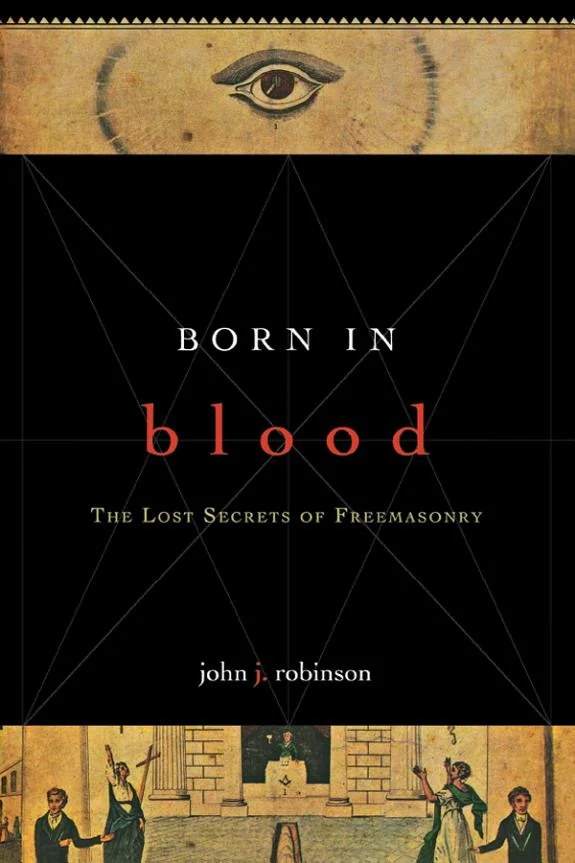
Barratt N S Freemasonry In Pennsylvania Vol I 1781 1813 1908

 78
78

Barratt N S Freemasonry In Pennsylvania Vol I 1781 1813 1908


Aurelia Blackwood (Occult Philosophy Critic) — 'Freemasonry in Pennsylvania, Vol. I' is an indispensable key for unlocking the esoteric heart of the Craft. Barratt and Sachse illuminate the symbolic architecture of early American Masonry, revealing its profound connection to Hermeticism and ancient mystery traditions. The book masterfully guides readers through the allegorical landscapes of rituals and degrees, offering insights into the transformative power of Masonic teachings. Its strength lies in its scholarly rigor married with an intuitive understanding of hidden knowledge. Essential for anyone serious about the philosophical and spiritual dimensions of Freemasonry, this volume offers a rare and valuable perspective on a tradition steeped in symbolism and seeking.
📝 Description
78
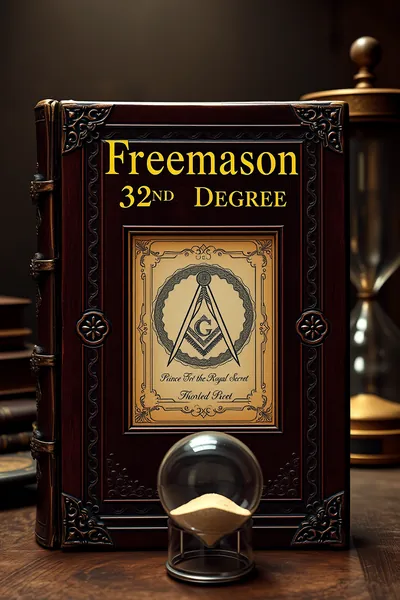
Published in 1908, 'Freemasonry in Pennsylvania, Vol. I' covers the years 1781-1813.
This volume examines Freemasonry in Pennsylvania between 1781 and 1813. It moves beyond simple historical records to discuss the philosophical ideas and esoteric elements influencing the Craft during its early development. The book details the rituals, symbols, and allegorical lessons that were transmitted, shaping men into keepers of tradition.
The text explains the symbolic language used in Masonic degrees, showing a system intended for moral and spiritual growth. It is a resource for understanding the metaphysical aspects of Freemasonry, a society frequently misunderstood, and its place in early American thought and spirituality. This work is a guide for those wanting to connect with the fraternity's heritage.
This book fits within the tradition of Masonic scholarship that seeks to understand the philosophical and symbolic dimensions of the fraternity. It engages with the idea that Masonic rituals and degrees contain deeper meanings related to personal transformation and understanding of universal principles. Such works often analyze the historical development of Masonic rites and their connection to older esoteric traditions, viewing Freemasonry as a vehicle for transmitting moral and spiritual knowledge.
💡 Why Read This Book?
Uncover the hidden spiritual and philosophical currents that defined early American Freemasonry. This book is a vital resource for seekers of esoteric knowledge, scholars of secret societies, and practitioners of the Craft who wish to delve into the symbolic depth and historical lineage of Masonic teachings. It offers a unique window into the evolution of a foundational Western mystery tradition.
⭐ Reader Reviews
Honest opinions from readers who have explored this book.
❓ Frequently Asked Questions
What is the primary focus of this volume?
This volume primarily focuses on the historical development and esoteric teachings of Freemasonry in Pennsylvania between the years 1781 and 1813, drawing from the rich Barratt & Sachse Collection.
Who are Barratt and Sachse in relation to this work?
Barratt and Sachse are recognized as significant figures associated with the collection and study of Masonic history, with this volume being a testament to their meticulous research and dedication to preserving Masonic knowledge.
Is this book suitable for beginners in Freemasonry?
While comprehensive, the book's depth may be best appreciated by those with some foundational understanding of Masonic principles or a strong academic interest in esoteric traditions. It offers rich material for dedicated exploration.
What kind of esoteric insights can be found within?
Readers can expect insights into the symbolic language, allegorical meanings of rituals, and philosophical underpinnings of Masonic degrees, revealing the Craft's role as a vehicle for spiritual and moral development.
Does the book discuss specific Masonic rituals?
Yes, the book delves into the symbolic nature and philosophical implications of various Masonic rituals and degrees practiced during the specified period, offering a deeper understanding of their esoteric significance.
🔮 Key Themes & Symbolism
The Alchemical Journey of the Soul
This volume explores Freemasonry not merely as a social fraternity, but as an alchemical crucible for the transformation of the human spirit. It examines how Masonic rituals and symbols serve as allegorical pathways, guiding initiates through stages of purification, illumination, and ultimate union with higher principles. The text illuminates the esoteric understanding of spiritual alchemy, where the 'base metals' of ignorance and vice are transmuted into the 'gold' of wisdom and virtue, mirroring the Great Work within the individual.
Pennsylvania as a Crucible of Enlightenment
The early years of Freemasonry in Pennsylvania, as chronicled here, represent an important era where the ideals of the Enlightenment intersected with ancient mystical traditions. This book reveals how the nascent American republic became a fertile ground for the dissemination of esoteric thought, with Masonic lodges acting as vital centers for intellectual discourse and spiritual exploration. It highlights the unique contribution of Pennsylvania to the development of Masonic philosophy, blending practical application with profound metaphysical inquiry.
The Language of Symbols and Allegory
At the heart of this work lies the deciphering of the rich symbolic language inherent in Freemasonry. Each symbol, from the square and compasses to more arcane imagery, is presented not as a mere emblem, but as a profound key to unlocking hidden truths about the cosmos and the human condition. The text emphasizes how allegory serves as a pedagogical tool, allowing for the transmission of complex metaphysical concepts in a manner that transcends ordinary language, fostering intuitive understanding and inner realization for the dedicated practitioner.
💬 Memorable Quotes
Direct passages from the work, attributed to the author.
“Within the lodge, shadows dance with ancient light.”
— This evokes the mystical atmosphere of a Masonic lodge, where hidden knowledge (shadows) is revealed through the illumination of ancient wisdom and esoteric principles.
“Each symbol, a whispered secret of creation.”
— This highlights the profound significance of Masonic symbols, portraying them as conduits of divine or cosmic information, offering glimpses into the fundamental nature of reality.
“The journey inward, the ultimate initiation.”
— This emphasizes the core esoteric principle that true Masonic progress is achieved through self-discovery and spiritual evolution, rather than external achievements.
“Pennsylvania's stone laid the foundation for esoteric inquiry.”
— This suggests that the specific historical context of Freemasonry in Pennsylvania was instrumental in fostering a deep and enduring tradition of metaphysical and symbolic exploration.
💡 Key Ideas
Editorial paraphrase of the work's core concepts — not direct quotes.
The Craft, a silent architect of inner worlds.
This quote suggests that Freemasonry's true work is not external, but internal, shaping the individual's spiritual and psychological landscape through its teachings.
🌙 Esoteric Significance
Tradition
This work is deeply rooted in the Western Esoteric Tradition, specifically drawing from Hermeticism, Kabbalah, and Renaissance Neoplatonism, as these influenced the development of Masonic philosophy. It highlights Freemasonry's role as a modern manifestation of ancient mystery schools, aiming to transmit esoteric knowledge for spiritual illumination and personal transformation. The text underscores the Craft's commitment to symbolic education, guiding initiates towards a deeper understanding of universal laws and the divine spark within.
Symbolism
The book meticulously unpacks the profound symbolism embedded within Masonic rituals and degrees. It explores how elements like geometric shapes, architectural tools, and celestial bodies are not merely decorative but represent fundamental metaphysical principles. These symbols function as mnemonic devices and allegorical keys, designed to guide the aspirant through a process of self-discovery, moral refinement, and an understanding of the interconnectedness of the macrocosm and microcosm.
Modern Relevance
In an age often characterized by materialism and intellectual fragmentation, the esoteric insights presented in this volume offer a vital counterpoint. The emphasis on symbolic language, inner transformation, and the pursuit of higher wisdom remains profoundly relevant. It provides a framework for understanding the enduring human quest for meaning and connection, demonstrating how ancient traditions can offer practical guidance and spiritual solace in contemporary life. The book serves as a reminder of the power of ritual and symbolism to foster community and personal growth.
👥 Who Should Read This Book
This volume is an essential acquisition for serious students of Freemasonry, particularly those interested in its historical development and esoteric underpinnings. Scholars of secret societies and Western esotericism will find it an invaluable primary source, offering deep dives into the philosophical field of early America. For seekers of hidden knowledge, the book provides a rich, allegorical framework for understanding spiritual disciplines and the transformative potential of symbolic systems. Practitioners of the Craft seeking a deeper comprehension of their ritualistic heritage and the philosophical underpinnings of their degrees will find this text informative and foundational.
📜 Historical Context
This volume emerges from a critical period in American history, spanning the nascent years of the United States and the transformative late 18th and early 19th centuries. It was an era deeply influenced by the Enlightenment's emphasis on reason and progress, yet also a time when ancient mystical traditions, Hermeticism, and Rosicrucianism continued to exert a powerful, albeit often veiled, influence. Freemasonry, as a prominent fraternal organization, served as a crucial conduit for these philosophical and spiritual currents. The lodges in Pennsylvania, particularly during this timeframe, were not merely social clubs but intellectual salons where ideas about liberty, governance, and the nature of the divine were debated and codified through symbolic ritual. This period saw the consolidation of Masonic structures and the refinement of its teachings, making it a fertile ground for the esoteric explorations documented herein.
📔 Journal Prompts
Reflect on the concept of 'inner worlds' as presented in the text. How does Masonic ritual act as a blueprint for constructing one's inner spiritual architecture?
Consider the 'ancient light' mentioned. What does this light represent in an esoteric context, and how might one seek to access it through symbolic practices?
Analyze a specific symbol discussed in the book. How can its esoteric meaning be applied to contemporary personal challenges or spiritual growth?
The text speaks of 'whispered secrets of creation.' What are the implications of viewing the universe as a repository of divine secrets to be unveiled through diligent study and practice?
How does the idea of Pennsylvania as a 'crucible of enlightenment' resonate with your understanding of the historical development of esoteric thought in North America?
🗂️ Glossary
Esotericism
The practice of belief in the existence of hidden spiritual truths or powers, accessible only to a select group of initiated individuals through specific teachings or practices.
Hermeticism
A religious, philosophical, and esoteric tradition based primarily upon writings attributed to Hermes Trismegistus, emphasizing divine wisdom, the unity of all things, and the potential for human spiritual ascent.
Allegory
A story, poem, or picture that can be interpreted to reveal a hidden meaning, typically a moral or political one, used extensively in esoteric teachings to convey complex ideas.
Macrocosm
The universe considered as a complex whole, in parallel with the microcosm, representing the idea that the universe reflects the structure and order of the individual human being.
Microcosm
The individual human being, seen as a miniature or miniature representation of the universe (macrocosm), implying a deep connection and correspondence between the two.
This book appears in 2 collections
🔮 Readers Also Liked
Browse all →






From the “Secret Societies” Collection
View all →




More Free Freemasonry & Secret Societies Books
View all →