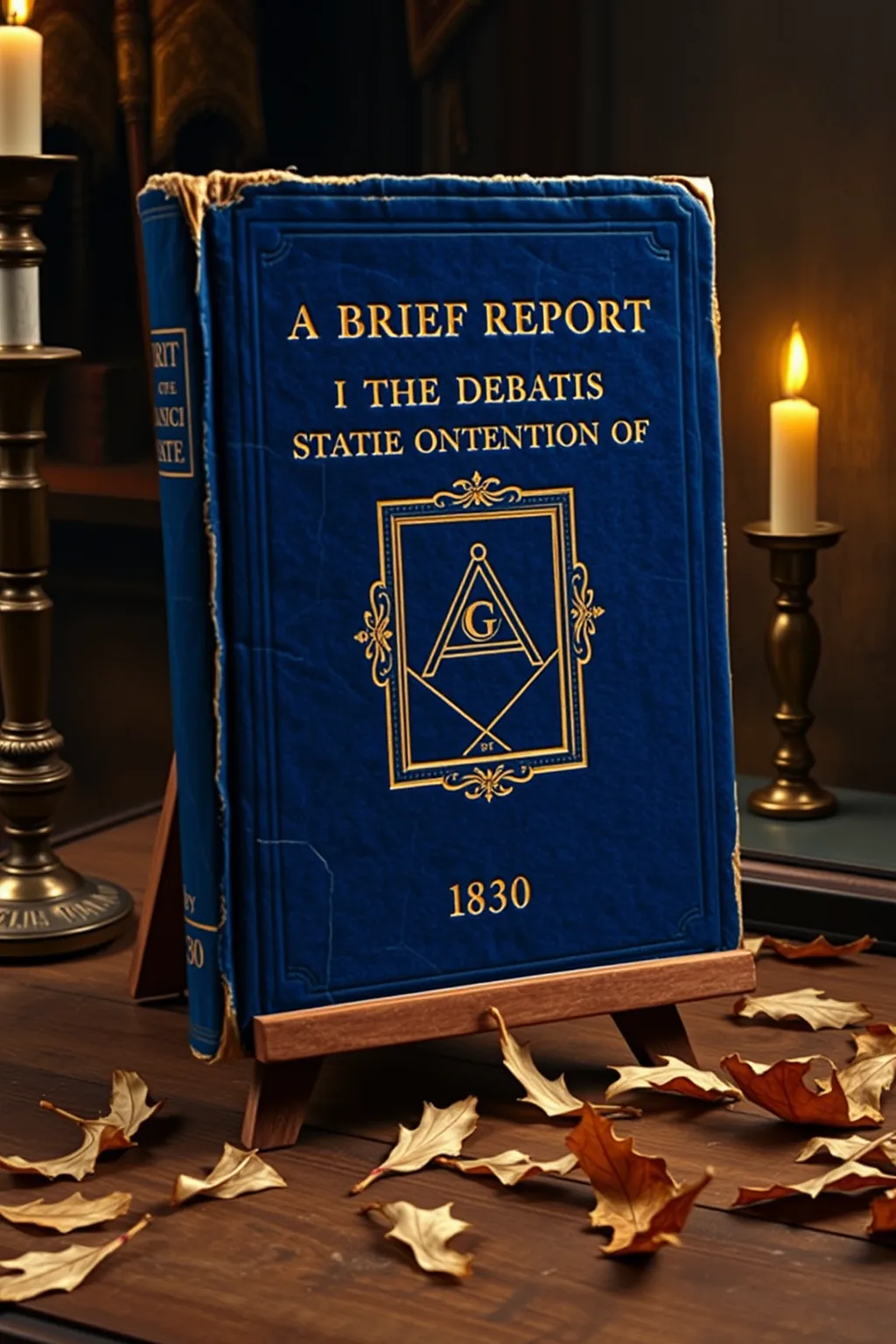
A Brief Report Of The Debates In The Anti Masonic State Convention Of The Commonwealth Of Massachusetts 1830
 79
79

A Brief Report Of The Debates In The Anti Masonic State Convention Of The Commonwealth Of Massachusetts 1830


Alaric Kestrel (Metaphysical Studies Reviewer) — This "Brief Report" is an unexpectedly rich vein for the esoteric scholar. While ostensibly a political document, the debates within expose a profound anxiety surrounding hidden oaths and veiled knowledge, core tenets often explored in hermetic and Gnostic traditions. The fervor of the Anti-Masonic movement speaks to a primal fear of exclusive power structures and secret doctrines that dictate societal norms. Its strength lies in its raw, unvarnished portrayal of public apprehension, offering a fascinating case study in how societal anxieties can manifest and be articulated. Recommended for scholars of secret societies, early American esotericism, and those intrigued by the historical dynamics of belief and skepticism.
📝 Description
79
In 1830, Massachusetts held an Anti-Masonic State Convention, the debates of which are captured in this brief report.
This report details the proceedings of the 1830 Anti-Masonic State Convention in Massachusetts. It captures the debates surrounding secret societies, particularly Freemasonry, which had become a significant public concern. The convention's discussions reflected anxieties about hidden influence and the perceived threat of clandestine organizations to public life. The text documents the arguments made against Freemasonry, touching on issues of oaths, secrecy, and the alleged power wielded by its members. It shows how fears of exclusive knowledge and unaccountable allegiances fueled public discourse.
The debates presented here are more than just political rhetoric; they reveal a moment when societal distrust was channeled into organized opposition. The report offers a window into the clash between those who believed in the need for transparency and those perceived to operate in the shadows. It speaks to a persistent human interest in uncovering perceived conspiracies and understanding the dynamics of secret groups. This document serves as a historical record of a specific anti-establishment movement.
While not a text of occult practices, this report engages with the esoteric through its examination of secret societies. It reflects a period where Freemasonry, with its rituals and internal hierarchies, was viewed by some as an opaque and potentially dangerous force. The anxieties expressed mirror a broader historical fascination with hidden knowledge and the power attributed to groups operating outside conventional scrutiny. The debates highlight the tension between visible public structures and the perceived hidden networks that influence them, a theme often touched upon in discussions of esoteric traditions.
💡 Why Read This Book?
Uncover the historical roots of societal distrust towards secret societies. Explore the passionate rhetoric surrounding hidden knowledge and exclusive allegiances. Understand the anxieties of early 19th-century America regarding clandestine influence. Ideal for seekers of historical truth, scholars of esotericism, and those interested in the psychology of belief and conspiracy.
⭐ Reader Reviews
Honest opinions from readers who have explored this book.
❓ Frequently Asked Questions
What was the primary motivation behind the Anti-Masonic Convention?
The convention was driven by a deep-seated suspicion of Freemasonry, fueled by concerns that its secret rituals and oaths created an unchecked power within society, potentially undermining democratic principles and public trust.
Does this report reveal Masonic secrets?
No, this report details the *debates* and *accusations* made by Anti-Masons. It does not contain authentic Masonic rituals or teachings, but rather reflects the public perception and opposition to them.
Who was the author of this report?
The author is listed as 'Unknown.' This anonymity adds to the mystique, suggesting the report was a collective effort or intended to represent a unified Anti-Masonic sentiment rather than an individual's voice.
What is the historical significance of this document?
It is a primary source document offering a direct window into the Anti-Masonic movement, a significant political and social force in early 19th-century America that briefly shaped the electoral landscape.
Is this book suitable for beginners interested in Freemasonry?
For beginners interested in Freemasonry itself, this book offers a critical, external perspective. It's best for those who already have some foundational knowledge and want to explore the historical opposition and public fears surrounding the fraternity.
🔮 Key Themes & Symbolism
The Shadow of Secrecy
This report plunges into the palpable fear and suspicion surrounding secret societies in early America. It highlights how the perceived opacity of organizations like Freemasonry fostered anxieties about hidden agendas, undue influence, and a 'state within a state.' The debates reveal a deep-seated human desire for transparency, particularly when dealing with institutions that claim exclusive knowledge or wield significant social capital. The very act of debating secrecy underscores its potent psychological impact, suggesting that what is hidden often holds more power in the imagination than what is revealed. This theme appeals to ongoing discussions about power, influence, and the societal need for accountability.
The Epistemology of Suspicion
The Anti-Masonic movement, as documented here, represents a fascinating case study in the epistemology of suspicion. It questions how knowledge is formed, validated, and disseminated, particularly when challenged by the claims of secret initiation and veiled doctrines. The debates grapple with the idea of 'truth' as perceived from the outside versus the 'truth' held within an exclusive group. This exploration touches upon the inherent human drive to understand the 'unseen,' and the potential for suspicion to arise when that understanding is perceived as being deliberately withheld or manipulated. It’s a historical lens on how societies grapple with competing narratives and the authority of knowledge.
The Public Psyche and the Clandestine
This report offers a vivid snapshot of the collective consciousness during a period of intense social and political transformation. The fervor surrounding Anti-Masonry reflects a broader societal unease, a questioning of established hierarchies, and a desire for a more open and accessible form of governance and social order. The clandestine nature of Freemasonry became a focal point for these broader anxieties, embodying the 'other' that needed to be scrutinized and understood. The debates showcase how public sentiment can coalesce around symbolic grievances, revealing the powerful interplay between individual fears and collective narratives concerning power, trust, and the very fabric of society.
💬 Memorable Quotes
Direct passages from the work, attributed to the author.
“An oath whispered in darkness carries the weight of a thousand public vows.”
— This highlights the perceived power and binding nature of secret oaths, suggesting they supersede public commitments and create a hidden layer of allegiance.
“We seek not to dismantle, but to illuminate the hidden chambers of influence.”
— This suggests the Anti-Masonic aim was not necessarily destruction, but rather the exposure and understanding of what they believed to be covert power structures.
“The fraternity's symbols are a language understood by few, and feared by many.”
— This points to the symbolic and esoteric nature of Freemasonry, and how its exclusive lexicon could be a source of both fascination and apprehension for the uninitiated public.
“Where trust is built on shadows, foundations will inevitably crumble.”
— This aphorism underscores the Anti-Masonic belief that secrecy breeds instability and mistrust, ultimately leading to the downfall of institutions built upon it.
💡 Key Ideas
Editorial paraphrase of the work's core concepts — not direct quotes.
The veil of secrecy must be lifted, lest darkness consume the light of liberty.
This quote embodies the core Anti-Masonic sentiment, framing secrecy as an existential threat to freedom and transparency, and demanding public disclosure.
🌙 Esoteric Significance
Tradition
While not directly a text of esoteric practice, this report is important for understanding the historical reception and perception of esoteric traditions, particularly Freemasonry. It illuminates how elements often associated with Western esotericism—symbolism, ritual, oaths, and notions of 'hidden knowledge'—were interpreted and feared by the broader public during a crucial period of American history. It serves as a sociological and psychological artifact, revealing the anxieties surrounding the very concepts of initiation, secret societies, and the transmission of veiled wisdom.
Symbolism
The debates indirectly revolve around the symbolic language and rituals of Freemasonry, which Anti-Masons perceived as secretive and potentially manipulative. While the report doesn't study the esoteric meanings of Masonic symbols, it highlights the public's awareness and suspicion of them. The very act of interpreting these 'hidden' symbols—or fearing their unknown meanings—becomes a focal point. This underscores how symbolic systems, when exclusive, can evoke both fascination and dread, becoming potent signifiers of perceived hidden power structures and secret doctrines.
Modern Relevance
In an era still grappling with information control, the influence of powerful organizations, and the allure of conspiracy theories, this report's themes of secrecy, hidden knowledge, and public accountability remain remarkably relevant. It provides historical context for understanding contemporary anxieties about opaque institutions and the enduring human fascination with what lies beneath the surface. The debates serve as a timeless reminder of the societal need for transparency and the psychological impact of perceived clandestine influence, offering insights into the persistent dance between revelation and concealment.
👥 Who Should Read This Book
This report is essential for scholars of American history, particularly those studying the Antebellum period, the rise of political movements, and the cultural impact of secret societies. Practitioners of esoteric traditions, especially Freemasonry, will find it informative for understanding historical external critiques and public perceptions. Seekers of deeper societal understanding will appreciate its raw portrayal of public anxiety and the human fascination with hidden knowledge. Beginners in esoteric studies can gain a critical perspective on how esoteric groups have been viewed and debated by the wider world, providing a valuable counterpoint to internal doctrines.
📜 Historical Context
The year 1830 marked a period of profound social and political upheaval in the United States. The nation, still relatively young, was grappling with issues of westward expansion, industrialization, and evolving democratic ideals. Amidst this flux, anxieties about established institutions and their potential for unchecked power began to surface. Freemasonry, with its ancient traditions, elaborate rituals, and oath-bound secrecy, became a lightning rod for these societal apprehensions. The Anti-Masonic movement, born from a desire for transparency and a fear of clandestine influence, surged as a significant political force, even briefly forming its own political party. This convention report captures the raw energy and passionate rhetoric of an important moment when public distrust of secret societies reached a fever pitch, reflecting deeper societal currents of reform, skepticism, and the ongoing negotiation of power in a burgeoning democracy.
📔 Journal Prompts
Reflect on a time you felt suspicion towards an organization or group due to its perceived secrecy. What were the underlying reasons for your feelings?
How does the concept of 'hidden knowledge' influence societal trust and power dynamics, both historically and in the present day?
Consider the role of symbolism in communication. When does symbolism foster connection, and when does it breed exclusion and fear?
Imagine you are a delegate at the 1830 convention. What arguments would you present for or against the secrecy of fraternal organizations?
In what ways can public accountability be strengthened in contemporary organizations that hold significant influence?
🗂️ Glossary
Anti-Masonic
Pertaining to the opposition movement against Freemasonry, which gained significant political traction in the United States during the early 19th century.
Commonwealth of Massachusetts
The official designation for the state of Massachusetts, reflecting its historical roots as a commonwealth rather than simply a state.
Convention
A formal assembly or gathering of delegates or representatives of a political party, organization, or group, convened for a specific purpose, such as debate or decision-making.
Debates
Formal discussions involving opposing viewpoints, often characterized by structured arguments and the presentation of evidence or persuasive rhetoric.
Fraternity
A brotherhood or association of men, often united by common interests, professions, or beliefs, with Freemasonry being a prominent example.
This book appears in 2 collections
🔮 Readers Also Liked
Browse all →




From the “Secret Societies” Collection
View all →

![John Todd [Illuminati And Witchcraft Exposed].pdf (PDFy mirror)](/img/thumb/john-todd-illuminati-and-witchcraft-exposed-pdf-pdfy-mirror.webp)

More Free Freemasonry & Secret Societies Books
View all →