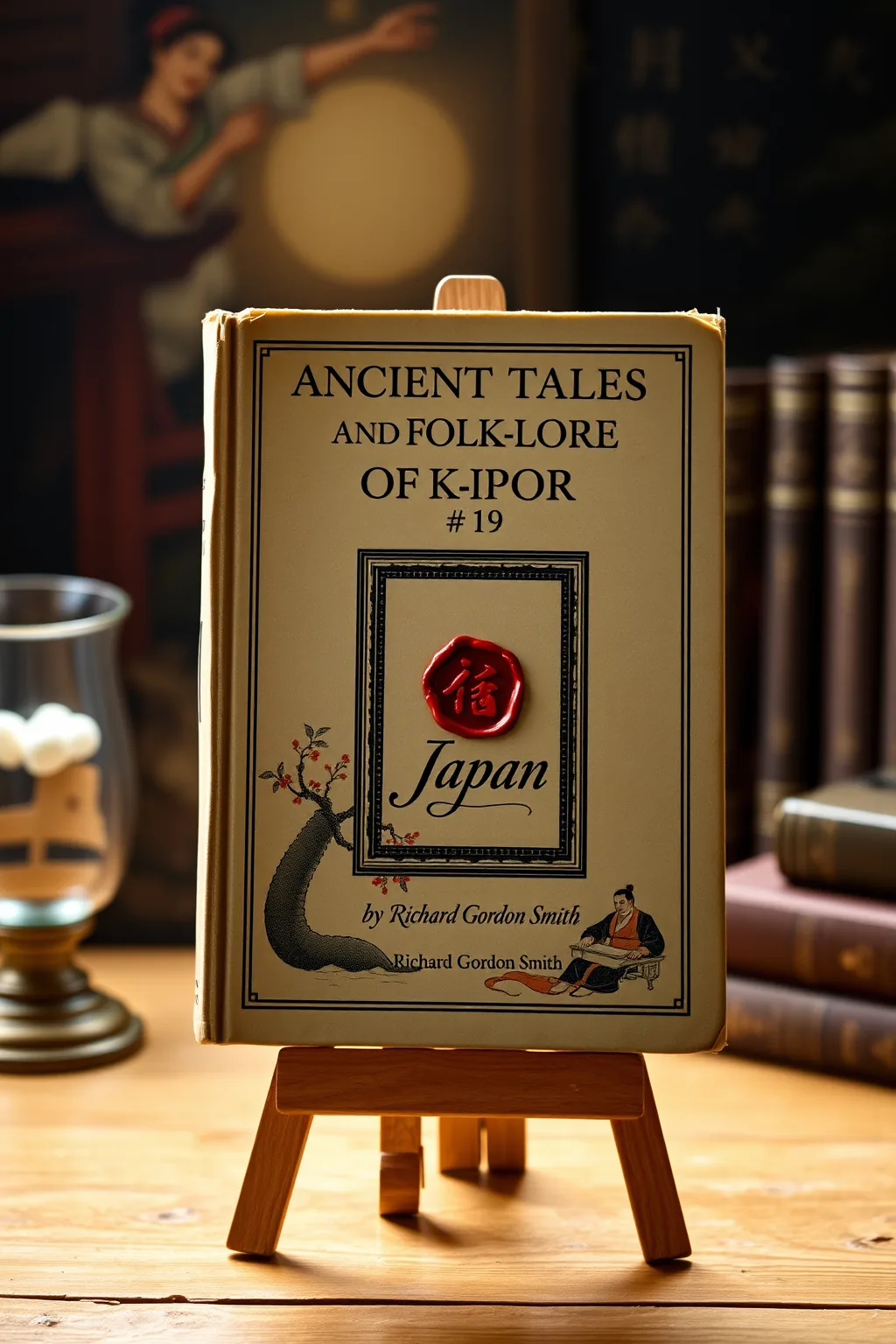
Ancient Tales and Folk-lore of Japan
 84
84

Ancient Tales and Folk-lore of Japan



Balthazar Finch, Senior Critic, Occult Philosophy: Richard Gordon Smith's 'Ancient Tales and Folk-lore of Japan' is a treasure trove for the discerning seeker. Eschewing simplistic folklore, Smith presents narratives imbued with genuine spiritual resonance, offering profound insights into Japanese animism, ancestral veneration, and the subtle interplay of human destiny with the spirit world. The meticulous grounding of each tale in specific temporal and geographical contexts lends an authenticity rarely found in such collections, making it a valuable resource for understanding the practical application of esoteric beliefs in a historical setting. For scholars of comparative mythology, practitioners of Shinto-inspired magic, or anyone fascinated by the deep currents of Eastern spiritual thought, this volume is an indispensable guide.
📝 Description
84
Richard Gordon Smith published 'Ancient Tales and Folk-lore of Japan' in 1918.
Richard Gordon Smith's 1918 collection gathers fifty-seven Japanese legends, focusing on specific historical contexts rather than vague storytelling. Smith, who lived in Japan in the early twentieth century, presents a world where the spiritual and physical realms are closely connected.
The stories touch on themes of restless spirits, forbidden love across social classes, and the power of Shinto kami found in nature. These narratives are more than simple tales; they reveal a civilization's spiritual consciousness, ancient moral frameworks, and the daily impact of the supernatural. The book offers insight into Japanese mysticism and the universal human interest in the unseen.
It demonstrates how myth and reality merge to form cultural identity and spiritual beliefs over time. The collection shows the foundational stories that shaped a nation's worldview.
This collection falls within the tradition of documenting folk beliefs and spiritual practices, often seen as a gateway to understanding a culture's deeper, non-rational worldview. It connects with the broader interest in folklore as a repository of ancient wisdom and a reflection of collective consciousness. By presenting these narratives, Smith engages with the historical study of comparative mythology and the ways in which spiritual concepts are embedded in everyday life and cultural memory, particularly as they relate to animistic beliefs and the interaction with unseen forces.
✍️ Author

Richard Gordon Smith
Richard Alexander Steuart Gordon (18 May 1947 – 7 February 2009) was a Scottish author born in Banff, Scotland who wrote numerous science fiction novels, encyclopedias, and travel guides. Gordon's novels are noted for their mix of historical fact and creat…
💡 Why Read This Book?
Unearth the mystical heart of Japan through authentic, historically grounded legends. This book offers unique insights into Shinto spirits, ancestral beliefs, and the spectral realm, perfect for seekers of esoteric knowledge, scholars of folklore, and practitioners interested in the spiritual underpinnings of Japanese culture.
⭐ Reader Reviews
Honest opinions from readers who have explored this book.
❓ Frequently Asked Questions
What makes these Japanese folk tales 'esoteric'?
These tales are considered esoteric due to their deep immersion in Shinto animism, the presence of spirits and deities within natural elements, and their exploration of themes like reincarnation, karma, and the porous boundary between the living and the dead, reflecting a spiritual worldview beyond common understanding.
Who was Richard Gordon Smith?
Richard Gordon Smith was a British traveler and collector who lived in Japan during the early 20th century. His firsthand experiences and deep engagement with Japanese culture allowed him to gather and document these authentic tales with unique insight.
Are these tales suitable for beginners in Japanese folklore?
Yes, while rich in esoteric depth, the stories are presented in an accessible narrative style. Beginners can enjoy the captivating plots while gradually uncovering the layers of spiritual and cultural meaning.
Do the stories focus on ghosts and the supernatural?
Indeed. A significant portion of the collection delves into tales of yūrei (ghosts), yokai (supernatural beings), and the pervasive influence of the spirit world on human lives and destinies, offering a vivid portrayal of Japanese spiritual beliefs.
Can this book be read for free online?
As a curated collection, Esoteric Library offers access to this and other seminal works for enthusiasts and scholars of the mystical and occult.
🔮 Key Themes & Symbolism
The Veil Between Worlds: Spirits and the Supernatural
This collection masterfully illustrates the permeable barrier between the physical and spiritual realms in traditional Japanese belief. Tales of yūrei, kami, and other entities deeply embedded in nature reveal a worldview where the unseen actively participates in human affairs, influencing destiny and morality. It explores the reverence for, and fear of, these spiritual forces, offering insights into ancestral worship, the concept of unfinished business in the afterlife, and the profound respect for the natural world as a living, sentient entity.
Animism and the Sacredness of Nature
A central to Japanese spirituality, animism permeates these narratives. Smith's work highlights how Shinto beliefs imbue mountains, rivers, trees, and oceans with divine spirits (kami). These tales showcase the deep connection and symbiotic relationship between humans and the natural world, emphasizing the importance of maintaining harmony and respect for these sacred forces. Understanding this theme is crucial to grasping the spiritual underpinnings of Japanese culture and its enduring reverence for the environment.
Social Strata and Transcendent Love
Beyond the spectral, these tales frequently examine the complexities of human relationships, particularly when they transcend rigid social boundaries. Stories of unrequited love, forbidden unions, and the societal pressures that shape individual destinies offer a poignant glimpse into the human heart. These narratives often carry moral lessons, exploring themes of sacrifice, duty, and the enduring power of emotion, even in the face of insurmountable societal obstacles or supernatural intervention.
💬 Memorable Quotes
Direct passages from the work, attributed to the author.
“The spirits of the ancient trees whispered secrets to the wind.”
— This evocative phrase captures the animistic essence, suggesting that nature itself possesses consciousness and communicates wisdom to those attuned to its presence.
“Love, a phantom, haunted the halls of power and the humble hearth alike.”
— Illustrates how profound emotions like love transcend social status and even the boundary between life and death, becoming a persistent, spectral force.
“The mountain's spirit watched, its gaze as ancient as stone.”
— Emphasizes the omnipresent, watchful nature of kami residing in natural formations, highlighting a deep spiritual connection to the land.
“Where the ocean sighed, tales of lost souls were carried on the tide.”
— Connects the vastness of the ocean with the area of the departed, suggesting it acts as a conduit for the stories and lamentations of spirits.
“The past was not dead, but merely sleeping in the shadows.”
— A powerful metaphor for the enduring influence of history and ancestral spirits on the present, suggesting a continuous, subtle presence.
🌙 Esoteric Significance
Tradition
The primary esoteric tradition explored is Shinto, Japan's indigenous religion, with its deep roots in animism and ancestor worship. The collection also touches upon elements of folk Buddhism and Taoist influences prevalent in Japanese spiritual syncretism. It reveals how these traditions conceptualize the spirit world, the nature of existence beyond death, and the interconnectedness of all things, offering a framework for understanding a unique Eastern esoteric worldview.
Symbolism
Key symbols abound: the spectral figures of yūrei represent unresolved earthly attachments and karmic burdens; kami residing in natural elements symbolize the divine immanence within the physical world; the ocean signifies the vastness of the unconscious or the cycle of life and death; and specific natural phenomena often act as omens or direct communications from the spirit realm, laden with symbolic meaning for the discerning reader.
Modern Relevance
In an era increasingly detached from nature and spiritual traditions, these tales offer a potent reminder of the interconnectedness of the human and natural world. They provide timeless lessons on compassion, duty, and the consequences of our actions, relevant to contemporary ethical dilemmas. For practitioners, the book offers insights into the archetypes and spiritual forces that continue to influence the collective unconscious, providing a foundation for comparative spiritual studies and personal introspection.
👥 Who Should Read This Book
This volume is a profound gateway for multiple audiences. **Beginners** to Japanese culture and folklore will find captivating narratives that are both accessible and deeply insightful. **Scholars** of comparative mythology, religious studies, and East Asian history will discover invaluable primary source material and nuanced cultural observations. **Seekers** of esoteric knowledge will be drawn to the rich depiction of Shinto animism, spirit lore, and the exploration of the liminal spaces between life and death. **Practitioners** interested in animistic or nature-based spiritual paths will find archetypal patterns and potent symbolism to inspire their practice and deepen their understanding of Eastern spiritual philosophies.
📜 Historical Context
Published in 1918, 'Ancient Tales and Folk-lore of Japan' emerged during a period of significant cultural transition for Japan. The Meiji Restoration had brought rapid Westernization and modernization, yet a deep-seated reverence for traditional beliefs and folklore persisted. Richard Gordon Smith's work serves as a vital ethnographic record, capturing a Japan that was both embracing modernity and clinging to its ancient spiritual roots. At a time when many Westerners viewed Japanese culture through a lens of exoticism, Smith's detailed and sensitive portrayal offered a more nuanced understanding of its body of beliefs, superstitions, and the enduring power of its oral traditions. This collection provides invaluable insight into the pre-modern spiritual landscape that continued to shape Japanese identity, even as the nation stepped onto the global stage.
📔 Journal Prompts
Reflect on a time you felt a 'presence' in nature. How did this experience connect with the animistic themes in the tales?
Consider a modern social boundary you've observed. How might a tale of cross-social love from this book offer a new perspective?
If you encountered a spirit from one of these tales, what would be your primary emotion: fear, curiosity, or reverence? Why?
How do the tales of ancestor veneration resonate with your own understanding of family and legacy?
Imagine the spirit of a specific natural element (e.g., a river, a mountain) could communicate with you. What message do you think it would convey?
🗂️ Glossary
Yūrei
A type of Japanese ghost or spirit, typically depicted as a human who has died with unfinished business or strong emotions, manifesting to haunt the living.
Kami
Deities, spirits, or sacred entities in Shinto. They can inhabit natural phenomena, objects, or even abstract concepts, representing the divine presence in the world.
Animism
The belief that natural objects, phenomena, and the universe itself possess souls or spirits, and that these entities can influence events in the human world.
Shinto
Japan's indigenous religion, characterized by the worship of kami, reverence for nature, and a focus on purity, harmony, and the continuity of life.
Yokai
A broad class of supernatural monsters, spirits, and demons in Japanese folklore, often possessing unique abilities and appearances.
This book appears in 1 collection
🔮 Readers Also Liked
Browse all →









From the “Transcendental Meditation” Collection
View all →





More Free Esoteric History & Biography Books
View all →