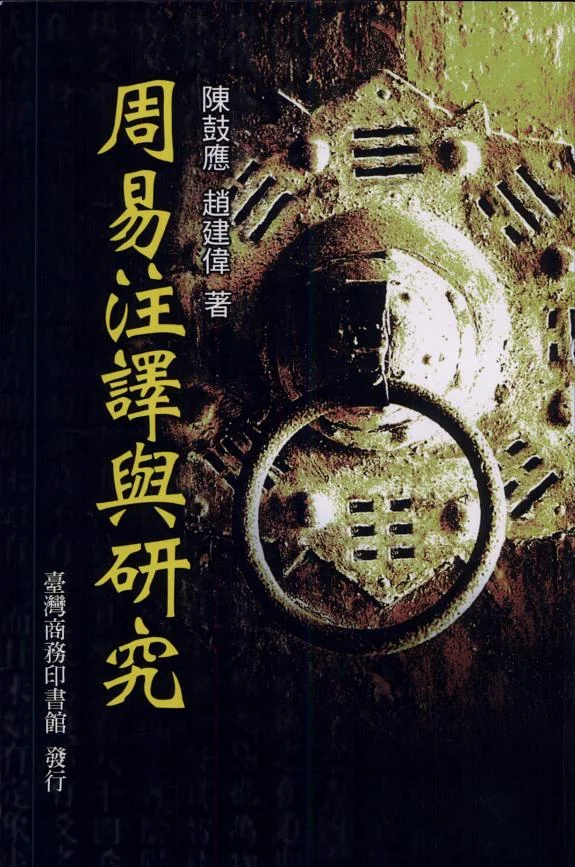
周易注譯與研究
 75
75

周易注譯與研究
Chen Guying’s 周易注譯與研究 provides a dense, academic treatment of the I Ching that eschews popular mystification for rigorous scholarship. The author’s meticulous attention to textual detail is a significant strength, particularly in his analysis of the commentaries appended to the core hexagram texts. For instance, his exploration of the philosophical underpinnings of the 'Great Appendix' (Dà Zhuàn) offers valuable insights into early Chinese cosmological thought. However, the book’s academic density, while admirable, can also be a limitation for readers unfamiliar with classical Chinese philosophical terminology. The extensive referencing of earlier commentators, while crucial for scholarly context, occasionally obscures the author’s own distinct contributions. Despite this, the work stands as a significant scholarly contribution to understanding the I Ching beyond its common perception as a mere oracle. It is a rigorous examination for the dedicated student.
📝 Description
75
Chen Guying's 1999 study offers a detailed analysis of the I Ching.
Chen Guying's 周易注譯與研究 (I Ching: Annotated Translation and Study), published in 1999, provides a scholarly examination of the classic Chinese text. The book focuses on clarifying the philosophical and cosmological ideas within the I Ching, a manual for divination. It closely examines the hexagrams, their accompanying texts, and the history of how these interpretations developed over time.
This work is suitable for students of Chinese philosophy, comparative religion, and ancient divination. Researchers and advanced practitioners looking for an academic treatment of the I Ching will find it useful. The book appeals to those interested in detailed textual analysis and historical background, engaging with the I Ching's philosophical foundations.
The I Ching, originating in the Western Zhou Dynasty, is a foundational text in Chinese divination and philosophy. Chen Guying's 1999 research situates this ancient work within a modern academic context, engaging with centuries of interpretation from scholars like Wang Bi and Zhu Xi. The study addresses concepts like Yin and Yang and the Five Elements, viewing the hexagrams as more than mere divinatory tools, but as symbolic representations of dynamic change.
💡 Why Read This Book?
• Gain a nuanced understanding of the I Ching's philosophical evolution, tracing its development through textual analysis and commentaries, a depth not found in introductory guides. • Explore the intricate relationship between Yin and Yang and the Five Elements as foundational cosmological principles, as presented in Chen Guying's detailed examination of the hexagrams. • Appreciate the I Ching's historical significance within Chinese intellectual history, particularly its influence on thinkers from the Zhou Dynasty to later Neo-Confucian scholars.
⭐ Reader Reviews
Honest opinions from readers who have explored this book.
❓ Frequently Asked Questions
When was 周易注譯與研究 first published?
周易注譯與研究 by Chen Guying was first published in 1999, reflecting a scholarly engagement with the I Ching in the late 20th century.
What is the primary focus of Chen Guying's book?
The book's primary focus is a scholarly annotation, translation, and in-depth study of the I Ching (Book of Changes), emphasizing its philosophical and cosmological dimensions.
Who is Chen Guying?
Chen Guying is a respected scholar of Chinese philosophy, known for his extensive work on classical texts like the I Ching and Zhuangzi.
Does the book cover the divination aspects of the I Ching?
While acknowledging the I Ching's origins as a divination text, Chen Guying's work prioritizes its philosophical and cosmological interpretations, treating the hexagrams as symbolic representations of universal patterns.
What historical periods does the book reference?
The book references the historical context of the I Ching's origins in the Zhou Dynasty (c. 1046–771 BCE) and discusses interpretations from various later periods, including the Han Dynasty commentaries and Song Dynasty Neo-Confucianism.
Is this book suitable for beginners in I Ching studies?
Due to its academic rigor and detailed textual analysis, the book is best suited for intermediate to advanced students of Chinese philosophy or those with prior familiarity with the I Ching.
🔮 Key Themes & Symbolism
Cosmological Principles
The work meticulously examines the I Ching's framework of Yin and Yang (陰陽) and the Five Elements (五行), presenting them not as static forces but as dynamic principles governing natural phenomena and human affairs. Chen Guying traces how these concepts are encoded within the structure and symbolism of the 64 hexagrams, illustrating the ancient Chinese worldview of interconnectedness and perpetual transformation. The study emphasizes the hexagrams as symbolic maps of cosmic processes, offering a lens through which to understand the universe's underlying order.
Textual Exegesis
A significant portion of 周易注譯與研究 is dedicated to detailed textual analysis and annotation of the I Ching's core texts and its traditional commentaries, particularly the Ten Wings. Chen Guying engages with the nuances of classical Chinese language and philosophical discourse, providing clarifications that aim to resolve ambiguities and highlight the intellectual lineage of interpretations. This scholarly approach focuses on the evolution of meaning and the historical layers of understanding applied to the text since the Zhou Dynasty.
Philosophical Ethics
Beyond its cosmological implications, the book explores the ethical dimensions embedded within the I Ching's teachings. Chen Guying interprets the hexagrams and their associated judgments as guides for virtuous conduct and wise decision-making. The study connects the understanding of cosmic patterns to the cultivation of personal character and social harmony, reflecting the Confucian emphasis on aligning human actions with the principles of Heaven (天). It positions the I Ching as a text for moral cultivation and practical wisdom.
Historical Reception
Chen Guying situates his study within the long history of I Ching scholarship, referencing key commentators and philosophical schools that have engaged with the text over millennia. The work acknowledges the I Ching's pervasive influence on Chinese culture and thought, from early divination practices to its integration into philosophical systems like Daoism and Confucianism. By examining different interpretative traditions, the book highlights the enduring relevance and evolving understanding of this foundational text.
💬 Memorable Quotes
Direct passages from the work, attributed to the author.
“The I Ching is a mirror reflecting the patterns of the cosmos and the principles of human conduct.”
— This interpretation emphasizes the dual function of the I Ching as presented in Chen Guying's work: a cosmological map and a guide for ethical living, suggesting its applicability to both understanding the universe and navigating personal decisions.
“Understanding the interplay of Yin and Yang is fundamental to grasping the I Ching's dynamic philosophy.”
— This highlights a core concept explored in the book, underscoring the importance of the binary forces of Yin and Yang not just as opposites, but as interconnected and constantly transforming elements central to the I Ching's worldview.
“Commentaries reveal the historical evolution of the I Ching's meaning.”
— This points to the book's focus on textual exegesis, suggesting that Chen Guying analyzes how different scholars and schools throughout history have interpreted and reinterpreted the I Ching, shaping its philosophical legacy.
“Ethical cultivation is achieved through aligning oneself with cosmic principles.”
— This interpretation reflects the book's exploration of the I Ching's moral philosophy, linking the understanding of natural order to the practice of virtue and the achievement of personal and social harmony.
💡 Key Ideas
Editorial paraphrase of the work's core concepts — not direct quotes.
The hexagrams are not mere symbols but representations of universal processes.
This paraphrase captures the essence of Chen Guying's scholarly approach, viewing the I Ching's imagery as profound illustrations of the fundamental changes and cycles that govern existence, rather than simple divinatory signs.
🌙 Esoteric Significance
Tradition
While not strictly within a Western esoteric lineage like Hermeticism or Kabbalah, Chen Guying's work engages deeply with the philosophical and cosmological underpinnings of the I Ching, a text foundational to Chinese Daoism and Confucianism. These traditions, particularly Daoism, possess their own rich esoteric dimensions focused on aligning with the natural order (Dao) and achieving spiritual or physical longevity. Chen's study provides a scholarly bridge, useful the principles that informed these esoteric practices and beliefs, making the I Ching accessible to those exploring non-Western spiritual philosophies.
Symbolism
Key symbols explored include the Yin (陰) and Yang (陽) forces, representing complementary and opposing principles (e.g., dark/light, passive/active) that dynamically interact to create all phenomena. The 64 hexagrams, composed of six lines each (trigrams), serve as archetypal representations of recurring situations and patterns of change in the universe and human life. Chen Guying's analysis unpacks the symbolic meaning embedded in the imagery and structure of these hexagrams, revealing their function as a symbolic language of cosmic processes.
Modern Relevance
Contemporary thinkers and practitioners in fields ranging from transpersonal psychology to systems theory find resonance in the I Ching's principles of change, interconnectedness, and cyclical patterns. Scholars like Joseph Needham, in his Science and Civilisation in China series, engaged with the I Ching's historical influence on Chinese science and philosophy. Modern practitioners of Daoism and various forms of meditative and contemplative practices often draw upon the I Ching's wisdom for personal guidance and understanding of universal dynamics, seeing it as a sophisticated system for observing and interacting with reality.
👥 Who Should Read This Book
• Advanced students of Chinese philosophy and comparative religion seeking rigorous textual analysis beyond introductory materials. • Scholars researching the historical development of divination, cosmology, and ethical thought in ancient China. • Practitioners of Daoist or Confucian-inspired disciplines looking for a deeper, scholarly understanding of the I Ching's foundational concepts.
📜 Historical Context
Chen Guying's 周易注譯與研究, published in 1999, enters a rich intellectual landscape shaped by over two millennia of I Ching scholarship. The text itself originates from the Western Zhou Dynasty (c. 1046–771 BCE), with later crucial commentaries like the Ten Wings attributed to the Confucian school. Chen's work engages with this long tradition, implicitly or explicitly referencing influential interpreters such as Wang Bi (226–249 CE), whose metaphysical interpretations differed significantly from the earlier cosmological focus, and Zhu Xi (1130–1200 CE), a towering figure in Neo-Confucianism who further systematized I Ching philosophy. The late 20th century saw a resurgence of interest in Eastern thought globally, providing a receptive audience for rigorous academic treatments of classical Chinese texts. Chen's study contributes to this scholarly discourse by offering a detailed, textually grounded analysis, building upon established scholarship while contributing his own interpretations, particularly concerning the philosophical underpinnings of the text.
📔 Journal Prompts
The dynamic interplay of Yin and Yang as depicted in the hexagrams.
The philosophical implications of the 'Great Appendix' (Dà Zhuàn) for understanding cosmic order.
How the concept of 'change' (易) in the I Ching informs ethical decision-making.
The symbolic meaning of specific trigrams and their combinations.
Chen Guying's interpretation of the I Ching's role in moral cultivation.
🗂️ Glossary
I Ching (易經)
Also known as the Book of Changes, a foundational Chinese classic combining divination, philosophy, and cosmology, composed of 64 hexagrams and associated texts.
Yin (陰)
In Chinese philosophy, one of the two primary, complementary forces in the universe, often associated with darkness, passivity, coolness, and the feminine.
Yang (陽)
The complementary force to Yin, associated with light, activity, warmth, and the masculine.
Hexagram (卦)
A figure composed of six stacked horizontal lines, each line being either solid (Yang) or broken (Yin). There are 64 possible hexagrams in the I Ching.
Trigram (卦)
A figure composed of three stacked lines, used as a component of hexagrams. There are eight basic trigrams.
Ten Wings (十翼)
A collection of ten commentaries traditionally appended to the I Ching, offering philosophical and interpretive explanations, often attributed to Confucius or his disciples.
Zhou Dynasty (周朝)
A Chinese dynasty (c. 1046–256 BCE) during which the core texts of the I Ching are believed to have been compiled and developed.
This book appears in 1 collection
🔮 Readers Also Liked
Browse all →





![SQL [asterisk] forms operator's reference card](/img/thumb/sql-asterisk-forms-operator-s-reference-card-oracle-corporation.webp)



From the “I Ching” Collection
View all →






More Free Divination & Tarot Books
View all →