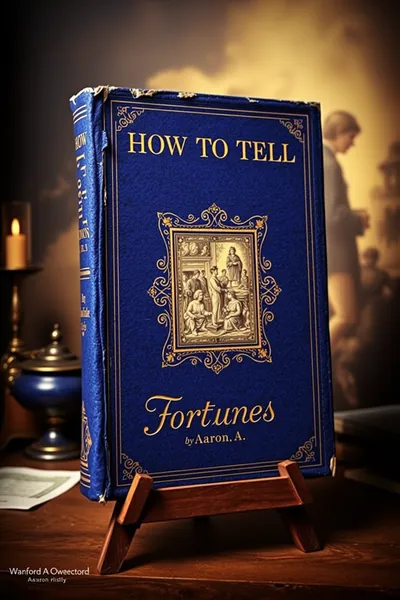
Wahrsagen mit dem großen Lenormand - Tarot
 76
76

Wahrsagen mit dem großen Lenormand - Tarot
Jolanta Ahlers' "Wahrsagen mit dem großen Lenormand - Tarot" presents a focused and practical manual for those drawn to the specific interpretive logic of the Lenormand deck. Unlike the often more abstract symbolism of tarot, Ahlers emphasizes the direct, narrative qualities of the Lenormand cards, a strength of the system she articulates clearly. The book's meticulous breakdown of each card's meaning and its interactions with others is commendable. However, the original blurb's absence leaves a void, and the title's inclusion of 'Tarot' might inadvertently confuse newcomers expecting a tarot-focused text, despite the content's clear Lenormand orientation. The section on card chaining, illustrating how adjacent cards modify meaning, is particularly well-developed and offers a concrete technique for deeper analysis. The work functions best as a dedicated primer for mastering this particular divination tool. It provides a solid foundation for understanding the Lenormand system, though advanced practitioners might seek more esoteric depth.
📝 Description
76
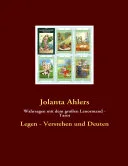
Jolanta Ahlers' 2009 book explains the Grand Lenormand deck for divination.
Wahrsagen mit dem großen Lenormand - Tarot, published in 2009, serves as a guide to reading with the 36 cards of the Grand Lenormand system. Jolanta Ahlers aims to clarify this method of cartomancy, distinguishing it from other tarot traditions. The book details each card's individual meaning, how cards interact symbolically, and how to use them for predictive readings. It offers a structured way for readers to learn card combinations and interpret the story a spread tells. This text is for those interested in learning or improving their Lenormand reading skills. It appeals to people drawn to tarot's symbolism but who want a more direct divination tool. Readers seeking practical advice on interpreting spreads, understanding card interplay, and applying these insights to life questions will find it useful. It suits both new diviners and those with experience wanting to master this specific system. Ahlers' work is situated within a modern revival of interest in older divination practices, following the Lenormand system's historical popularity.
The Lenormand system, named after Marie Anne Lenormand, originated in early 19th century France. Lenormand was a contemporary of Napoleon, and her readings were sought by influential figures. This system, with its 36 cards, offers a more direct approach to divination than some tarot decks. It has seen periods of popularity throughout the 20th and 21st centuries, often appearing alongside or as an alternative to Rider-Waite-Smith tarot. Ahlers' book engages with this historical tradition, placing it within a contemporary renewed interest in historical divination methods.
💡 Why Read This Book?
• Learn the unique narrative structure of the 36 Lenormand cards, understanding how each card's meaning shifts based on its neighbors, a concept central to "card chaining" as detailed in the book. • Gain practical skills in interpreting full 'tableau' readings, a method discussed for creating a holistic overview of complex situations using the entire deck. • Master the specific symbolism of cards like The House or The Coffin, differentiating their direct predictive language from the more allegorical imagery found in tarot traditions.
⭐ Reader Reviews
Honest opinions from readers who have explored this book.
❓ Frequently Asked Questions
What is the difference between Lenormand and Tarot as presented in this book?
The book clarifies that while both are divination systems, Lenormand cards (36 in number) offer more direct, narrative-based interpretations, whereas tarot often employs more complex archetypes and symbolism.
Who was Marie Anne Lenormand?
Marie Anne Lenormand (1772–1843) was a renowned French fortune-teller whose predictions influenced political figures, and the Lenormand system of divination is named in her honor.
Does the book teach how to do full card spreads?
Yes, 'Wahrsagen mit dem großen Lenormand - Tarot' guides readers through interpreting 'tableau' readings, where all 36 cards are laid out to provide a comprehensive overview of a situation.
When was Jolanta Ahlers' book first published?
Jolanta Ahlers' guide, 'Wahrsagen mit dem großen Lenormand - Tarot', was first published in 2009.
Is this book suitable for absolute beginners in divination?
The book is structured to be accessible to beginners, providing a systematic approach to learning the 36 Lenormand cards and their combinations, though prior familiarity with symbolic systems can be helpful.
What is 'card chaining' in Lenormand reading?
Card chaining, as explained in the text, is an interpretive technique where the meaning of a card is significantly influenced by the cards positioned immediately before and after it in a spread.
🔮 Key Themes & Symbolism
The 36 Lenormand Cards
This theme focuses on the core components of the Lenormand system: the 36 distinct cards, each with unique imagery and meanings. Ahlers' work systematically breaks down each card, from The Rider representing news and movement, to The Lily symbolizing peace and old age. The book emphasizes understanding the individual essence of each card before exploring their interactions, providing a foundational knowledge crucial for accurate divination. The emphasis is on concrete symbolism, making it distinct from the more abstract archetypes found in tarot.
Card Chaining and Combinations
A central tenet explored is 'card chaining,' a method where the sequential placement of cards dictates how their meanings merge and influence one another. This theme moves beyond static card definitions, teaching readers to see a narrative flow within a spread. Ahlers illustrates how a card like The House (stability, home) can take on different nuances when placed next to The Clouds (obstacles) versus The Clover (good fortune), demonstrating the dynamic interpretation required for effective Lenormand readings.
Tableau Reading Method
The book dedicates significant attention to the 'tableau' or grand tableau method, which involves laying out all 36 Lenormand cards to create a comprehensive map of a query or situation. This theme highlights the power of a full spread for holistic interpretation. Readers are guided on how to read the 'Grand Tableau' as a narrative, identifying key themes, influences, and potential outcomes by analyzing the interplay of cards across different sections of the layout.
Lenormand vs. Tarot
A recurring theme is the distinction between the Lenormand system and traditional tarot. Ahlers clarifies that while both are cartomantic tools, their interpretive frameworks differ. Lenormand is presented as more direct and predictive, focusing on everyday events and relationships, whereas tarot often looks at deeper psychological and spiritual archetypes. This theme helps readers understand the specific strengths and applications of the Lenormand deck as a divination tool.
💬 Memorable Quotes
Direct passages from the work, attributed to the author.
“The Grand Tableau offers a comprehensive overview of a situation.”
— This highlights the significance of the full 36-card spread in Lenormand readings, as detailed in the book, emphasizing its utility for holistic analysis.
“Each of the 36 cards has a direct, often literal, meaning.”
— This reflects the book's approach to Lenormand, contrasting it with tarot by emphasizing the system's straightforward, narrative-driven interpretations.
“Understanding the Rider card signifies news or communication.”
— This represents the book's method of defining individual cards, using The Rider as an example of a core Lenormand symbol and its primary interpretation.
💡 Key Ideas
Editorial paraphrase of the work's core concepts — not direct quotes.
The meaning of a card is often determined by the cards surrounding it.
This paraphrase captures the essence of 'card chaining,' a core concept in Lenormand divination where context provided by adjacent cards is crucial for accurate interpretation.
The Coffin card often indicates an ending or transformation.
This paraphrase illustrates how specific Lenormand cards, like The Coffin, are presented with clear, predictive meanings related to life events.
🌙 Esoteric Significance
Tradition
The Lenormand system, as presented by Ahlers, aligns with the broader tradition of Western esoteric cartomancy, particularly those practices focused on practical divination and prediction. While not directly tied to Hermeticism or Kabbalah in its core structure, it shares with them a method of symbolic interpretation aimed at revealing hidden influences and future potentials. Its lineage is primarily secular, rooted in 19th-century fortune-telling practices rather than overt religious or philosophical doctrines. Ahlers' work fits within this lineage by providing a clear, accessible guide to a system that, despite its popularity, often lacked comprehensive modern instruction.
Symbolism
Key symbols in the Lenormand system include The House, representing domesticity, stability, and personal space, and The Coffin, signifying endings, transformation, or a period of dormancy. Ahlers' work elucidates how these concrete images translate into predictive meanings. For instance, The House appearing in a reading might directly refer to one's dwelling or family life, while The Coffin points to the conclusion of a phase, a literal burial, or a period of introspection and change, emphasizing the system's grounded approach to symbolic language.
Modern Relevance
Contemporary practitioners of divination, particularly those focusing on predictive cartomancy and narrative-based readings, continue to draw upon the Lenormand system. Its directness and ability to provide clear answers make it popular among modern esotericists and laypeople seeking guidance. Schools of thought that emphasize practical application of esoteric tools, such as some modern occult circles and online divination communities, find Ahlers' systematic approach highly valuable. The Lenormand's resurgence reflects a broader trend towards exploring diverse divinatory methods beyond the mainstream tarot.
👥 Who Should Read This Book
• Aspiring diviners seeking a structured introduction to a powerful, yet distinct, cartomantic system, focusing on the 36 Lenormand cards and their specific interpretive logic. • Tarot readers interested in expanding their toolkit with a method known for its directness and narrative clarity, learning how to differentiate Lenormand symbolism from tarot archetypes. • Esoteric practitioners who value practical, predictive divination and wish to master techniques like 'card chaining' and 'tableau' readings for in-depth analysis.
📜 Historical Context
Jolanta Ahlers' "Wahrsagen mit dem großen Lenormand - Tarot" emerged in 2009, a period marked by a sustained resurgence of interest in traditional divination practices. The Lenormand system itself traces its origins to the early 19th century, closely associated with Marie Anne Lenormand (1772–1843), a fortune-teller whose predictions were legendary in pre- and post-Revolutionary France. Her work gained traction during an era when cartomancy was becoming a popular form of esoteric inquiry, often practiced alongside other mystical arts. In the early 21st century, this renewed interest saw practitioners and authors like Ahlers documenting and disseminating these older systems. This era was also characterized by a burgeoning online community sharing esoteric knowledge, contrasting with earlier periods where such information might have been more guarded or subject to limited print runs. While systems like the Rider-Waite-Smith tarot dominated much of the 20th century's popular occult scene, the 2000s saw a growing appreciation for alternative cartomantic decks and methods, including the more direct interpretive style of Lenormand.
📔 Journal Prompts
Reflect on the core meaning of The Rider card and its potential manifestations in daily communication.
Analyze the symbolic interplay between The Clouds and The Clover in a hypothetical spread.
Consider how the concept of 'card chaining' alters the interpretation of a single card's meaning.
Describe a personal situation where a 'tableau' reading could offer clarity.
How does the direct symbolism of The House compare to archetypal representations of home in other systems?
🗂️ Glossary
Lenormand Deck
A deck of 36 cards used for divination, named after Marie Anne Lenormand, characterized by its direct imagery and narrative interpretive style.
Card Chaining
An interpretive technique in Lenormand readings where the meaning of a card is significantly influenced by the cards immediately preceding and following it.
Tableau Reading
A method of Lenormand divination involving the layout of all 36 cards to form a comprehensive 'picture' or map of a situation.
Grand Tableau
The full 36-card spread in Lenormand divination, considered the most comprehensive layout for analyzing a query.
The Rider
A specific card in the Lenormand deck, typically symbolizing news, messages, movement, or a visitor.
The Coffin
A Lenormand card often representing endings, transformation, closure, illness, or a period of confinement.
Esoteric
Relating to or concerned with the inner nature of things; often referring to mystical, occult, or spiritual knowledge not widely known.