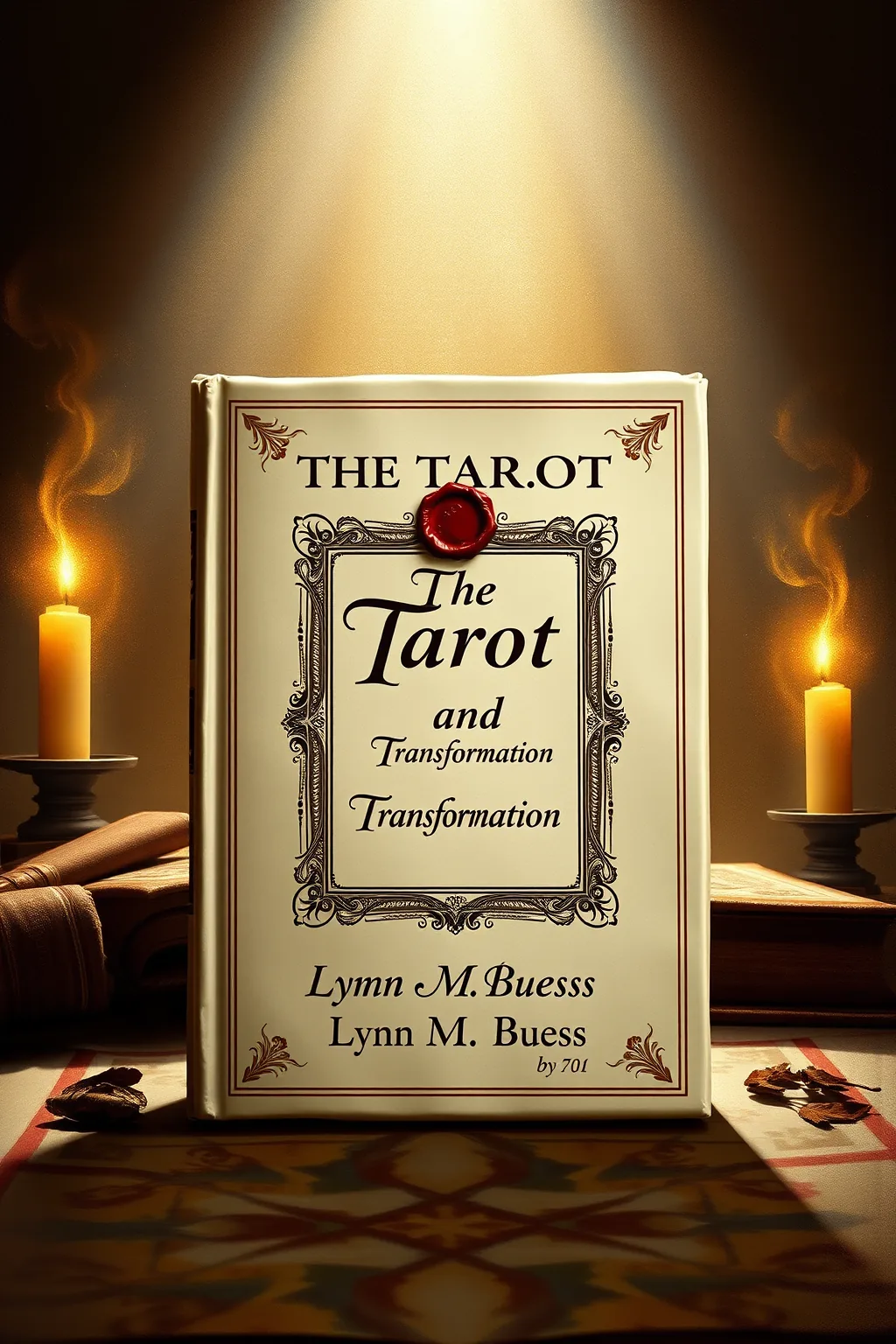
The tarot and transformation
 80
80

The tarot and transformation
Lynn M. Buess's "The Tarot and Transformation" positions the cards as a profound psychological framework, a stance refreshingly grounded for its 1977 publication. The strength lies in its consistent focus on the Tarot as a mirror for internal change, rather than a crystal ball. Buess avoids sensationalism, presenting a sober, academic yet accessible exploration of archetypal psychology through the Major Arcana. A notable passage discusses the Empress card not just as fertility, but as the generative principle of consciousness itself, a compelling re-framing. However, the book occasionally suffers from a density that might deter absolute beginners, requiring a certain familiarity with psychological terminology. Its original context, while valuable, means some contemporary psycho-spiritual references may feel dated. Nonetheless, it remains a solid contribution for those seeking a deeper, introspective engagement with the Tarot.
📝 Description
80
### What It Is This work by Lynn M. Buess, first published in 1977, offers a unique perspective on the Tarot not merely as a divinatory tool but as a psychological and spiritual map. It explores the archetypal patterns embedded within the Major and Minor Arcana, linking them to processes of personal evolution and self-discovery.
### Who It's For Students of esoteric philosophy, seasoned Tarot practitioners seeking deeper meaning beyond fortune-telling, and individuals interested in the intersection of psychology and spirituality will find this book particularly relevant. It caters to those who approach the Tarot as a system for inner work and transformation.
### Historical Context Emerging in the mid-1970s, a period of burgeoning interest in Eastern philosophies and Western esotericism, Buess's book contributed to a growing movement to understand Tarot through psychological lenses, influenced by figures like Carl Jung. It moved away from purely predictive interpretations prevalent in earlier eras.
### Key Concepts The text examines the Tarot's structure as a progression, often drawing parallels between the Fool's journey and the individuation process. It highlights the symbolic language of the cards, interpreting them as stages of consciousness and archetypal encounters essential for personal growth.
💡 Why Read This Book?
• Gain a structured understanding of the Tarot's archetypal journey, mirroring the individuation process as explored in psychology, a concept Buess details. • Explore the symbolic language of the Major Arcana as stages of consciousness, moving beyond simple divinatory meanings to profound personal insights. • Appreciate the historical context of esoteric thought in the 1970s, understanding how works like this shifted Tarot interpretation towards psychological depth.
⭐ Reader Reviews
Honest opinions from readers who have explored this book.
❓ Frequently Asked Questions
When was "The Tarot and Transformation" originally published?
"The Tarot and Transformation" by Lynn M. Buess was first published in 1977, placing it within a significant period of interest in esoteric and psychological interpretations of the Tarot.
What is the primary focus of Buess's interpretation of the Tarot?
Buess focuses on the Tarot as a psychological and spiritual map, exploring the archetypal patterns within the cards as tools for personal evolution and self-discovery, rather than solely for divination.
Does the book discuss both Major and Minor Arcana?
Yes, the work examines the archetypal patterns embedded within both the Major and Minor Arcana, linking them to processes of personal evolution and self-discovery.
What intellectual movements influenced the book's approach?
The book was influenced by the burgeoning interest in Eastern philosophies and Western esotericism in the mid-1970s, particularly by psychological approaches to archetypes, akin to those explored by Carl Jung.
Is "The Tarot and Transformation" suitable for beginners?
While accessible, the book's depth and psychological focus might be best appreciated by those with some existing familiarity with Tarot or psychology, rather than absolute beginners.
How does Buess link the Tarot to personal growth?
Buess links the Tarot's structure to a progression, often comparing the Fool's journey through the cards to the psychological process of individuation and essential stages of consciousness development.
🔮 Key Themes & Symbolism
Archetypal Psychology and Tarot
Buess posits the Tarot's cards as potent archetypes, mirroring the human psyche's innate patterns and developmental stages. This perspective aligns with Jungian psychology, viewing the Major Arcana's progression as a symbolic representation of the individuation journey—the process of becoming a whole, integrated self. The cards are presented not as external forces, but as internal potentials and challenges the individual encounters on the path to self-realization.
The Tarot as a Map of Consciousness
The book frames the Tarot deck as a comprehensive map charting the landscape of human consciousness. Each card, from the Zero of the Fool to the more complex interactions within the Minor Arcana, represents a distinct state of awareness, a particular energetic quality, or a stage in psychological unfolding. This allows practitioners to use the cards for self-assessment and to understand their current inner state.
Symbolism and Personal Transformation
Buess emphasizes the profound symbolic language inherent in the Tarot imagery. Understanding these symbols unlocks deeper layers of meaning, revealing pathways for personal transformation. The transformation is not seen as an external event, but as an internal shift in perception, understanding, and being, facilitated by engaging with the archetypal energies the cards represent.
Esoteric Systems and Modern Psychology
Published in 1977, the work reflects a mid-20th-century trend of integrating ancient esoteric systems with emerging psychological theories. Buess bridges the gap between traditional occultism and modern analytical psychology, demonstrating how ancient wisdom traditions can offer valuable frameworks for understanding contemporary human experience and psychological development.
💬 Memorable Quotes
“The Tarot is a mirror of the soul.”
— This concise statement encapsulates Buess's core thesis: the cards do not predict an external future but reflect the internal landscape of the individual, offering insights into their psychological state and developmental trajectory.
“The Fool's journey is the journey of individuation.”
— This interpretation directly links the symbolic progression of the Fool through the Major Arcana to Carl Jung's concept of individuation, suggesting the Tarot provides a symbolic blueprint for psychological wholeness.
“Each card represents a stage of consciousness.”
— This highlights the book's focus on the Tarot as a dynamic system for understanding mental and spiritual development, framing the cards as markers on a path of evolving awareness.
“Transformation occurs through understanding archetypes.”
— This suggests that personal change is facilitated by recognizing and integrating the universal patterns (archetypes) depicted in the Tarot, leading to a more profound self-awareness.
“The Minor Arcana detail the practical application of archetypal forces.”
— This points to Buess's view that while the Major Arcana represent grand themes, the Minor Arcana illustrate how these universal principles manifest in the everyday experiences and challenges of life.
🌙 Esoteric Significance
Tradition
This work aligns with the Western esoteric tradition, particularly drawing from Hermetic and Gnostic principles that emphasize inner knowledge and the journey of the soul. It also shows a strong influence from Jungian psychology, which itself engaged with Gnostic and alchemical symbolism. Buess reframes traditional Tarot symbolism through a psychological lens, making it accessible to those interested in self-actualization and spiritual growth.
Symbolism
Key symbols include 'The Fool,' representing the primordial spark of consciousness and the uninitiated journey, often linked to the concept of Kether in Kabbalah or the divine child archetype. 'The Empress' signifies the generative principle, nurturing growth and creative manifestation, a concept that resonates with the feminine divine in various traditions. The suits of the Minor Arcana (Wands, Cups, Swords, Pentacles) are interpreted as representing fundamental forces or elements in human experience.
Modern Relevance
Buess's approach continues to inform contemporary Tarot readers and psychologists interested in archetypal patterns. Modern therapeutic modalities that incorporate symbolic language, such as Jungian analysis and active imagination, echo the insights presented in this book. Contemporary authors exploring the intersection of spirituality and psychology often reference this shift towards understanding the Tarot as a tool for inner work and personal myth-making.
👥 Who Should Read This Book
• Students of Jungian psychology and archetypal theory seeking practical applications of these concepts. • Tarot enthusiasts interested in moving beyond predictive readings to explore the cards as a system for self-understanding and psychological growth. • Esoteric scholars examining the evolution of Tarot interpretation in the late 20th century and its engagement with psychological frameworks.
📜 Historical Context
Lynn M. Buess's "The Tarot and Transformation," emerging in 1977, arrived during a fertile period for esoteric and psychological inquiry. The mid-20th century had seen figures like Carl Jung revolutionize the study of archetypes, a trend that significantly impacted how systems like the Tarot were perceived. Unlike earlier, more fortune-telling-centric approaches, Buess's work contributed to a burgeoning field that viewed Tarot as a tool for psychological exploration and spiritual development. This era also saw a significant influx of interest in Eastern spiritual traditions, which often provided parallel frameworks for understanding consciousness and transformation. Buess's text can be seen as part of a Western esoteric movement seeking to synthesize these diverse streams of thought. While not directly engaging with contemporaries in public debate, her work implicitly dialogued with the psychological interpretations offered by figures like Joseph Campbell and the broader New Age movement gaining momentum.
📔 Journal Prompts
The Fool's initial leap into the unknown: what current 'leap' are you contemplating?
Reflect on the archetype of 'The Empress' as a generative force in your life.
How does the concept of 'stages of consciousness' apply to a recent challenge?
Consider the symbolic meaning of the Minor Arcana suits in your daily activities.
What does the journey of individuation mean for your personal path?
🗂️ Glossary
Archetype
In Jungian psychology, an inherited, universal pattern of thought or image derived from the collective unconscious, which shapes human experience and behavior. The Tarot's figures are often seen as archetypes.
Individuation
The psychological process of integrating the conscious and unconscious aspects of the personality, leading to the development of a unique self; a central concept in Carl Jung's analytical psychology.
Consciousness
The state of being aware of and responsive to one's surroundings. In this context, it refers to different levels or states of awareness explored through the Tarot's symbolic progression.
Major Arcana
The trump cards of a Tarot deck, typically numbered 0 through 21, representing significant life lessons, spiritual journeys, and archetypal forces.
Minor Arcana
The four suits of a Tarot deck (Wands, Cups, Swords, Pentacles), akin to playing cards, which represent more mundane events, challenges, and daily experiences.
Symbolic Language
The use of images, signs, or objects to represent abstract ideas or qualities. The Tarot communicates through a rich symbolic language of archetypes and motifs.
Esotericism
Systems of thought and practice concerned with hidden knowledge, spiritual illumination, and often involving secret teachings or initiatory traditions, such as Hermeticism or Gnosticism.