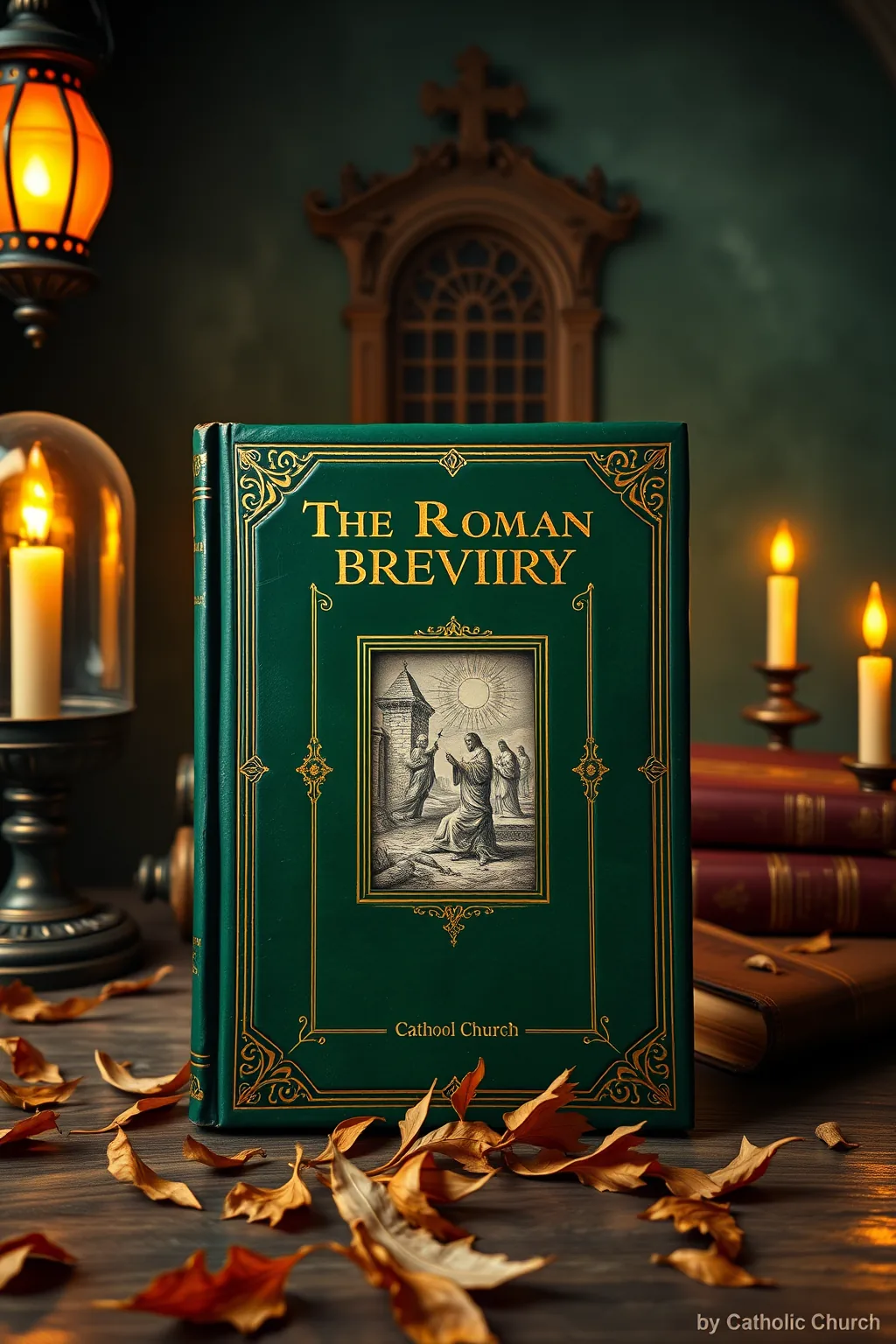
The Roman Breviary
 75
75

The Roman Breviary



The 3rd Marquess of Bute’s revised edition of the Roman Breviary presents a substantial and meticulously researched volume, offering a deep dive into the structured prayer life of the Catholic Church. Its strength lies in its scholarly apparatus and the sheer density of liturgical material preserved. However, for the uninitiated, the sheer volume and the archaic language of its Latinate origins (even in translation) can present a formidable barrier. The section on the Hours, for instance, while comprehensive, assumes a prior familiarity with liturgical cycles. The original 1540 publication date, while a point of historical interest, does not reflect the extensive revisions and scholarly input that characterized later editions, including Bute's own. This is a work for the dedicated scholar or devotionalist, not an entry point for the curious beginner. Its value is in its historical accuracy and liturgical completeness, demanding significant effort from the reader.
📝 Description
75
### What It Is
The Roman Breviary is the official daily public prayer book for the Roman Catholic Church, containing prayers, psalms, readings, and hymns appointed for each day of the liturgical year. Its structure and content are deeply rooted in centuries of Christian tradition, providing a framework for communal and private devotion. This edition, particularly the one revised and published under the patronage of the 3rd Marquess of Bute, represents a significant effort to restore and clarify its liturgical and textual elements.
### Who It's For
This work is essential for scholars of liturgical history, comparative religion, and Christian mysticism. It is also of interest to those engaged in the study of Catholic tradition, specifically its devotional practices and the evolution of its prayer forms. Individuals seeking to understand the historical underpinnings of Catholic liturgy and its textual development will find significant value here. It is not a book for casual reading but for dedicated study.
### Historical Context
The Roman Breviary, in its earliest forms, traces its lineage back to the monastic breviaries of the early Church. The Council of Trent (1545-1563) mandated a revision of the breviary to standardize its use across the Roman Rite, leading to the publication of the Breviarium Romanum in 1568 under Pope Pius V. This move aimed to correct perceived abuses and ensure doctrinal uniformity. The edition associated with John Patrick Crichton-Stuart, the 3rd Marquess of Bute, signifies a later scholarly engagement with this tradition, reflecting a renewed interest in historical liturgical texts in the 19th century.
### Key Concepts
The Breviary is structured around the Liturgy of the Hours, a cycle of daily prayer. Key components include the Divine Office, consisting of Matins, Lauds, Prime, Terce, Sext, None, Vespers, and Compline. It features the recitation of the Psalms, scriptural readings (often from the Old and New Testaments), and patristic writings. The calendar is organized according to feasts and seasons, dictating the specific prayers and readings for each day. The concept of *lectio divina* (divine reading) is central to its use, encouraging contemplative engagement with the texts.
✍️ Author

Catholic Church, John Patrick Crichton-Stuart 3rd Marquess of Bute
The Pontifical Equestrian Order of St. Gregory the Great (Latin: Ordo Sancti Gregorii Magni; Italian: Ordine di San Gregorio Magno) was established on 1 September 1831, by Pope Gregory XVI, seven months after his election as Pope.
💡 Why Read This Book?
• Gain direct access to the historical prayer cycles of the Roman Catholic Church, understanding the *Liturgy of the Hours* as it was structured for centuries, offering a unique perspective on historical Christian devotion. • Explore the intricate relationship between scripture, patristic writings, and liturgical practice through the specific readings and psalms appointed for each day, as codified by the Council of Trent's mandate for standardization. • Understand the evolution of liturgical texts by examining the scholarly efforts, such as those by the 3rd Marquess of Bute, to refine and present the Breviary, appreciating the historical context of its 1568 revision.
⭐ Reader Reviews
Honest opinions from readers who have explored this book.
❓ Frequently Asked Questions
What is the primary purpose of the Roman Breviary?
The Roman Breviary serves as the official daily prayer book for clergy and the laity in the Roman Rite of the Catholic Church. It contains the texts for the Divine Office, structured into canonical hours like Matins, Lauds, and Vespers.
When was the Roman Breviary first officially standardized?
Following the Council of Trent, the Roman Breviary was officially standardized and published as the Breviarium Romanum in 1568 under Pope Pius V, aiming to unify liturgical practice.
Who was John Patrick Crichton-Stuart, and what was his role?
John Patrick Crichton-Stuart, the 3rd Marquess of Bute, was a prominent convert to Catholicism and a scholar. He undertook significant work in revising and translating liturgical texts, including the Roman Breviary, in the late 19th century.
What are the main components of the daily prayers in the Breviary?
The Breviary's daily prayers, known as the Liturgy of the Hours, primarily consist of psalms, scripture readings, hymns, and patristic commentaries, organized into specific canonical hours throughout the day and night.
Is the 1540 edition the same as the later revised versions?
The 1540 publication is an early iteration. The Roman Breviary underwent significant revision and standardization under Pope Pius V in 1568, with further scholarly contributions, such as those by the 3rd Marquess of Bute, appearing much later.
What is 'lectio divina' in the context of the Breviary?
'Lectio divina' (divine reading) is a contemplative practice central to the use of the Breviary. It involves meditating on the scriptural and patristic texts provided, aiming for spiritual insight and union with God.
🔮 Key Themes & Symbolism
The Divine Office Cycle
The Breviary is fundamentally structured around the Divine Office, a cycle of canonical hours that structure the day and night for prayer. This includes Matins, Lauds, Prime, Terce, Sext, None, Vespers, and Compline. Each hour has specific psalms, readings, and prayers. This cyclical nature reflects the ancient monastic tradition of 'perpetual prayer,' ensuring that the Church is always engaged in praise and intercession, a concept deeply embedded in its historical development since at least the early monastic communities.
Psalms and Scriptural Recitation
A cornerstone of the Breviary is the systematic recitation of the Psalms. The entire Psalter is typically divided to be sung or recited over the course of a week. This deep engagement with the biblical text, particularly the Psalms, was seen as essential for spiritual formation and maintaining a connection to the Old Testament covenant while anticipating the New. The selection and arrangement of these psalms are integral to understanding the devotional life it fosters.
Patristic Authority and Tradition
The Breviary incorporates readings from the Church Fathers (patristic writings) alongside scripture. This inclusion highlights the importance of tradition and the authoritative interpretations of early Christian theologians. These selections provide commentary and spiritual reflection, connecting the contemporary worshipper to the wisdom of the early Church and reinforcing doctrinal continuity. The Council of Trent's revision in 1568 was partly aimed at standardizing these patristic selections.
Liturgical Standardization
The historical development of the Roman Breviary, particularly the 1568 edition following the Council of Trent, reflects a strong impulse towards standardization within the Roman Rite. This effort sought to unify prayer practices across diverse regions, correct perceived textual corruptions, and ensure doctrinal orthodoxy. The work of scholars like the 3rd Marquess of Bute in later centuries represents continued efforts to refine and present these standardized texts accurately.
💬 Memorable Quotes
“The Divine Office consists of prayers, psalms, readings, and hymns appointed for each canonical hour.”
— This paraphrased concept highlights the core components and structure of the Breviary. It emphasizes that the daily prayer cycle is not arbitrary but a carefully curated collection of liturgical elements designed for spiritual discipline.
“The entire Psalter is typically recited over the course of a week.”
— This statement underscores the systematic and comprehensive engagement with the Psalms integral to the Breviary. It points to a disciplined, repetitive spiritual practice aimed at internalizing biblical language and prayer forms.
“Readings from the Church Fathers are included to provide authoritative commentary.”
— This captures the Breviary's reliance on tradition. The inclusion of patristic texts signifies a connection to early Christian thought and a belief in their enduring relevance for guiding prayer and doctrine.
“The Council of Trent mandated a revision to standardize the Breviary.”
— This points to a key historical moment in the Breviary's development. The Council's decision in the 16th century aimed to create uniformity and doctrinal consistency in the Church's official prayer book.
“The Breviary is structured around the Liturgy of the Hours.”
— This paraphrased concept defines the overarching organizational principle of the Breviary. It signifies a prayer life intentionally ordered throughout the day and night, not confined to a single service.
🌙 Esoteric Significance
Tradition
While the Roman Breviary is a primary text of mainstream Catholicism, its systematic structure, emphasis on cyclical prayer, and deep scriptural exegesis lend themselves to esoteric interpretation. Within traditions that value angelicic communication or the 'Work of God' as a cosmic force, the Breviary can be seen as a formalized method for aligning human consciousness with divine rhythms. It aligns with a broader Hermetic principle of 'as above, so below,' by structuring earthly time according to celestial patterns and divine will.
Symbolism
The canonical hours themselves—Matins, Lauds, Prime, Terce, Sext, None, Vespers, Compline—can be interpreted symbolically as representing stages of spiritual development or specific energetic alignments throughout the day. The Psalms, particularly those of lament and praise, are rich with archetypal imagery and can be used in meditative practices for inner transformation. The cyclical recurrence of feasts and seasons symbolizes death and rebirth, mirroring cosmic and personal cycles.
Modern Relevance
Contemporary practitioners of contemplative prayer, traditionalist Catholic movements, and scholars of Western esotericism often engage with the Breviary. Its structured approach to prayer offers a counterpoint to more unstructured or individualistic spiritual paths. Thinkers interested in the 'perennial philosophy' may find in its ancient form a universal model of aligning human life with divine order, influencing contemporary approaches to sacred time and liturgical revival.
👥 Who Should Read This Book
• Students of Catholic liturgical history and theology seeking a foundational text that shaped centuries of prayer life and devotional practice. • Scholars of comparative religion interested in the structure and content of official religious prayer books and their role in maintaining religious identity. • Devotees of traditional Christian prayer seeking to understand the historical origins and textual basis of the Liturgy of the Hours as reformed after the Council of Trent.
📜 Historical Context
The Roman Breviary's lineage stretches back to the earliest Christian monasticism, but its modern form is heavily influenced by the post-Council of Trent reforms. The Council of Trent (1545-1563) aimed to address doctrinal disputes and liturgical abuses, leading to the publication of the *Breviarium Romanum* in 1568 under Pope Pius V. This standardized the daily prayer book for the Roman Rite, replacing numerous local variations. The era was marked by the Counter-Reformation, a Catholic response to the Protestant Reformation, which emphasized doctrinal clarity and adherence to tradition. While Protestant reformers were developing their own liturgical forms, the Catholic Church sought to reaffirm and purify its existing practices. The 19th-century scholarly engagement, exemplified by the 3rd Marquess of Bute's work, reflects a renewed historical and devotional interest in these foundational texts, often in dialogue with Anglican liturgical scholarship of the same period.
📔 Journal Prompts
The structure of the Liturgy of the Hours and its appointed psalms.
Reflecting on the inclusion of patristic readings within the Breviary.
The impact of the Council of Trent's standardization on Catholic prayer.
The symbolic meaning of the canonical hours throughout the day.
Personal practice of *lectio divina* using Breviary texts.
🗂️ Glossary
Divine Office
The official daily prayer of the Roman Catholic Church, comprising psalms, hymns, scripture readings, and other prayers recited at specific canonical hours throughout the day and night.
Canonical Hours
Specific times set for daily prayer in the Divine Office, traditionally including Matins, Lauds, Prime, Terce, Sext, None, Vespers, and Compline.
Psalter
A collection of the Psalms, forming a significant part of the Old Testament and a central element of the Breviary's daily recitation.
Church Fathers (Patristics)
Early influential theologians and writers in Christianity whose works are considered authoritative interpretations of scripture and doctrine.
Liturgy of the Hours
The official name for the Divine Office in the Roman Catholic Church, reflecting its structured, communal, and ongoing nature of prayer.
Breviarium Romanum
The official title of the Roman Breviary as published and standardized by Pope Pius V in 1568 following the Council of Trent.
Lectio Divina
A traditional monastic practice of scriptural reading, meditation, and prayer, aimed at deepening one's spiritual connection with God.