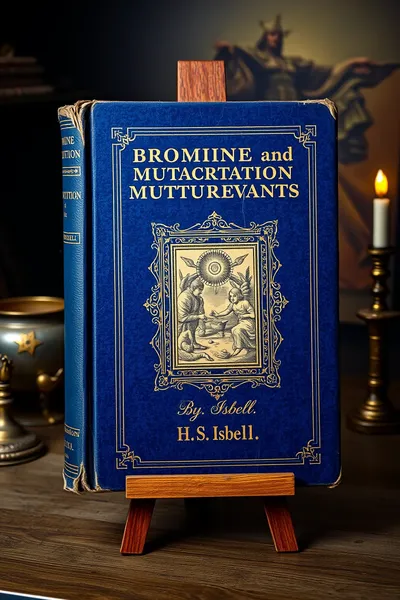
The laws of scientific hand reading
 64
64

The laws of scientific hand reading



Sophia Crane (Associate Editor) — William G. Benham's "The Laws of Scientific Hand Reading" stands as an enduring testament to the deep wisdom of chiromancy. Benham's approach, meticulously detailed and grounded in observation, transcends superficial prediction, offering instead a profound exploration of human psychology and destiny as revealed by the palm. His clear exposition of the hand's structure, from the meaning of each finger to the intricate pathways of the major lines, provides an invaluable resource for serious students. This book is essential for anyone seeking to understand the esoteric currents that shape our lives, offering practical tools for self-discovery and a deeper appreciation for the subtle language of the universe. It is a foundational text for practitioners and curious minds alike.
📝 Description
64
Embark on a profound journey into the ancient art of cheiromancy with William G. Benham's "The Laws of Scientific Hand Reading." This seminal work, a cornerstone of our Esoteric Library, unveils the intricate language etched into the human palm. Benham, a masterful guide, illuminates how the very architecture of the hand – its mounts, lines, and contours – serves as a living map of destiny, character, and hidden potential. Beyond mere fortune-telling, this book delves into the philosophical underpinnings of palmistry, revealing it as a sophisticated system of symbolic interpretation. Discover how the shape of your fingers, the curves of your life line, and the subtle markings on your palm are not random accidents but cosmic whispers waiting to be understood. This is a text for the discerning seeker, the scholar of ancient wisdom, and anyone yearning to unlock the secrets held within their own being. Prepare to perceive the world, and yourself, through a lens of profound, interconnected symbolism. The knowledge within these pages offers a unique perspective on the unfolding narrative of existence, bridging the material and the mystical.
✍️ Author
William G. Benham
Elizabeth, Princess Berkeley (born Lady Elizabeth Berkeley; 17 December 1750 – 13 January 1828), sometimes unofficially styled Margravine of Brandenburg-Ansbach, previously Elizabeth Craven, Baroness Craven of Hamstead Marshall, was an author and playwright…
💡 Why Read This Book?
Unlock the ancient secrets of the palm and gain profound insights into your character, destiny, and hidden potentials. "The Laws of Scientific Hand Reading" offers a systematic approach to palmistry, revealing it as a sophisticated language of self-knowledge. Ideal for seekers of esoteric wisdom, students of divination, and practitioners of metaphysical arts eager to deepen their understanding of symbolic interpretation and the human condition.
⭐ Reader Reviews
Honest opinions from readers who have explored this book.
❓ Frequently Asked Questions
What is the primary foundation of palmistry according to Benham?
Benham posits that the science of palmistry is fundamentally founded upon the shape and characteristics of the human hand, serving as its primary interpretive basis.
Is this book just about predicting the future?
No, while it touches on destiny, the book focuses more on understanding character, innate talents, and life patterns through the symbolic language of the palm.
Who is the intended audience for this book?
The book is intended for those interested in a scientific and systematic approach to palmistry, including students of occult sciences, seekers of self-knowledge, and practitioners.
What makes Benham's approach 'scientific'?
Benham emphasizes systematic observation, detailed analysis of hand features, and consistent interpretations, aiming for a structured and logical understanding rather than purely intuitive readings.
Does this book require prior knowledge of palmistry?
While prior knowledge can be helpful, Benham's clear explanations and systematic approach make it accessible to beginners eager to learn the foundational principles of hand reading.
🔮 Key Themes & Symbolism
The Hand as a Cosmic Blueprint
This theme explores the profound idea that the hand is not merely a physical appendage but a living map, imprinted with the energies and patterns of one's life. Benham argues that the lines, mounts, and shapes are reflections of deeper spiritual and psychological forces at play, acting as a tangible manifestation of destiny. The book delves into how these physical attributes serve as a unique blueprint, offering a visual language to understand the soul's journey and the unfolding narrative of existence. It encourages a holistic view where the physical form is intrinsically linked to the metaphysical realm, revealing the interconnectedness of all things.
Systematic Interpretation and Observation
Benham champions a rigorous, observational approach to palmistry, moving beyond anecdotal evidence to establish a set of 'laws' for interpretation. This theme emphasizes the importance of detailed analysis, consistent application of principles, and the development of a discerning eye. It presents palmistry not as a mystical guessing game, but as a structured discipline requiring study and practice to master. The focus is on building a reliable framework for understanding the palm's complex symbolism, making the art accessible and credible to those who seek a rational yet profound method of inquiry.
The Interplay of Character and Destiny
This central theme examines the intricate relationship between innate character traits and the predetermined currents of destiny as revealed in the hand. Benham illustrates how the hand can articulate both our inherent predispositions, our strengths and weaknesses, and the potential pathways and challenges that lie ahead. It’s a nuanced exploration that suggests destiny is not rigidly fixed but is influenced by our character and choices, which are themselves illuminated by the palm. The book encourages readers to use this knowledge for self-awareness, personal growth, and making informed decisions on their life's journey.
💬 Memorable Quotes
“The shape of the hand is the foundation of palmistry.”
— This core statement emphasizes Benham's belief that the physical structure of the hand is the primary and most crucial element for accurate chiromantic interpretation.
“Lines are but the echoes of the mounts.”
— This suggests that the famous palm lines are secondary to and influenced by the development and characteristics of the hand's fleshy mounds, highlighting a hierarchical interpretive structure.
“The thumb speaks of will and logic.”
— This concisely points to the thumb as a key indicator of a person's willpower, reasoning abilities, and capacity for logical thought.
“Fingers are the interpreters of the hand's message.”
— This emphasizes the crucial role of the fingers in elaborating and clarifying the meanings conveyed by the overall hand structure and its various features.
“Every hand is a book written by nature.”
— A poetic assertion that the palm is a natural text, filled with profound information about the individual, waiting to be read and understood.
🌙 Esoteric Significance
Tradition
Benham's work is deeply rooted in the Western esoteric tradition of Chiromancy, a practice with ancient origins stretching back to classical Greece and Egypt. It aligns with hermetic principles of correspondence, where the microcosm (the hand) reflects the macrocosm (the universe and individual destiny). This tradition views the hand as a divine inscription, revealing the soul's journey, karmic patterns, and inherent potentials, integrating psychological insights with spiritual understanding.
Symbolism
The book meticulously decodes the rich symbolism of the hand. Key symbols include the seven mounts (Venus, Jupiter, Saturn, Apollo, Mercury, Mars, Luna), each representing specific character traits and life energies. The major lines (Life, Head, Heart, Fate, Sun) are interpreted as pathways of energy and experience, while finger shapes and lengths offer further layers of meaning, creating a complex symbolic language for self-understanding.
Modern Relevance
In an age of digital distraction and existential questioning, Benham's "The Laws of Scientific Hand Reading" offers a timeless path to self-discovery. Its emphasis on tactile, embodied knowledge and symbolic interpretation provides a grounding counterpoint to superficial information. The principles of observing patterns, understanding character, and discerning potential remain profoundly relevant for personal development, psychological insight, and cultivating a deeper connection with one's inner landscape.
👥 Who Should Read This Book
This foundational text is a must-read for aspiring palmists seeking a structured and authoritative guide to the art. Scholars of esoteric history and divination will find it invaluable for understanding the development of Western occultism. Seekers of self-knowledge and personal growth will discover a powerful tool for introspection and understanding their unique life path. Practitioners of other metaphysical arts, such as astrology or tarot, will benefit from the complementary symbolic language offered by chiromancy, enriching their interpretive toolkit.
📜 Historical Context
William G. Benham's "The Laws of Scientific Hand Reading," published in the early 20th century, emerged during a vibrant period of renewed interest in occultism, spiritualism, and esoteric philosophies across the Western world. This era, often referred to as the 'New Age' precursor, saw individuals seeking deeper meaning beyond burgeoning industrialization and scientific materialism. Palmistry, alongside other divinatory arts, experienced a resurgence, transitioning from folk practice to more systematized study. Benham's work contributed to this by attempting to formalize palmistry with a more analytical and observational framework, aiming to elevate it to the status of a 'science.' His contributions reflect the era's desire to find order and discoverable laws within the mystical, bridging the gap between ancient wisdom and contemporary intellectual curiosity. The book became a foundational text for a generation of palmists.
📔 Journal Prompts
After reading about the Mount of Venus, reflect on areas in your life where love, passion, or sensuality are expressed or suppressed. How does your hand reflect this?
Examine your Life Line: what periods of significant change or vitality does it seem to indicate? How do these correspond with your personal history?
Consider the shape of your fingers. Do they suggest a preference for detail or a broader perspective? How does this manifest in your daily life?
Analyze your Head Line. Does it represent a straightforward or complex thought process? How do you typically approach problem-solving and learning?
Reflect on the connection between a specific line or mount on your hand and a significant life event or personality trait. What insights does this connection offer?
🗂️ Glossary
Chiromancy
The ancient art and practice of reading the palm of the hand to interpret character, predict future events, and understand life patterns.
Mounts
The fleshy, raised pads on the palm, named after planets, each associated with specific psychological traits, energies, and potential life influences.
Lines
The various creases and markings on the palm, most notably the Life, Head, Heart, and Fate lines, which are interpreted as pathways of experience and energy.
Phalanges
The sections of the fingers, separated by creases, each contributing specific nuances to the interpretation of the finger and its associated mount.
Trifurcation
A line on the palm that splits into three distinct branches, often indicating a complex or multifaceted expression of the energy or influence associated with that line.