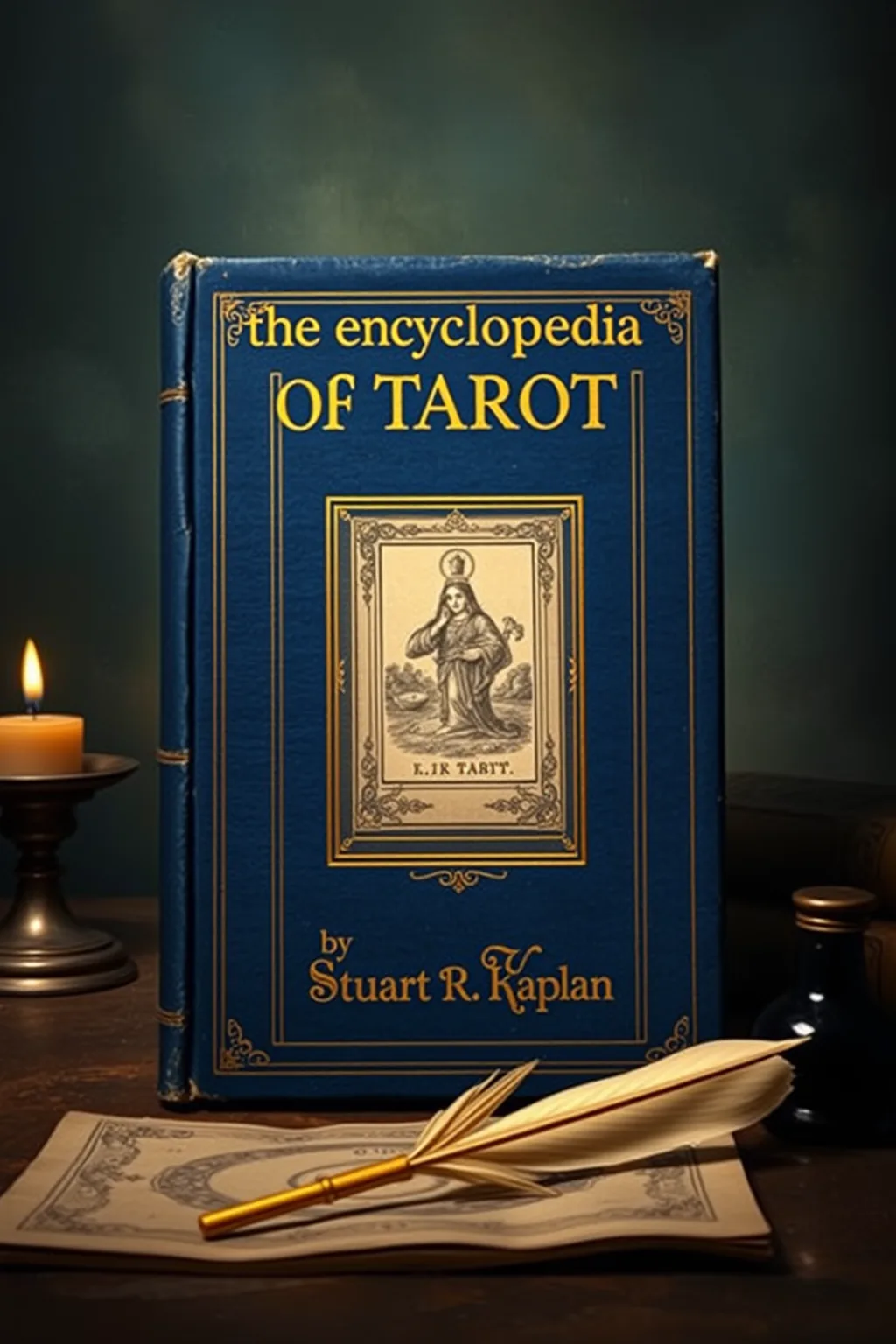
The encyclopedia of tarot
 79
79

The encyclopedia of tarot
Kaplan and Huets' Encyclopedia of Tarot, originating in 1978, remains a monumental, if somewhat dated, reference for the serious student of cartomancy. Its strength lies in its exhaustive cataloging and clear presentation of the Rider-Waite-Smith imagery, providing a solid foundation for understanding card meanings. The detailed historical context offered, particularly concerning the development of popular Tarot decks, is invaluable. However, the book’s prose can feel dry, prioritizing encyclopedic thoroughness over evocative language, which might deter readers seeking a more intuitive or mystical connection. A notable limitation is its focus on a single, albeit influential, deck system, potentially overlooking the vast diversity within Tarot traditions that have flourished since its initial publication. The section detailing the symbolism of the Four Suits, while informative, could benefit from more comparative analysis across different historical decks.
Ultimately, this work functions as an indispensable historical archive and a reliable primer, best utilized as a foundational text rather than a sole source for contemporary practice.
📝 Description
79
### What It Is The Encyclopedia of Tarot, first published in 1978 by Stuart R. Kaplan and Jean Huets, serves as a foundational compendium for understanding the history, symbolism, and practical application of Tarot cards. It meticulously details the Rider-Waite-Smith deck, alongside other significant historical decks, offering a comprehensive visual and textual exploration of the Major and Minor Arcana. The work aims to provide a structured approach to learning and interpreting the cards, moving beyond ephemeral trends to present a systematic overview.
### Who It's For This volume is primarily intended for serious students of Tarot, occult studies, and esoteric traditions. It appeals to those seeking a deep, historical understanding of the cards, rather than quick divinatory methods. Researchers, collectors of antique playing cards, and individuals interested in the intersection of art, psychology, and mysticism will find substantial material. It is suitable for both beginners who wish to build a solid theoretical foundation and experienced practitioners looking to deepen their knowledge.
### Historical Context Released in 1978, The Encyclopedia of Tarot emerged during a period of renewed interest in occult and esoteric subjects, following the counterculture movements of the 1960s. This era saw a significant resurgence in Tarot study, influenced by figures like A.E. Waite and Pamela Colman Smith, whose deck design became a de facto standard. The book's detailed approach contrasted with more popular, less academic guides, establishing itself as a serious reference. It contributed to the academic legitimization of Tarot studies, situating it within broader Western esoteric traditions.
### Key Concepts The work systematically breaks down the Tarot into its constituent parts: the 22 Major Arcana and the 56 Minor Arcana. It explores the archetypal meanings associated with each card, drawing connections to mythology, astrology, and Kabbalistic principles. Kaplan and Huets emphasize the narrative structure of the Major Arcana and the practical applications of the Minor Arcana, including court cards and numbered pip cards. The book also delves into the history of Tarot, tracing its evolution from playing cards to a tool for spiritual and psychological exploration.
💡 Why Read This Book?
• Gain a structured understanding of the 78 cards within the Rider-Waite-Smith tradition, including detailed analysis of both Major and Minor Arcana, as presented in the book's comprehensive card-by-card breakdowns. • Grasp the historical trajectory of Tarot from its origins as playing cards to its emergence as an esoteric tool, informed by the 1978 publication date and the prevailing intellectual climate of that era. • Appreciate the intricate symbolism woven into each card, as explored through the lens of mythology and astrology, providing specific examples like the archetypal journey of The Fool or the elemental associations of the Four Suits.
⭐ Reader Reviews
Honest opinions from readers who have explored this book.
❓ Frequently Asked Questions
When was the first edition of The Encyclopedia of Tarot published?
The first edition of The Encyclopedia of Tarot was published in 1978, making it one of the foundational comprehensive texts on the subject during its time.
Who are the primary authors of The Encyclopedia of Tarot?
The primary authors credited with The Encyclopedia of Tarot are Stuart R. Kaplan and Jean Huets.
What specific Tarot deck does the book focus on?
While it touches on historical decks, the book heavily details and uses the Rider-Waite-Smith deck as its primary reference, due to its significant influence.
Does the book offer practical divination methods?
The Encyclopedia of Tarot focuses more on the history, symbolism, and interpretation of cards rather than providing a wide array of practical divination techniques.
Is this book suitable for absolute beginners in Tarot?
Yes, its structured approach and detailed explanations make it suitable for beginners who want a solid, historical foundation, though it is also valuable for experienced readers.
What kind of esoteric traditions does the book draw from?
The work explores connections between Tarot symbolism and Western esoteric traditions, including elements of Hermeticism, Kabbalah, and astrology.
🔮 Key Themes & Symbolism
Archetypal Major Arcana
The work systematically details the 22 Major Arcana cards, presenting them as archetypal figures and narrative stages. Each card, from The Fool to The World, is explored for its symbolic weight, often linking its imagery to mythological figures, astrological correspondences, and psychological concepts. This approach frames the Major Arcana not merely as random symbols but as a universal journey or a map of the soul's development, reflecting the spiritual quests explored in various Western esoteric traditions.
The Four Suits and Their Meanings
Central to the book's examination of the Minor Arcana is the detailed explication of the Four Suits: Wands, Cups, Swords, and Pentacles. Kaplan and Huets assign elemental and astrological associations to each suit, providing a framework for understanding their distinct energies and themes. This section elucidates how these suits represent different facets of human experience, from action and emotion to intellect and material concerns, crucial for interpreting the 56 Minor Arcana cards.
Historical Development of Tarot
A significant aspect of The Encyclopedia of Tarot is its engagement with the historical evolution of the Tarot deck. The book traces the lineage of Tarot cards, discussing their transition from early Italian playing cards to their adoption and adaptation within esoteric circles, particularly by figures like A.E. Waite. This historical perspective situates the Rider-Waite-Smith deck, a key focus, within a broader tradition, highlighting how symbolism and usage have shifted over centuries.
Symbolism and Esoteric Correspondences
The book meticulously analyzes the rich symbolism present in Tarot cards, drawing connections to various esoteric systems. It explores correspondences with astrology, numerology, and Kabbalistic Tree of Life concepts, presenting these as integral to a deeper understanding of the cards. This detailed approach offers readers a method for decoding the layers of meaning embedded within the imagery, aligning with the symbolic language prevalent in Hermetic and occult studies.
💬 Memorable Quotes
“The Rider-Waite deck is the most widely used and influential Tarot deck in the world.”
— This statement, implied by the book's focus, highlights the significance of the Rider-Waite-Smith deck as a standard reference point for Tarot study and practice since its creation.
“Each of the seventy-eight cards has a unique meaning and symbolism.”
— This underscores the core principle of Tarot interpretation: that every card, whether Major or Minor Arcana, carries distinct symbolic weight and contributes uniquely to a reading.
“The Minor Arcana depict the everyday events of life.”
— This interpretation frames the numbered cards and court cards not as abstract concepts but as representations of mundane occurrences, challenges, and interactions encountered in daily existence.
“The Major Arcana represent significant life lessons and spiritual archetypes.”
— This concept positions the 22 Major Arcana as pivotal stages or guiding forces in an individual's journey, reflecting deeper spiritual truths and transformative experiences.
“Understanding the history of Tarot aids in comprehending its modern use.”
— This suggests that a historical perspective on the evolution of Tarot decks and their associated meanings is crucial for a comprehensive grasp of contemporary divination and self-exploration practices.
🌙 Esoteric Significance
Tradition
This work sits within the Western Esoteric Tradition, particularly drawing from Hermeticism and occultism that gained prominence in the late 19th and early 20th centuries. It functions as a bridge, connecting the historical development of Tarot as a divinatory and symbolic system to the structured esoteric frameworks popularized by figures like A.E. Waite. While not strictly tied to a single lineage like Golden Dawn teachings, it synthesizes and presents the common symbolic language and interpretive methods prevalent in these traditions.
Symbolism
Key symbols explored include the archetypal journey of The Fool, representing the beginning of a spiritual quest, and the elemental symbolism of the Four Suits (Wands, Cups, Swords, Pentacles). These suits are linked to the four classical elements and often to Kabbalistic Sephira or astrological signs, providing a multi-layered interpretive grid. The Rider-Waite-Smith deck's specific imagery, detailing scenes for each Minor Arcana card, is a crucial element, offering visual narratives that enhance symbolic understanding.
Modern Relevance
Contemporary Tarot practitioners and scholars continue to reference The Encyclopedia of Tarot for its historical data and detailed analysis of the Rider-Waite-Smith deck. While new decks and interpretive systems have emerged, Kaplan's work remains a foundational text for understanding the historical context and symbolism that underpins much of modern Tarot practice. Thinkers and practitioners focusing on psychological archetypes, Western esoteric history, and comparative symbology often consult this volume as a primary source.
👥 Who Should Read This Book
• Aspiring Tarot readers seeking a comprehensive, historically grounded introduction to the Rider-Waite-Smith system, providing detailed meanings for all 78 cards. • Students of Western Esotericism interested in the development of Tarot symbolism and its connections to Hermeticism, Kabbalah, and astrology. • Collectors and historians of playing cards and divination tools who wish to understand the evolution and significance of key Tarot decks, particularly from the early 20th century.
📜 Historical Context
The Encyclopedia of Tarot was published in 1978, a period marked by a resurgence of interest in occult and esoteric subjects, partly fueled by the counterculture movements of the preceding decade. This era saw a significant increase in the study and popularization of Tarot, building upon the foundations laid by earlier esotericists like Arthur Edward Waite and Pamela Colman Smith, whose iconic 1909 deck design became a benchmark. Kaplan and Huets' work emerged as a serious, systematic reference amidst a growing field of popular guides, offering a more academic and detailed exploration. It contributed to the discourse by meticulously cataloging historical decks and their symbolism, contrasting with the more mystical or divinatory-focused publications of the time. The book's comprehensive approach helped legitimize Tarot study within broader Western esotericism, aligning with a general trend towards exploring alternative spiritualities and psychological models.
📔 Journal Prompts
The Fool's journey as an archetypal path: what current life transition does it mirror?
Elemental associations of the Four Suits: how do Wands, Cups, Swords, and Pentacles manifest in your daily routines?
Symbolism of The High Priestess: what hidden knowledge or intuition does this card suggest is relevant now?
The structure of the Major Arcana: how does the sequence of cards from The Magician to The World represent a narrative arc?
Historical context of the Rider-Waite-Smith deck: how does its 1909 creation date influence its symbolic language?
🗂️ Glossary
Major Arcana
The set of 22 trump cards in a Tarot deck, numbered from 0 (The Fool) to 21 (The World), representing significant life events, spiritual lessons, and archetypal forces.
Minor Arcana
The 56 cards in a Tarot deck divided into four suits (Wands, Cups, Swords, Pentacles), typically depicting everyday situations, challenges, and opportunities.
Rider-Waite-Smith Deck
A highly influential Tarot deck designed by Pamela Colman Smith, commissioned by Arthur Edward Waite, and published in 1909. Known for its detailed imagery, especially in the Minor Arcana.
Archetype
A universal, inherited pattern of thought or imagery derived from the collective unconscious, often appearing in myths, dreams, and symbols, such as those found in the Major Arcana.
Hermeticism
A religious, philosophical, and esoteric tradition based primarily upon writings attributed to Hermes Trismegistus, emphasizing divine knowledge and the interconnectedness of all things.
Kabbalah
A system of Jewish mysticism and esoteric interpretation that explores the divine nature and the creation of the universe, often represented visually by the Tree of Life, which influences some Tarot interpretations.
Divination
The practice of seeking knowledge of the future or the unknown by supernatural means, for which Tarot cards are commonly used.