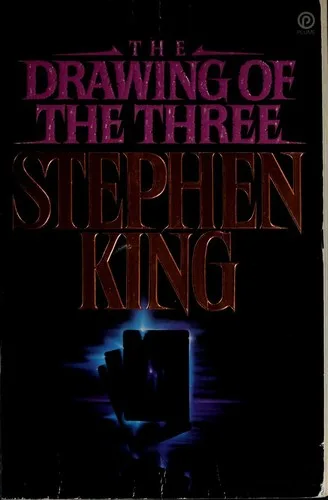
The Drawing of the Three

 73
73

The Drawing of the Three
Stephen King’s "The Drawing of the Three" picks up the Dark Tower thread with a narrative ambition that feels both expansive and deliberately paced. The introduction of Eddie Dean and Odetta Holmes/Detta Walker from separate Earths is a masterstroke, immediately complicating Roland’s solitary quest with the messy, unpredictable nature of human interaction. King excels at rendering these new characters’ struggles, particularly Eddie’s battle with addiction and Odetta’s fractured psyche, making their eventual synergy feel earned rather than forced. However, the narrative occasionally bogs down in Roland’s prolonged individual ordeals on Mid-World before the drawings are complete. The extended sequences of Roland battling the low-men and the sheer physical degradation he endures, while establishing his grit, can feel like a lengthy preamble to the more dynamic cross-world exchanges. The book’s true strength lies in its depiction of the psychic and emotional toll of summoning individuals across realities, hinting at the profound interconnectedness of all things within the Tower's influence. It’s a vital, if somewhat uneven, expansion of the Dark Tower universe, demonstrating King's evolving narrative scope.
📝 Description
73
### The Unfolding of Roland's Quest Stephen King's 1987 novel, "The Drawing of the Three," is the second installment in his sprawling Dark Tower saga. It significantly expands the narrative beyond the initial solitary quest of Roland Deschain. The book introduces new characters and dimensions, shifting the focus from Roland's immediate pursuit of the Man in Black to the critical necessity of gathering companions. This installment is pivotal, as Roland must draw individuals from different Earths into his own reality to aid him in his grander mission. The narrative structure becomes more intricate, interweaving Roland's present struggles with flashbacks that illuminate his past and the motivations behind his relentless journey. The world-building deepens, offering glimpses into the desolate beauty and the lingering dangers of a post-apocalyptic landscape. King masterfully crafts a sense of urgency, as the fate of Roland's world, and potentially others, hinges on his ability to connect with these chosen few. The novel serves as a bridge, meticulously laying the groundwork for the epic confrontations and profound revelations that characterize the later books in the series.
### A Journey Through Parallel Realities This book is crafted for readers who appreciate narrative complexity and character-driven fantasy. It is particularly suited for those interested in the exploration of fate, destiny, and the concept of multiple realities. The story requires an engagement with characters who are not only struggling with external threats but also internal demons and the weight of immense responsibility. Readers who enjoy intricate plotlines, the gradual assembly of a fellowship, and the exploration of how disparate individuals can be brought together by a common, albeit mysterious, purpose will find "The Drawing of the Three" compelling. It’s for those who understand that grand quests are rarely undertaken alone and that the strength of a group often lies in its diverse origins and shared resolve. The novel appeals to an audience that is patient with world-building and enjoys piecing together a larger mythos from individual character arcs and unfolding prophecies.
### The Genesis of a Multiverse Epic Published in 1987, "The Drawing of the Three" emerged during a period when King was solidifying his reputation as a master storyteller across various genres, though the Dark Tower series was already an ambitious undertaking. The late 1980s saw a surge in interest in multiverse theories and parallel worlds within popular culture, influenced by both scientific speculation and philosophical exploration. This novel can be seen as King's unique contribution to this cultural moment, manifesting these abstract concepts through a richly imagined, albeit grim, fantasy framework. At the time, the literary landscape was also being shaped by authors like George R.R. Martin and Robert Jordan, who were developing sprawling, epic fantasy narratives. King's approach, however, was distinct, blending his signature horror sensibilities with a quest narrative that drew inspiration from classic Westerns, J.R.R. Tolkien, and Robert Browning's poem "Childe Roland to the Dark Tower Came." The reception of the Dark Tower series, while growing steadily, was not yet the global phenomenon it would become, allowing King the creative freedom to develop its unique cosmology.
### Portals, Psychics, and Predestination "The Drawing of the Three" introduces several arcane concepts central to the Dark Tower mythos. The primary mechanism for character introduction is the "doorway to other worlds," literal portals that Roland utilizes to draw his ka-tet from different timelines. This concept of interdimensional travel is a cornerstone of the narrative. The book also prominently features individuals with psychic abilities, particularly Eddie Dean's struggles with heroin addiction and Odetta Holmes's dissociative identity disorder, which manifests as the formidable Detta Walker. These psychological complexities are presented not merely as character flaws but as integral parts of their destined roles. The idea of "ka," a fundamental force in the Dark Tower universe akin to destiny or fate, underpins the entire selection process. Roland is not merely choosing companions; he is fulfilling a cosmic imperative, guided by forces beyond his immediate comprehension. These elements – interdimensional portals, the interplay of psychological states and destiny, and the overarching concept of ka – are crucial to understanding the series' esoteric underpinnings.
💡 Why Read This Book?
• Learn how interdimensional portals function within King's cosmology, a concept central to drawing companions from different Earths, as depicted through the magical doors Roland discovers. • Experience the unique challenges of psychic integration and addiction recovery through Eddie Dean's journey, understanding how personal battles become integral to a fated quest. • Grasp the concept of "ka," or destiny, as Roland is compelled to draw specific individuals, revealing how fate orchestrates the assembly of his crucial ka-tet in this 1987 novel.
⭐ Reader Reviews
Honest opinions from readers who have explored this book.
❓ Frequently Asked Questions
What are the primary characters introduced in "The Drawing of the Three"?
The novel primarily introduces Eddie Dean, a drug-addicted young man from New York, and Odetta Holmes, a civil rights activist from the same city who suffers from dissociative identity disorder, manifesting as the aggressive Detta Walker.
How does Roland connect with the new characters from other worlds?
Roland finds magical doors on a beach in Mid-World that act as portals to other realities. By opening these doors at specific times, he can draw individuals from their respective Earths into his own desolate world.
What is the significance of the year 1987 for this book?
1987 marks the original publication year of "The Drawing of the Three," the second book in Stephen King's Dark Tower series, placing it within a period of burgeoning interest in multiverse narratives.
What is "ka" in the context of "The Drawing of the Three"?
"Ka" is a fundamental concept in the Dark Tower series, representing destiny, fate, or the invisible force that guides events and individuals towards their predetermined paths, essential for Roland's quest.
Does this book stand alone from the rest of the Dark Tower series?
No, "The Drawing of the Three" is a direct continuation of "The Gunslinger" and is essential for understanding the formation of Roland's ka-tet and the progression of his quest for the Dark Tower.
What esoteric themes are explored in this novel?
The novel explores themes of destiny (ka), parallel realities, the nature of self through dissociative identity, and the spiritual significance of addiction and recovery, all within a fantasy quest framework.
🔮 Key Themes & Symbolism
Interdimensional Travel and Portals
The novel prominently features the concept of interdimensional travel through magical "doors" that Roland discovers. These portals serve as conduits, drawing individuals from different Earths into Mid-World. This mechanism is not merely a plot device but an exploration of the interconnectedness of realities and the idea that fate can manifest through physical gateways. The book posits that these portals are not random but exist for specific purposes, aligning with Roland's destined task of assembling his ka-tet. The esoteric angle lies in viewing these doors as liminal spaces, points of transition between disparate existences, governed by a higher cosmic order.
Ka and Destiny's Call
Central to "The Drawing of the Three" is the concept of "ka," a force akin to destiny or fate that governs the universe of the Dark Tower. Roland's quest is not a matter of personal choice but a fulfillment of his ka. The characters he draws are not random but are specifically chosen by this overarching force to aid him. This theme explores the philosophical debate between free will and determinism, suggesting that even the most personal struggles and choices are ultimately woven into a larger, predetermined pattern. The esoteric significance lies in the idea of a guiding cosmic intelligence that orchestrates events across all planes of existence.
Psychological Fragmentation and Integration
The novel delves into the psyche of its characters, particularly Odetta Holmes and her alternate personality, Detta Walker. This exploration of dissociative identity disorder is presented as a crucial element of Odetta's destiny. Her fragmented self must integrate to become the powerful figure required for Roland's quest. Similarly, Eddie Dean's struggle with heroin addiction is depicted not just as a personal failing but as an obstacle tied to his ka. The book suggests that overcoming these internal battles is a prerequisite for fulfilling one's fated role, hinting at a spiritual dimension to psychological healing and self-mastery within a larger cosmic framework.
The Bleakness of Mid-World
The setting of Mid-World, a desolate, post-apocalyptic landscape, plays a significant role in establishing the tone and stakes of the narrative. Its decay and lingering dangers reflect the crumbling nature of Roland's world and the immense task he faces. The environment itself is a character, a reflection of a reality teetering on the brink of oblivion. The esoteric aspect here involves the concept of a world suffering from a spiritual or existential malaise, where the remnants of civilization struggle against encroaching darkness. The harshness of Mid-World underscores the urgency of Roland's mission and the profound sacrifice required of those drawn into its reality.
💬 Memorable Quotes
“The power of the door is the power of the draw.”
— This statement encapsulates the central mechanic of the novel: Roland's ability to summon individuals from other Earths. It suggests that the doors are not merely passive portals but possess an active force, compelling specific individuals to cross the dimensional threshold, aligning with the theme of ka.
“You have come to the sea, Roland. And the sea is not kind.”
— Spoken by the slow mutant, this line highlights the perilous nature of Roland's journey and the treacherous environment of Mid-World. It serves as a warning about the dangers he faces and the unforgiving reality he inhabits, emphasizing the struggle for survival.
“Eddie was too much of a coward to be a hero, but he was not too much of a coward to be a man.”
— This interpretation of Eddie Dean's character suggests a nuanced view of heroism. It implies that true courage lies not in the absence of fear but in acting despite it, a crucial step for Eddie as he begins to embrace his role in Roland's quest.
“The world has moved on, and if you are still standing there, you are standing still.”
— This sentiment reflects the theme of progress and the necessity of adaptation. In the context of Roland's quest and the merging of realities, it suggests that stagnation is fatal and that embracing change and new companions is essential for survival and advancement.
“Ka is a wheel, and it turns.”
— A foundational concept in the Dark Tower series, this paraphrase emphasizes the cyclical and inevitable nature of destiny. It implies that events and character fates are part of a grand, ongoing cosmic design that cannot be escaped or permanently altered.
🌙 Esoteric Significance
Tradition
While not adhering strictly to a single esoteric tradition, "The Drawing of the Three" draws heavily on archetypal Western occult concepts, particularly those related to fate, destiny, and the interconnectedness of consciousness. It echoes Gnostic ideas of a fallen or broken world requiring spiritual intervention and Hermetic principles of "As Above, So Below" by linking the macrocosm (the Tower) with the microcosm (individual destinies). The concept of "ka" functions as a personalized, narrative manifestation of divine providence or cosmic law, a common thread in many mystical systems seeking to explain the order of existence.
Symbolism
The "doors" are potent symbols of liminality and transition, representing passages between states of being or different realities, akin to shamanic journeying or alchemical transformations. The struggle with addiction and dissociative identity disorder, particularly for Eddie and Odetta/Detta, symbolizes the internal battles individuals face against their lower natures or fragmented selves, a necessary purification before embarking on a higher calling. Mid-World itself, a decaying landscape, symbolizes a world in spiritual or physical decline, awaiting a redemptive force or a return to order through the quest for the Dark Tower.
Modern Relevance
Contemporary thinkers and practitioners in fields ranging from Jungian psychology to modern occultism often reference the Dark Tower series for its exploration of archetypes and the collective unconscious. The series' nuanced portrayal of addiction as a spiritual battleground and its examination of fractured identities resonate with modern therapeutic approaches. Furthermore, the concept of "ka" continues to be discussed among those interested in fate, synchronicity, and the idea of a guiding force in the universe, making King's narrative a touchstone for exploring these profound metaphysical questions in a popular culture context.
👥 Who Should Read This Book
• Aspiring writers and storytellers interested in complex, multi-layered narrative structures and character archetypes. • Students of comparative religion and philosophy exploring concepts of fate, destiny, and the nature of reality. • Fans of epic fantasy seeking a departure from traditional tropes, featuring a gritty, psychologically complex protagonist and a blend of horror and adventure.
📜 Historical Context
Published in 1987, "The Drawing of the Three" arrived during a period when Stephen King was already a dominant force in popular fiction, known for his blend of horror and suspense. The late 1980s saw a flourishing of genre fiction, with authors like Robert Jordan beginning his "Wheel of Time" series in 1990 and George R.R. Martin publishing "A Game of Thrones" in 1996, both building expansive fantasy worlds. King's Dark Tower series, however, stood apart by integrating elements of Westerns, science fiction, and horror into a singular, ambitious quest narrative. The concept of parallel universes, while not new, was gaining traction in popular culture, influenced by scientific theories and other speculative fiction. The initial reception of the Dark Tower series was more cult-driven than mainstream blockbuster, allowing King considerable creative latitude. Unlike the more traditional fantasy epics emerging at the time, King's work was characterized by its gritty realism, psychological depth, and willingness to explore darker, more mature themes, setting it apart from much of the contemporary fantasy landscape.
📔 Journal Prompts
Roland's discovery of the beach door on a desolate shore.
The fractured psyche of Odetta Holmes/Detta Walker.
Eddie Dean's struggle with heroin addiction.
The concept of 'ka' as a guiding force.
The symbolic meaning of the decaying Mid-World.
🗂️ Glossary
Ka-tet
A group of individuals bound together by the force of 'ka' (destiny), essential for fulfilling a shared, fated purpose. Roland's ka-tet is central to his quest for the Dark Tower.
Ka
A fundamental concept in the Dark Tower universe, representing destiny, fate, or a cosmic force that guides events and individuals towards their predetermined paths.
Mid-World
The primary setting for much of the Dark Tower series, a post-apocalyptic, decaying Earth where Roland Deschain is the last gunslinger.
Gunslinger
An individual sworn to protect the Dark Tower, a mystical nexus point connecting all realities. Roland Deschain is the last of this order.
Man in Black
A recurring antagonist in the Dark Tower series, a sorcerer and agent of chaos who is Roland's primary nemesis.
Doorway
Magical portals discovered by Roland that allow passage between different Earths or realities, crucial for drawing companions into his world.
Low Men
Servants of the Man in Black, often depicted as insidious figures who manipulate and cause harm, representing forces of decay and corruption.