The doctrine of the New Jerusalem concerning the Lord

 72
72

The doctrine of the New Jerusalem concerning the Lord
Emanuel Swedenborg's "The Doctrine of the New Jerusalem Concerning the Lord" is less a narrative and more a theological treatise, meticulously dissecting the nature of the Divine. Its strength lies in its singular focus and unwavering internal logic, presenting a coherent alternative to Trinitarian doctrine. The assertion of the Divine Human, where Jesus Christ is the very form of God's essence, is a concept that demands careful consideration. However, the work's academic dryness and lack of metaphorical flourish can be a significant barrier. Readers accustomed to more devotional or allegorical theological texts might find the prose dense and the arguments abstract. A particularly striking passage discusses the Lord's "Divine Providence" as an ever-present, loving guidance flowing from this unified Divine essence. While rigorous in its exposition, the text offers limited points of emotional access for the uninitiated. It is a book for the determined student of theology, not the casual inquirer.
📝 Description
72
### What It Is The Doctrine of the New Jerusalem Concerning the Lord, first published in 1795, is a foundational text by Emanuel Swedenborg. It presents a systematic theological framework intended to clarify the spiritual nature of God and the Lord Jesus Christ. The work asserts that the Divine Love and Divine Wisdom are the essential attributes of God, manifesting through the Lord as the Divine Human. Swedenborg argues for a singular, unified Divine essence within the Lord, distinct from the concept of a triune God as commonly understood in traditional Christian dogma.
### Who It's For This volume is principally for individuals seeking a deeper, more philosophical understanding of Christian theology, particularly those interested in the divine nature of Jesus. It will appeal to scholars of religious history, comparative theology, and esoteric philosophy who are examining post-Reformation Christian thought and its divergence into mystical interpretations. Readers familiar with Swedenborg's extensive corpus will find this work a key exposition of his Christology.
### Historical Context Published in the late 18th century, a period marked by Enlightenment rationalism and burgeoning mystical revivals, Swedenborg's work offered a unique synthesis. It emerged decades after his most prolific writing period and was intended to distill his complex theological visions into a more accessible format. This was a time when figures like Immanuel Kant were grappling with the limits of reason and faith, and Swedenborg's detailed spiritual cosmology provided an alternative to both orthodox theology and deism. His ideas circulated among intellectual and spiritual circles across Europe, influencing later movements.
### Key Concepts The central tenet is the "Divine Human," positing Jesus Christ not merely as a human who was divine, but as the embodiment of the Divine itself in human form. This concept challenges the traditional Trinity by proposing a singular Divine essence in the Lord, from whom all divine attributes flow. The doctrine also elaborates on the "Internal Man" and the "External Man," distinguishing between the spiritual, internal perception of divine truth and the earthly, corporeal manifestation of life. The idea of "correspondences"—the belief that natural phenomena reflect spiritual realities—is implicitly present, forming the basis for understanding divine communication.
✍️ Author
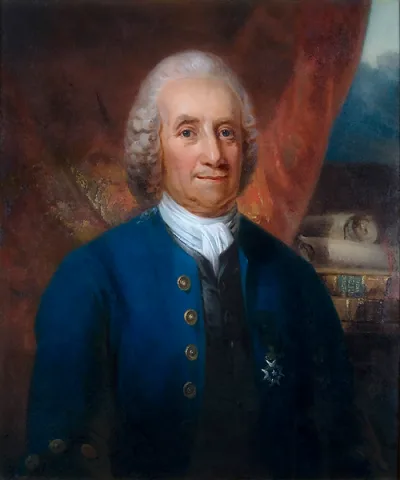
Emanuel Swedenborg
Emanuel Swedenborg (; Swedish: [ɛˈmɑ̂ːnʉɛl ˈsvêːdɛnˌbɔrj] ; born Emanuel Swedberg; 29 January 1688 – 29 March 1772) was a Swedish polymath; a scientist, engineer, astronomer, anatomist, Christian theologian, philosopher, and mystic. He became best known fo…
💡 Why Read This Book?
• Understand the concept of the "Divine Human" as presented by Swedenborg, a unique Christological interpretation that differs from traditional Trinitarian views. • Gain insight into Swedenborg's specific theological framework, first published in 1795, offering a distinct perspective on God's nature and manifestation. • Explore the idea of "correspondences" as it underpins Swedenborg's understanding of how the spiritual realm interacts with the natural, a key tenet in his philosophy.
⭐ Reader Reviews
Honest opinions from readers who have explored this book.
❓ Frequently Asked Questions
What is the core theological argument of "The Doctrine of the New Jerusalem Concerning the Lord"?
The central argument posits Jesus Christ as the Divine Human, the singular manifestation of God's essence. It reinterprets the Trinity, proposing one Divine being in a Human form, distinct from traditional concepts of three persons.
When was "The Doctrine of the New Jerusalem Concerning the Lord" first published?
This foundational work by Emanuel Swedenborg was first published in the year 1795, contributing to theological discourse during a period of significant intellectual and spiritual change.
How does Swedenborg's view of God differ from mainstream Christianity?
Swedenborg presents God not as a Trinity of three persons but as a singular Divine essence embodied in the Lord Jesus Christ. This Divine Human is the source of all Divine Love and Divine Wisdom.
What is the "Internal Man" according to Swedenborg's doctrine?
The "Internal Man" refers to the spiritual aspect of human consciousness, the part that perceives divine truths and is connected to the spiritual world. It is distinct from the "External Man," which relates to the physical and corporeal life.
Is "The Doctrine of the New Jerusalem Concerning the Lord" available online?
Yes, as a historical theological text, "The Doctrine of the New Jerusalem Concerning the Lord" is widely available in the public domain and can often be found for free online through various archives and religious society websites.
Who was Emanuel Swedenborg and why is his work significant?
Emanuel Swedenborg (1688-1772) was a Swedish scientist, theologian, and mystic. His extensive writings, including this doctrine from 1795, have significantly influenced esoteric Christianity and New Age thought, offering unique spiritual insights.
🔮 Key Themes & Symbolism
The Divine Human
This theme centers on Swedenborg's assertion that Jesus Christ is the embodiment of God's singular essence, referred to as the Divine Human. It posits that the Divine Love and Divine Wisdom are united within the Lord, who is the Creator and Sustainer of the universe. This concept challenges the traditional doctrine of the Trinity by proposing a unified Divine Being in Human form, rather than three co-equal persons. The work details how this Divine Human is the source of all spiritual life and the intermediary between the infinite and the finite.
Unity of Divine Essence
Swedenborg argues forcefully for the absolute unity of God. He contends that the commonly understood Christian Trinity, with its three distinct persons, obscures this fundamental truth. Instead, he presents the Lord Jesus Christ as the sole Divine Being, containing within Himself the essential Divine Love and Divine Wisdom. This unity is not merely conceptual but is embodied in the Divine Human, making God accessible and comprehensible through the Lord's divine humanity, as explored in his 1795 treatise.
Spiritual Life and Creation
The doctrine elaborates on how spiritual life originates from and flows through the Divine Human. Swedenborg explains that all creation is a manifestation of divine principles, and the spiritual world directly corresponds to the natural world. This work explores how the Lord's Divine Providence governs the universe, guiding all things toward spiritual perfection. Understanding the Lord as the Divine Human is presented as key to accessing true spiritual understanding and eternal life.
The Internal and External Man
This theme addresses the dual nature of human existence as understood within Swedenborg's theology. The "Internal Man" represents the spiritual, rational, and receptive aspect of the soul, capable of perceiving divine truths. The "External Man" pertains to the physical body and the worldly senses. The doctrine explains how the Lord, as the Divine Human, seeks to connect with and elevate the Internal Man, transforming the individual's spiritual perception and life, as detailed in his writings from the late 18th century.
💬 Memorable Quotes
“The Lord is the Divine Human.”
— This concise statement encapsulates Swedenborg's central thesis: that God's essence is not an abstract concept but is perfectly embodied in the person of Jesus Christ, making the Divine accessible and comprehensible in Human form.
“Divine Love and Divine Wisdom are the two essential properties of the Divine.”
— This highlights the fundamental attributes Swedenborg identifies as constituting the Divine. He posits that these two are not separate but are united in the Lord, forming the basis of His being and His creative activity.
“The Church is built on the acknowledgment of the Lord as God of Heaven and Earth.”
— This paraphrased concept emphasizes Swedenborg's view that true Christian faith hinges on recognizing the absolute divinity of Jesus Christ, not just as a savior, but as the supreme Divine Being governing all existence.
“All things in the natural world correspond to things in the spiritual world.”
— This reflects the principle of "correspondences," a key element in Swedenborg's theology. It suggests that the physical reality we experience is a symbolic representation of deeper spiritual truths and divine order.
“The Lord's Providence is an eternal guiding hand.”
— This paraphrased concept points to Swedenborg's belief in a benevolent and active Divine governance over all creation. It suggests that the Lord's love and wisdom are constantly at work, guiding individuals and the universe towards spiritual ends.
🌙 Esoteric Significance
Tradition
Swedenborg's work is a pivotal contribution to esoteric Christianity, bridging mystical theology with a systematic, almost scientific, approach. While drawing on Christian scripture, his interpretation forms a unique tradition distinct from Hermeticism or Kabbalah, though it shares their interest in divine order and symbolic representation. His "New Jerusalem" doctrine aims to establish a more enlightened spiritual understanding for a new era, moving beyond historical dogmatism. It represents a significant departure from medieval scholasticism and post-Reformation orthodoxy, forging a path for modern spiritual inquiry.
Symbolism
A central symbol is the "Divine Human," representing the embodiment of God's infinite essence in the person of Jesus Christ. This human form is not merely a vessel but the very nature of the Divine made accessible. Another key motif is "correspondence," the idea that the natural world is a symbolic language reflecting spiritual realities. For instance, light symbolizes divine wisdom, and heat represents divine love, concepts deeply embedded in Swedenborg's cosmology and essential for interpreting his texts.
Modern Relevance
Contemporary thinkers and spiritual movements continue to draw from Swedenborg's theological framework. His concept of the Divine Human and the principle of correspondences inform various New Age philosophies and esoteric practices. Modern spiritual psychologists and theologians engage with his ideas on the inner life and the nature of consciousness. His emphasis on a unified Divine in Human form also resonates with contemporary interfaith dialogue and those seeking a more integrated understanding of spirituality beyond traditional sectarian boundaries.
👥 Who Should Read This Book
• Students of comparative theology and religious philosophy seeking to understand post-Enlightenment Christian mysticism and its divergences from orthodoxy. • Spiritual seekers interested in alternative interpretations of Jesus Christ and the nature of God, particularly those drawn to Swedenborg's systematic approach. • Scholars of esoteric traditions who wish to examine a foundational text that significantly influenced later occult and New Thought movements.
📜 Historical Context
Emanuel Swedenborg's "The Doctrine of the New Jerusalem Concerning the Lord," published in 1795, emerged from a complex intellectual landscape. The late 18th century witnessed both the height of Enlightenment rationalism, which questioned traditional religious dogma, and a concurrent rise in spiritualism and mystical thought. Swedenborg's work offered a distinct theological system that diverged significantly from established Christian creeds, particularly the doctrine of the Trinity. His ideas circulated within intellectual circles across Europe, influencing various spiritual movements. Contemporaries like Johann Wolfgang von Goethe explored themes of divine immanence, though often through different philosophical lenses. Swedenborg's theological writings, including this treatise, were met with both fervent admiration and considerable skepticism, sometimes facing opposition from orthodox religious authorities for challenging core tenets.
📔 Journal Prompts
The Lord as the "Divine Human": How does this concept alter traditional perceptions of God's nature?
Reflect on Swedenborg's view of "correspondences" between the natural and spiritual worlds.
The "Internal Man" versus the "External Man": Explore the balance in personal experience.
Consider the implications of a singular Divine essence versus a Trinitarian God.
How does the idea of "Divine Providence" offer solace or challenge one's worldview?
🗂️ Glossary
Divine Human
Swedenborg's term for the embodiment of God's singular essence in the person of Jesus Christ. It posits that the Lord is not merely divine but is the Divine itself in a Human form, serving as the Creator and sustainer.
Divine Love
One of the two essential properties of the Divine, according to Swedenborg. It is the infinite, creative, and benevolent force emanating from God, seeking to give life and union with Himself.
Divine Wisdom
The second essential property of the Divine, inseparable from Divine Love. It encompasses God's infinite understanding, order, and the means by which Divine Love is expressed and manifested.
Correspondences
The fundamental principle that the natural world is a symbolic representation of the spiritual world. Natural phenomena, objects, and events are seen as outward forms that reflect inner, spiritual realities and divine truths.
Internal Man
The spiritual and rational aspect of a human being, capable of receiving divine truths and connecting with the spiritual realm. It is distinct from the physical body and worldly senses.
External Man
The physical and corporeal aspect of a human being, associated with the body, the senses, and worldly life. It is the outward manifestation of the Internal Man.
Divine Providence
The continuous and loving governance of the universe by the Lord. It asserts that God actively guides all things, not by coercion, but by working through the free will of individuals towards spiritual good.