Tarot Twist
 76
76

Tarot Twist
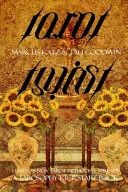
Tarot Twist by Tali Goodwin and Marcus Katz presents a refreshing challenge to conventional Tarot reading. Rather than rehashing standard interpretations, the authors champion the art of the spread itself, offering a compelling argument for custom-designed layouts. Their exploration of techniques for timing events, a subject often treated with skepticism, is particularly noteworthy. The book’s strength lies in its sheer volume of novel approaches; the 78 methods provided offer a vast toolkit for any serious student of the cards. However, the sheer breadth of information can feel overwhelming for beginners, and some of the more esoteric integrations, like combining Tarot with specific astrological timings without deeper explanation, might leave less experienced readers wanting more foundational context. A particularly insightful section details how to construct a spread based on the precise wording of a question, demonstrating a nuanced understanding of query-based divination. Ultimately, Tarot Twist serves as an advanced manual for those ready to move beyond rote learning into creative, personalized Tarot practice.
📝 Description
76
### What It Is Tarot Twist, by Tali Goodwin and Marcus Katz, offers an expansive approach to Tarot reading, moving beyond standard interpretations to explore innovative spread designs and predictive techniques. Published in 2020, this work presents 78 distinct methods for engaging with the cards. It emphasizes the creation of personalized spreads tailored to specific questions, aiming to unlock deeper layers of meaning and facilitate more accurate divination. The book also touches upon integrating other divinatory systems like Runes and Astrology.
### Who It's For This volume is crafted for intermediate to advanced Tarot practitioners seeking to expand their repertoire and refine their interpretive skills. It appeals to those who are already familiar with the basic meanings of the Tarot cards and are looking for novel ways to apply them. Individuals interested in developing their own unique reading styles, exploring predictive Tarot, or using the cards for spiritual development will find significant value here. It is also suitable for professional readers aiming to offer more sophisticated services.
### Historical Context Tarot Twist emerged within a contemporary resurgence of interest in esoteric practices and divination, building on decades of scholarship and popular engagement with Tarot. Authors Tali Goodwin and Marcus Katz are recognized figures in modern Tarot circles, known for their scholarly yet practical approach. Their work from 2020 situates itself within a lineage of Tarot innovation, following figures like A.E. Waite and Pamela Colman Smith who revolutionized Tarot deck design in the early 20th century, and later authors who explored predictive and psychological applications.
### Key Concepts The core of Tarot Twist revolves around the concept of 'spread crafting' – the deliberate construction of card layouts to address precise inquiries. It introduces methods for timing events through Tarot, a less common but significant aspect of divination. The book also advocates for a dynamic interaction with the cards, encouraging readers to develop a personal dialogue with the Tarot system. It promotes the Tarot as a tool for both fortune-telling and profound self-discovery, bridging practical application with spiritual growth.
💡 Why Read This Book?
• Learn to construct unique Tarot spreads tailored precisely to any question, moving beyond pre-set layouts as demonstrated in the chapter on spread crafting. • Develop methods for predicting the timing of events using Tarot, a specialized skill often overlooked in basic courses, as detailed in specific predictive techniques. • Integrate Tarot with other divinatory tools like Runes and Astrology, enriching your practice with multi-layered insights, a concept explored through combined methods.
⭐ Reader Reviews
Honest opinions from readers who have explored this book.
❓ Frequently Asked Questions
What makes the spreads in Tarot Twist innovative compared to traditional Tarot layouts?
Tarot Twist introduces 78 innovative spreads and methods, focusing on custom creation tailored to specific questions, rather than relying solely on established layouts like the Celtic Cross.
Can Tarot Twist help predict the timing of events?
Yes, the book explicitly teaches methods for predicting the timing of events using the Tarot cards, offering practical techniques for divination.
Is Tarot Twist suitable for beginners with no prior Tarot knowledge?
While it offers foundational concepts, the book is best suited for intermediate to advanced practitioners who already understand basic Tarot meanings and are looking to expand their skills.
Does the book explain how to combine Tarot with other divination systems?
Indeed, Tarot Twist explores how to combine Tarot with systems such as Runes and Astrology to achieve more comprehensive readings.
Who are the authors of Tarot Twist?
Tarot Twist was written by award-winning Tarot authors Tali Goodwin and Marcus Katz.
When was Tarot Twist first published?
The first edition of Tarot Twist was published on May 13, 2020.
🔮 Key Themes & Symbolism
Custom Spread Crafting
The central innovation of Tarot Twist lies in its emphasis on creating bespoke Tarot spreads. Moving beyond fixed layouts like the Celtic Cross or the Three-Card Spread, Goodwin and Katz empower readers to design spreads directly answering their specific questions. This involves analyzing the query's structure and selecting card positions that best illuminate its various facets. The book provides a systematic approach to this creative process, encouraging a deeper, more personalized engagement with the Tarot that yields more precise and relevant insights for divination.
Predictive Timing Techniques
Tarot Twist addresses a sophisticated aspect of divination: determining the timing of events. The authors present methods that allow practitioners to assign temporal significance to card placements within a spread. This moves the Tarot from a purely symbolic or psychological tool into one capable of forecasting 'when' rather than just 'what' or 'why'. Such techniques require careful study and practice but offer a powerful extension of the Tarot's divinatory capabilities for those seeking concrete temporal answers.
Integrated Divination Systems
Recognizing that divination is often enriched by cross-disciplinary approaches, Tarot Twist explores the synergistic potential of combining Tarot with other esoteric systems. Notably, it discusses the integration of Runes and Astrology into Tarot readings. This multi-layered approach allows for a more holistic interpretation, where insights from different modalities can corroborate or expand upon each other, offering a richer and more nuanced understanding of the querent's situation.
Spiritual Self-Discovery
Beyond fortune-telling, Tarot Twist advocates for the Tarot's role in personal growth and spiritual development. The innovative spreads and interpretive methods encourage introspection and self-awareness. By learning to converse with the cards and understand their messages in a deeply personal context, readers can use the Tarot as a mirror to their inner landscape, facilitating profound self-discovery and fostering a more conscious connection to their spiritual path.
💬 Memorable Quotes
“Learn how to create your own unique spreads from any question.”
— This highlights the book's core philosophy: empowering the reader to move beyond standardized layouts and actively construct divinatory tools tailored to specific inquiries, fostering a more personalized and effective reading experience.
“Learn to converse with the cards themselves.”
— This suggests an interactive and intuitive approach to Tarot, framing the practice not just as interpretation but as a dialogue, encouraging a deeper, more responsive relationship with the archetypal imagery.
“Predict the timing of events.”
— This points to a specific, advanced skill taught in the book, emphasizing its practical application in forecasting temporal aspects of a situation, moving beyond general insights to concrete timelines.
“Use the Tarot for spiritual self-discovery and regular fortune-telling.”
— This encapsulates the dual utility of the methods presented, showing that the book bridges the practical needs of divination with the deeper, transformative potential of self-exploration through the Tarot.
“Combine Runes, Astrology.”
— This indicates the book's exploration of syncretic divination, suggesting techniques for integrating multiple esoteric systems to achieve richer, more comprehensive readings beyond the scope of Tarot alone.
🌙 Esoteric Significance
Tradition
Tarot Twist operates within the broad Western Esoteric tradition, particularly its modern iterations focused on practical divination and psychological application. While not strictly tied to a single lineage like Hermeticism or Kabbalah, it draws from the lineage of Tarot interpretation that evolved from Renaissance occultism through figures like Eliphas Lévi and A.E. Waite. The work departs from purely academic or historical analyses by emphasizing practical, user-generated methodologies, aligning with contemporary movements that prioritize experiential learning and personalized spiritual practice over dogmatic adherence.
Symbolism
The book engages deeply with the symbolic language of the Tarot, not just in interpreting individual cards but in the very structure of spreads. Key motifs include the concept of the 'question' as a symbolic matrix and the 'spread' as a map of potential outcomes or inner states. The integration of Runes and Astrology suggests a symbolic understanding of correspondences, where planetary, zodiacal, and runic symbols can interact with and illuminate the archetypal imagery of the Tarot cards, creating a richer symbolic field for divination.
Modern Relevance
Tarot Twist remains highly relevant for contemporary practitioners and students of divination. Its focus on creating custom spreads resonates with modern desires for personalized spiritual tools and techniques. Thinkers and practitioners in fields like modern witchcraft, intuitive development, and even digital occultism find value in its practical, adaptable methods. The book’s approach to integrating multiple systems is also characteristic of current trends in esoteric synthesis, making it a useful resource for those seeking a holistic approach to divination in the 21st century.
👥 Who Should Read This Book
• Intermediate to advanced Tarot students seeking to break free from conventional spread limitations and develop their own unique reading methodologies. • Professional Tarot readers aiming to offer more sophisticated, question-specific readings and incorporate predictive timing into their services. • Individuals interested in the syncretic study of divination who wish to explore practical ways to combine Tarot with systems like Runes and Astrology.
📜 Historical Context
Published in May 2020, Tarot Twist arrived during a period of intense global introspection and a burgeoning interest in digital and practical esoteric arts. The work by Tali Goodwin and Marcus Katz builds upon the rich history of Tarot scholarship and practice that gained significant momentum throughout the 20th century, particularly following A.E. Waite’s influential 1909 deck. Unlike earlier approaches that might have focused on single divination systems, Goodwin and Katz’s book reflects a contemporary trend towards syncretism, actively encouraging the integration of Tarot with other modalities like Runes and Astrology. This contrasts with more insular approaches prevalent in earlier decades, such as the strict adherence to Thelema practiced by some occultists or the purely psychological interpretations championed by figures like Carl Jung, who nonetheless profoundly influenced modern Tarot theory. The book’s emphasis on practical, customizable methods for both professional and personal use positions it within the modern landscape of accessible, applied mysticism.
📔 Journal Prompts
The process of crafting a unique spread for a specific question.
Applying the predictive timing techniques to a past event and analyzing the results.
Reflecting on the dialogue established with the Tarot cards during a reading session.
How the integration of Runes or Astrology altered the interpretation of a Tarot spread.
The personal significance of a chosen Tarot spread's structure for self-discovery.
🗂️ Glossary
Spread Crafting
The deliberate process of designing and constructing a custom Tarot card layout specifically tailored to address the nuances of a particular question or area of inquiry.
Predictive Timing
Techniques within Tarot divination focused on determining the temporal aspect of events, such as when something is likely to occur, rather than solely focusing on the nature of the event itself.
Syncretic Divination
The practice of combining insights and methods from multiple divinatory systems, such as Tarot, Runes, and Astrology, to achieve a more comprehensive and multi-layered interpretation.
Querent
The individual for whom a Tarot reading is being performed; the person asking the question or seeking guidance from the cards.
Esoteric
Relating to or concerned with the occult, mystical, or supernatural; intended for or understood by only a small number of people with a specialized knowledge or interest.
Archetype
In Tarot, the universal, mythical patterns or figures represented by the cards (e.g., The Fool, The Magician, The High Priestess) that tap into the collective unconscious.
Divination
The practice of seeking knowledge of the future or the unknown by supernatural means, often through symbolic interpretation of signs or omens.