Tarot, talisman or taboo?
 77
77

Tarot, talisman or taboo?
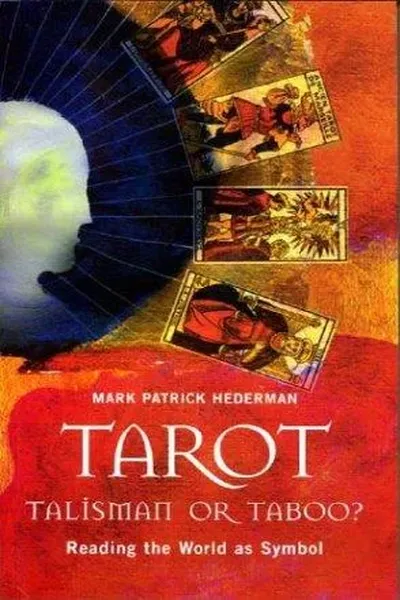
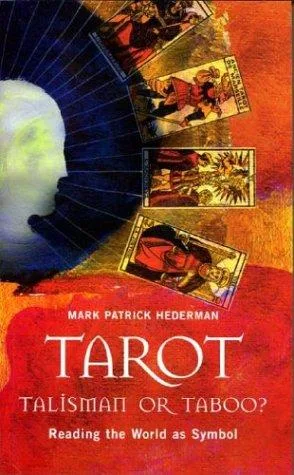
Mark Patrick Hederman's 'Tarot, talisman or taboo?' offers a refreshingly critical perspective on the ubiquitous Tarot deck. Hederman avoids the usual mystification, instead focusing on the very question of the Tarot's identity and perceived power. He compellingly argues that much of the Tarot's mystique stems from its historical reception and the projections placed upon it, rather than inherent qualities. A particular strength is his nuanced discussion of the 'talisman' aspect, exploring how the cards themselves, or the act of using them, can be seen as conduits of personal or external force. While the book provides a solid historical and philosophical grounding, its exploration of the 'taboo' aspect could have benefited from more specific examples of societal or religious condemnation from earlier periods. Nonetheless, Hederman’s work presents a lucid and grounded approach to understanding the Tarot's complex cultural footprint. It is a valuable addition for anyone seeking to move beyond superficial interpretations.
📝 Description
77
### What It Is 'Tarot, talisman or taboo?' is a 2003 exploration into the historical and cultural perception of the Tarot. It moves beyond simple divinatory interpretations to examine the cards' role as potential objects of power and their controversial status in certain circles. The work scrutinizes the objectification of the Tarot, considering whether its primary function lies in symbolic representation, personal empowerment, or as a subject of moral or religious objection.
### Who It's For This book is suited for individuals interested in the deeper currents of Tarot history and philosophy, rather than solely its predictive applications. It will appeal to students of esotericism, cultural historians, and those curious about the societal reception of occult practices. Readers seeking to understand the theoretical underpinnings of Tarot as an artifact and a symbol will find it particularly relevant.
### Historical Context The book was first published in 2003, a period where interest in esoteric subjects was growing, yet often met with skepticism. Hederman's work situates the Tarot within a broader discourse on occultism and its place in Western culture, acknowledging both its integration into popular spirituality and its continued categorization as taboo by more conservative elements. It reflects on how academic and public perceptions of such practices evolved.
### Key Concepts Central to the text is the examination of the Tarot's dual nature: as a tool for self-reflection and divination, and as an object imbued with perceived magical properties or associated with forbidden knowledge. The author investigates the transition of the Tarot from a game to a symbolic system and then to a potential talisman, analyzing the philosophical and psychological forces driving these shifts in perception over centuries.
💡 Why Read This Book?
• Understand the Tarot's identity crisis by examining its evolution from a game to a symbolic system, as detailed in the book's analysis of its historical reception. • Explore the concept of the Tarot as a 'talisman,' learning how its perceived power is constructed through belief and historical association, a core theme discussed by Hederman. • Gain critical insight into the 'taboo' surrounding the Tarot, appreciating its controversial status in various cultural and religious contexts, as explored through specific historical periods.
⭐ Reader Reviews
Honest opinions from readers who have explored this book.
❓ Frequently Asked Questions
What is the primary focus of 'Tarot, talisman or taboo?' by Mark Patrick Hederman?
The book primarily focuses on the historical and cultural perception of the Tarot, examining whether it functions as a divinatory tool, a magical talisman, or a subject of taboo, moving beyond simple interpretations.
When was Mark Patrick Hederman's 'Tarot, talisman or taboo?' first published?
Mark Patrick Hederman's 'Tarot, talisman or taboo?' was first published in 2003.
Does the book offer practical Tarot readings?
No, the book is not a practical guide for reading the Tarot. Instead, it offers a philosophical and historical analysis of the cards' perception and role in culture.
What historical periods are discussed in relation to the Tarot's perception?
The book touches upon various historical periods to trace the Tarot's transition from a game to a symbolic system and its reception as a potential talisman or taboo subject.
Who would benefit most from reading 'Tarot, talisman or taboo?'
Individuals interested in the philosophy, history, and cultural reception of the Tarot, as well as students of esotericism and cultural studies, would find this book particularly beneficial.
What distinguishes Hederman's approach to the Tarot?
Hederman's approach is distinguished by its critical examination of the Tarot's perceived power and controversial status, rather than focusing solely on its use in divination.
🔮 Key Themes & Symbolism
The Tarot as Object
This theme scrutinizes the Tarot deck not just as a tool for divination, but as a physical artifact that has accrued meaning and power over time. The book investigates how the object itself has been perceived – sometimes as a source of magical influence (talisman), other times as a dangerous or forbidden item (taboo). It explores the psychological and cultural processes that transform a set of printed cards into something imbued with potent symbolism and potential agency.
Historical Perception Shifts
Hederman traces the evolving interpretations of the Tarot throughout history. Originally conceived as a card game in 15th-century Italy, its symbolic and divinatory potential was recognized later, particularly in the 18th and 19th centuries. The work examines key moments and intellectual currents that led to the Tarot being viewed through esoteric, occult, and even occultist lenses, contrasting these with periods where it was dismissed or condemned.
Divination vs. Power
A central tension explored is the difference between using the Tarot for predictive purposes and viewing it as a source of inherent power or influence. The 'talisman' aspect suggests the cards possess a latent energy or can channel external forces, a concept distinct from simple fortune-telling. The book questions the validity and implications of attributing such talismanic qualities to the cards.
The Taboo Factor
This theme addresses the persistent categorization of the Tarot as a forbidden or morally questionable practice in certain religious and societal contexts. Hederman analyzes the reasons behind this taboo, linking it to broader anxieties about the occult, fortune-telling, and the perceived disruption of divine order or rational thought. It considers how this taboo has shaped public and institutional responses to Tarot use.
💬 Memorable Quotes
“The question is whether the Tarot is a tool, an object of power, or something to be feared.”
— This statement encapsulates the central inquiry of the book, framing the Tarot's identity crisis across three distinct perceptions: functional (tool), potent (talisman), and dangerous (taboo).
“From game to oracle: the trajectory of the Tarot's meaning.”
— This highlights the significant historical transformation of the Tarot, emphasizing its shift from a pastime to a system for divination and esoteric exploration.
“The allure of the talisman lies in its perceived ability to manifest will or destiny.”
— This interpretation focuses on the 'talisman' aspect, suggesting that its perceived power stems from the belief in its capacity to act upon reality and shape outcomes.
“Societal unease often casts occult practices as inherently taboo.”
— This points to the 'taboo' theme, suggesting that the condemnation of practices like Tarot reading is frequently rooted in broader cultural anxieties and distrust of the unknown or unconventional.
“Is the power in the cards, or in the interpretation placed upon them?”
— This core question challenges the reader to consider the source of the Tarot's perceived influence, differentiating between inherent properties and the subjective meaning projected by users.
🌙 Esoteric Significance
Tradition
This work fits within the broader Western Esoteric tradition, particularly the streams that engage with symbolic systems and their perceived magical or psychological efficacy. While not strictly Hermetic or Kabbalistic, it interrogates concepts central to these traditions: the power of symbols, the relationship between the microcosm and macrocosm, and the potential for objects to serve as conduits for occult forces. It departs from purely academic historical accounts by wrestling with the ontological status of the Tarot as described within esoteric circles.
Symbolism
The book's core symbolism revolves around the three poles of its title: 'Tarot' representing the cards themselves and their symbolic language; 'talisman' signifying an object imbued with power, capable of affecting reality or the user's state; and 'taboo' denoting something forbidden, dangerous, or morally proscribed. These three concepts act as symbolic lenses through which the historical and cultural reception of the Tarot is critically examined.
Modern Relevance
In contemporary esoteric practice, the debate between viewing Tarot as a psychological tool, a divinatory oracle, or a talismanic object remains active. Thinkers and practitioners in fields like Jungian psychology, modern occultism, and even secular spirituality continue to grapple with how to interpret and utilize the Tarot. Hederman's book provides a crucial intellectual framework for these discussions, encouraging a critical stance on the perceived powers and societal implications of Tarot use today.
👥 Who Should Read This Book
• Students of esoteric history: Those seeking to understand the philosophical underpinnings of how objects like the Tarot gained occult significance and faced societal resistance. • Critical Tarot practitioners: Individuals who use Tarot and wish to explore its theoretical basis beyond simple divinatory mechanics, questioning its role as a talisman or its taboo status. • Cultural historians: Researchers interested in the reception of symbolic systems and occult practices within Western society, examining how beliefs shape the perception of artifacts.
📜 Historical Context
Published in 2003, Mark Patrick Hederman's 'Tarot, talisman or taboo?' emerged during a resurgence of interest in esoteric studies, yet also amidst ongoing cultural and religious debates surrounding divination and occultism. The late 20th and early 21st centuries saw a bifurcation: on one hand, a growing popular embrace of Tarot and New Age practices, often through accessible guides and online communities; on the other, continued skepticism from mainstream academia and religious institutions. Hederman's work engages with this context by questioning the very nature of the Tarot's perceived power and its controversial status. He implicitly positions his inquiry against more simplistic interpretations prevalent in popular culture, while also acknowledging the historical roots of Tarot's association with both hidden knowledge and moral transgression. Contemporaries exploring similar themes in occult history and philosophy included scholars like Richard Kieckhefer, whose work often examined medieval magic, and authors like Lynn Picknett and Clive Prince, who investigated historical conspiracies and esoteric traditions, though Hederman's focus remains distinctly on the philosophical status of the Tarot itself.
📔 Journal Prompts
The perceived power of the Tarot as a talisman.
The historical journey of the Tarot from game to oracle.
An object's transition from common use to esoteric significance.
The reasons behind societal discomfort with divination.
Defining the Tarot: tool, talisman, or taboo?
🗂️ Glossary
Tarot
A deck of cards, typically containing 78 cards, featuring symbolic imagery. Historically used for games, it evolved into a significant tool for divination and esoteric exploration.
Talisman
An object believed to possess magical properties, often inscribed with symbols or figures, intended to bestow good luck, protection, or other specific powers upon its bearer.
Taboo
A social or religious custom prohibiting or restricting a particular practice or forbidding association with a particular person, place, or thing, often due to perceived danger or sacredness.
Divination
The practice of seeking knowledge of the future or the unknown by supernatural means, using various methods such as Tarot cards, astrology, or runes.
Esotericism
Belief systems and spiritual or mystical practices that are traditionally considered secret or revealed only to a select group of initiates, often dealing with hidden knowledge and spiritual transformation.
Occultism
A broad category of mystical or supernatural traditions, practices, and beliefs that are outside the scope of established religious or scientific knowledge, often involving magic, alchemy, and divination.
Symbolic System
A set of symbols and the rules governing their use and interpretation, employed to represent complex ideas, concepts, or relationships, as seen in the Tarot.