Tarot
 75
75

Tarot
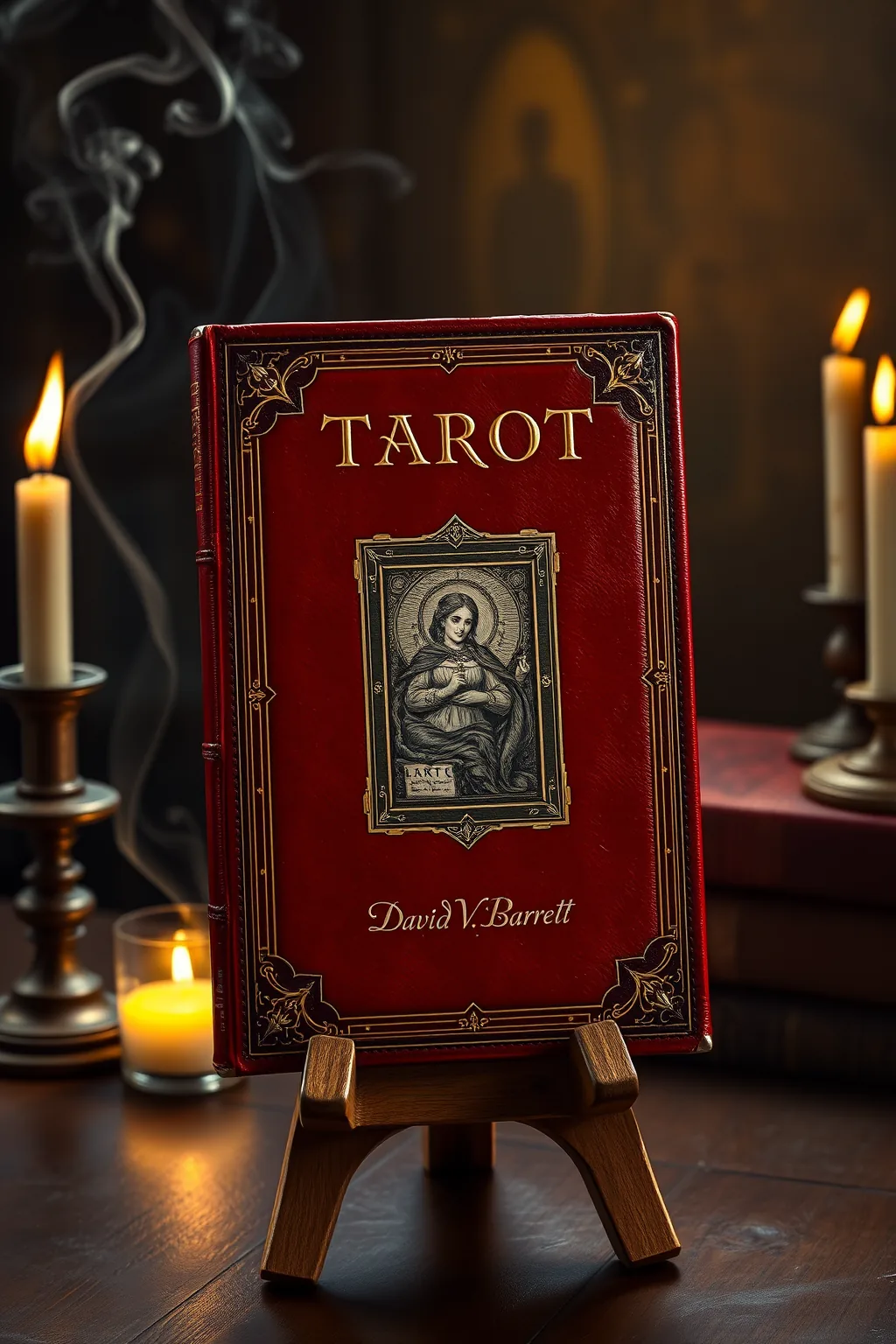
Barrett's "Tarot" is a text that demands careful reading, eschewing the sensationalism that often surrounds the subject. Its strength lies in its methodical approach, meticulously detailing the historical evolution of the cards and the various schools of thought that have interpreted them since their inception in 15th-century Italy. The section detailing the symbolic language of the Minor Arcana, for instance, provides a structured framework that moves beyond rote memorization. However, the work's academic rigor can sometimes feel dense, occasionally obscuring the practical application for the nascent practitioner. A notable passage is the detailed exploration of the Fool's journey, presented not as a simple narrative but as a complex symbolic representation of spiritual progression. For those seeking a scholarly foundation for their Tarot studies, Barrett's "Tarot" offers substantial material.
📝 Description
75
### What It Is David V. Barrett's "Tarot" offers a comprehensive examination of the Tarot deck, moving beyond simple divinatory practices to explore its rich history and complex symbolism. Published initially in 1995, this work serves as a foundational text for understanding the Tarot not just as a tool for fortune-telling, but as a system of esoteric knowledge and a mirror to the human psyche.
### Who It's For This book is designed for serious students of Tarot and Western esotericism. It appeals to those who wish to understand the archetypal meanings embedded within the cards, their historical development, and their connections to broader philosophical and mystical traditions. It is suitable for individuals seeking to deepen their practice beyond surface-level interpretations.
### Historical Context Barrett's "Tarot" emerged during a period of renewed interest in esoteric studies, building upon scholarship that traced the Tarot's lineage back to 18th-century France. The work engages with the historical interpretations proposed by figures like Eliphas Lévi and A.E. Waite, placing Barrett's own analyses within this ongoing scholarly conversation. It reflects a scholarly approach that sought to ground Tarot studies in historical evidence and comparative mysticism.
### Key Concepts The book systematically breaks down the Tarot into its constituent parts, including the Major Arcana, Minor Arcana, and court cards. It explores the numerological and astrological correspondences often associated with the cards, as well as their potential application in psychological introspection. Barrett investigates the philosophical underpinnings that have informed Tarot interpretation across centuries, linking it to concepts of initiation and self-discovery.
💡 Why Read This Book?
• Gain a structured understanding of the Tarot's historical trajectory, including its connection to 18th-century French occultism, enabling you to contextualize its place in esoteric history. • Explore the symbolic language of each card within the Major and Minor Arcana, learning how Barrett connects them to archetypal patterns and philosophical concepts. • Appreciate the Tarot as a system of esoteric knowledge by understanding its numerological and astrological correspondences as presented by Barrett, moving beyond simple divination.
⭐ Reader Reviews
Honest opinions from readers who have explored this book.
❓ Frequently Asked Questions
When was David V. Barrett's "Tarot" first published?
David V. Barrett's "Tarot" was first published in 1995, reflecting a significant period of academic and popular interest in esoteric subjects.
What historical figures influenced the study of Tarot as presented in this book?
The book draws upon the work of seminal figures in Tarot scholarship, including interpretations by Eliphas Lévi and A.E. Waite, placing Barrett's analysis within a lineage of esoteric study.
Does "Tarot" by David V. Barrett focus solely on divination?
No, while divination is a component, Barrett's "Tarot" emphasizes the historical development, symbolic complexity, and philosophical underpinnings of the Tarot deck.
What is the significance of the 15th-century Italian origins mentioned in relation to Barrett's book?
The book acknowledges the emergence of Tarot cards in 15th-century Italy, tracing their evolution from playing cards to the complex esoteric tools they are considered today.
How does Barrett's work relate to the concept of esoteric knowledge?
Barrett presents the Tarot as a system of esoteric knowledge, exploring its symbolic language, numerological connections, and philosophical depth as a means for introspection and understanding.
Is this book suitable for absolute beginners to Tarot?
While comprehensive, the book's academic tone and depth may be more suited for those with some existing interest or foundational knowledge in Tarot or esoteric studies.
🔮 Key Themes & Symbolism
Archetypal Symbolism
Barrett's "Tarot" delves into the deep symbolic language of the 78 cards, particularly the Major Arcana, interpreting them as archetypal representations of universal human experiences and spiritual stages. He connects these symbols to psychological frameworks, suggesting the deck functions as a mirror to the inner self. The exploration moves beyond simplistic one-word meanings to reveal layers of interpretation rooted in mythology and philosophy, offering a structure for self-reflection and understanding personal journeys through the lens of these ancient images, first appearing in the mid-15th century in Europe.
Historical Development
The work meticulously traces the evolution of the Tarot deck, beginning with its origins as a game in 15th-century Italy. It examines how the cards transformed into vehicles for esoteric thought, particularly through the influence of occultists in 18th-century France like Etteilla and later figures such as Eliphas Lévi and A.E. Waite. Barrett situates his analysis within this historical lineage, discussing how different eras and traditions have imbued the cards with varied meanings and applications, highlighting shifts from secular entertainment to mystical texts.
Esoteric Frameworks
Barrett positions the Tarot as a key component within Western esoteric traditions. He explores its connections to numerology, astrology, and Kabbalistic concepts, presenting a cohesive system of correspondences. The book suggests that understanding these links unlocks deeper layers of meaning, transforming the deck from a divinatory tool into a sophisticated map of consciousness and a guide for spiritual development. This esoteric framework provides context for its use in practices aimed at self-knowledge and occult philosophy.
Psychological Mirror
Moving beyond fortune-telling, Barrett examines the Tarot's capacity to reflect the user's inner psychological landscape. The archetypes represented by the cards are presented as potent symbols that can illuminate unconscious patterns, desires, and challenges. This perspective aligns with modern psychological interpretations, viewing the Tarot as a tool for introspection, personal growth, and understanding the dynamics of the psyche, as explored through its visual narratives and symbolic structure.
💬 Memorable Quotes
“The Fool's journey is not a simple progression but a complex symbolic representation of spiritual and psychological ascent.”
— This interpretation highlights Barrett's view of the Fool card as more than just an innocent beginner. It signifies a profound journey with multifaceted stages, reflecting internal growth and the exploration of consciousness within an esoteric context.
“Each suit in the Minor Arcana carries its own elemental and philosophical resonance.”
— This concept underscores Barrett's methodical approach to the Minor Arcana. It suggests that understanding the core nature of Wands, Cups, Swords, and Pentacles is essential for grasping their broader symbolic meaning and application within the Tarot system.
“The Tarot deck's structure mirrors fundamental principles of universal order.”
— This statement points to Barrett's belief in the Tarot as a microcosm of the macrocosm. It suggests that the arrangement and symbolism within the deck reflect underlying cosmic laws and patterns, making it a tool for understanding existence.
“Understanding the historical reception of Tarot reveals its evolving role in esoteric discourse.”
— This emphasizes Barrett's focus on the historical context. It implies that the way Tarot has been viewed and utilized by different groups and individuals over centuries is crucial to comprehending its significance as an esoteric tool.
“Astrological and numerological correspondences provide a vital layer of interpretation for the cards.”
— This highlights a key analytical method Barrett employs. By linking Tarot imagery to established systems like astrology and numerology, he offers a structured way to decode the cards' deeper meanings and their place within a broader occult framework.
🌙 Esoteric Significance
Tradition
Barrett's work is firmly rooted in the Western Esoteric Tradition, specifically drawing from Hermeticism, Kabbalism, and later occultist interpretations that emerged in the 19th and early 20th centuries. It positions the Tarot as a key text within this lineage, akin to the Hermetic Corpus or the Zohar, serving as a symbolic language for understanding cosmic principles and the path of spiritual development. The book reflects a scholarly effort to systematize and contextualize Tarot within these established mystical frameworks, moving beyond its origins as a mere card game.
Symbolism
Central to Barrett's analysis are the archetypal symbols of the Major Arcana and the elemental correspondences of the Minor Arcana. The Fool, for instance, is explored not just as a beginner but as the embodiment of potential and the divine spark's journey. The four suits (Wands, Cups, Swords, Pentacles) are examined for their association with the classical elements (Fire, Water, Air, Earth) and their respective domains of action, passion, intellect, and materiality. These symbols function as a visual vocabulary for esoteric concepts.
Modern Relevance
Contemporary practitioners of Western esotericism, particularly those engaged with Hermetic orders or Kabbalistic studies, continue to find value in Barrett's systematic approach. His work informs modern psychological interpretations of the Tarot, bridging historical occultism with Jungian archetypes. Thinkers and authors exploring comparative mysticism or the history of occultism often cite or engage with the scholarly foundations laid by works like Barrett's, which provide a critical lens for understanding the Tarot's enduring appeal as a tool for self-discovery and spiritual insight.
👥 Who Should Read This Book
• Students of Western Esotericism seeking a historical and symbolic analysis of the Tarot, moving beyond simple divination techniques. • Practitioners of Hermeticism and Kabbalah interested in how the Tarot integrates with these traditions through numerological and astrological correspondences. • Comparative religion scholars or cultural historians examining the evolution and diverse interpretations of symbolic systems throughout history.
📜 Historical Context
Published in 1995, David V. Barrett's "Tarot" entered a landscape revitalized by earlier occult revivals and scholarly interest. The work builds upon the foundational interpretations of figures like Eliphas Lévi, who in the mid-19th century began systematically linking Tarot imagery to Kabbalistic and Hermetic principles, and A.E. Waite, whose Rider-Waite deck (1909) became a benchmark for symbolic interpretation. Barrett's approach reflects a continuation of this hermeneutic tradition, seeking to contextualize the Tarot within Western esotericism. This period saw diverse engagement with occultism, ranging from academic studies of traditions like Theosophy to popular interest in divination. Barrett's scholarship offered a more structured, historical lens, distinguishing itself from purely divinatory manuals and engaging with the intellectual currents that sought to integrate mystical traditions with philosophical inquiry, providing a counterpoint to less historically grounded approaches.
📔 Journal Prompts
The Fool's journey as a representation of spiritual ascent.
The elemental resonance of the Minor Arcana suits.
How do the historical interpretations of figures like A.E. Waite shape your understanding of the Tarot today?
The Tarot as a symbolic map of universal order.
Reflecting on the archetypal symbolism within your own life, as mirrored by the Major Arcana.
🗂️ Glossary
Major Arcana
The set of 22 trump cards in a Tarot deck, generally depicting archetypal figures, concepts, and stages of a spiritual journey, considered more significant than the Minor Arcana.
Minor Arcana
The set of 56 cards in a Tarot deck, divided into four suits (typically Wands, Cups, Swords, Pentacles), which detail everyday events, challenges, and circumstances.
Hermeticism
A philosophical and religious tradition based on writings attributed to Hermes Trismegistus, emphasizing spiritual knowledge, the interconnectedness of all things, and the pursuit of divine wisdom.
Kabbalah
A system of Jewish mysticism that explores the relationship between the divine and the created universe, often using the Tree of Life as a symbolic map.
Numerology
The study of the mystical or symbolic significance of numbers and their influence on human life and events.
Archetype
A universal, symbolic pattern or image that recurs in myth, literature, and the collective unconscious, representing fundamental human experiences or concepts.
Divination
The practice of seeking knowledge of the future or the unknown by supernatural means, often using tools like the Tarot.