Tarot Cards For Beginners
 72
72

Tarot Cards For Beginners
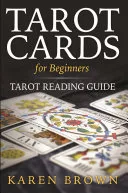
Karen Brown's "Tarot Cards For Beginners" approaches the Rider-Waite-Smith deck with a commendable lack of pretension. It successfully strips away much of the arcane jargon that can alienate newcomers, presenting the card meanings in a digestible format. The section on the Minor Arcana, particularly its explanation of the elemental correspondences, offers a solid bedrock for understanding the suit dynamics. However, the book sometimes leans too heavily on very general interpretations, occasionally sacrificing the nuanced psychological depth that makes Tarot so compelling. For instance, while the explanation of The Tower is factually correct in its depiction of sudden change, it could benefit from exploring the *implications* of such upheaval beyond mere disruption. Brown's work is a functional primer, but it doesn't fully capture the transformative potential often sought by those turning to Tarot.
📝 Description
72
### What Tarot Cards For Beginners Is Karen Brown's "Tarot Cards For Beginners," first published in 2015, serves as an accessible entry point into the symbolic language of Tarot. It demystifies the 78 cards of the Rider-Waite-Smith deck, breaking down their meanings, interpretations, and applications for personal insight. The work focuses on providing foundational knowledge, enabling newcomers to engage with the cards without being overwhelmed by complex esoteric doctrines.
### Who This Book Is For This guide is specifically crafted for individuals new to Tarot. It caters to those who feel intimidated by the vastness of occult studies and seek a clear, straightforward introduction. Readers interested in self-discovery, intuition development, and alternative methods of guidance will find this book particularly beneficial. It's for anyone curious about how ancient symbolism can offer contemporary perspectives on life's challenges and opportunities.
### Historical Context of Tarot While Tarot's precise origins are debated, its use as a divinatory tool gained significant traction in the late 18th century with figures like Antoine Court de Gébelin. By the early 20th century, the Rider-Waite-Smith deck, illustrated by Pamela Colman Smith, became the archetypal image for many Western occultists, including members of the Hermetic Order of the Golden Dawn. Brown's 2015 work builds upon this legacy, adapting the established symbolism for a modern audience seeking practical guidance.
### Key Concepts Introduced The book introduces core Tarot concepts such as the Major Arcana and Minor Arcana, explaining the distinct roles of each. It covers the four suits (Wands, Cups, Swords, Pentacles) and their associated elements and archetypes. Brown also explains basic spread layouts, like the three-card spread, to help beginners interpret card combinations and construct a narrative from a reading.
💡 Why Read This Book?
• Understand the fundamental structure of the 78-card Tarot deck, including the distinct roles of the Major and Minor Arcana, as detailed in the book's foundational chapters. • Learn the elemental associations for each of the four suits (Wands, Cups, Swords, Pentacles), providing a deeper context for interpreting their meanings beyond simple keywords. • Gain practical skills in performing simple Tarot readings using layouts like the three-card spread, enabling immediate application of learned concepts to personal questions.
⭐ Reader Reviews
Honest opinions from readers who have explored this book.
❓ Frequently Asked Questions
When was Karen Brown's 'Tarot Cards For Beginners' first published?
Karen Brown's 'Tarot Cards For Beginners' was first published on February 3, 2015. This publication date places it within the contemporary resurgence of interest in esoteric practices and self-help tools.
Which specific Tarot deck does 'Tarot Cards For Beginners' focus on?
The book primarily focuses on the Rider-Waite-Smith deck. This is one of the most popular and influential Tarot decks, known for its clear imagery and symbolic depth, making it ideal for beginners.
What are the Major and Minor Arcana in Tarot?
The Major Arcana are the 22 trump cards representing significant life events and spiritual lessons, while the Minor Arcana consist of the 56 suit cards (Wands, Cups, Swords, Pentacles) that reflect daily experiences and challenges.
Can I use this book to read Tarot for others?
Yes, the foundational knowledge provided in 'Tarot Cards For Beginners' equips you to interpret card meanings and combinations, enabling you to offer readings for friends or clients seeking insight.
How does the book explain the four suits of the Tarot?
The book associates each of the four suits with a specific element: Wands with Fire, Cups with Water, Swords with Air, and Pentacles with Earth, explaining the general themes and energies of each.
What is a Tarot spread, and does the book teach them?
A Tarot spread is a specific arrangement of cards laid out to answer a question. The book introduces beginners to basic spreads, such as the three-card spread, to help them interpret card relationships.
🔮 Key Themes & Symbolism
Understanding the Major Arcana
This section explores the 22 Major Arcana cards, often seen as the archetypal forces and significant turning points in life. The book details each card's imagery and core meaning, from the Fool's new beginnings to The World's completion. It emphasizes their role in representing profound spiritual lessons and major life transitions, offering a framework for interpreting these powerful cards in a reading.
The Four Suits and Their Elements
Here, the book breaks down the 56 Minor Arcana cards into their four suits: Wands (Fire), Cups (Water), Swords (Air), and Pentacles (Earth). Each suit is presented with its associated element, typical themes, and the types of experiences it represents in a reading. This elemental approach provides a structured way to understand the nuances of everyday situations and emotions reflected in the cards.
Practical Reading Techniques
This theme focuses on applying Tarot knowledge through practical methods. The book introduces fundamental Tarot spreads, such as the simple three-card spread (past, present, future) and slightly more complex layouts. It guides readers on how to ask effective questions and interpret the relationships between cards in a spread, moving from basic meanings to cohesive narratives.
Intuition and Personal Guidance
Beyond rote memorization, the work encourages the development of personal intuition in reading Tarot. It suggests that while understanding traditional meanings is crucial, the reader's inner guidance plays a vital role in uncovering deeper insights. This aspect highlights Tarot not just as a predictive tool, but as a method for self-reflection and accessing inner wisdom.
💬 Memorable Quotes
“The Fool begins a new journey with open eyes and an open heart.”
— This paraphrased concept captures the essence of The Fool card (0 of the Major Arcana), representing innocence, spontaneity, and the courage to embark on the unknown path ahead.
“Each suit reflects a different facet of human experience.”
— This interpretation highlights the book's approach to the Minor Arcana, suggesting that Wands, Cups, Swords, and Pentacles offer distinct lenses through which to view our actions, emotions, thoughts, and material world.
“The Rider-Waite-Smith deck uses vivid imagery to convey its messages.”
— This statement underscores the importance of the visual elements in the Rider-Waite-Smith deck, implying that the illustrations by Pamela Colman Smith are integral to understanding the symbolic language of the cards.
“A three-card spread can reveal the flow of a situation.”
— This highlights a practical application taught in the book, where a simple three-card layout is used to illustrate the progression of events or energies, such as past, present, and future outcomes.
“Tarot offers a mirror to our inner world.”
— This interpretation emphasizes the introspective nature of Tarot, positioning the cards as tools for self-examination and understanding one's own thoughts, feelings, and motivations.
🌙 Esoteric Significance
Tradition
This work engages with the Western esoteric tradition, specifically drawing from the symbolism popularized by the Rider-Waite-Smith deck, which itself is rooted in Hermetic and Kabbalistic principles. While not deeply theoretical, it acts as a gateway, introducing foundational concepts that echo earlier systems of divination and spiritual understanding without requiring adherence to a specific lineage.
Symbolism
The book focuses on key symbols within the Rider-Waite-Smith deck. It explains the elemental associations of the four suits—Wands (Fire), Cups (Water), Swords (Air), and Pentacles (Earth)—and the archetypal meanings of the 22 Major Arcana cards, such as The Fool's leap of faith or The Hermit's introspection, as fundamental building blocks for interpretation.
Modern Relevance
Contemporary readers seeking practical tools for self-reflection and personal growth often turn to accessible guides like Brown's. Its emphasis on clear interpretations of established symbolism makes it relevant for modern mindfulness practices, intuitive development, and as an entry point for those exploring alternative spiritual pathways outside traditional religious structures.
👥 Who Should Read This Book
• Absolute beginners curious about Tarot who feel intimidated by complex occult systems and seek a straightforward introduction to the Rider-Waite-Smith deck. • Individuals interested in developing their intuition and seeking a practical, non-dogmatic tool for self-reflection and personal guidance in everyday life. • Students of comparative spirituality or psychology looking for an accessible entry point into symbolic language and archetypal interpretation as applied through cartomancy.
📜 Historical Context
Published in 2015, Karen Brown's "Tarot Cards For Beginners" emerged during a period of renewed popular interest in divination and esoteric practices, often facilitated by online communities and accessible literature. This era saw a move away from solely academic or rigidly occultist approaches towards more personalized, self-help oriented applications of Tarot. While figures like A.E. Waite and Pamela Colman Smith established the Rider-Waite-Smith deck's iconography in the early 20th century, Brown's work adapts this established symbolism for a contemporary audience less concerned with the intricate doctrines of groups like the Hermetic Order of the Golden Dawn. The book’s accessible format contrasts with the more complex theoretical works that characterized earlier Tarot scholarship, reflecting a broader cultural trend towards democratizing esoteric knowledge.
📔 Journal Prompts
The Fool's initiation into the Major Arcana: What is your current 'leap of faith'?
Reflecting on the four suits: Which element (Wands, Cups, Swords, Pentacles) currently dominates your life, and why?
The meaning of The Tower: How have unexpected changes reshaped your perspective?
Interpreting card combinations: What story emerges from a simple three-card spread about a recent decision?
The Hermit's inward journey: What wisdom are you seeking through introspection?
🗂️ Glossary
Major Arcana
The 22 trump cards of the Tarot deck, representing significant life lessons, archetypal energies, and major turning points in a person's journey.
Minor Arcana
The 56 cards of the Tarot deck, divided into four suits (Wands, Cups, Swords, Pentacles), which typically represent daily events, challenges, and circumstances.
Rider-Waite-Smith Deck
A highly influential Tarot deck first published in 1909, known for its clear, symbolic illustrations by Pamela Colman Smith, which are widely used in modern Tarot study.
Spread
A specific arrangement or layout of Tarot cards used in a reading to answer a particular question or explore a situation from various angles.
Wands
One of the four suits in the Minor Arcana, traditionally associated with the element of Fire, representing inspiration, creativity, passion, and action.
Cups
One of the four suits, associated with the element of Water, reflecting emotions, relationships, intuition, and the inner world.
Swords
One of the four suits, associated with the element of Air, dealing with thoughts, intellect, communication, conflict, and challenges.
Pentacles
One of the four suits, associated with the element of Earth, concerning the material world, finances, work, health, and practical matters.