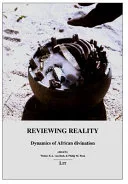
Reviewing Reality
 74
74

Reviewing Reality
The extensive cataloging of divinatory methods in *Reviewing Reality* is its most striking feature. Van Beek and Peek present a dense, fact-rich survey, moving from the Sudanese ebony diviners to Xhosa healers in South Africa. The sheer breadth is commendable, offering a corrective to Eurocentric views of spiritual practice. However, the work’s analytical depth sometimes falters under the weight of its descriptive ambition. While the authors detail 'friction oracles in the Congo Basin,' a deeper engagement with the * phenomenology * of such an experience would have been illuminating. The book excels at documenting *what* is done, but occasionally leaves the reader wanting to understand more fully *how* it is perceived by the practitioner. Despite this limitation, its value lies in its comprehensive, empirical approach, providing a vital resource for understanding the practical and symbolic dimensions of African divination.
📝 Description
74
### What It Is
This collection, originally published in 2013, meticulously examines the diverse landscape of divination practices across the African continent. It moves beyond superficial descriptions to explore the deep-seated cultural roles these practices play. The work details systems from crab divination in Cameroon to friction oracles in the Congo Basin, and from object casting in Mozambique to spirit possession rituals in Cote d'Ivoire. It highlights how these methods are integral to community life, offering guidance and solutions.
### Who It's For
Scholars of religious studies, anthropology, and African history will find this volume indispensable. It is also suited for practitioners of divination seeking to understand the global spectrum of their art, and for anyone interested in comparative mythology and cosmology. The book offers a nuanced perspective for those who wish to move past generalized notions of magic and explore specific, functioning belief systems.
### Historical Context
The study of African divination systems gained academic traction in the mid-20th century, building on earlier ethnographic work. This book contributes to that ongoing scholarly conversation by providing detailed case studies from various regions. It acknowledges the rich intellectual traditions and practical applications of these practices, presenting them as sophisticated methods of understanding and interacting with the world, rather than mere superstition.
### Key Concepts
Central to the book's exploration is the concept of divination not as prediction, but as a means of accessing knowledge and restoring balance. It examines how divinatory tools, whether physical objects or altered states of consciousness, function as interfaces with spiritual or ancestral realms. The work emphasizes the communal and ethical dimensions of divination, showing its role in resolving social conflicts and guiding communal decisions.
💡 Why Read This Book?
• Understand the role of 'crab divination in Cameroon' as a community problem-solving tool, offering insights into how specific cultural contexts shape spiritual practices. • Explore the mechanics of 'friction oracles in the Congo Basin,' learning how non-visual sensory input can be interpreted within a divinatory framework. • Gain knowledge of 'spirit possession in Cote d'Ivoire' not as a pathology, but as a recognized means of communication and social regulation within its specific cultural milieu.
⭐ Reader Reviews
Honest opinions from readers who have explored this book.
❓ Frequently Asked Questions
What specific regions of Africa does 'Reviewing Reality' cover for divination practices?
The book covers a wide geographical spread, detailing practices in regions such as Cameroon (crab divination), the Congo Basin (friction oracles), Mozambique (object casting), Cote d'Ivoire (spirit possession), Sudan (ebony diviners), and South Africa (Xhosa healers).
What is the primary function of divination systems discussed in the book?
Divination systems serve crucial community functions by answering questions, resolving problems, and helping individuals understand past and present events to chart a course for their lives.
Is 'Reviewing Reality' an academic text or a practical guide?
It is primarily an academic and ethnographic study, detailing and analyzing diverse divination practices across Africa with scholarly rigor.
Who are the authors and when was this book first published?
The book is by W. E. A. van Beek and Philip M. Peek, first published in 2013. It draws on extensive ethnographic research.
Does the book focus on a single type of divination?
No, the book highlights the extraordinary diversity of divination, covering various methods including oracles, object casting, and spirit possession across different African cultures.
What kind of insights does the book offer about African spiritual traditions?
It offers insights into the complex belief systems and practical applications of divination, showcasing their integral role in social, spiritual, and personal guidance within African communities.
🔮 Key Themes & Symbolism
Divination as Social Technology
The work emphasizes that divination across Africa is not merely about predicting the future but functions as a vital social technology. Systems like 'reading cast objects in Mozambique' are shown to resolve disputes, diagnose illness, and guide communal decisions. This perspective reframes divination as a dynamic process integral to maintaining social harmony and addressing practical challenges within communities, rather than an isolated mystical act. The book details how these practices provide frameworks for understanding causality and agency in complex social environments.
The Spectrum of Divinatory Methods
A core theme is the sheer variety of methods employed. From the tactile engagement of 'friction oracles in the Congo Basin' to the visual interpretation of scattered objects, the book meticulously documents different sensory and symbolic modalities. It explores how specific cultural epistemologies shape the design and interpretation of these tools. The diversity presented challenges monolithic understandings of spiritual practice and highlights the ingenuity of human societies in creating means to access knowledge beyond the ordinary senses.
Spiritual Access and Knowledge Retrieval
The book examines how various African divination systems act as conduits for accessing spiritual knowledge, ancestral wisdom, or divine will. Whether through 'spirit possession in Cote d'Ivoire' or the pronouncements of 'Sudanese ebony diviners,' the underlying principle is the mediation of information. This theme explores the cultural logic that validates these channels, presenting them as legitimate means of understanding the unseen forces that influence human affairs and providing pathways to navigate life's uncertainties.
Community and Individual Guidance
A significant focus is placed on how divination serves both collective and individual needs. The practices described, such as those of 'South African Xhosa healers,' are depicted as essential resources for individuals seeking clarity on personal matters and for communities facing broader challenges. The book illustrates how divination provides a shared symbolic language and a structured process for confronting ambiguity, thereby reinforcing communal bonds and offering personalized counsel.
💬 Memorable Quotes
“Divination systems throughout Africa serve their communities by answering questions and resolving problems.”
— This foundational statement underscores the pragmatic and social utility of divination, positioning it as a functional element within community structures rather than purely esoteric speculation.
“From crab divination in the Cameroon to friction oracles in the Congo Basin...”
— This phrase exemplifies the book's commitment to showcasing the vast geographical and methodological diversity of African divination, immediately establishing its broad scope.
“Divination helps people chart a course in their lives through a deeper understanding of past and present.”
— This highlights the role of divination in providing a framework for decision-making and life navigation, emphasizing its function in interpreting temporal experience.
“This important book reveals the extraordinary diversity and complexit[y of African divination systems].”
— This declarative statement positions the work as a significant contribution to the understanding of African spiritual practices, promising a detailed exploration of their multifaceted nature.
“Reading cast objects in Mozambique and spirit possession in Cote d'Ivoire are examples of diverse divinatory methods.”
— This interpretation highlights specific, tangible examples of divination, illustrating the range of techniques discussed and grounding the abstract concept in concrete practices.
🌙 Esoteric Significance
Tradition
While not strictly aligned with a single Western esoteric lineage like Hermeticism or Kabbalah, this work is crucial for understanding the 'as-above, so-below' principle through non-Western lenses. It offers a comparative perspective on how different cultures enact the concept of universal interconnectedness and seek knowledge of hidden realities. It departs from Western esoteric traditions by focusing on indigenous methodologies and cosmologies, providing empirical data that can inform broader theories of gnosis and divination.
Symbolism
The book implicitly explores the symbolism inherent in divinatory tools and practices. For instance, 'cast objects' in Mozambique likely carry symbolic weight derived from their form, material, and origin, representing forces or entities. 'Spirit possession' in Cote d'Ivoire symbolizes a direct channel to the spirit world, where the possessed individual becomes a living vessel for divine or ancestral communication, representing a profound connection between the material and immaterial realms.
Modern Relevance
Contemporary practitioners of modern occultism and comparative spirituality, particularly those interested in shamanism, indigenous psychologies, and non-Western forms of magic, draw significant insights from works like this. Thinkers exploring global epistemologies and the anthropology of magic find value in its detailed ethnography. It informs discussions on alternative healing modalities and the role of altered states of consciousness in accessing information, relevant to fields like transpersonal psychology and consciousness studies.
👥 Who Should Read This Book
['• Anthropologists and Religious Studies scholars: To deepen their understanding of comparative divination practices and ethnographic methodologies in African contexts.', '• Students of Comparative Mythology and Cosmology: To explore diverse belief systems and their functional roles in shaping worldviews across different cultures.', '• Practitioners of Esoteric Arts: To broaden their knowledge of global divination techniques beyond Western traditions and gain context for indigenous spiritual technologies.']
📜 Historical Context
Published in 2013, *Reviewing Reality* emerged during a period of sustained academic interest in African cosmologies and spiritual practices, building upon foundational ethnographies from the mid-20th century. The work engaged with scholarship that increasingly sought to understand African belief systems on their own terms, moving away from earlier colonial-era interpretations that often dismissed them as 'superstition.' While not directly engaging in a public controversy, the book contributed to an ongoing scholarly debate against the backdrop of post-colonial studies and the comparative religion field. Its detailed case studies provided empirical data that supported theoretical frameworks exploring the social functions of ritual and belief. Contemporaries like Jack Goody, whose work on literacy and rationality often touched upon the conceptual frameworks of non-Western societies, provided an intellectual milieu where such detailed ethnographic analyses were valued.
📔 Journal Prompts
The role of 'crab divination in Cameroon' as a problem-solving tool.
Interpreting sensory data in 'friction oracles in the Congo Basin'.
The social function of 'spirit possession in Cote d'Ivoire'.
How 'reading cast objects in Mozambique' facilitates understanding.
The community significance of 'South African Xhosa healers'.
🗂️ Glossary
Divination
The practice of seeking knowledge of the future or the unknown by supernatural means, often involving interpretation of omens, signs, or oracles.
Oracle
A person or agency considered to be a source of divine wisdom or prophetic prediction, or the place where such pronouncements are made.
Spirit Possession
A state where an individual is believed to be controlled or influenced by a spirit or deity, often resulting in altered behavior or speech.
Friction Oracle
A divinatory method involving the interpretation of movements or sounds produced by rubbing objects together, common in certain African regions.
Object Casting
A form of divination where various objects are thrown or cast, and their resulting pattern is interpreted to divine information or answers.
Xhosa Healers
Traditional healers among the Xhosa people of Southern Africa, often employing spiritual and herbal methods for diagnosis and treatment.
Ebony Diviners
Diviners, possibly from Sudan or surrounding regions, who utilize ebony wood or related materials in their divinatory practices.