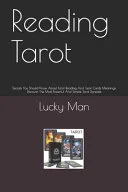
Reading Tarot
 75
75

Reading Tarot
Lucky Man’s Reading Tarot avoids the common pitfall of overwhelming beginners with overly complex theory. Instead, it adopts a refreshingly direct and encouraging tone, making the initial steps into cartomancy feel accessible. The author's emphasis on the historical development of the Tarot, noting its transition from gaming cards to esoteric tools, is a notable strength, grounding the practice in its heritage. A particular section, detailing the archetypal journey of the Major Arcana, offers a solid framework for understanding their narrative power. However, the book's brevity means that deeper explorations into advanced techniques or specific historical decks, such as the Marseille or Rider-Waite-Smith, are only touched upon. While effective for its stated purpose of introducing psychic Tarot reading, it leaves the reader wanting more detailed guidance for more nuanced readings. Nonetheless, it provides a commendable starting point for the aspiring Tarot enthusiast.
📝 Description
75
### What It Is Reading Tarot by Lucky Man, first published in April 2020, serves as an introductory guide to psychic Tarot reading specifically for novices. It aims to demystify the Tarot, offering clear instructions for interpreting the cards and enhancing one's intuitive abilities. The book emphasizes a friendly, encouraging approach to learning.
### Who It's For This work is tailored for individuals new to the Tarot, whether they are curious about its fundamental nature or eager to begin practical card interpretation. It caters to those seeking to develop their skills in reading Tarot for themselves or others, providing a foundational understanding.
### Historical Context The book introduces the historical lineage of Tarot, tracing its origins and evolution. It explores how Tarot cards transitioned from an early form of playing cards, possibly emerging in 15th-century Europe, to become a significant tool for occultists and cartomancers, highlighting its integration into esoteric practices.
### Key Concepts Central to Reading Tarot is the concept of intuitive interpretation guided by established meanings. The work covers understanding the structure of a Tarot deck, the significance of individual cards (both Major and Minor Arcana), and basic spread layouts for divination and self-reflection.
💡 Why Read This Book?
• Learn the foundational history of Tarot, understanding its evolution from 15th-century European card games to its use by occultists, a context often overlooked. • Grasp the core principles of psychic Tarot reading, including how to interpret the Major and Minor Arcana cards for personal insight. • Develop practical skills for card interpretation through clear instruction, enabling you to begin reading spreads confidently.
⭐ Reader Reviews
Honest opinions from readers who have explored this book.
❓ Frequently Asked Questions
When was Reading Tarot by Lucky Man first published?
Reading Tarot by Lucky Man was first published on April 26, 2020. This edition provides a modern introduction to the practice of Tarot reading.
Is Reading Tarot suitable for someone with no prior Tarot knowledge?
Yes, the book is explicitly written for beginners. It covers what Tarot is and how to interpret the cards, making it ideal for those starting their Tarot journey.
Does the book explain the history of Tarot cards?
Yes, Reading Tarot honors the heritage of Tarot by introducing its history, including when Tarot cards began and their evolution into tools for occultists and cartomancers.
What kind of Tarot reading does this book focus on?
The book focuses on psychic Tarot reading, offering guidance on how to read the cards and improve interpretive skills for divination and self-reflection.
What are the main components of the Tarot discussed in the book?
The book covers the fundamental structure of the Tarot deck, the significance of both the Major and Minor Arcana cards, and basic spread layouts for interpretation.
What is the author's approach to teaching Tarot?
The author employs a friendly and emphatically written style, designed to make learning accessible and encouraging for new students of the Tarot.
🔮 Key Themes & Symbolism
Beginner-Focused Instruction
This work prioritizes clarity and accessibility for novices. It breaks down the complex world of Tarot into manageable steps, focusing on core concepts like card meanings and basic spread interpretation. The author's encouraging tone ensures that readers feel empowered rather than intimidated as they begin their practice with the cards.
Historical Evolution of Tarot
Reading Tarot acknowledges the deep heritage of the cards, tracing their lineage from early European playing cards, possibly originating in the 15th century, to their significant role in esoteric traditions. This historical grounding provides context for their use by cartomancers and occultists.
Intuitive Card Interpretation
Beyond rote memorization, the book emphasizes developing psychic intuition for reading Tarot. It guides readers on how to connect with the cards on a deeper level, fostering an interpretive skill that combines symbolic meaning with personal insight and psychic perception.
Structure and Symbolism
The work systematically explains the components of a Tarot deck, including the Major and Minor Arcana. It introduces the symbolic language embedded within each card, encouraging readers to understand the archetypal narratives and divinatory significance of the imagery.
💬 Memorable Quotes
“This is a friendly and emphatically written book on Psychic Tarot Reading for beginners.”
— This statement highlights the book's core intention: to offer a welcoming and direct guide for those new to Tarot reading, setting an encouraging tone from the outset.
“Whether you want to learn what Tarot is, or whether you want to learn to read the cards and improve your skills of interpreting the Tarot, this is the book for you.”
— This emphasizes the dual purpose of the book, catering to both absolute beginners seeking foundational knowledge and those already familiar with Tarot but wishing to refine their interpretive abilities.
“Tarot for Beginners honors the intense heritage of Tarot by introducing you to the history, as well as the evolution of Tarot cards.”
— This conveys the author's respect for the tradition, promising to cover the historical background and development of the Tarot, connecting its modern practice to its ancient roots.
“i.e. when they began and how they became such an important aspect for occultists and Cartomancers.”
— This specific point underscores the book's commitment to historical accuracy, focusing on the origins and the crucial transition of Tarot into a tool for esoteric practitioners and fortune-tellers.
“This easy to understand guide...”
— This paraphrased concept suggests the book's design prioritizes simplicity and clarity, aiming to make the learning process for Tarot interpretation straightforward and uncomplicated for new students.
🌙 Esoteric Significance
Tradition
This work fits within the modern popularization of esoteric knowledge, specifically the Western Esoteric Tradition's engagement with divination. While not deeply rooted in a specific lineage like Kabbalah or Hermeticism, it draws upon the common understanding of Tarot as a symbolic system for self-discovery and psychic exploration, accessible to a broad audience.
Symbolism
The book likely introduces key symbols such as The Fool, representing new beginnings and leaps of faith, and The High Priestess, symbolizing intuition, mystery, and hidden knowledge. It would also cover the symbolism of the four suits (Wands, Cups, Swords, Pentacles) and their association with elements and aspects of human experience.
Modern Relevance
In contemporary practice, Reading Tarot contributes to the ongoing trend of mindfulness, self-help, and personal development through divination. It aligns with modern spiritual seekers who use Tarot not just for prediction, but as a tool for introspection, psychological insight, and navigating personal challenges.
👥 Who Should Read This Book
• Beginning students of cartomancy seeking a clear, encouraging introduction to Tarot card interpretation. • Individuals curious about the historical development of Tarot from its origins to its use in occult practices. • Those looking to enhance their intuitive abilities and self-awareness through practical divination techniques.
📜 Historical Context
Published in April 2020, Lucky Man's Reading Tarot emerged during a period of renewed interest in esoteric practices and divination, particularly online. The work situates itself within the broad lineage of cartomancy, a practice that gained significant traction in the late 19th and early 20th centuries with figures like Arthur Edward Waite and Pamela Colman Smith, whose Rider-Waite-Smith deck became a de facto standard. The book's approach, focusing on accessible psychic reading, contrasts with more academically rigorous historical analyses of Tarot's origins in 15th-century Italy or its association with occult orders like the Hermetic Order of the Golden Dawn. While not engaging directly with academic debates or specific contemporary esoteric authors, it taps into a popular resurgence of interest in Tarot, offering a modern entry point that acknowledges its historical roots without getting mired in complex scholarly disputes.
📔 Journal Prompts
Reflect on the archetypal journey of The Fool card and its initial significance.
Consider how the concept of 'psychic Tarot reading' differs from purely academic study.
Explore the historical transition of Tarot cards from gaming to esoteric use.
Analyze the symbolic meaning of the Major Arcana in the context of personal growth.
How might the Minor Arcana suits relate to different facets of your daily life?
🗂️ Glossary
Tarot
A deck of cards, typically containing 78 cards, used for divination, self-exploration, and spiritual insight. It comprises the Major Arcana and Minor Arcana.
Major Arcana
The trump cards of a Tarot deck, typically numbering 22, representing significant life events, archetypal figures, and spiritual lessons.
Minor Arcana
The four suits (Wands, Cups, Swords, Pentacles) of a Tarot deck, totaling 56 cards, which typically represent more mundane events, challenges, and situations.
Cartomancy
The practice of divination using playing cards or Tarot cards. It involves interpreting the symbols and combinations of cards to gain insight.
Psychic Tarot Reading
A method of Tarot interpretation that emphasizes intuitive perception and psychic abilities alongside the traditional meanings of the cards.
Spread
A specific arrangement of Tarot cards laid out for interpretation, designed to answer a particular question or explore a situation.
Occultist
A practitioner of occultism, which involves the study of hidden or secret knowledge, often related to magic, mysticism, and esoteric traditions.