Rationale divinorum officiorum

 81
81

Rationale divinorum officiorum
Guillaume Durand's Rationale Divinorum Officiorum offers a granular, almost forensic, dissection of medieval Catholic liturgy. Its strength lies in its exhaustive detail; one can trace the evolution of a particular vestment or ritual practice through its pages with remarkable clarity. The text, however, can feel somewhat dry for a modern reader unfamiliar with the specific theological debates of the 13th century. For instance, the extensive treatment of the nuances of the Mass's structure, while accurate, requires significant prior knowledge to fully appreciate its historical weight. A limitation is its dense prose, which demands considerable focus. The detailed explanation of the *pars activa* and *pars psa* of the liturgy, for example, while academically valuable, is not immediately accessible. Nevertheless, for those seeking a foundational understanding of the structured beauty of the medieval divine office, it remains a vital, if demanding, reference.
📝 Description
81
### What It Is Rationale Divinorum Officiorum, first published in 1843 by Guillaume Durand, is a detailed examination of the liturgical and ceremonial practices of the medieval Catholic Church. It functions as a comprehensive guide, dissecting the symbolic meanings, historical development, and spiritual significance embedded within church rituals, vestments, and sacred objects. The work aims to elucidate the theological underpinnings that informed these outward expressions of faith.
### Who It's For This volume is intended for scholars of religious history, liturgical studies, and medieval Church practices. It also appeals to those interested in the evolution of Western ceremonial traditions, including occultists and philosophers who seek to understand the roots of symbolic language and ritualistic expression that have informed later esoteric movements. Readers with a background in Catholic liturgy will find it particularly illuminating.
### Historical Context Published in the mid-19th century, Durand's work emerged during a period of renewed interest in medievalism and religious scholarship across Europe. The era saw significant academic engagement with historical church documents and practices, often in response to the religious and intellectual currents of the Enlightenment and the subsequent Romantic movement. It provided a structured, scholarly approach to understanding a complex religious system that had undergone centuries of development and reform.
### Key Concepts The book systematically breaks down the components of divine office, explaining the purpose behind liturgical seasons, the significance of specific prayers and readings, the symbolism of the altar, the sacraments, and the vestments worn by clergy. Durand explores how each element contributes to the overall spiritual experience and the theological message conveyed during worship. The work emphasizes the didactic function of liturgy, where ritual actions and objects serve to teach spiritual truths.
✍️ Author
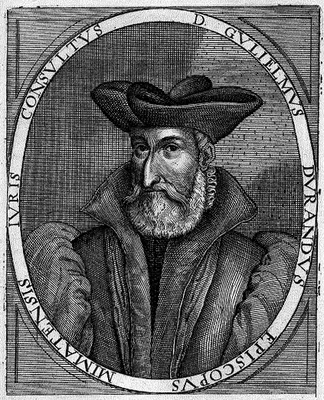
Guillaume Durand
Guillaume Durand, or William Durand (c. 1230 – 1 November 1296), also known as Durandus, Duranti or Durantis, from the Italian form of Durandi filius, as he sometimes signed himself, was a French canonist and liturgical writer, and Bishop of Mende.
💡 Why Read This Book?
• Understand the intricate symbolism of Catholic vestments, such as the *chasuble* and *mitre*, gaining insight into their historical and theological significance, a level of detail often absent in general religious histories. • Grasp the specific structure of the medieval Mass, including the *ordinarium* and *proprium*, allowing for a deeper appreciation of its devotional and pedagogical functions beyond mere ritual performance. • Trace the historical development of liturgical seasons and feast days, such as Advent and Lent, as documented in the 13th century, providing context for current religious observances and their underlying symbolism.
⭐ Reader Reviews
Honest opinions from readers who have explored this book.
❓ Frequently Asked Questions
When was Guillaume Durand's Rationale Divinorum Officiorum first published?
Guillaume Durand's Rationale Divinorum Officiorum was first published in 1843. This edition provided a comprehensive overview of medieval Catholic liturgical practices and their symbolic meanings for a scholarly audience.
What is the primary focus of Rationale Divinorum Officiorum?
The book primarily focuses on the explanation and symbolic interpretation of the rites, ceremonies, vestments, and vessels used in the medieval Catholic Church's divine offices.
Is Rationale Divinorum Officiorum suitable for beginners in liturgical studies?
While comprehensive, the work's scholarly depth and detailed theological explanations make it more suitable for those with some existing knowledge of Catholic liturgy or medieval history.
What historical period does the book primarily cover?
The book primarily covers the liturgical practices and symbolism prevalent during the medieval period of the Catholic Church, offering insights into its 13th-century structure.
Where can I find Rationale Divinorum Officiorum online?
As a work published in the 19th century, Rationale Divinorum Officiorum is often available in the public domain and can be found on digital archives and academic library websites.
Who was Guillaume Durand?
Guillaume Durand (c. 1230 – 1296) was a French canon lawyer and bishop, known for his influential work on church law and liturgy, Rationale Divinorum Officiorum, which became a standard text.
🔮 Key Themes & Symbolism
The Symbolism of Sacred Objects
Durand meticulously details the symbolic significance of every object used in divine service, from the altar and its cloths to the chalice and paten. Each item is not merely functional but carries theological weight, representing aspects of Christ's life, passion, or the Church's mysteries. The work argues that these objects are visual aids, intended to instruct the faithful and elevate their minds to divine contemplation, aligning with a tradition of using tangible elements to convey abstract spiritual truths.
Structure of the Divine Office
A central theme is the systematic breakdown of the divine office, encompassing the daily cycle of prayers, the liturgical year, and the specific rites of the Mass. Durand explains the rationale behind the order of services, the choice of readings, and the progression through different seasons like Lent and Advent. This structural analysis reveals an underlying order and purpose designed to guide the community through a narrative of salvation history, emphasizing the Church's role as a mediator of divine grace.
The Role of Liturgy as Pedagogy
The book posits that liturgy is a profound teaching tool. Beyond the spoken word, the actions, gestures, and visual elements of worship serve to communicate complex theological doctrines. Durand illustrates how vestments, processions, and the very architecture of the church are designed to reinforce spiritual lessons. This perspective highlights a pedagogical approach where the senses are engaged to foster understanding and devotion, a method consistent with pre-modern educational philosophies that relied heavily on visual and performative instruction.
Evolution of Ceremonial Practices
While focused on the 13th century, Durand's work implicitly acknowledges the historical development of these practices. He often references earlier traditions or explains the reasons for specific customs that had solidified over time. This provides a diachronic view, allowing readers to appreciate that the 'rationale' was not static but a codification of practices that had evolved. It shows how tradition is built, interpreted, and maintained within a religious institution.
💬 Memorable Quotes
“The vestments are the sacred armour of God.”
— This paraphrased concept highlights the symbolic function of clerical attire, portraying it not as mere clothing but as a divinely ordained protective and spiritual covering for those performing sacred duties.
“The altar is the table of sacrifice and the bed of the Spouse.”
— This statement encapsulates the dual symbolism of the altar: a place of sacrificial offering in remembrance of Christ's sacrifice, and a representation of the union between Christ (the Spouse) and the Church (the Bride).
“Every ceremony is a key to unlock the divine mysteries.”
— This idea suggests that the rituals and actions within the liturgy are not arbitrary but are carefully designed symbolic representations intended to reveal deeper spiritual truths and facilitate understanding of sacred concepts.
“The bells call the faithful to prayer and announce God's presence.”
— This simple statement emphasizes the practical and spiritual role of church bells: their function in organizing communal worship and their symbolic power in signifying the sacredness and immediacy of the divine within the community.
“The church building itself is a microcosm of heaven.”
— This interpretation conveys the idea that the physical structure of the church, with its layout, decorations, and sacred objects, is intended to mirror the celestial realm, serving as a sacred space for encountering the divine on Earth.
🌙 Esoteric Significance
Tradition
While rooted in medieval Catholic theology, *Rationale Divinorum Officiorum* has found resonance within Western esoteric traditions due to its detailed exposition of symbolic language and ritual. It is often viewed as a source for understanding the archetypal forms and symbolic underpinnings that later influenced Hermetic, Rosicrucian, and Masonic symbolism. Its structured approach to divine service provides a framework for analyzing the 'magnum opus' of spiritual transformation, seeing the Church’s ritual as a macrocosm of the individual’s path to enlightenment.
Symbolism
The work extensively details the symbolism of liturgical vestments, such as the *chasuble* representing charity, and the *mitre* signifying the bishop's spiritual authority and wisdom. The altar is described as both a sacrificial altar and a symbol of Christ's union with the Church. Furthermore, the liturgical calendar, with its cycles of feasts and fasts, is interpreted as a symbolic map of salvation history, guiding practitioners through spiritual seasons analogous to personal inner development.
Modern Relevance
Contemporary practitioners of Western Esotericism, particularly those involved in ceremonial magic or comparative religious studies, often consult Durand's work to understand the historical and symbolic roots of ritualistic practices. Movements that emphasize the sacredness of form and symbol, such as certain branches of Traditionalism or those exploring liturgical theology from an esoteric perspective, find in *Rationale* a valuable resource for deconstructing the layers of meaning within established religious forms. It offers a bridge between exoteric religious expression and esoteric interpretation.
👥 Who Should Read This Book
• Students of Western Esotericism and comparative religion seeking to understand the historical and symbolic foundations of Western liturgical practices, providing a detailed look at pre-modern ceremonial structures. • Scholars of medieval Church history and liturgy interested in a comprehensive, systematic explanation of 13th-century Catholic rites, vestments, and theological underpinnings. • Ritual practitioners and ceremonialists looking to explore the archetypal symbolism and structured practices that have informed various esoteric traditions over centuries.
📜 Historical Context
Guillaume Durand's *Rationale Divinorum Officiorum*, first published in 1843, emerged during a period of intense scholarly interest in medieval history and theology, often termed Neo-Gothic or Romanticism. This era saw a significant re-examination of pre-Reformation religious practices and structures, partly as a reaction against Enlightenment rationalism and partly fueled by movements like the Oxford Movement in England, which sought to revive aspects of ancient Christianity. Durand's work provided a comprehensive, systematic explanation of the Catholic liturgy as it had evolved by the 13th century, offering a scholarly counterpoint to earlier, more polemical Protestant interpretations of Catholic ritual. It engaged with the intellectual currents of the time by grounding liturgical practice in historical precedent and theological reasoning, making it a vital resource for scholars of Church history and comparative religion. Contemporaries like J.M. Neale in England were also deeply involved in translating and studying medieval liturgical texts, indicating a broader European scholarly engagement with this material.
📔 Journal Prompts
The symbolism of the *mitre* as spiritual authority and wisdom.
The pedagogical function of liturgical ceremonies in medieval worship.
The symbolic interpretation of the altar as both sacrifice and union.
The historical evolution of specific liturgical vestments like the *chasuble*.
The concept of the church building as a microcosm of the divine.
🗂️ Glossary
Divine Office
The official set of daily prayers and services performed by clergy and religious orders in the Catholic Church, comprising psalms, readings, and hymns throughout the day.
Chasuble
The outermost liturgical vestment worn by a priest during the celebration of Mass, symbolizing charity and the yoke of Christ.
Mitre
A tall, pointed hat worn by bishops and abbots as a symbol of their office, representing spiritual insight and authority.
Altar
The central table in a church used for the celebration of the Eucharist, representing both the place of sacrifice and the table of the Lord's Supper.
Liturgical Year
The annual cycle of feasts and seasons in Christian churches, marking significant events in the life of Jesus Christ and the history of salvation.
Pars activa
Literally 'active part,' referring to the portions of the liturgy performed by the celebrant or clergy, as distinct from the sung parts by the choir.
Pars psa
Literally 'sung part,' referring to the portions of the liturgy that are sung, typically by the choir or congregation.