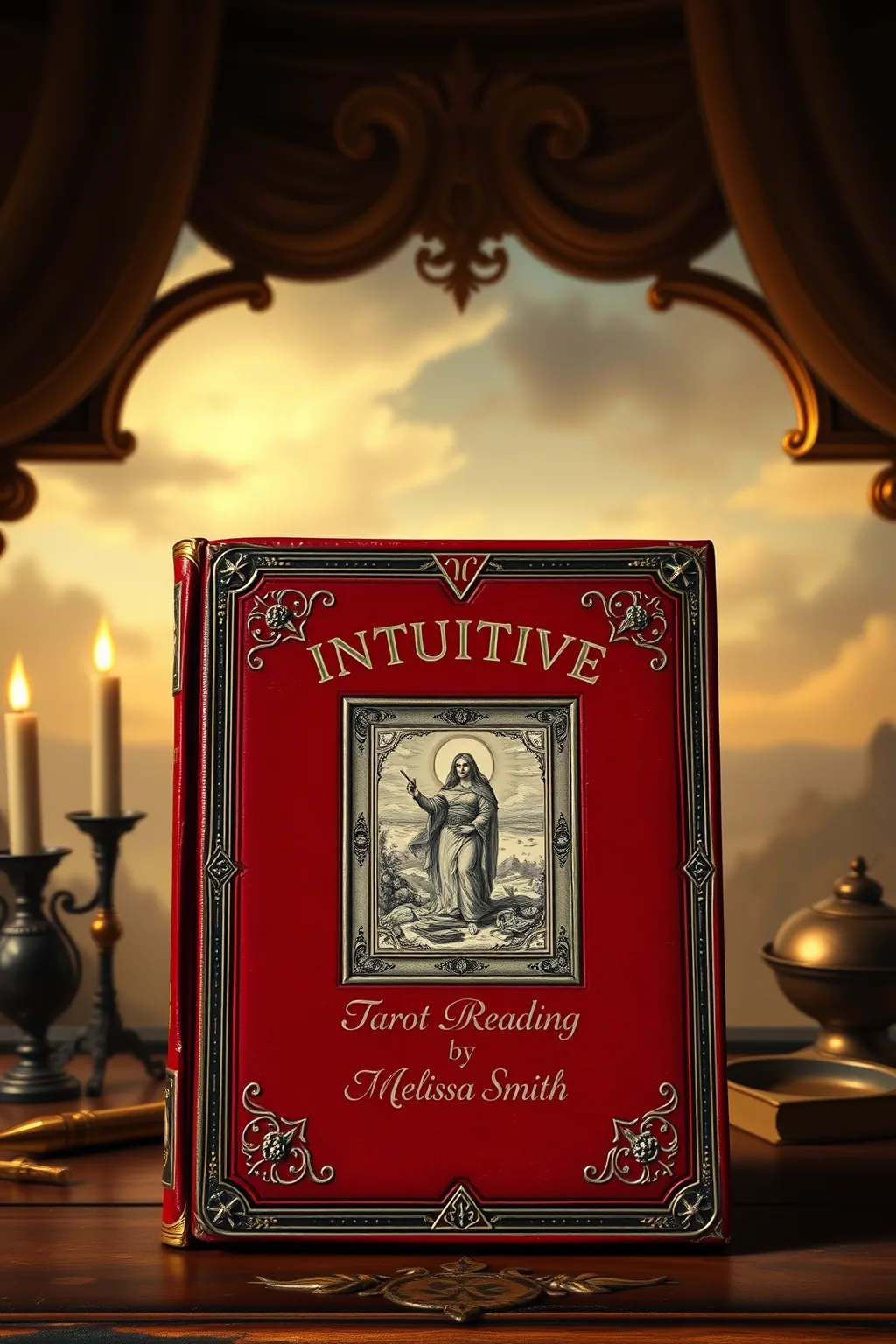
Intuitive Tarot Reading
 79
79

Intuitive Tarot Reading



Melissa Smith's Intuitive Tarot Reading attempts a refreshingly direct approach to a field often mired in esoteric jargon and rigid dogma. The author’s insistence on developing a personal connection with the cards, rather than merely memorizing a lexicon of meanings, is commendable. This perspective is particularly evident in her treatment of the Minor Arcana, where she encourages exploration of the suit energies and numerological patterns as springboards for intuitive insight. However, the book occasionally skims over the deeper historical currents that shaped Tarot symbology, such as the influence of occult orders in the late 19th century. While the emphasis on intuition is a strength, a brief acknowledgment of the foundational symbolic languages could have provided a richer context. The passage discussing the Fool's journey as a metaphor for embracing the unknown, while well-intentioned, could benefit from more concrete examples of how this translates to daily decision-making. Overall, Smith offers a grounded, user-friendly introduction to intuitive card work, prioritizing personal connection over academic rigor.
📝 Description
79
### What It Is Intuitive Tarot Reading by Melissa Smith presents the Tarot as a practical tool for self-discovery, aiming to bridge the gap between esoteric lore and everyday application. Published in 2019, the work moves beyond rote memorization of card meanings, advocating for a more personal and responsive engagement with the deck. It positions the Tarot not as a predictive device but as a mirror to the unconscious, facilitating self-awareness and personal growth. The book promises a straightforward approach, intended to demystify the process for newcomers and offer a fresh perspective for those already acquainted with the cards.
### Who It's For This volume is curated for individuals seeking an accessible entry into Tarot studies, particularly those who feel intimidated by complex systems or dense historical texts. It appeals to the modern seeker interested in practical spirituality and personal development, who desires to integrate symbolic language into their daily life. Readers looking for a method to unlock inner wisdom and gain clarity on personal challenges, without necessarily adhering to rigid interpretive frameworks, will find this guide particularly relevant. It is also suited for those who have previously found Tarot guides overwhelming or overly academic.
### Historical Context The early 21st century has seen a resurgence of interest in divination and esoteric practices, often reframed through the lens of psychology and self-help. Smith's work emerges within this milieu, influenced by the late 20th-century interpretations of Tarot that emphasized archetypal psychology, notably the work of Carl Jung and his followers. While earlier occult traditions, such as the Hermetic Order of the Golden Dawn, focused on intricate symbolic systems and ritualistic applications of the Tarot, contemporary approaches like Smith's tend to prioritize intuitive connection and subjective experience. This shift reflects a broader cultural movement towards personalized spirituality and the accessibility of esoteric knowledge through accessible guides and online platforms.
### Key Concepts The core of Intuitive Tarot Reading revolves around the concept of 'active imagination' applied to the Tarot, encouraging readers to develop a personal dialogue with the cards. Instead of relying solely on traditional meanings, Smith emphasizes the reader's inner response and the symbolic resonance each card evokes. The book likely explores the archetypal nature of the Major Arcana, suggesting they represent fundamental human experiences and stages of development. Furthermore, it introduces practical exercises designed to cultivate this intuitive faculty, transforming the Tarot deck into a dynamic tool for introspection and problem-solving, rather than a passive oracle.
💡 Why Read This Book?
• You will learn to develop a personal language with the Tarot, moving beyond memorized meanings, as guided by Smith's emphasis on intuitive resonance with each card, particularly evident in her approach to the Minor Arcana. • Gain practical methods for integrating Tarot into daily life for self-reflection, as the book provides exercises designed to transform the deck into a tool for introspection, a concept first explored in its practical application sections. • Understand the Tarot as a psychological mirror reflecting inner states, a perspective that draws implicitly from early 20th-century psychological interpretations of symbolism, allowing for deeper self-awareness.
why_read
⭐ Reader Reviews
Honest opinions from readers who have explored this book.
❓ Frequently Asked Questions
What is the main philosophy behind Intuitive Tarot Reading?
The book promotes the idea that Tarot is a tool for accessing the subconscious mind, acting as a mirror to reveal self-awareness and facilitate personal change, rather than a predictive oracle.
Is this book suitable for complete beginners to Tarot?
Yes, it is designed for those new to Tarot, aiming to provide an easy and effective way to integrate card reading into everyday life without overwhelming the reader with excessive information.
Does Melissa Smith advocate for memorizing card meanings?
No, the central philosophy is to foster an intuitive connection with the cards, encouraging readers to develop their own understanding based on personal resonance and inner response.
When was Intuitive Tarot Reading first published?
The original publication date for Intuitive Tarot Reading by Melissa Smith was July 13, 2019.
What distinguishes this book from other Tarot guides?
It focuses on practical application and personal intuition, aiming to demystify the process and make Tarot accessible for everyday self-discovery, moving away from purely academic or overly complex interpretations.
Does the book cover the historical origins of Tarot cards?
While focusing on practical application, the book implicitly draws from later 20th-century psychological interpretations of Tarot symbolism, offering a modern perspective rather than a deep historical dive.
🔮 Key Themes & Symbolism
Intuitive Connection
The work champions developing a personal, intuitive relationship with the Tarot deck. It argues that the true power of the cards lies not in rote memorization of meanings but in the reader's inner response and subjective interpretation. This approach encourages a dynamic dialogue between the querent and the cards, transforming the Tarot from a static oracle into a living tool for self-exploration and understanding.
Practical Application
A central theme is the integration of Tarot reading into the fabric of everyday life. Smith moves beyond theoretical study to offer concrete methods and exercises for using the cards to gain clarity on daily challenges, make decisions, and foster personal growth. The emphasis is on utility, making the esoteric accessible and actionable for the modern individual seeking guidance.
The Tarot as a Mirror
The book positions the Tarot deck as a reflective surface for the human psyche. The cards are presented as symbols that tap into deeper levels of consciousness, revealing aspects of oneself that may be hidden or unrecognized. This psychological perspective encourages introspection, self-awareness, and the potential for profound personal transformation through understanding these inner reflections.
Demystifying the Esoteric
Smith aims to simplify the practice of Tarot reading, making it approachable for those who might be intimidated by its mystical associations or complex historical traditions. The work seeks to strip away unnecessary complexity, offering a clear, effective pathway into understanding and utilizing the Tarot for personal benefit without requiring extensive prior knowledge.
💬 Memorable Quotes
“Tarot cards are used to help people see things in themselves that they may not be aware of.”
— This encapsulates the book's core premise: the Tarot functions as a tool for introspection, illuminating subconscious patterns and personal truths that might otherwise remain hidden from conscious awareness.
“Good news is you are in the right place to start your journey.”
— This direct address conveys the book's accessible and encouraging tone, assuring the reader that this guide is a welcoming and practical starting point for learning Tarot.
“Tarot is a tool used for accessing a deep part of the human mind.”
— This highlights the psychological and subconscious dimension of Tarot, framing it not as mere fortune-telling but as a method for connecting with profound inner wisdom and understanding.
“Discover an easy and effective way to integrate Tarot reading in your everyday life.”
— This statement clearly defines the book's promise: to provide a straightforward and practical method for incorporating Tarot practice into daily routines for personal benefit.
“Help people change their lives for the better.”
— This underscores the transformative potential of Tarot as presented in the book, positioning it as a catalyst for positive personal development and life improvement.
🌙 Esoteric Significance
Tradition
This work aligns with contemporary Neo-Pagan and New Age interpretations of Tarot, which often emphasize psychological archetypes and personal spiritual development over strict adherence to historical esoteric lineages like Hermeticism or Kabbalah. It departs from traditional occult methodologies by downplaying ritualistic context and formal initiatory structures, favoring a direct, intuitive engagement with the symbolism for self-understanding.
Symbolism
The book likely engages with archetypal symbolism, particularly within the Major Arcana, interpreting figures like The Fool or The High Priestess as representations of universal human experiences and stages of consciousness. The suit symbols (Wands, Cups, Swords, Pentacles) are probably explored as elemental forces or life domains, encouraging readers to see how these energies manifest in their own lives, fostering a personal connection to the symbolic language.
Modern Relevance
Smith's approach resonates with modern practices focused on mindfulness, self-care, and personal empowerment. It finds relevance in therapeutic settings that utilize symbolic tools for emotional processing and in contemporary spiritual communities that value subjective experience and direct personal insight over dogma. Thinkers and practitioners exploring Jungian psychology, archetypal studies, and accessible divination methods often draw inspiration from guides that bridge esoteric symbolism with everyday life.
👥 Who Should Read This Book
• Individuals new to Tarot seeking a practical, non-intimidating introduction that focuses on developing personal intuition rather than memorizing complex systems. • Those interested in using Tarot as a tool for self-reflection, personal growth, and understanding subconscious patterns, aligning with psychological and self-help approaches to spirituality. • Readers who may have previously found traditional Tarot guides overwhelming or overly academic and are looking for a more accessible and user-friendly method for card reading.
📜 Historical Context
Melissa Smith's *Intuitive Tarot Reading*, published in 2019, arrives in an era marked by a significant popular revival of esoteric practices, often filtered through self-help and psychological frameworks. This contemporary approach stands in contrast to the more rigidly defined occult systems of the late 19th and early 20th centuries, such as those developed by the Hermetic Order of the Golden Dawn, which meticulously cataloged Tarot symbolism within a complex Kabbalistic and ceremonial magical structure. While figures like Arthur Edward Waite and Pamela Colman Smith were instrumental in popularizing the Rider-Waite-Smith deck in 1909, their work still operated within a context of structured esoteric societies. Smith’s work, by contrast, prioritizes individual intuition and personal meaning-making, reflecting a broader cultural shift towards personalized spirituality and a departure from authoritative, tradition-bound interpretations prevalent in earlier occult discourse. The accessibility of online resources and a growing interest in mindfulness practices further contextualize this book's emphasis on immediate, personal application.
📔 Journal Prompts
Reflect on the journey of The Fool as depicted in the Major Arcana.
How does the energy of the Wands suit manifest in your current projects?
Consider the symbolic representation of Swords in relation to recent challenges.
Explore the intuitive messages you receive from the Cups suit regarding your emotional landscape.
Connect the imagery of Pentacles to your material world and daily routines.
🗂️ Glossary
Major Arcana
The set of 22 trump cards in a Tarot deck, often seen as representing significant life events, spiritual lessons, and archetypal forces influencing a person's journey.
Minor Arcana
The 56 cards divided into four suits (Wands, Cups, Swords, Pentacles), typically corresponding to everyday situations, challenges, and experiences in a person's life.
Suits
The four divisions within the Minor Arcana (Wands, Cups, Swords, Pentacles), each associated with specific elements, areas of life, and types of energy or action.
Intuition
The ability to understand something immediately, without the need for conscious reasoning; in Tarot, it refers to the reader's inner knowing and personal connection to the cards.
Archetype
A universal, archaic pattern or image that derives from the collective unconscious and is believed to influence human behavior and perception, often represented in Tarot cards.
Querent
The person for whom a Tarot reading is performed; the individual seeking insight or guidance from the cards.
Symbolism
The use of symbols to represent ideas and qualities; in Tarot, the cards are rich with visual symbols that carry deeper meanings and interpretations.










![Cicero in twenty eight volumes. Vol.20: De senectute, De amicitia, De divinatione [Loeb 154]](/img/thumb/cicero-in-twenty-eight-volumes-vol-20-de-senectute-de-amicitia-de-divinatione-loeb-154-cicero-marcus-tulius-106-43-bce.webp)