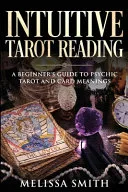
INTUITIVE TAROT READING; A Beginner's Guide to Psychic Tarot and Card Meanings
 80
80

INTUITIVE TAROT READING; A Beginner's Guide to Psychic Tarot and Card Meanings



Melissa Smith’s "Intuitive Tarot Reading" addresses a common frustration: the sheer volume of information that can paralyze a beginner. The work’s strength lies in its direct, accessible prose, cutting through the dense historical and occult baggage that often surrounds Tarot study. Smith effectively reframes the cards as mirrors for the psyche rather than pronouncements from an external force. A notable passage details how to approach the Six of Swords, not as a fixed prediction of travel, but as a symbol of transition and emotional release, encouraging personal resonance. However, the book sometimes leans too heavily on the "intuitive" aspect, potentially downplaying the value of understanding established symbolism and historical context, which can anchor intuition. While effective for the absolute novice, seasoned practitioners might find its approach lacking deeper theoretical exploration.
Ultimately, this guide serves as a gentle, practical on-ramp for those intimidated by traditional Tarot manuals.
📝 Description
80
### What It Is Intuitive Tarot Reading: A Beginner's Guide to Psychic Tarot and Card Meanings offers a practical framework for understanding and utilizing the Tarot beyond rote memorization. Published in 2020, the book positions Tarot not as a mystical oracle dictating fate, but as a tool for self-discovery and personal insight. It aims to demystify the process of card reading, focusing on developing an intuitive connection with the cards and their inherent symbolism.
### Who It's For This guide is specifically designed for individuals new to Tarot who find traditional approaches overwhelming. It caters to those seeking a more accessible entry point into card reading, emphasizing personal intuition over rigid interpretations. Readers looking to integrate Tarot into their daily lives for self-reflection, decision-making, or a deeper understanding of their subconscious will find this book particularly beneficial.
### Historical Context The book emerges within a contemporary resurgence of interest in divination and esoteric practices, building upon a lineage of Tarot interpretation that dates back to the 18th century. While historical figures like Antoine Court de Gébelin linked Tarot imagery to ancient Egyptian mysteries, Smith's approach prioritizes the psychological and intuitive aspects, diverging from purely divinatory or occultist traditions that dominated in the late 19th and early 20th centuries with figures like A.E. Waite and Pamela Colman Smith, whose Rider-Waite deck remains influential.
### Key Concepts Central to the book is the concept of "intuitive reading," which advocates for a personal dialogue between the reader, the cards, and the querent's subconscious. It explores the inherent symbolism within the Major and Minor Arcana, encouraging readers to observe their immediate reactions and associations to the imagery. The book also touches upon the idea of Tarot as a "psychic tool," suggesting its capacity to unlock latent psychic abilities and provide clarity on personal matters, aligning with modern psychological interpretations of archetypal symbolism.
💡 Why Read This Book?
• You will learn to bypass the memorization of 78 card meanings by developing your personal intuitive connection, a skill directly applicable to interpreting the symbolism of The Fool's Journey as presented in Chapter 3. • You will gain a practical method for integrating Tarot into daily life for self-reflection, using techniques described for reading the Minor Arcana to gain clarity on everyday challenges. • You will understand Tarot as a psychological tool for accessing subconscious insights, a concept elaborated upon when discussing the interpretation of the Major Arcana in the context of personal growth.
why_read
⭐ Reader Reviews
Honest opinions from readers who have explored this book.
❓ Frequently Asked Questions
What is the primary goal of "Intuitive Tarot Reading" for beginners?
The book aims to make Tarot accessible by focusing on developing personal intuition and understanding card symbolism, rather than memorizing rigid meanings, empowering beginners to use the cards for self-discovery.
How does this book differ from other beginner Tarot guides?
It emphasizes an intuitive approach, encouraging readers to trust their personal responses to the cards' imagery and symbolism, moving beyond purely academic or divinatory interpretations.
What specific Tarot decks are recommended or discussed?
While the book focuses on general principles, it implicitly references the archetypal imagery common to decks like the Rider-Waite-Smith, which remains a benchmark for understanding card symbolism.
Can I use "Intuitive Tarot Reading" to learn divination?
The book frames Tarot primarily as a tool for self-reflection and psychological insight, rather than solely for fortune-telling, though developing intuition can naturally enhance divinatory skills.
What is the significance of the publication year 2020 for this book?
Published in 2020, it reflects a contemporary interest in accessible, psychologically-oriented esoteric practices, aligning with current trends in self-help and mindfulness.
Does the book cover specific card spreads?
Yes, the book introduces various spreads, guiding readers on how to select and interpret them based on their intuitive connection to the cards and the questions being asked.
🔮 Key Themes & Symbolism
Intuitive Connection
This theme centers on cultivating a direct, personal relationship with the Tarot deck. Smith argues that true understanding comes not from memorizing pre-defined meanings, but from allowing the imagery and archetypes of the cards to speak to the reader's subconscious. The book encourages paying attention to gut feelings, emotional responses, and spontaneous associations that arise when engaging with the cards, positioning intuition as the primary key to unlocking their wisdom. This is explored through exercises designed to bypass intellectual analysis and foster a more visceral connection with the Tarot's symbolic language.
Psychological Tool
The work reframes Tarot as a sophisticated psychological instrument, akin to a projective test. Rather than predicting external events, the cards are presented as mirrors reflecting the querent's inner landscape, including their beliefs, fears, desires, and hidden potentials. This perspective aligns Tarot with modern psychological concepts of archetypes and the subconscious mind. By examining the symbolic narratives within spreads, individuals can gain clarity on their motivations, identify patterns of behavior, and uncover pathways for personal growth and transformation, moving beyond simple divinatory applications.
Demystifying Tarot
A core objective of "Intuitive Tarot Reading" is to dismantle the perception of Tarot as an esoteric discipline accessible only to a select few. Smith simplifies the process, offering a clear, step-by-step approach for newcomers. The book addresses common anxieties and confusions beginners face, such as being overwhelmed by the vast number of cards or complex interpretations. By providing practical techniques and a supportive framework, it aims to empower anyone to engage with the Tarot confidently and effectively, making its insights available for everyday use and personal development.
Symbolism and Archetypes
The book delves into the rich symbolic language embedded within the Tarot deck, particularly focusing on the archetypal figures and scenes of the Major and Minor Arcana. It encourages readers to look beyond superficial meanings and explore the deeper, universal patterns that these symbols represent. Understanding these archetypes, such as The Fool's journey or the elemental associations of the Minor Arcana suits, is presented as crucial for developing an intuitive reading. The emphasis is on how these universal symbols resonate with individual experiences, providing a framework for self-understanding.
💬 Memorable Quotes
“Tarot cards are used to help people see things in themselves that they may not be aware of.”
— This highlights the book's core premise: Tarot as a tool for introspection and uncovering subconscious truths, rather than an external predictive mechanism.
“I know how frustrating it can be looking for a practical guide that introduces you to this magic world just to end up overwhelmed.”
— This expresses empathy with the beginner's experience, promising a clear, actionable approach that avoids the common pitfalls of overly complex or esoteric manuals.
“Good news is you are in the right place.”
— A direct reassurance to the reader that this book offers the solution they have been seeking for an accessible entry into Tarot reading.
“Tarot is a tool used for accessing a deep part of the human mind.”
— This positions Tarot within a psychological framework, suggesting its function is to connect with deeper mental processes and intuition.
“Help people change their lives for the better.”
— This underscores the transformative potential of Tarot when used consciously, emphasizing its practical application for personal improvement and positive life changes.
🌙 Esoteric Significance
Tradition
This work engages with the Western Esoteric Tradition, particularly its modern psychological and self-help iterations. While Tarot has roots in cartomancy and occultism, Smith situates it within a Hermetic-adjacent framework emphasizing inner wisdom and personal gnosis. It departs from strict Qabalistic or astrological correspondences often found in older Tarot systems, favoring an approach that aligns more with Jungian psychology and archetypal symbolism, focusing on the individual's direct experience rather than adherence to a fixed, external doctrine.
Symbolism
Key symbols include The Fool, representing new beginnings and leaps of faith, and the suits of the Minor Arcana (Wands, Cups, Swords, Pentacles). In Smith's intuitive framework, Wands might symbolize creative energy or passion, Cups emotional states and relationships, Swords intellectual pursuits or challenges, and Pentacles the material world or practical concerns. The book encourages readers to discover personal meanings, but these elemental associations provide a grounding for intuitive exploration, linking the cards to fundamental aspects of human experience.
Modern Relevance
The book's approach resonates with contemporary interest in mindfulness, self-care, and accessible spiritual practices. Thinkers and practitioners in fields like transpersonal psychology, coaching, and modern paganism often utilize Tarot as a tool for self-exploration, mirroring Smith's emphasis on intuition and psychological insight. Its accessible format makes it relevant for digital-native audiences seeking practical guidance for personal development, aligning with online communities focused on spirituality and self-improvement.
👥 Who Should Read This Book
• Absolute beginners in Tarot who feel intimidated by complex systems and seek a gentle, intuitive entry point. • Individuals interested in using Tarot as a tool for self-reflection and psychological insight, rather than solely for fortune-telling. • Those looking for practical methods to integrate card reading into their daily lives for personal growth and decision-making.
📜 Historical Context
Published in 2020, Melissa Smith's "Intuitive Tarot Reading" arrives during a period of renewed interest in esoteric practices, particularly among younger demographics seeking self-help and spiritual tools. The book builds upon a rich history, tracing back to 18th-century occultists like Antoine Court de Gébelin who associated Tarot with ancient Egyptian wisdom. However, Smith's emphasis on intuition and psychological interpretation represents a departure from the more rigid divinatory systems and occultist frameworks popular in the late 19th and early 20th centuries, championed by figures such as A.E. Waite. While Waite and his collaborator Pamela Colman Smith created the iconic Rider-Waite deck in 1909, which remains a touchstone, Smith's work prioritizes personal resonance over adherence to specific, historically codified meanings. The book’s accessible approach reflects a modern trend towards secularizing and psychologizing esoteric traditions, making them palatable outside of strict esoteric circles, contrasting with the more exclusive esoteric societies of the past.
📔 Journal Prompts
Reflect on the journey of The Fool from Chapter 3 and its initial steps.
Consider the elemental associations of the suits and your personal connection to each.
Analyze the symbolism of the Major Arcana figures in relation to your life goals.
Explore the concept of "intuitive reading" when interpreting the Six of Swords.
Document a personal insight gained from a simple three-card spread.
🗂️ Glossary
Major Arcana
The 22 trump cards in a Tarot deck, representing significant life lessons, archetypal energies, and major spiritual themes. They often signify pivotal moments or profound influences.
Minor Arcana
The 56 cards divided into four suits (Wands, Cups, Swords, Pentacles), typically corresponding to everyday experiences, specific situations, and more mundane aspects of life.
Intuitive Reading
A method of Tarot interpretation that emphasizes personal feelings, gut instincts, and direct connections to the card imagery, rather than relying solely on memorized meanings.
Querent
The person for whom a Tarot reading is being performed. The cards are drawn and interpreted in relation to the querent's questions or situation.
Spread
A specific arrangement of Tarot cards laid out for interpretation. Different spreads are designed to address various types of questions or situations.
Archetype
Universal, primal symbols or images that are part of the collective unconscious, representing fundamental human experiences and patterns of behavior, often embodied by Tarot figures.
Psychic Tool
In this context, Tarot is viewed as a device that can help access inner knowing, subconscious information, or subtle perceptions beyond ordinary rational thought.