De Divinatione
 78
78

De Divinatione
Cicero’s *De Divinatione* remains a cornerstone for understanding ancient skepticism. The text’s strength lies in its methodical dismantling of divinatory practices, presenting a coherent philosophical argument against their efficacy. Cicero’s engagement with Stoic principles, particularly his emphasis on natural causality, provides a robust framework for his critique. However, the work’s sheer density of philosophical exposition, while intellectually rigorous, can make for challenging reading for those unfamiliar with the nuances of Hellenistic philosophy. The passages discussing the fallibility of memory in recounting supposed prophetic successes, particularly in Book II, are sharp and remain relevant to how we evaluate evidence today. Ultimately, *De Divinatione* offers a powerful case study in ancient rationalism versus belief.
📝 Description
78
### What It Is
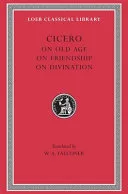
*De Divinatione* is Marcus Tullius Cicero's philosophical treatise on the nature and validity of divination. Originally composed around 44 BCE, this work systematically examines various forms of prophecy and fortune-telling, dissecting their logical underpinnings and historical prevalence within Roman society. Cicero, a renowned orator and statesman, approaches the subject with a critical, skeptical eye, drawing heavily on Stoic philosophy to question the rational basis of supernatural insight.
### Who It's For
This text is essential for scholars of ancient philosophy, Roman history, and the intellectual currents of the late Republic. It appeals to those interested in the historical development of skepticism and the philosophical arguments against superstition. Students of rhetoric will also find value in Cicero's structured argumentation and his use of persuasive appeals. It is for readers who appreciate rigorous philosophical inquiry into beliefs that shaped ancient cultures.
### Historical Context
Composed in the turbulent final years of the Roman Republic, *De Divinatione* reflects a society deeply invested in omens, auspices, and prophetic pronouncements. Cicero wrote during a period of intense political upheaval, where such practices were not merely private beliefs but public rituals influencing state decisions. His work engages with the ideas of earlier Greek philosophers and contemporary Roman thinkers, offering a snapshot of the intellectual debates surrounding the divine and the human capacity to comprehend it. The text was part of a broader philosophical dialogue concerning fate, free will, and the role of reason.
### Key Concepts
The book explores the distinction between natural and artificial divination, examining practices like dream interpretation, the flight of birds (augury), and the pronouncements of oracles. Cicero critiques the anecdotal evidence often used to support divination, highlighting logical fallacies and the tendency for confirmation bias. He contrasts these with the Stoic emphasis on rational causality and the understanding of the cosmos as governed by natural laws, rather than capricious divine intervention or preordained supernatural messages.
💡 Why Read This Book?
• Gain a foundational understanding of ancient skepticism by examining Cicero's logical refutations of divination, a practice integral to Roman statecraft and daily life. • Understand the Stoic perspective on causality and fate, as Cicero uses these principles to question supernatural knowledge in his critique of augury. • Appreciate Cicero's rhetorical skill in presenting a complex philosophical argument, learning how he systematically deconstructs claims of prophetic accuracy through reasoned discourse.
⭐ Reader Reviews
Honest opinions from readers who have explored this book.
❓ Frequently Asked Questions
When was Cicero's *De Divinatione* originally written?
Marcus Tullius Cicero's *De Divinatione* was composed around 44 BCE, during the tumultuous final years of the Roman Republic, a period marked by significant political instability.
What philosophical school most influenced Cicero's arguments in *De Divinatione*?
Cicero's arguments in *De Divinatione* are heavily influenced by Stoic philosophy, particularly its emphasis on natural law, causality, and rational understanding of the cosmos.
What are the main types of divination Cicero discusses and critiques?
Cicero addresses various forms including dream interpretation, haruspicy (examination of entrails), augury (observing bird flight), and the pronouncements of oracles and sibyls.
How does Cicero's work relate to modern skepticism?
Cicero's systematic critique of evidence, logical fallacies, and reliance on anecdotal proof provides a historical precedent for modern skeptical inquiry into unsubstantiated claims.
Is *De Divinatione* a primary source for understanding Roman religious practices?
Yes, *De Divinatione* is a valuable primary source, offering insights into the prevalence and societal acceptance of divinatory practices in the late Roman Republic, even as it critiques them.
What was the political climate when Cicero wrote *De Divinatione*?
Cicero wrote *De Divinatione* during the late Roman Republic, a period of intense civil strife and political upheaval following the assassination of Julius Caesar.
🔮 Key Themes & Symbolism
Skepticism and Rational Inquiry
Cicero systematically questions the validity of divination, dissecting the logical fallacies and insufficient evidence supporting such practices. He champions reason and empirical observation over superstition and unfounded belief. His critique of anecdotal evidence and reliance on flawed memory serves as an early model for critical thinking, particularly relevant when examining claims of supernatural insight or prophecy within any historical or modern context.
Stoic Philosophy and Natural Law
The work is deeply rooted in Stoic epistemology and metaphysics. Cicero employs Stoic concepts of natural law and causality to argue against external divine intervention in human affairs. He posits that events unfold according to predictable natural processes, rendering divinatory pronouncements unnecessary or erroneous. This perspective frames the cosmos as an ordered, rational system rather than one dictated by arbitrary omens.
Roman Belief Systems
Despite his skepticism, Cicero provides a detailed account of the diverse divinatory practices prevalent in Roman society, including augury, haruspicy, and dream interpretation. He illustrates how these beliefs permeated public life and influenced state decisions, offering valuable insight into the cultural landscape of the late Roman Republic. The text reveals the tension between philosophical inquiry and deeply ingrained societal superstitions.
The Nature of Truth and Knowledge
At its core, *De Divinatione* probes the very foundations of knowledge. Cicero distinguishes between genuine understanding derived from reason and the unverified assertions of prophecy. He explores the human desire for certainty and the psychological mechanisms that lead people to believe in divination, examining how fear and hope can shape perception and acceptance of claims.
💬 Memorable Quotes
“For there is no man who does not believe that he has the right to declare that he has foreseen things which have not happened.”
— This interpretation highlights Cicero's observation that people readily claim foresight, often without factual basis, suggesting a human tendency towards self-deception or exaggeration regarding predictive abilities.
“The gods are not accustomed to give signs of future events to men.”
— This statement encapsulates Cicero's Stoic-influenced view that the divine does not directly interfere with human affairs by providing specific prophetic warnings or guidance.
“For what is there that is not false which rests on the authority of one man?”
— Cicero questions the reliability of claims based solely on individual testimony, emphasizing the need for corroboration and objective evidence rather than blind acceptance of pronouncements.
“What is more foolish than to be surprised at what happens in accordance with nature?”
— This reflects Cicero's belief in a rationally ordered universe governed by natural laws, implying that events are not arbitrary but follow predictable patterns.
“For it is not easy to find any one who has been surprised by anything, which he has foreseen.”
— Cicero points out the logical inconsistency of being surprised by a foreseen event, suggesting that true foresight would preclude such surprise, thereby undermining the credibility of many divinatory claims.
🌙 Esoteric Significance
Tradition
While Cicero's work is primarily a philosophical treatise rooted in Hellenistic skepticism and Stoicism, its detailed examination of divination practices touches upon elements that later became foundational in Western esotericism. The systematic deconstruction of prophecy and the exploration of altered states (dreams) provided a critical lens through which later occultists and mystics would re-examine their own traditions, often seeking to differentiate genuine spiritual insight from mere superstition.
Symbolism
Cicero discusses the symbolism inherent in divinatory practices like augury, where the flight patterns and behavior of birds were interpreted as divine messages. He also touches upon the symbolic language of dreams, which were often seen as direct communications from the gods or the subconscious. While Cicero dismisses their predictive value, the very act of assigning meaning to natural phenomena or internal visions is a symbolic process central to many esoteric systems.
Modern Relevance
Modern practitioners and scholars of Western esotericism, Hermeticism, and even psychological approaches to spirituality engage with *De Divinatione*. It serves as a critical benchmark for understanding the historical context and philosophical underpinnings of practices involving prophecy, synchronicity, and intuition. The work's rigorous approach to evidence and logical fallacy continues to inform discussions on discerning genuine insight from self-deception or wishful thinking within contemporary mystical and occult studies.
👥 Who Should Read This Book
• Students of ancient philosophy and Roman history seeking to understand the intellectual landscape of the late Republic and the philosophical critiques of prevalent beliefs. • Aspiring skeptics and critical thinkers interested in historical arguments against superstition and the methods used to dissect claims of supernatural knowledge. • Scholars of religion and comparative mythology looking for primary source material on Roman divinatory practices and their philosophical contestation.
📜 Historical Context
Composed around 44 BCE, *De Divinatione* emerged during the late Roman Republic, a period of profound political instability and civil war. Cicero, a central figure in Roman intellectual and political life, penned this treatise amidst the collapse of republican institutions. The work reflects ongoing debates between philosophical schools regarding fate, free will, and the nature of the divine. Cicero engages directly with Stoic arguments, particularly those of Chrysippus, while also critiquing the prevalent use of divination, such as augury, in Roman statecraft. This practice, deeply ingrained in tradition, was often manipulated for political ends. Despite Cicero's philosophical critique, divination remained a significant element of Roman public and private life, influencing decisions from military campaigns to personal matters, illustrating the persistent tension between rationalism and tradition.
📔 Journal Prompts
Cicero's critique of augury and its reliance on interpreting natural phenomena.
The Stoic emphasis on natural causality versus supernatural signs.
Distinguishing between rational argument and anecdotal evidence in claims of foresight.
The role of human psychology in the acceptance of divinatory pronouncements.
Reflecting on the societal impact of divination in ancient Rome versus modern interpretations.
🗂️ Glossary
Divination
The practice of seeking knowledge of the future or the unknown by supernatural means, such as through omens, oracles, or dreams.
Augury
A practice among the ancient Romans where priests (augurs) observed the flight of birds and other signs to interpret the will of the gods regarding proposed actions.
Haruspicy
An ancient Etruscan and Roman practice of divination by examining the entrails of sacrificed animals, particularly the liver.
Stoicism
A Hellenistic school of philosophy emphasizing virtue, reason, and living in accordance with nature, which teaches that destructive emotions result from errors in judgment and that a wise person will be emotionally unaffected by the accidents of fortune.
Skepticism
An attitude of doubt towards knowledge, facts, or opinions, often involving questioning the validity or truthfulness of claims.
Causality
The principle that everything has a cause; in philosophy, particularly Stoicism, the belief that events in the universe are interconnected and follow natural laws.
Oracle
A person or agency considered to be a source of wise counsel or prophetic predictions inspired by a deity.