An appeal to the serious and candid professor of Christianity

 79
79

An appeal to the serious and candid professor of Christianity
Priestley's "An Appeal" is less a gentle theological inquiry and more a determined dissection, particularly concerning the doctrine of the Trinity. His approach, grounded in empirical observation and a deep commitment to what he considered rational Christianity, is both his greatest strength and, for some readers, a potential limitation. He systematically dismantles traditional interpretations of key biblical passages, demanding a level of textual and logical scrutiny that can feel relentless. The section where he questions the scriptural basis for the eternal pre-existence of Christ, demanding precise textual evidence rather than assumption, is particularly stark. While the rigor is admirable, the tone can sometimes lack the pastoral warmth one might associate with religious discourse, leaning heavily into polemic. It’s a significant document for understanding the intellectual currents of dissenting theology in the late 18th century, though its confrontational style may alienate those seeking devotional material.
📝 Description
79
### What It Is An Appeal to the Serious and Candid Professor of Christianity, first published in 1792, is Joseph Priestley's critical examination of prevailing Christian doctrines and their scriptural support. Priestley, a chemist and theologian, approaches his subject with the rigor of a scientist, dissecting theological claims and advocating for a more rational interpretation of faith.
### Who It's For This work is intended for individuals who engage with religious thought from a position of intellectual honesty and a desire for scriptural accuracy. It speaks to those who question established dogma and seek to understand the foundational principles of Christianity without resorting to unexamined tradition. Readers should possess a willingness to confront challenging arguments and a commitment to reasoned discourse.
### Historical Context Published during a period of intense intellectual and religious ferment in late 18th-century Britain, Priestley's work emerged alongside the Enlightenment's emphasis on reason and empirical evidence. His challenges to traditional Trinitarian and Atonement doctrines placed him at odds with many established church figures. The era saw vigorous debates between rational dissenters like Priestley and defenders of orthodox theology, with thinkers such as Edmund Burke also commenting on the societal impact of radical thought.
### Key Concepts The book centers on Priestley's commitment to Unitarianism, his belief in the non-divinity of Jesus Christ and the sole sovereignty of God the Father. He champions the concept of human reason as a tool for understanding divine revelation, advocating for interpretations of scripture that align with observable reality and logical consistency. He critiques what he perceives as corruptions of early Christian teachings that entered the faith over centuries.
✍️ Author
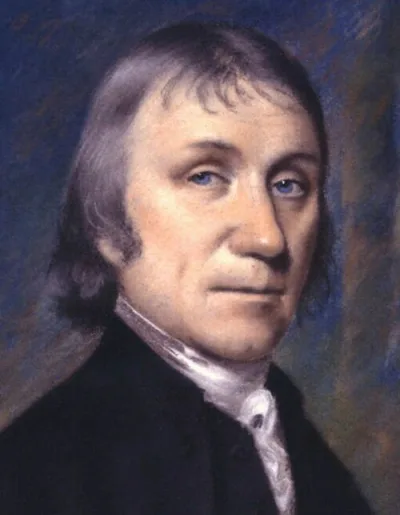
Joseph Priestley
The Joseph Priestley House was the American home of eighteenth-century British theologian, Dissenting clergyman, natural philosopher (and co-discoverer of oxygen), educator, and political theorist Joseph Priestley from 1798 until his death. Located in Nort…
💡 Why Read This Book?
• Understand Priestley's Unitarian arguments, learning how he used rational inquiry to reinterpret Christian scripture, a method applicable to modern scriptural studies. • Grasp the intellectual climate of the late 1700s, specifically the debates between Enlightenment reason and traditional Christian doctrine, as evidenced by his 1792 publication. • Examine Priestley's critique of the Trinity, gaining insight into alternative theological frameworks and the historical development of Christian thought beyond orthodox consensus.
⭐ Reader Reviews
Honest opinions from readers who have explored this book.
❓ Frequently Asked Questions
What is Joseph Priestley's primary theological stance in 'An Appeal'?
Priestley's primary stance is Unitarianism. He argues against the doctrine of the Trinity and the divinity of Jesus Christ, advocating for a singular God and a rational interpretation of Christian teachings based on scripture and reason.
When was 'An Appeal to the Serious and Candid Professor of Christianity' first published?
The work was first published in 1792, during a period of significant intellectual and religious debate in Britain.
What specific Christian doctrines does Priestley challenge?
Priestley challenges several core doctrines, most notably the Trinity and the Atonement. He also questions the traditional interpretations of Christ's divinity and pre-existence, seeking a more scripturally literal and rational understanding.
How does Priestley's scientific background influence his theological arguments?
His background as a scientist, particularly his work in chemistry, instilled in him a rigorous, empirical, and rational approach. He applies this analytical method to scripture, demanding clear evidence and logical consistency in theological claims.
Who is the intended audience for this book?
The book is aimed at 'serious and candid' professors of Christianity—those willing to engage in critical examination of their faith, question established dogma, and seek a reasoned understanding of scripture.
Is this book still relevant for contemporary readers?
Yes, it remains relevant for those interested in the history of Unitarianism, the philosophical underpinnings of religious belief, and critical approaches to textual interpretation in theology.
🔮 Key Themes & Symbolism
Rational Christianity
Priestley champions a form of Christianity grounded in reason and empirical evidence, a direct influence of the Enlightenment. He argues that divine revelation should be interpreted through the lens of human intellect and observable reality, rather than blind faith or inherited tradition. This approach seeks to strip away what he viewed as later corruptions and return to the 'rational' core of early Christian teachings, emphasizing logical consistency in theological arguments.
Scriptural Interpretation
Central to Priestley's work is his method of scriptural interpretation. He insists on a literal and contextually accurate reading of the Bible, demanding explicit textual support for doctrines like the Trinity. He critiques allegorical or tradition-based readings, advocating for an approach that aligns with scientific understanding and logical deduction. His meticulous examination of specific passages aims to demonstrate that many traditional Christian beliefs lack direct scriptural foundation.
Unitarian Theology
This book is a foundational text for understanding Priestley's advocacy for Unitarianism. He systematically presents arguments against the co-equality of Jesus Christ with God the Father and the concept of the Holy Spirit as a distinct divine person. His work emphasizes the sole sovereignty of God and the humanity of Jesus, positioning his views as a return to the perceived original simplicity of Christian monotheism before the development of Nicene orthodoxy.
Critique of Orthodoxy
Priestley directly confronts and critiques the established doctrines of 18th-century Christianity, particularly the Trinity and the doctrine of atonement. He frames these as deviations from pure scripture, possibly introduced through philosophical influences or ecclesiastical politics. His 'appeal' is a call for reform, urging believers to abandon what he considers unfounded dogmas in favor of a more intellectually defensible faith, sparking considerable controversy.
💬 Memorable Quotes
“The doctrine of the Trinity... has no foundation in the New Testament.”
— This concise assertion highlights Priestley's central critique. He argues that a careful, rational reading of the scriptures reveals no explicit support for the concept of God as three co-equal persons, suggesting it's a later theological construct rather than an original Christian teaching.
“Reason is the principal instrument of divine revelation.”
— Priestley posits reason not as an opponent of faith, but as its essential tool. He believes that God has endowed humans with the capacity for reason to understand His word and will, implying that any doctrine contradicting reason is suspect.
“I have been more and more confirmed in the belief of the simple unity of God.”
— This reflects Priestley's personal journey and conviction towards Unitarianism. It underscores his commitment to monotheism as the core of his theological system, viewing the traditional understanding of the Trinity as a departure from this fundamental principle.
“The opinions of men are not to be dictated by the authority of a council.”
— Here, Priestley challenges the authority of historical church councils (like the Council of Nicaea) in shaping Christian doctrine. He prioritizes individual conscience and scriptural evidence over pronouncements made by ecclesiastical bodies centuries after the apostles.
“The true Christian religion is... a reasonable service.”
— This paraphrase captures Priestley's essence: Christianity, in its purest form, should be understandable and justifiable through logic. He advocates for a faith that engages the intellect, contrasting it with what he perceives as irrational or superstitious elements within established theology.
🌙 Esoteric Significance
Tradition
While Priestley's primary focus was rational theology and a return to what he believed were primitive Christian truths, his work can be seen as an early precursor to certain strands of modern esotericism that prioritize individual spiritual discernment over institutional dogma. His emphasis on reason as a path to understanding divine truths aligns with the Hermetic principle 'As above, so below' when interpreted through an intellectual lens. He departs from traditional esoteric lineages by eschewing mystical experience in favor of logical proof, yet his challenge to established religious structures resonates with movements seeking direct spiritual experience.
Symbolism
Priestley's work is less concerned with overt symbolism and more with textual exegesis. However, the concept of 'light' can be seen as a recurring motif, representing both scientific discovery (his experiments with gases) and rational understanding of religious truth. The 'scriptures' themselves function as a symbolic text that he seeks to decode, stripping away layers of interpretation to reveal an underlying, pure message. His critique of complex doctrines like the Trinity can be viewed as an attempt to demystify religious concepts, returning them to a singular, foundational 'truth'.
Modern Relevance
Priestley's insistence on critical thinking and rational examination of religious texts finds echoes in contemporary progressive Christianity, Unitarian Universalism, and secular humanist approaches to spirituality. His work informs modern debates about biblical literalism versus critical scholarship and the compatibility of science and faith. Thinkers and movements that advocate for deconstructing traditional doctrines, emphasizing personal conscience, and seeking a faith based on reason and ethics continue to draw upon the intellectual groundwork laid by Priestley and his contemporaries.
👥 Who Should Read This Book
• Students of Enlightenment theology, who will gain insight into how rationalism was applied to Christian doctrine during a pivotal historical period. • Inquirers interested in the origins and historical development of Unitarianism, understanding Priestley's foundational arguments against Trinitarianism. • Readers seeking to explore critiques of established religious dogma from a historical perspective, learning how scripture was analyzed to challenge orthodoxy in the late 18th century.
📜 Historical Context
Joseph Priestley's "An Appeal to the Serious and Candid Professor of Christianity," published in 1792, emerged from the crucible of late 18th-century intellectual and religious upheaval. The era was dominated by the Enlightenment's emphasis on reason, empiricism, and individual liberty, profoundly influencing dissenting religious movements. Priestley, already renowned for his work in chemistry and his advocacy for political reform, applied a similar critical, scientific mindset to theology. His staunch Unitarianism—a direct challenge to the Nicene Creed and the dominant Trinitarian orthodoxy—placed him in direct opposition to established church figures and defenders of traditional doctrine. Contemporary thinkers like Richard Price shared his rational dissent, while figures like Edmund Burke engaged with the broader implications of radical thought. Priestley's work was not merely academic; it contributed to a wider public debate about the nature of faith, the authority of scripture, and the role of reason in religious life, often met with fierce opposition from orthodox clergy.
📔 Journal Prompts
Priestley's critique of the Trinity and its scriptural basis.
The role of reason in understanding divine revelation, as argued by Priestley.
Evaluating the historical reception of Priestley's arguments in the 1790s.
The concept of 'rational Christianity' versus traditional dogma.
Identifying passages in scripture that Priestley might deem 'unreasonable'.
🗂️ Glossary
Unitarianism
A theological belief system that emphasizes the oneness of God and rejects the doctrine of the Trinity, asserting that Jesus Christ was a human being, not divine.
Trinity
The Christian doctrine that God is one God in three co-equal, co-eternal persons: the Father, the Son (Jesus Christ), and the Holy Spirit.
Atonement
The doctrine that Christ's death reconciled humanity to God, often understood as a sacrifice that pays the penalty for sins.
Enlightenment
An 18th-century intellectual and cultural movement emphasizing reason, individualism, skepticism, and science, which profoundly influenced political and religious thought.
Orthodoxy
Adherence to established or traditional beliefs, particularly within a religious context; in this case, referring to mainstream Christian doctrines of the time.
Scripture
Sacred writings or texts, particularly the Bible in the Christian context, considered to be divinely inspired and authoritative.
Dissenters
Protestants in England who belonged to denominations other than the Church of England, often advocating for religious and political reforms.