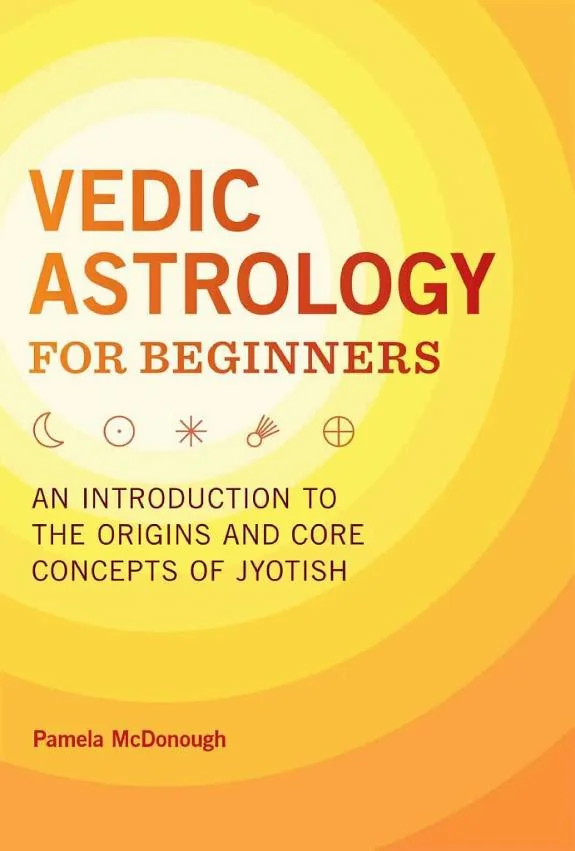
Vedic Astrology for Beginners
 82
82

Vedic Astrology for Beginners
Pamela McDonough's "Vedic Astrology for Beginners" offers a commendable entry into the world of Jyotish, presenting a system that can often appear impenetrable. The strength of this book lies in its systematic deconstruction of complex astrological principles, making the analysis of a birth chart feel achievable for novices. McDonough’s explanation of the Navagraha (nine planets) and their distinct influences is particularly clear, avoiding the dense jargon that plagues many introductory texts. However, the book occasionally feels constrained by its beginner focus, sometimes glossing over the deeper philosophical underpinnings that give Jyotish its unique power. For instance, the discussion on karma, while present, could benefit from more extensive exploration beyond its direct astrological manifestation. The section detailing the Nakshatras, while informative, could also benefit from more examples illustrating their nuanced impact. Ultimately, McDonough provides a functional and accessible primer, serving well as a first step for the curious neophyte.
📝 Description
82
Pamela McDonough's 2023 guide introduces Jyotish, the Indian astrological system, to beginners.
Vedic Astrology for Beginners by Pamela McDonough introduces Jyotish, the traditional Indian system of astrology. The book breaks down Jyotish into understandable parts, aiming to help readers interpret their own birth charts, called Kundali. McDonough focuses on clarity, making a system often seen as complex and connected to ancient Indian thought accessible.
This book is for people new to Vedic astrology, including those curious about Jyotish with no prior knowledge. It also suits Western astrology practitioners wanting to learn about the Eastern approach. Readers interested in self-understanding, personality, relationships, and life direction will find value here. It serves as a starting point for exploring a different way of looking at astrological paradigms.
Jyotish, or Vedic astrology, originates from India and dates back thousands of years, linked to the ancient Sanskrit Vedas. Its development occurred alongside Indian advancements in astronomy and mathematics. Unlike Western astrology, which has Hellenistic roots, Jyotish developed separately and incorporates Indian philosophical ideas like karma and reincarnation. The system's continuous use over centuries shows its lasting cultural and spiritual place in India.
💡 Why Read This Book?
• Learn to analyze your Kundali by understanding the specific placement and influence of the Navagraha (nine planets) within the twelve Bhavas (houses), offering a unique lens on personal destiny. • Grasp the foundational concepts of Jyotish, including the 27 Nakshatras (lunar mansions), which provide a more granular and nuanced understanding of lunar cycles than Western astrology. • Discover the practical application of Vedic astrology for understanding personality, relationships, and life path, moving beyond general archetypes to specific karmic influences indicated in your chart.
⭐ Reader Reviews
Honest opinions from readers who have explored this book.
❓ Frequently Asked Questions
What is the primary difference between Vedic astrology and Western astrology?
Vedic astrology, or Jyotish, uses a sidereal zodiac, which aligns with fixed stars, while Western astrology primarily uses a tropical zodiac, based on the seasons. Jyotish also places a greater emphasis on karma, planetary periods (dashas), and lunar mansions (Nakshatras).
How does Pamela McDonough explain the concept of karma in Vedic astrology?
The book interprets karma within Vedic astrology as the accumulated actions and consequences influencing an individual's present life, as reflected in their birth chart. It suggests that astrological patterns indicate karmic predispositions and life lessons.
Can I use Vedic Astrology for Beginners to predict future events?
While the book provides tools for understanding planetary influences and potential life trends based on your birth chart, its primary focus is on self-understanding and awareness rather than deterministic future prediction. It helps in understanding propensities.
What are the Navagrahas and why are they important in Jyotish?
The Navagrahas are the nine celestial bodies (Sun, Moon, Mars, Mercury, Jupiter, Venus, Saturn, Rahu, Ketu) that are considered to exert the most significant influence in Vedic astrology. Their positions and strengths in a birth chart are crucial for interpretation.
Does the book cover planetary periods (Dashas)?
Yes, the book introduces the concept of Dashas, which are planetary periods that govern different phases of life according to Vedic astrology. Understanding Dashas is key to timing events and understanding life's unfolding cycles.
Is Pamela McDonough's book suitable for someone who knows nothing about astrology?
Absolutely. The title "Vedic Astrology for Beginners" reflects its purpose. It systematically breaks down core concepts like planetary influences, zodiac signs, and chart interpretation without assuming prior astrological knowledge.
🔮 Key Themes & Symbolism
The Navagraha's Influence
This section looks at the nine principal celestial bodies of Jyotish, the Navagraha. It explains how each planet—from the Sun (Surya) to the shadow planets Rahu and Ketu—carries unique energies and karmic implications. The book details their effects on personality, relationships, and life events, emphasizing their role in shaping an individual's destiny as depicted in the birth chart (Kundali).
Understanding the Kundali
The birth chart, or Kundali, is presented as a cosmic blueprint. This theme explores how to read the foundational elements of the Kundali, including the twelve Bhavas (houses) that represent different areas of life. It guides readers through interpreting the planetary placements within these houses, revealing the interplay of celestial energies at the moment of birth and their significance for life's journey.
The Role of Nakshatras
Beyond the twelve zodiac signs, Vedic astrology utilizes the 27 Nakshatras, or lunar mansions. This theme highlights their importance in providing a more detailed and nuanced astrological analysis. The book explains how each Nakshatra possesses its own ruling deity, symbolism, and characteristics, offering deeper insights into the subtle layers of personality and destiny.
Karma and Reincarnation
Central to Jyotish is the concept of karma, the law of cause and effect spanning multiple lifetimes. This theme explores how Vedic astrology is viewed as a map of an individual's karmic inheritance. The book discusses how the birth chart can illuminate past actions and their present consequences, offering a framework for understanding life's challenges and opportunities as part of a larger spiritual evolution.
💬 Memorable Quotes
Direct passages from the work, attributed to the author.
“The birth chart is a snapshot of cosmic energies at your moment of birth.”
— This highlights the core premise of astrology: that the celestial configuration at birth holds significant meaning. It suggests that the arrangement of planets and stars is not random but imprinted with information about an individual's potential and life path.
“Jyotish offers a framework for understanding the 'why' behind life's circumstances.”
— This interpretation emphasizes the explanatory power attributed to Vedic astrology. It positions Jyotish as a tool for gaining insight into the underlying causes of personal experiences, particularly challenges, fostering a sense of purpose and acceptance.
“Each of the nine planets has a distinct energetic signature.”
— This is a direct reference to the Navagraha. It explains that the core of Vedic astrological interpretation lies in understanding the unique qualities and influences associated with each of the nine primary celestial bodies.
“Understanding your chart is a step toward fulfilling your dharma.”
— This links astrological insight with spiritual purpose. It implies that self-knowledge gained through chart analysis can guide individuals toward their rightful path and responsibilities (dharma) in life.
💡 Key Ideas
Editorial paraphrase of the work's core concepts — not direct quotes.
The Nakshatras add layers of detail to the zodiacal signs.
This quote points to the sophisticated nature of the Vedic system. It suggests that the 27 lunar mansions provide a finer, more intricate analysis than the broader divisions of the zodiac, allowing for deeper character assessment.
🌙 Esoteric Significance
Tradition
Vedic astrology, or Jyotish, belongs to the ancient Indic spiritual and philosophical traditions. It is deeply embedded within the Vedic worldview, which emphasizes cosmic order (Rta), karma, and reincarnation. Unlike Hermetic or Kabbalistic traditions that focus on divine emanations and correspondences, Jyotish views the celestial bodies as divine forces and indicators of one's karmic journey. It is less about magical invocation and more about understanding and aligning with cosmic law as revealed through the birth chart.
Symbolism
Key symbols in Jyotish include the planets (Grahas), often personified and associated with deities, representing divine energies and karmic forces. The zodiac signs and Nakshatras represent cosmic divisions and archetypal energies. The birth chart (Kundali) itself is a mandala, a sacred geometric representation of the cosmos at a specific moment, mapping the soul's journey and karmic predispositions for the current incarnation.
Modern Relevance
Contemporary thinkers and practitioners in fields like transpersonal psychology, consciousness studies, and holistic wellness often draw upon Vedic astrology. Its emphasis on karma and self-understanding aligns with modern therapeutic goals of personal growth and self-awareness. While not always explicitly acknowledged, the principles of Jyotish influence modern approaches to life coaching and personal development, offering a spiritual framework for navigating life's challenges.
👥 Who Should Read This Book
• Aspiring astrologers seeking a comprehensive introduction to the Indian system of Jyotish, moving beyond the scope of Western tropical astrology. • Individuals interested in self-discovery and personal growth who wish to understand their unique personality traits, strengths, and challenges through a karmic lens. • Students of comparative religion and spirituality looking to explore the philosophical underpinnings of Vedic cosmology and its practical application in understanding destiny.
📜 Historical Context
Pamela McDonough's "Vedic Astrology for Beginners" emerges in a contemporary milieu where interest in Eastern spiritual and philosophical traditions has surged, particularly since the mid-20th century. Jyotish itself, however, boasts an ancient lineage, with its origins deeply intertwined with the Vedic period of India, potentially dating back over 5,000 years. Its development was concurrent with significant advancements in Indian mathematics and astronomy. While Western astrology largely traces its roots to Hellenistic traditions and figures like Ptolemy, Jyotish evolved independently, incorporating unique philosophical concepts like karma and reincarnation. The book's publication in 2020 places it within a modern landscape where comparative religious studies and esoteric practices are increasingly accessible, though not without ongoing academic debate regarding the scientific validity of astrological claims. Contemporary figures like K. N. Rao have significantly contributed to the modern academic study and popularization of Jyotish, engaging with its complex predictive techniques.
📔 Journal Prompts
Your natal Sun's position within a specific Bhava.
The influence of the Navagraha on your relationship patterns.
The meaning of your Ascendant Nakshatra.
Reflecting on a current planetary period (Dasha) and its manifestations.
Comparing the archetypes of a Western zodiac sign with its corresponding Nakshatra.
🗂️ Glossary
Jyotish
The Sanskrit name for Vedic astrology, meaning 'the science of light'. It is the traditional Hindu system of astrology.
Kundali
A Vedic birth chart or horoscope, representing the positions of celestial bodies at the exact time and place of birth.
Navagraha
The nine primary celestial influencers in Vedic astrology: Surya (Sun), Chandra (Moon), Mangala (Mars), Budha (Mercury), Guru (Jupiter), Shukra (Venus), Shani (Saturn), Rahu, and Ketu.
Bhava
A house in the Vedic astrological chart, each representing a different area of life, such as self, wealth, siblings, or career.
Nakshatra
Lunar mansions; the 27 divisions of the ecliptic used in Vedic astrology, providing a more detailed analysis than the 12 zodiac signs.
Dasha
Planetary periods or cycles that indicate the timing of events and the influence of specific planets throughout a person's life.
Rahu and Ketu
The lunar nodes, considered shadow planets in Vedic astrology. Rahu represents obsession and worldly desires, while Ketu signifies detachment and spiritual seeking.
This book appears in 1 collection
🔮 Readers Also Liked
Browse all →









From the “Vedic Astrology” Collection
View all →





More Free Astrology & Cosmology Books
View all →