The new astrology
 71
71

The new astrology
Suzanne White’s "The New Astrology" presents a compelling argument for a more integrated, psychologically resonant astrological practice. Its strength lies in its detailed mapping of planetary archetypes onto specific human experiences, offering a vocabulary for the unconscious that feels both ancient and freshly relevant. The work effectively bridges the gap between the celestial mechanics and the inner world, particularly in its discussions of the outer planets as transformative agents. A limitation, however, is that the sheer density of its conceptual framework can sometimes feel overwhelming for the uninitiated, requiring significant reader commitment. White's exploration of the "shadow" aspects of astrological placements, for instance, is particularly insightful, revealing how perceived negative configurations can be gateways to profound self-awareness. Ultimately, "The New Astrology" serves as a robust, if demanding, guide for those seeking to deepen their understanding of astrology's psychological dimensions.
📝 Description
71
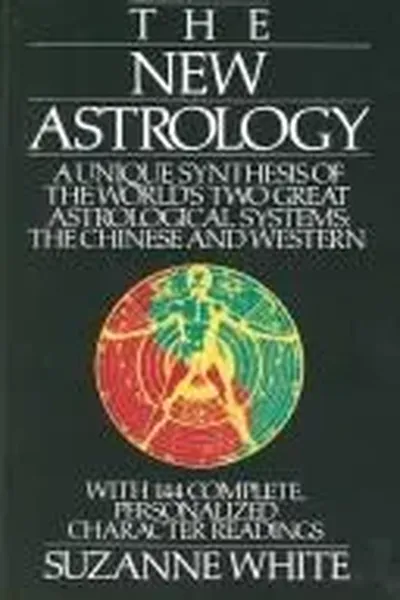
Suzanne White's 1986 book, "The New Astrology," reinterpreted celestial patterns through a psychological lens.
Published in 1986, "The New Astrology" by Suzanne White departs from conventional astrological readings. White integrates psychological archetypes with celestial influences, moving beyond simple natal chart analysis to examine the dynamic interaction of planetary energies within the human psyche. The book details how astrological configurations can reflect specific behaviors, emotional states, and life trajectories, offering a guide for self-discovery and personal development. White frames the cosmos's symbolic language as a resource for introspection and self-awareness.
This work is intended for those seeking a more psychologically informed approach to astrology. It will appeal to individuals familiar with basic astrological concepts who wish to understand deeper connections between cosmic movements and their inner lives. Readers interested in the confluence of astronomy, psychology, and esoteric thought will find its structure particularly relevant. It also serves practitioners looking to broaden their interpretive methods beyond standard practices, providing a new perspective on natal chart interpretation and future outlooks.
"The New Astrology" appeared during a period of significant interest in human potential and the blending of psychological theories with spiritual studies. The 1980s saw increased attention to depth psychology, archetypal symbolism, and consciousness studies. White's book aligns with this cultural trend, which favored a shift from deterministic astrological views to models emphasizing personal agency and self-exploration. The era also saw advances in astrological technology and wider access to astrological information, creating fertile ground for innovative concepts.
💡 Why Read This Book?
• Gain a framework for understanding planetary aspects as dialogues between psychological functions, moving beyond simple interpretations of celestial bodies. • Discover how the "outer planets" (Uranus, Neptune, Pluto) are presented as catalysts for personal transformation, offering specific insights into generational shifts and individual evolution. • Learn to interpret "astrological timing" not just for prediction, but as a tool for informed personal agency and strategic engagement with life's cycles.
⭐ Reader Reviews
Honest opinions from readers who have explored this book.
❓ Frequently Asked Questions
When was Suzanne White's "The New Astrology" first published?
Suzanne White's "The New Astrology" was first published in 1986, a period marked by significant growth in psychological astrology.
What is the primary focus of "The New Astrology"?
The book focuses on integrating psychological archetypes with celestial patterns, exploring astrology as a language for the human psyche and personal development.
Does "The New Astrology" offer predictive astrology?
While it discusses astrological timing, the emphasis is less on simple prediction and more on understanding opportune moments for personal growth and informed action.
What distinguishes "The New Astrology" from traditional astrological texts?
It emphasizes the psychological and archetypal dimensions of celestial influences, viewing planetary placements and aspects as symbolic expressions of inner states and potentials.
Are there specific astrological concepts explained in detail?
Yes, the book delves into the meanings of inner and outer planets, their aspects, and their manifestation as specific psychological functions and life patterns.
Who would benefit most from reading this book?
Individuals interested in psychological astrology, depth psychology, and esoteric philosophy, particularly those seeking a more in-depth understanding of astrological symbolism's connection to the psyche.
🔮 Key Themes & Symbolism
Archetypal Psychology
The work posits that celestial bodies and their configurations are not mere indicators but potent archetypal forces shaping human consciousness and behavior. White explores how planets like Mercury, Venus, and Mars represent fundamental psychological functions, while outer planets such as Uranus, Neptune, and Pluto embody transformative energies and collective shifts. This perspective frames astrological charts as symbolic maps of the psyche, revealing inherent potentials, challenges, and developmental pathways. The book encourages readers to engage with these archetypes consciously, fostering a deeper understanding of their own inner landscape and motivations.
Planetary Aspects as Dialogue
"The New Astrology" reinterprets planetary aspects not as rigid connections but as dynamic dialogues or interactions between different facets of the self. The book details how conjunctions, oppositions, squares, and trines illustrate the ways in which various psychological energies either harmonize, conflict, or integrate within an individual. This approach moves beyond deterministic interpretations, suggesting that understanding these dialogues allows for conscious management and transformation of internal dynamics. The emphasis is on the relational quality of these celestial connections, mirroring the complex interplay of human emotions and drives.
Astrological Timing and Agency
White presents "astrological timing" as a nuanced understanding of cyclical energies, rather than a tool for simple fortune-telling. The book explains how transits and progressions can indicate periods ripe for specific types of growth, challenge, or manifestation. Crucially, this framework is designed to empower the reader, promoting informed decision-making and proactive engagement with life's unfolding patterns. The goal is to equip individuals with the insight to navigate opportune moments effectively, fostering a sense of agency in their personal journey and development.
The Outer Planets as Transformative Forces
A significant focus is placed on Uranus, Neptune, and Pluto, which White interprets as powerful agents of profound change and evolution. Uranus is linked to sudden insights and rebellion against convention, Neptune to spirituality, illusion, and artistic expression, and Pluto to deep psychological transformation and power dynamics. The book examines how these celestial bodies influence both individual destinies and broader societal trends, highlighting their role in shattering old paradigms and ushering in new consciousness. Their influence is presented as essential for personal and collective metamorphosis.
💬 Memorable Quotes
Direct passages from the work, attributed to the author.
“The planets are not just celestial bodies; they are the fundamental forces that shape our inner lives.”
— This statement expresses the book's core premise: astrology as a psychological language. It posits that celestial positions are symbolic representations of potent psychic energies and archetypes within the human mind.
“Aspects are the conversations between different parts of yourself.”
— This metaphor illustrates how planetary aspects are viewed not as static connections but as dynamic interactions between distinct psychological functions, highlighting the potential for harmony or conflict within the psyche.
“Uranus, Neptune, and Pluto speak of profound change, collective evolution, and the shedding of old skins.”
— This highlights the book's emphasis on the outer planets as drivers of significant transformation, impacting both individual lives and broader societal shifts, urging readers to confront and integrate these powerful forces.
“Understanding timing means working with, not against, the currents of cosmic energy.”
— This emphasizes a proactive and empowered approach to astrological timing, suggesting that insight into celestial cycles facilitates informed action and personal agency rather than passive acceptance of fate.
“The shadow of the chart is where true growth often lies hidden.”
— This points to the book's exploration of challenging astrological configurations not as insurmountable obstacles, but as critical junctures for deep psychological work and personal evolution, revealing hidden potential.
🌙 Esoteric Significance
Tradition
White's work draws heavily from the Western Esoteric tradition, particularly its modern psychological interpretations of Hermeticism and Jungian archetypal psychology. It extends the symbolic language of Hermeticism (as Above, So Below) to map internal psychological structures. While not explicitly Kabbalistic or Gnostic, it shares with these traditions an interest in cosmic order and its reflection in the human microcosm. It departs from older, more divinatory forms of astrology by foregrounding psychological integration and self-awareness, aligning with the evolution of esoteric thought in the 20th century.
Symbolism
Key symbols include the planets, viewed as potent archetypes governing distinct psychological functions and life experiences. The "inner planets" (Mercury, Venus, Mars) represent core personal energies, while the "outer planets" (Jupiter, Saturn, Uranus, Neptune, Pluto) symbolize broader developmental stages and transformative forces. Planetary aspects are symbolic dialogues, illustrating the dynamic interplay and potential integration or conflict between these archetypal energies within the psyche. The concept of "timing" itself symbolizes the cyclical nature of growth and opportunity within the cosmic order.
Modern Relevance
The emphasis on psychological astrology and archetypal symbolism in "The New Astrology" continues to influence contemporary esoteric practitioners and thinkers. Modern schools of archetypal astrology and somatic astrology often echo White's approach to understanding planetary energies as internal forces. Her work is relevant to contemporary discussions in transpersonal psychology and consciousness studies, where symbolic systems are used to explore the human condition. Many modern astrologers trained in the late 20th and early 21st centuries cite her as an influence for her sophisticated integration of psychological depth with celestial mechanics.
👥 Who Should Read This Book
• Aspiring psychological astrologers seeking to understand planetary archetypes as expressions of the psyche, moving beyond simple predictive techniques. • Individuals engaged in depth psychology or Jungian analysis interested in exploring symbolic frameworks for self-understanding and personal transformation. • Esoteric students and practitioners looking to deepen their knowledge of Western esoteric traditions by examining how celestial patterns are interpreted as maps of consciousness.
📜 Historical Context
Published in 1986, "The New Astrology" arrived during a vibrant period for Western esotericism and psychological exploration. The human potential movement had deeply influenced how individuals viewed self-improvement, integrating psychological theories with spiritual practices. Astrology, particularly the psychological astrology pioneered by Dane Rudhyar in the mid-20th century, was evolving beyond predictive techniques to embrace archetypal symbolism and inner development. White's work contributed to this shift, moving away from deterministic interpretations towards a more empowering, psychotherapeutic application of astrological principles. This era also saw the rise of comparative mythology studies, with figures like Joseph Campbell popularizing archetypal concepts that resonated with astrological symbolism. While not directly engaging in public debates, White's approach stood in contrast to more traditional, fortune-telling focused astrological schools, reflecting a growing intellectual current that sought deeper meaning in celestial patterns.
📔 Journal Prompts
The archetypal role of Mercury in your natal chart and its communication patterns.
How the dialogue between your Venus and Mars aspects manifests in relationships.
Identifying a personal "shadow" aspect, as explored through the outer planets.
Periods of opportune "astrological timing" for initiating a new creative project.
Reflecting on the transformative potential symbolized by your Pluto placement.
🗂️ Glossary
Archetype
In this context, a universal, archaic pattern or image that derives from the collective unconscious and is the psychic counterpart of an inherited structure. Planets are seen as embodying these archetypal forces within the human psyche.
Inner Planets
Mercury, Venus, and Mars. These are considered to represent fundamental psychological functions related to communication, values, attraction, and action, as well as personal identity.
Outer Planets
Jupiter, Saturn, Uranus, Neptune, and Pluto. These are viewed as representing more complex developmental stages, generational influences, and profound transformative energies that shape both individual lives and collective consciousness.
Aspect
The angular relationship between two or more planets in a birth chart. Aspects are interpreted as the dynamic interactions or dialogues between the energies symbolized by those planets.
Conjunction
An aspect formed when two or more planets are at the same degree of the zodiac (0 degrees apart). It signifies a merging or potent interplay of the energies involved.
Square
An aspect formed when two planets are approximately 90 degrees apart. It represents tension, conflict, and challenge, often requiring significant effort to integrate the energies involved.
Timing (Astrological)
The interpretation of transits, progressions, and other celestial movements to identify periods that are symbolically opportune for specific types of personal growth, action, or manifestation.
🔮 Readers Also Liked
Browse all →









More by Suzanne White
All books →




More Free Astrology & Cosmology Books
View all →