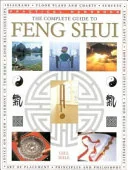
The Complete Guide to Feng Shui
 81
81

The Complete Guide to Feng Shui
Gill Hale's *The Complete Guide to Feng Shui* offers a refreshingly direct approach to a practice often shrouded in mysticism. Unlike more academic treatises, Hale prioritizes practical application, a strength evident in the book's clear layout and instructional photographs. The author successfully breaks down complex concepts like the Five Elements and their interactions into digestible advice. However, the book's structure, while practical, sometimes sacrifices depth for breadth. For instance, the discussion on the Bagua map, while present, might leave practitioners wanting a more nuanced exploration of its astrological and directional applications. The inclusion of step-by-step diagrams for specific remedies is a significant plus, offering immediate actionable steps. Hale's work is a competent, if unadventurous, primer for those looking to implement basic Feng Shui principles without getting lost in esoteric theory.
📝 Description
81
Gill Hale's 2000 guide offers practical steps to harmonize spaces using ancient Chinese art.
The Complete Guide to Feng Shui, published in 2000 by Gill Hale, provides a practical framework for applying the principles of this ancient Chinese art. It goes beyond decoration to show how arranging spaces influences energy flow, known as 'qi' or 'chi', which in turn affects well-being and prosperity. The book is structured to give clear, actionable advice for readers wanting to balance their environments.
This guide suits individuals interested in Feng Shui's practical uses, whether they are new to it or have some experience. It addresses homeowners, renters, and those concerned with office spaces who want to improve the energetic quality of their surroundings. The inclusion of step-by-step photographs indicates an audience that benefits from visual instruction and direct guidance.
Feng Shui, with roots stretching back centuries in China, gained popularity in the West during the late 20th century. Hale's book appeared during a time of growing interest in Eastern philosophies and alternative wellness practices. This period saw Feng Shui discussed alongside disciplines like traditional Chinese medicine and meditation, reflecting a wider cultural acceptance of holistic approaches to life and environment. The work serves as an accessible introduction to these concepts.
💡 Why Read This Book?
• Gain practical methods for harmonizing your living space by learning to identify and manage the flow of 'qi,' as detailed in the sections on spatial arrangement and the Bagua map. • Understand the interplay of the Five Elements (Wood, Fire, Earth, Metal, Water) and how to balance them in your home, a core principle discussed throughout the guide. • Implement concrete, visually-guided steps for improving energy in specific areas of your home, leveraging the book's photographic instructions for actionable environmental adjustments.
⭐ Reader Reviews
Honest opinions from readers who have explored this book.
❓ Frequently Asked Questions
When was The Complete Guide to Feng Shui first published?
The Complete Guide to Feng Shui by Gill Hale was first published in the year 2000, positioning it within a wave of accessible guides to Eastern practices.
What is the primary goal of Feng Shui as presented in this book?
The book's primary goal is to teach readers how to arrange their living and working spaces to optimize the flow of energy, or 'qi,' to enhance well-being and prosperity.
Does the book explain the Bagua map?
Yes, The Complete Guide to Feng Shui explains the Bagua map, a fundamental tool in Feng Shui used to divide a space into nine areas corresponding to different aspects of life.
Are there visual aids in The Complete Guide to Feng Shui?
Absolutely. The book features step-by-step photographs designed to make the instructions easy to follow, aiding readers in visually understanding how to apply Feng Shui principles.
What are the Five Elements in Feng Shui according to Gill Hale?
Gill Hale discusses the Five Elements: Wood, Fire, Earth, Metal, and Water. The book explains their characteristics and how their balance affects the energy of a space.
Is this book suitable for beginners in Feng Shui?
Yes, the book is structured as a practical reference with easy-to-follow instructions, making it well-suited for beginners seeking to learn the basics of Feng Shui.
🔮 Key Themes & Symbolism
Qi Flow and Spatial Arrangement
The central tenet explored is the concept of 'qi,' the vital life force energy. Hale's guide emphasizes that the arrangement of furniture, the placement of doors and windows, and the overall layout of a space directly influence how qi flows. Blockages or stagnant energy are identified as detrimental, while smooth, harmonious flow is promoted as conducive to health, wealth, and happiness. The book provides practical methods for identifying areas where qi might be compromised and offers straightforward techniques to rectify these imbalances, making it a guide to actively shaping one's energetic environment.
The Five Elements Theory
A central to Feng Shui, the Five Elements—Wood, Fire, Earth, Metal, and Water—are presented not merely as abstract concepts but as dynamic forces that interact within any given space. Hale details the generative (creation) and destructive cycles of these elements, explaining how their balance or imbalance manifests in the environment and affects its inhabitants. Readers learn to recognize the elemental qualities of objects and materials within their homes and how to introduce or mitigate specific elements to achieve desired energetic outcomes, fostering a sense of equilibrium.
The Bagua Map Application
The Bagua, an octagonal or square grid, serves as a diagnostic tool for analyzing the energy of a space. This guide explains how to overlay the Bagua onto floor plans, dividing the area into nine life-aspiration sectors (e.g., Wealth, Health, Relationships, Career). Each sector is associated with specific elements, colors, and shapes. Hale provides practical advice on how to enhance or activate these areas through thoughtful design and object placement, enabling readers to consciously address specific aspects of their lives by modifying their surroundings.
Yin and Yang Harmony
The fundamental principle of Yin (passive, dark, feminine) and Yang (active, light, masculine) is explored as it applies to interior design and spatial configuration. The book illustrates how an environment can become overly Yin (leading to lethargy) or excessively Yang (causing agitation). Hale guides readers in identifying and adjusting the balance of these opposing forces within different rooms and areas, advocating for environments that are both calming and invigorating, striking a harmonious equilibrium that supports overall well-being.
💬 Memorable Quotes
Direct passages from the work, attributed to the author.
“Arrange your surroundings to encourage the smooth flow of beneficial energy, or 'qi'.”
— This expresses the core practical aim of Feng Shui as presented: it's not just about aesthetics, but about actively directing life force energy through thoughtful spatial design to improve one's life.
“The Bagua map reveals how different areas of your home relate to specific life aspirations.”
— This highlights the diagnostic power of the Bagua. It suggests that by understanding these spatial correspondences, one can systematically address areas of life by making changes to the physical environment.
“Balance the Five Elements – Wood, Fire, Earth, Metal, Water – for energetic harmony.”
— This points to the fundamental principle of elemental interaction. Achieving equilibrium among these five forces is presented as key to creating a supportive and balanced environment.
“Every object and color choice contributes to the overall energetic signature of a space.”
— This emphasizes the detailed nature of Feng Shui application. It implies that even seemingly minor design decisions have an impact on the ambient energy, requiring conscious consideration.
“Stagnant or chaotic energy can negatively impact health and fortune.”
— This statement underscores the 'why' behind Feng Shui practices. It directly links environmental conditions to tangible outcomes in personal well-being and success, motivating the reader to implement changes.
🌙 Esoteric Significance
Tradition
Feng Shui, originating in ancient China, is deeply rooted in Taoist philosophy and cosmological principles. It is considered an esoteric art because it deals with the unseen forces of nature, particularly 'qi' (life force energy), and their influence on human life. While not strictly aligned with Western esoteric traditions like Hermeticism or Kabbalah, it shares a common goal: understanding and harmonizing with the subtle energies of the cosmos to improve human experience. Hale's work, while practical, draws upon this ancient lineage, presenting the core principles in a digestible format for modern practitioners.
Symbolism
Key symbols in Feng Shui, often discussed in guides like Hale's, include the Bagua map, which represents the eight trigrams of the I Ching and nine life areas. The Five Elements (Wood, Fire, Earth, Metal, Water) are also highly symbolic, representing fundamental forces and transformations. Colors carry symbolic weight, with red often signifying good fortune and energy, while blue can represent tranquility and growth. The dragon and phoenix are powerful mythical symbols representing auspicious energy and balanced relationships, respectively, though their direct application might be more nuanced in a practical guide.
Modern Relevance
The principles of Feng Shui, as outlined in works like Gill Hale's, continue to be relevant in contemporary discussions around environmental psychology, wellness design, and sustainable living. Modern architects and interior designers increasingly incorporate concepts of flow, balance, and natural elements, echoing Feng Shui's emphasis on creating supportive environments. The practice is also integrated into broader wellness movements, with many individuals seeking to create calm, productive, and harmonious personal spaces in an increasingly complex world. Its adaptability allows it to be applied to everything from small apartments to large corporate offices.
👥 Who Should Read This Book
• Individuals new to Feng Shui seeking a clear, step-by-step introduction to its core principles and practical applications. • Homeowners and renters interested in improving the energy and atmosphere of their living spaces through actionable design advice. • Professionals looking to optimize their office or workspace for better productivity and well-being, using the book's guidance on spatial arrangement and elemental balance.
📜 Historical Context
Published in 2000, *The Complete Guide to Feng Shui* arrived during a period when Western interest in Eastern philosophies and holistic living was reaching a new peak. The late 20th century saw a surge in the availability of books on practices like yoga, meditation, and traditional Chinese medicine, with Feng Shui becoming a prominent subject. Hale's work sits within this trend, offering a practical, accessible entry point into an ancient art. This era saw Feng Shui practitioners like Lillian Too gaining significant international recognition, often appearing on television and publishing prolifically. While competing with numerous other Feng Shui guides, Hale's book distinguished itself with its emphasis on clear, photographic instruction, aiming to clarify the practice for a broad audience rather than focusing on highly specialized schools of thought within Feng Shui itself, such as the Compass School versus the Form School.
📔 Journal Prompts
The Bagua map's connection to specific life areas: how does your current environment reflect or hinder your aspirations?
Reflect on the dominant elements in your primary living space; are they balanced according to the Five Elements theory?
Consider the flow of 'qi' in your home; identify any areas that feel stagnant or overly energetic.
The principle of Yin and Yang in your bedroom: does it promote rest or overstimulation?
How can the placement of specific objects, as suggested by Feng Shui, enhance the energy of your entryway?
🗂️ Glossary
Qi (Chi)
The vital life force energy believed to flow through all living things and the environment. Feng Shui aims to optimize its flow.
Bagua
A fundamental Feng Shui tool, typically an octagonal or square map, used to analyze the energy of a space by dividing it into nine areas corresponding to different aspects of life.
Five Elements
The core components of Chinese cosmology: Wood, Fire, Earth, Metal, and Water. Their interactions and balance are central to Feng Shui applications.
Yin
The feminine, passive, dark, and cool principle in Taoist philosophy, representing qualities like stillness and receptivity.
Yang
The masculine, active, light, and warm principle in Taoist philosophy, representing qualities like movement and expansion.
Sheng Qi
A term for beneficial or auspicious energy flow in Feng Shui, characterized by smooth, harmonious movement.
Sha Qi
A term for negative or harmful energy, often associated with sharp angles, clutter, or stagnant environments.
This book appears in 1 collection
🔮 Readers Also Liked
Browse all →








From the “Chinese Astrology” Collection
View all →








More Free Astrology & Cosmology Books
View all →







![Mr. Patridge's [sic] judgement and opinion of this frost. Foretelling how long it is like to continue, according to the rules of astrology. ... 1709](/img/thumb/mr-patridge-s-sic-judgement-and-opinion-of-this-frost-foretelling-how-long-it-is-like-to-continue-according-to-the-rules-of-astrology-1709-patridge-mr.webp)
