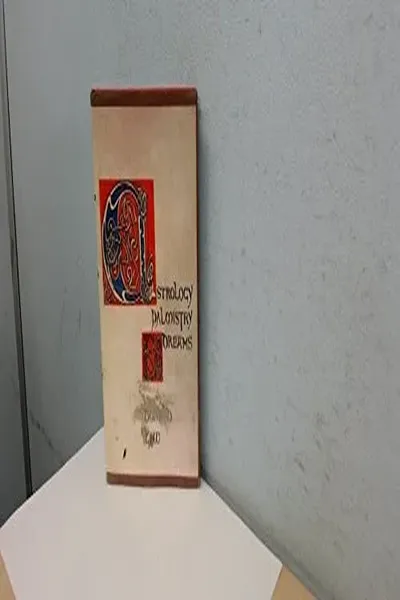
The astrological tarot
 83
83

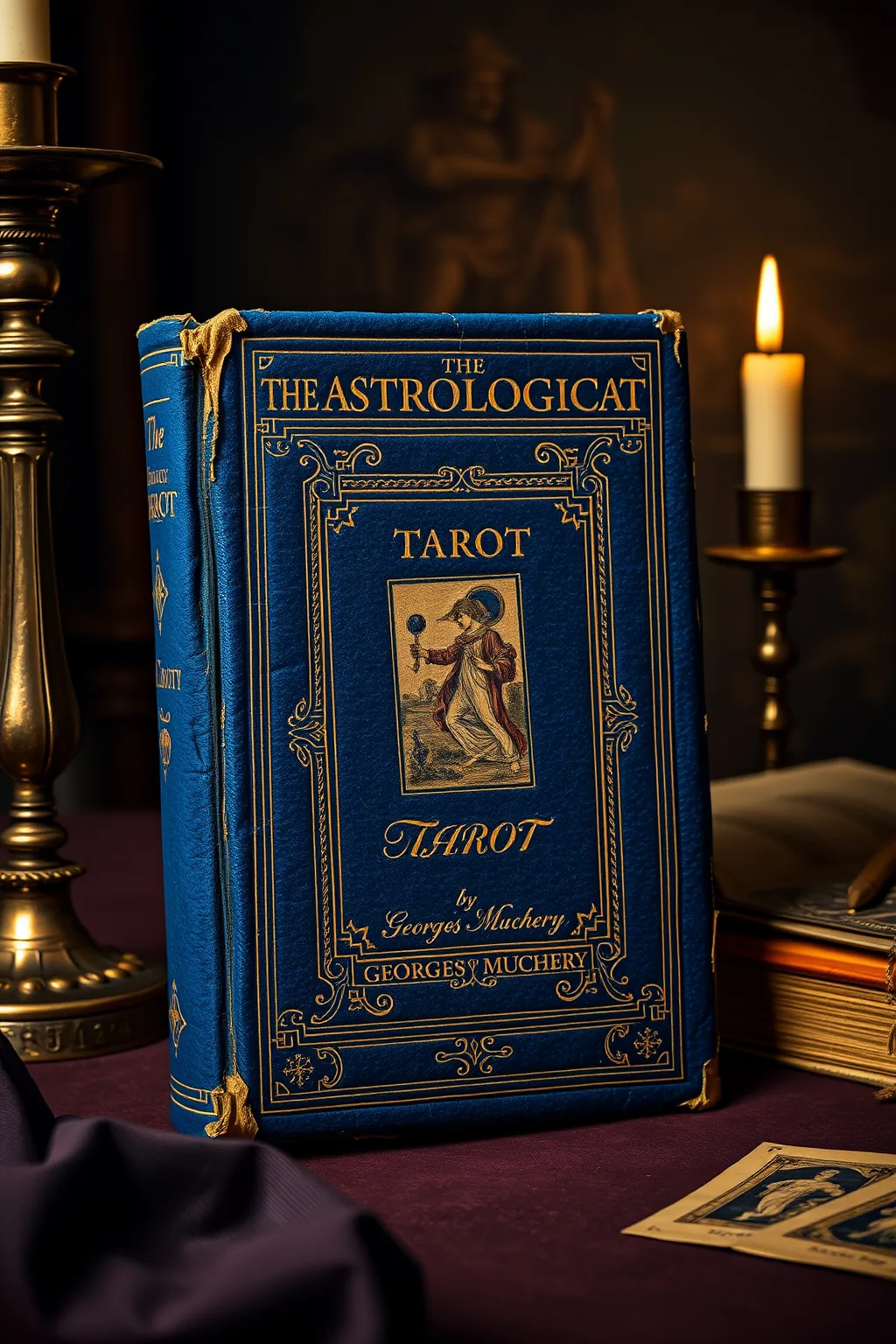
The astrological tarot
Georges Muchery's "The Astrological Tarot" attempts a grand synthesis, and for the most part, it succeeds in presenting a coherent, if densely packed, astrological framework for the Tarot. The strength of the book lies in its systematic approach; Muchery doesn't merely suggest parallels but builds a structured system where each Tarot card is assigned specific astrological dignities and influences. This creates a robust interpretive grid for those already versed in both disciplines. However, the sheer density of information can be overwhelming. A specific passage detailing the correspondence between the Ace of Swords and the planet Mars in Aries feels particularly illuminating, demonstrating the precision Muchery aims for. Yet, the book occasionally leans towards an overly rigid assignment of meanings, which might stifle the intuitive flow many seek in Tarot readings. It’s a valuable resource for the dedicated student, though newcomers might find the initial ascent steep. Ultimately, it offers a unique, intellectually rigorous perspective on a familiar divinatory tool.
📝 Description
83
Georges Muchery published "The Astrological Tarot" in 1992, linking Tarot cards to celestial bodies.
Georges Muchery's "The Astrological Tarot" (1992) presents a detailed system for understanding the 78 Tarot cards through the lens of astrology. Rather than simple correspondences, Muchery proposes a comprehensive astrological framework for the Tarot's symbolic language. He explains how planetary influences, zodiacal signs, and astrological houses inform the meaning of each card. This approach offers a deeper interpretive method for both astrologers and Tarot readers.
The book is suited for students of esoteric studies who already have a working knowledge of either Tarot or astrology, or both. It avoids introductory material on basic meanings or planetary facts. Instead, it focuses on an integrated system for practitioners wishing to enhance their divinatory work by combining these two traditions. Researchers interested in the history of esoteric syncretism will also find this work valuable for its systematic approach.
Published in 1992, "The Astrological Tarot" emerged during a period of renewed interest in occult studies. While separate studies of Tarot and astrology were common, integrated systems like Muchery's were less frequent. This work aligns with a trend toward more systematic analysis of esoteric traditions, moving beyond the superficial. Muchery's approach aimed to codify and structure the relationship between the Tarot and celestial mechanics, contributing to a more organized body of occult knowledge.
💡 Why Read This Book?
• Gain a structured method for interpreting Tarot cards through astrological houses and planetary influences, as detailed in the chapter on the Major Arcana's cosmic correspondences. • Understand how the four suits of the Tarot can be linked to the zodiacal signs and elements, offering a new perspective on the Minor Arcana's narrative. • Explore the concept of the Tarot as a symbolic map of the cosmos, a core tenet of Muchery's approach, which can deepen your understanding of fate and free will in readings.
⭐ Reader Reviews
Honest opinions from readers who have explored this book.
❓ Frequently Asked Questions
What is the primary focus of Georges Muchery's "The Astrological Tarot"?
The book's primary focus is to demonstrate the deep connections between the 78 Tarot cards and astrological principles, presenting a system where celestial influences inform card meanings and vice versa.
When was "The Astrological Tarot" by Georges Muchery first published?
Georges Muchery's "The Astrological Tarot" was first published in 1992, contributing to the esoteric literature of the late 20th century.
Is this book suitable for beginners in Tarot or astrology?
No, the book assumes a foundational knowledge of both Tarot and astrology, making it more suitable for intermediate to advanced students seeking a syncretic approach.
How does Muchery connect the Major Arcana to astrology?
Muchery links the 22 Major Arcana cards to astrological houses, planets, and their associated dignities, creating a complex interpretive framework.
What is the relationship between the Minor Arcana and astrology in this book?
The Minor Arcana are correlated with the twelve zodiacal signs and the four classical elements, providing a detailed astrological layer to their meanings.
Does the book offer practical exercises for readers?
While primarily theoretical, the structured approach implicitly guides practice by providing a detailed system for astrological-Tarot readings.
🔮 Key Themes & Symbolism
Tarot as Cosmic Map
The central thesis posits the Tarot as a symbolic representation of the cosmos, not merely a deck of cards but a visual lexicon of celestial mechanics and their earthly manifestations. Muchery argues that understanding astrological principles unlocks the deeper esoteric meaning of the cards, moving beyond superficial interpretations. This perspective frames each card's symbolism as intrinsically tied to planetary energies and zodiacal archetypes, suggesting a divinely ordered system waiting to be deciphered by the dedicated student.
Astrological Dignities and Tarot
Muchery meticulously assigns astrological dignities and influences to each Tarot card, particularly the Major Arcana, correlating them with planets, houses, and signs. This system provides a robust framework for interpretation, allowing for nuanced readings that consider the waxing and waning of celestial energies. The book explores how a card's meaning shifts based on its astrological "condition," mirroring how planetary aspects affect events and consciousness in a natal chart.
Syncretism of Divinatory Arts
This work represents a significant effort in syncretism, merging the symbolic language of the Tarot with the predictive and interpretive science of astrology. It argues that these systems are not independent but are facets of a single, unified esoteric truth. By bridging these two powerful traditions, Muchery offers practitioners a more comprehensive tool for self-understanding and divination, suggesting that a holistic approach yields greater insight than isolated study.
The Four Elements and Zodiacal Signs
The Minor Arcana are systematically linked to the twelve zodiacal signs and the four classical elements (Fire, Air, Water, Earth). This connection provides a method for understanding the progression of events and energies represented by the numbered cards and court cards. Each sign's inherent qualities are applied to the suits, offering a rich interpretive layer that explains the specific nuances of situations depicted in the Tarot spread.
💬 Memorable Quotes
Direct passages from the work, attributed to the author.
“The Tarot is a mirror of the celestial mechanics.”
— This statement expresses the book's core argument: that the Tarot's symbolism is not arbitrary but directly reflects the intricate workings and energies of the cosmos as understood in astrology.
“Each card possesses its own astrological dignity.”
— This highlights Muchery's systematic approach, suggesting that just as planets have strengths and weaknesses in astrology, Tarot cards carry inherent astrological qualities that influence their meaning.
“The zodiacal signs inform the nature of the Minor Arcana suits.”
— This points to the specific method used to link the Minor Arcana to astrology, emphasizing how the archetypal energies of the zodiac manifest through the elements and suits.
“Understanding planetary transits can illuminate a Tarot reading.”
— This suggests a practical application of the book's teachings, implying that dynamic astrological movements can add depth and context to the static symbolism of the Tarot cards.
“The Fool represents the primordial spark of creation, akin to the astrological potential of the First House.”
— An example of the direct correspondence Muchery draws, linking a Major Arcana card to a specific astrological concept (the First House) to illustrate the inherent cosmic blueprint within the Tarot.
🌙 Esoteric Significance
Tradition
This work firmly belongs to the Western Esoteric tradition, particularly within the Hermetic and Astrological lineages. It extends the syncretic impulse seen in earlier occultists who sought to unify diverse mystical systems. Muchery's approach aligns with the Hermetic principle of "As Above, So Below," positing that the microcosm of the Tarot reflects the macrocosm of the heavens. It departs from purely Kabbalistic or Alchemical interpretations by centering the astrological correspondences as the primary interpretive key.
Symbolism
Key symbols include the 22 Major Arcana, each mapped to planets and houses, representing cosmic forces and life stages. The Minor Arcana, tied to the 12 zodiacal signs and 4 elements, symbolize the practical unfolding of these forces. Muchery emphasizes the archetypal journey of the Fool as a representation of cosmic initiation, mirroring astrological concepts of beginnings and potential, such as the Aries-ruled First House.
Modern Relevance
Contemporary practitioners of psychological astrology and symbolic Tarot continue to draw upon such integrated systems. Modern occultists and esotericists interested in comparative divination often reference works like Muchery's to build complex reading methodologies. The trend towards detailed symbolic mapping in spiritual practices finds echoes in this book's systematic correlations, appealing to those who seek a logically structured esoteric framework.
👥 Who Should Read This Book
• Advanced Tarot practitioners seeking to deepen their interpretive skills by integrating astrological knowledge. • Astrologers interested in exploring the symbolic and divinatory dimensions of the Tarot as a complementary tool. • Students of Western Esotericism interested in historical attempts to synthesize different mystical traditions, particularly Tarot and astrology.
📜 Historical Context
Georges Muchery's "The Astrological Tarot," published in 1992, emerged during a period of renewed interest in esoteric studies following the broader New Age movement. While figures like Paul Foster Case had previously explored similar Tarot-astrology correspondences in the mid-20th century, Muchery's work offered a comprehensive and systematized approach. The book appeared in an intellectual landscape where occult literature was increasingly seeking to move beyond mere popularization towards more structured theoretical frameworks. It existed alongside a growing body of academic interest in Western esotericism, though direct scholarly engagement with this specific work might be limited. The era saw various competing interpretations of Tarot, from psychological to purely symbolic, making Muchery's astrological focus a distinct contribution that appealed to those seeking a more rigorous, cosmologically grounded system.
📔 Journal Prompts
The astrological correspondences assigned to the Major Arcana, such as The Sun's link to solar energies.
The mapping of the Minor Arcana suits to the twelve zodiacal signs and their elemental qualities.
The concept of a Tarot card possessing its own astrological dignity.
How the planetary ruler of a specific zodiac sign influences a corresponding Minor Arcana card.
The idea of the Tarot as a direct reflection of celestial mechanics and cosmic order.
🗂️ Glossary
Major Arcana
The 22 trump cards of the Tarot deck, often seen as representing significant life lessons, spiritual archetypes, and major turning points.
Minor Arcana
The 56 cards of the Tarot deck divided into four suits, typically representing everyday events, challenges, and situations.
Astrological Dignity
In astrology, the inherent strength or weakness of a planet based on its placement within a zodiac sign or house, influencing its expression.
Zodiacal Signs
The twelve divisions of the ecliptic, each associated with specific archetypal energies, elements, and ruling planets, used in astrological interpretation.
Planetary Influences
The symbolic energies and archetypes attributed to the celestial bodies (Sun, Moon, Mercury, Venus, Mars, Jupiter, Saturn, etc.) in astrology.
Houses
In astrology, the twelve divisions of the celestial sphere based on the time and location of birth, each representing a different area of life experience.
Syncretism
The amalgamation or attempted amalgamation of different religions, cultures, or schools of thought.
🔮 Readers Also Liked
Browse all →








More by Georges Muchery
All books →
More Free Astrology & Cosmology Books
View all →