Rooster
 71
71

Rooster
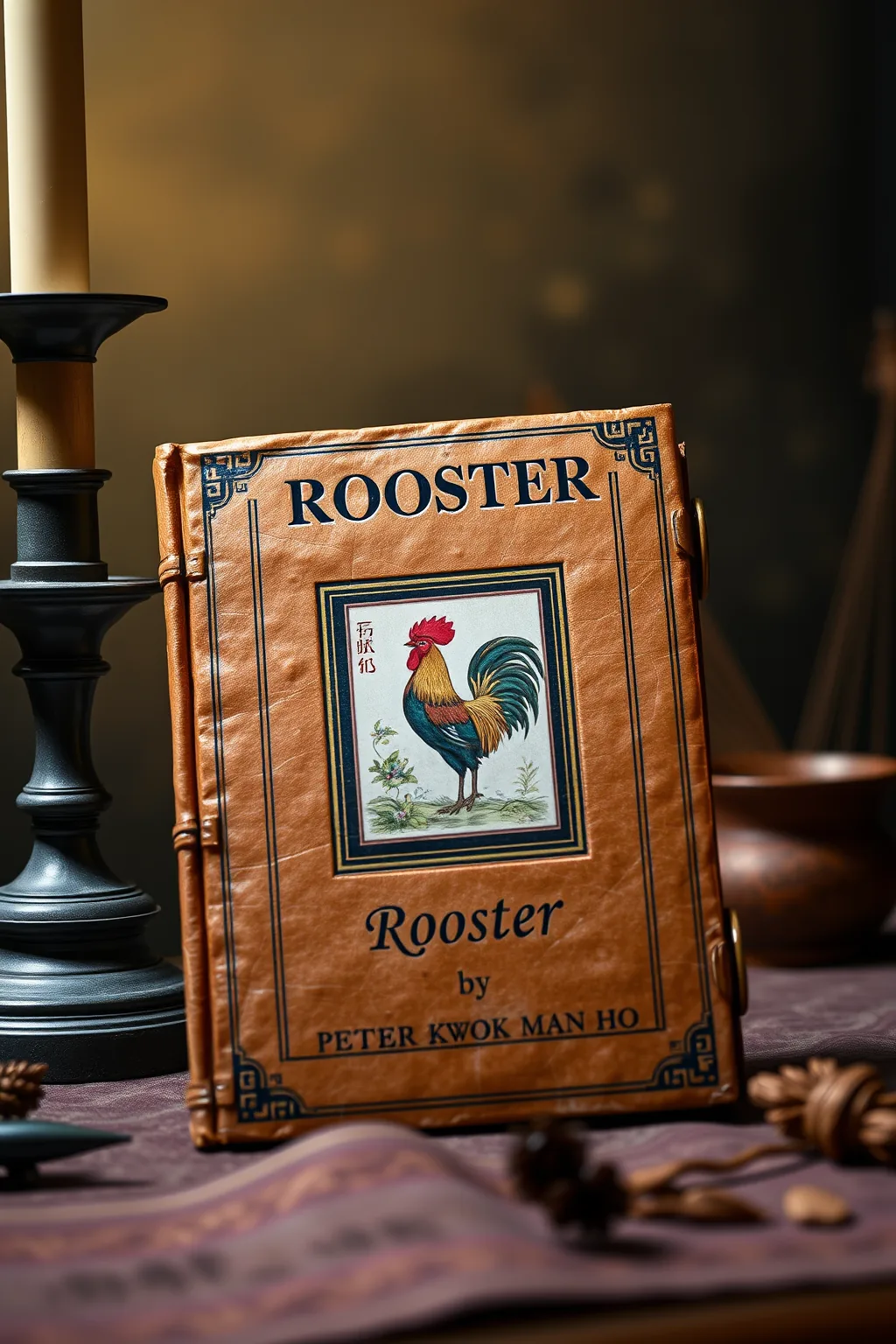
Peter Kwok Man Ho’s Rooster is an arid landscape, a place where philosophical seeds are sown but rarely bloom into accessible forms. The book’s strength lies in its unyielding commitment to its unique symbolic language; it refuses to dilute its esoteric core for broader appeal. For instance, the persistent recurrence of avian imagery, particularly the rooster, offers a consistent anchor for contemplation, even if its precise meaning remains elusive. However, its primary limitation is its sheer opacity. Without extensive background in specific Eastern philosophical traditions or alchemical symbolism, many passages feel like encrypted messages. A particularly challenging section involves the intricate numerological breakdowns that seem to govern the text's structure, demanding a level of dedicated deconstruction rarely asked of contemporary esoteric works. Rooster is a dense, demanding text for the specialist, offering few concessions to the casual reader.
📝 Description
71
Peter Kwok Man Ho's Rooster, published in 1994, presents a series of interconnected ideas and symbolic representations.
Rooster by Peter Kwok Man Ho is not a conventional narrative. Instead, it offers a collection of linked concepts and symbolic images from 1994. The book acts as a document, giving insight into a specific period of esoteric thought. It is for students of comparative mysticism and symbolic languages, especially those interested in less common 20th-century esoteric writings. Readers who enjoy complex symbolic systems and are prepared for material that requires significant prior knowledge or dedicated study will find it rewarding.
The book's structure emphasizes its content over traditional storytelling. It invites readers to piece together meaning from its symbolic language and conceptual connections. The work rewards careful attention and deep engagement, making it a challenging yet potentially illuminating text for those with the necessary background.
Published in 1994, Rooster emerged during a time of resurgent esoteric publishing. The intellectual atmosphere showed a renewed interest in Gnosticism, Hermeticism, and Eastern philosophies, often interpreted through figures like Manly P. Hall or Jungian psychology. Ho's work fits within this milieu, providing a unique viewpoint that differed from more common Theosophical or Rosicrucian ideas. Its appearance predates widespread internet access to esoteric texts, suggesting a more deliberate and curated intellectual contribution.
💡 Why Read This Book?
• Gain insight into the symbolic role of the 'Rooster' as a metaphor for spiritual awakening, a concept explored through detailed alchemical analogies. • Understand the intricate numerological systems Peter Kwok Man Ho employed, particularly those referenced in the book's structural organization from its 1994 publication. • Explore the intersection of East Asian cosmology and Western esoteric traditions as presented in a unique framework, offering a departure from more common interpretations.
⭐ Reader Reviews
Honest opinions from readers who have explored this book.
❓ Frequently Asked Questions
What is the primary symbolic meaning of the 'Rooster' in Peter Kwok Man Ho's work?
The 'Rooster' in Rooster typically symbolizes awakening, vigilance, and the dawn of spiritual understanding. It draws upon its cross-cultural associations with heralding the new day and dispelling darkness, linking it to esoteric concepts of enlightenment.
What esoteric traditions does Rooster draw from?
Rooster appears to synthesize elements from East Asian cosmological principles, alchemical symbolism, and general esoteric philosophy. It presents a unique blend that doesn't strictly adhere to any single, well-defined lineage, making it a distinctive work.
When was Rooster first published?
Rooster was first published in 1994, placing it within a specific period of esoteric literature that saw renewed interest in symbolic and philosophical explorations.
Is Rooster suitable for beginners in esoteric studies?
Given its dense symbolism and complex conceptual framework, Rooster is generally more suited for intermediate to advanced students of esoteric subjects who have some familiarity with alchemical and East Asian philosophical concepts.
Does the book offer practical exercises or guidance?
The book is primarily theoretical and symbolic in nature. While it discusses concepts like 'inner alchemy,' it focuses on conceptual understanding rather than providing explicit, step-by-step practical exercises for immediate application.
What makes the symbolism in Rooster unique?
The uniqueness of Rooster's symbolism lies in its specific integration of East Asian cosmological ideas with Western alchemical motifs, interpreted through Peter Kwok Man Ho's distinct perspective, moving beyond conventional interpretations.
🔮 Key Themes & Symbolism
The Symbol of the Rooster
The titular 'Rooster' serves as a potent and multi-layered symbol throughout Peter Kwok Man Ho's work. Drawing on its archetypal associations with dawn, vigilance, and the herald of change, the Rooster signifies awakening – both on a personal and a cosmic level. Its presence suggests a call to consciousness, an overcoming of obscurity, and the commencement of a new phase. In the context of esoteric symbolism, this can be interpreted as the awakening of the spiritual self, the illumination of hidden truths, or the activation of dormant potentials within the practitioner. The book explores this symbol through various lenses, connecting it to alchemical processes and cycles of transformation.
Inner Alchemy and Transformation
A core theme explored in Rooster is the concept of 'inner alchemy.' This refers to the process of spiritual purification, refinement, and transformation that occurs within the individual. Mirroring the metallurgical processes of external alchemy, inner alchemy involves transmuting base elements of the psyche into higher, more refined states of consciousness. The book likely uses symbolic narratives and conceptual frameworks to illustrate this internal work. It suggests that true spiritual attainment is not an external acquisition but an internal restructuring, a meticulous alchemical process of the soul guided by esoteric principles.
East Asian Cosmological Principles
Peter Kwok Man Ho's work integrates significant elements derived from East Asian cosmological frameworks. This manifests in the book's understanding of cyclical time, the interconnectedness of phenomena, and the energetic forces that govern existence. Concepts such as Yin and Yang, the Five Elements, or similar principles may be implicitly or explicitly referenced through the symbolic language employed. This integration provides a unique perspective on esoteric concepts, bridging Eastern philosophical traditions with Western alchemical and symbolic thought, offering a distinct approach to understanding universal laws and spiritual development.
Symbolic Language and Interpretation
Rooster operates heavily through a rich, often intricate, symbolic language. The book emphasizes that true understanding comes not from literal interpretation but from grasping the deeper, symbolic meanings embedded within its text. This requires an engagement with esoteric semiotics, where symbols act as keys to unlock hidden knowledge. The author likely employs a specific lexicon of symbols, potentially drawing from both Eastern and Western esoteric traditions, to convey complex philosophical and spiritual ideas. The challenge and reward of reading Rooster lie in deciphering this symbolic collection.
💬 Memorable Quotes
Direct passages from the work, attributed to the author.
“Alchemy is the art of internal transmutation.”
— This statement defines the core of esoteric alchemy as an internal spiritual process, focusing on the transformation of the self rather than external material changes.
“Cycles of nature mirror the soul's ascent.”
— This concept links the observation of natural rhythms and cycles to the spiritual journey of the individual, implying a universal pattern of growth and evolution.
“Each number holds a resonance, a key to cosmic order.”
— This emphasizes the importance of numerology within the esoteric framework presented, suggesting that numbers are not merely quantities but carry symbolic weight and structural significance.
“The bird's eye sees beyond the veil.”
— This interpretation connects the keen sight of avian creatures, particularly the Rooster, to the esoteric ability to perceive hidden realities or spiritual truths obscured from ordinary sight.
💡 Key Ideas
Editorial paraphrase of the work's core concepts — not direct quotes.
The crowing of the Rooster signals the dispelling of inner shadows.
This passage highlights the Rooster as a symbol of awakening and illumination, suggesting its call signifies the banishment of ignorance and the emergence of spiritual clarity.
🌙 Esoteric Significance
Tradition
Rooster does not strictly align with a single, codified esoteric tradition like Hermeticism or Kabbalah. Instead, it appears to forge its own path by synthesizing elements from East Asian cosmological thought (such as concepts of cyclical transformation and energetic balance) with a Western alchemical and symbolic framework. It departs from purely Western lineages by its distinct cultural infusion, offering a unique comparative lens on universal spiritual principles. The work can be seen as an example of late 20th-century esoteric synthesis, where boundaries between traditions were increasingly explored.
Symbolism
The central symbol of the 'Rooster' represents awakening, vigilance, and the dawn of spiritual consciousness, echoing its role as a herald of light. Another key motif is likely 'inner alchemy,' symbolizing the internal process of spiritual purification and transformation, akin to the transmutation of base metals into gold. The book also employs cyclical symbolism, reflecting East Asian concepts of time and natural processes, suggesting that spiritual growth follows natural, recurring patterns of development and renewal.
Modern Relevance
Contemporary esoteric practitioners interested in cross-cultural symbolism and the integration of Eastern philosophical concepts with Western alchemical ideas may find Rooster a valuable, albeit challenging, resource. Thinkers exploring Jungian archetypes through a non-Western lens, or those engaged in comparative mysticism, can draw parallels. Its unique approach to symbolic language continues to inform discussions in circles that seek to move beyond rigid traditional boundaries, appealing to those interested in the evolution of esoteric thought in the late 20th century.
👥 Who Should Read This Book
• Students of comparative mysticism seeking to understand the synthesis of East Asian cosmology and Western esoteric symbolism. • Practitioners of alchemy and Hermeticism interested in novel interpretations of transformation and spiritual development beyond traditional texts. • Scholars of 20th-century esoteric movements looking for unique, non-aligned voices from the period.
📜 Historical Context
Published in 1994, Peter Kwok Man Ho's Rooster emerged during a period of eclectic spiritual exploration. The preceding decades had seen a proliferation of esoteric literature, with movements like Theosophy and Anthroposophy having already established significant followings, alongside a growing interest in Jungian psychology and its symbolic interpretations. Simultaneously, there was a burgeoning interest in less mainstream traditions, including Gnosticism and various forms of Hermeticism, often disseminated through smaller presses. Rooster positioned itself within this landscape not as a follower of established Western esoteric orders, but as an independent voice. Its publication predates the internet's role as a primary conduit for esoteric knowledge, making it a more self-contained artifact of its time. The work likely engaged, albeit indirectly, with thinkers who were bridging Eastern and Western mystical thought, a trend that gained momentum throughout the late 20th century. Its reception was likely limited to niche circles due to its specialized symbolic language, contrasting with the more accessible presentations of contemporary authors like Doreen Virtue, who focused on angelic communication.
📔 Journal Prompts
The Rooster as a symbol of awakening: What inner 'shadows' does its call seek to dispel in your understanding?
Reflect on the concept of 'inner alchemy' as presented in the text. How might its principles apply to personal growth?
Analyze the cyclical patterns described. How do these natural cycles inform your perception of spiritual progress?
Examine the specific numerological associations mentioned. What potential meaning do these hold for cosmic order?
Consider the 'bird's eye' perspective. What hidden realities might this symbolic sight reveal?
🗂️ Glossary
Inner Alchemy
A symbolic or practical process of spiritual transformation and purification within the individual, aiming to transmute lower aspects of the psyche into higher states of consciousness.
Cosmological Principles
Fundamental theories and beliefs concerning the origin, structure, and evolution of the universe, often incorporating spiritual or metaphysical dimensions.
Symbolic Language
A system of communication that uses symbols (images, gestures, signs) to represent abstract ideas, concepts, or spiritual truths, often requiring interpretation beyond the literal.
Transmutation
In an esoteric context, the process of changing or transforming one state of being, consciousness, or substance into another, typically towards a higher or more refined form.
Vigilance
The state of being watchful and alert, especially in the context of spiritual awareness, guarding against ignorance or negative influences.
Archetype
A universal, symbolic pattern or model of a character, symbol, or situation that recurs in the collective unconscious, as described in Jungian psychology.
Esoteric
Intended for or likely to be understood by only a small number of people with a specialized knowledge or interest; pertaining to hidden or secret meanings.
🔮 Readers Also Liked
Browse all →








More by Peter Kwok Man Ho
All books →
More Free Astrology & Cosmology Books
View all →