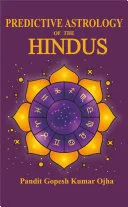
Predictive Astrology of the Hindus
 71
71

Predictive Astrology of the Hindus
Pandit Gopesh Kumar Ojha’s "Predictive Astrology of the ሂndus" emerges as a practical bridge between Vedic and Western astrological paradigms. Its signal strength lies in its directness; Ojha spares the reader extensive Sanskrit scholarship, focusing instead on the mechanics of Jyotish. The explanation of planetary periods, or Dashas, is particularly lucid, offering a structured method for understanding temporal unfolding in a life chart. However, the book’s primary limitation is its brevity. While aiming for the quintessence, some readers might find the treatment of complex yogas or the nuances of Nakshatra interpretation somewhat condensed. A passage detailing the calculation and significance of the Vimshottari Dasha system, for instance, serves as a clear entry point but could benefit from more illustrative examples. The author's effort to reconcile sidereal and tropical zodiacs is commendable, though the conversion section feels introductory rather than exhaustive. Ultimately, this book serves as a valuable primer for those initiated into Western astrology but seeking a systematic introduction to Vedic predictive techniques.
📝 Description
71
Pandit Gopesh Kumar Ojha's 1981 book translates Hindu predictive astrology for Westerners.
This volume distills Hindu predictive astrology, known as Jyotish, for an audience unfamiliar with Sanskrit. Pandit Gopesh Kumar Ojha explains the fundamental principles and predictive methods of this system in clear language. The book aims to reconcile the sidereal zodiac, central to Vedic astrology, with the tropical zodiac common in Western practices.
It is designed for astrology students, both beginners and those with experience, who want to go beyond Western traditions. The work is especially useful for those interested in comparative astrology, offering a way to understand Jyotish's unique approaches without needing to learn Sanskrit. Readers looking for practical predictive tools based on a different cosmic viewpoint will find value here.
The text addresses the historical split between the sidereal zodiac, used in Hindu astrology since ancient times, and the tropical zodiac, adopted by Hellenistic and later Western traditions. Ojha's work provides ways for Western practitioners to align or convert between these systems, fostering a cross-cultural astrological exchange.
Jyotish, the Hindu system of astrology, is one of the oldest continuous traditions of divination. Rooted in Vedic cosmology, it uses a sidereal framework tied to the fixed stars. This contrasts with the Western tropical system, which is based on the seasons. Pandit Gopesh Kumar Ojha's work bridges this divide, making the complex predictive techniques of Jyotish accessible. It allows for a deeper understanding of a system that views astrological patterns as direct manifestations of cosmic law and karma.
💡 Why Read This Book?
• Gain a foundational understanding of the Dasha system, a unique Hindu astrological method for timing events, enabling a new framework for interpreting life's unfolding periods. • Learn to distinguish and potentially convert between the sidereal zodiac, central to Hindu astrology since antiquity, and the tropical zodiac common in Western practice. • Explore the significance of Nakshatras, the 27 lunar mansions used in Jyotish, offering a richer layer of interpretation to planetary placements beyond Western sign rulership.
⭐ Reader Reviews
Honest opinions from readers who have explored this book.
❓ Frequently Asked Questions
What is the primary difference between Hindu astrology and Western astrology discussed in this book?
The book highlights that Hindu astrology (Jyotish) predominantly uses the sidereal zodiac, which aligns with fixed stars, while Western astrology typically employs the tropical zodiac, based on the seasons and the Sun's apparent path. Ojha explains how to bridge this difference.
Does "Predictive Astrology of the Hindus" require knowledge of Sanskrit?
No, Pandit Gopesh Kumar Ojha specifically wrote this book to be accessible to lay readers and Western astrologers who do not know Sanskrit. The core principles are presented in English.
What are the "Dashas" mentioned in the book?
Dashas are planetary periods within Hindu astrology that indicate when the effects of specific planets will manifest in a person's life. The book introduces these systems for predictive timing.
What is the sidereal zodiac and why is it important in this book?
The sidereal zodiac is based on the actual constellations of stars. This book emphasizes its use in Hindu astrology, contrasting it with the tropical zodiac that Western astrology often uses, providing methods for conversion.
What are Nakshatras?
Nakshatras are lunar mansions, dividing the ecliptic into 27 segments. This book explains their significance in Hindu astrology for detailed interpretation of the Moon's position and its influence.
When was "Predictive Astrology of the Hindus" first published?
The book was first published in January 2013, making its insights available to a modern audience seeking to understand Vedic astrological principles.
🔮 Key Themes & Symbolism
Sidereal vs. Tropical Zodiac
This work directly confronts the fundamental divergence between the sidereal zodiac, employed by Hindu astrology since ancient times, and the tropical zodiac prevalent in Western traditions. Ojha elucidates how the former aligns with fixed stars, while the latter is tied to seasonal changes. The book provides practical guidance for Western practitioners to understand and potentially convert between these frameworks, fostering a more inclusive approach to astrological study and practice that respects both traditions.
Planetary Periods (Dashas)
A central to Hindu predictive astrology is the concept of Dashas, or planetary periods, which map out the sequential unfolding of influences throughout a lifetime. Ojha's text simplifies the understanding of these crucial timing mechanisms, such as the widely used Vimshottari Dasha system. By detailing how these periods operate, the book equips readers with a method for forecasting when specific life events or themes are likely to manifest, offering a distinct temporal predictive tool.
The Significance of Nakshatras
Beyond the twelve zodiac signs, Hindu astrology utilizes twenty-seven Nakshatras, or lunar mansions, which offer a more refined layer of interpretation. This book explores the unique characteristics and symbolism associated with each Nakshatra, explaining how their influence, particularly when occupied by the Moon or other planets, provides deeper insights into personality, destiny, and specific karmic patterns. Understanding Nakshatras adds a nuanced dimension to chart analysis.
Accessible Jyotish for All
The driving force behind "Predictive Astrology of the Hindus" is to make the sophisticated system of Jyotish accessible to a global audience, particularly those unfamiliar with Sanskrit. Ojha’s careful translation of complex astrological concepts into clear English removes traditional barriers. The book serves as an educational tool, democratizing access to Vedic astrological knowledge and empowering a wider range of individuals to explore its predictive power and philosophical depth.
💬 Memorable Quotes
Direct passages from the work, attributed to the author.
“Hindu astrology is sidereal. But in the West, most astrologers base their calculations and inferences on the tropical zodiac.”
— This statement directly addresses the core technical difference Ojha aims to clarify, setting the stage for his explanation of how Western practitioners can engage with the sidereal system fundamental to Jyotish.
“To cater to their needs and to enable them to convert a tropical zodiac.”
— This highlights the book's practical, reader-focused objective: providing tools for Western astrologers to bridge the gap between their familiar tropical system and the sidereal basis of Hindu astrology.
“There are many books on Hindu astrology. However, their perusal is a problem, particularly for the lay readers who do not know Sanskrit.”
— This identifies the problem Ojha's work seeks to solve: the inaccessibility of traditional Jyotish texts due to language barriers, positioning his book as a solution for a broader audience.
“Therefore the author has presented in this book the quintessence of predictive Hindu astrology...”
— This underscores the author's intention to extract and present the essential, most vital elements of predictive astrology from the vast corpus of Hindu tradition, focusing on what is most impactful for forecasting.
💡 Key Ideas
Editorial paraphrase of the work's core concepts — not direct quotes.
The author has presented in this book the quintessence of predictive Hindu astrology in a medium understood worldwide.
This paraphrased concept emphasizes the book's goal of distilling complex Vedic astrological knowledge into a universally understandable format, prioritizing clarity and accessibility over scholarly jargon.
🌙 Esoteric Significance
Tradition
This work fits within the broader esoteric interest in comparative cosmology and divination systems that gained traction in the West during the 20th century. While Jyotish itself is a deeply rooted tradition within Hinduism, Ojha's presentation frames it as a complementary system to Western astrology, aligning with a syncretic approach often seen in modern occult and metaphysical studies. It bridges the empirical observational basis of Vedic astrology with the philosophical inquiries of Western esotericists.
Symbolism
The book implicitly engages with the symbolism inherent in the Nakshatras, the 27 lunar mansions that divide the ecliptic in Hindu astrology. Each Nakshatra carries specific deities, ruling planets, and symbolic meanings, offering a rich symbolic language for interpreting lunar influences. Furthermore, the concept of planetary Dashas introduces a temporal symbolism, where planetary energies are understood to manifest in cyclical, predictable phases throughout a human life.
Modern Relevance
Contemporary practitioners of comparative astrology, Vedic astrologers seeking clearer articulation of their system for Western audiences, and students of esoteric philosophy interested in cyclical time and predictive sciences draw upon works like Ojha's. It supports modern movements focused on integrating diverse spiritual and divinatory traditions, providing a practical entry point to Jyotish for those engaged in globalized metaphysical studies or personal growth practices.
👥 Who Should Read This Book
• Students of Western astrology seeking to understand and incorporate the principles of Hindu Jyotish into their practice, gaining access to predictive techniques like Dashas. • Comparative religion and philosophy scholars interested in the astrological traditions of India and their unique cosmological frameworks. • Individuals curious about their own life path and future, looking for alternative or supplementary predictive methods beyond Western horoscopes.
📜 Historical Context
Published in 2013, Pandit Gopesh Kumar Ojha’s "Predictive Astrology of the Hindus" entered a landscape where interest in Eastern esoteric traditions, including Vedic astrology, had been growing significantly since the mid-20th century. This revival was partly fueled by figures like Dane Rudhyar, who, from the 1930s onwards, actively explored and wrote about comparative astrology, advocating for a synthesis of Western and Eastern methods. Ojha’s work directly addresses the primary technical hurdle for many Western students: the difference between the sidereal zodiac used in Jyotish and the tropical zodiac common in Western practice since Ptolemy. While Hellenistic astrology formed the bedrock of Western traditions, the resurgence of interest in Vedic astrology presented a challenge in reconciling these distinct cosmological frameworks. Ojha’s text offers a practical solution, aiming to make Jyotish accessible, a move that resonated with a generation of astrologers seeking a more comprehensive understanding of global astrological systems.
📔 Journal Prompts
The sidereal zodiac's alignment with fixed stars versus the tropical zodiac's seasonal basis.
The application of planetary Dashas to understand life's temporal unfolding.
The symbolic meanings and interpretive depth of the Nakshatras.
How Ojha's explanation of Jyotish principles can inform one's understanding of karma and destiny.
The practical challenges and benefits of reconciling Vedic and Western astrological methodologies.
🗂️ Glossary
Jyotish
The traditional Hindu system of astrology, also known as Vedic astrology. It is a complex system of prediction and divination based on astronomical positions and cycles.
Sidereal Zodiac
An astrological zodiac that uses the actual positions of constellations in the sky as its reference points. This is the primary zodiac used in Hindu astrology.
Tropical Zodiac
An astrological zodiac that is based on the seasons and the apparent path of the Sun. The vernal equinox is fixed at 0 degrees Aries.
Dasha
A system of planetary periods used in Hindu astrology to predict the timing of events in a person's life based on the sequence of planetary influences.
Nakshatra
One of the 27 lunar mansions or divisions of the ecliptic in Hindu astrology. Each Nakshatra has its own ruler, symbol, and mythology.
Vimshottari Dasha
The most commonly used Dasha system in Hindu astrology, based on the Moon's Nakshatra at birth, which delineates planetary periods throughout life.
Yogas
Specific combinations of planetary positions and influences in a birth chart that indicate particular outcomes or potentials in a person's life.