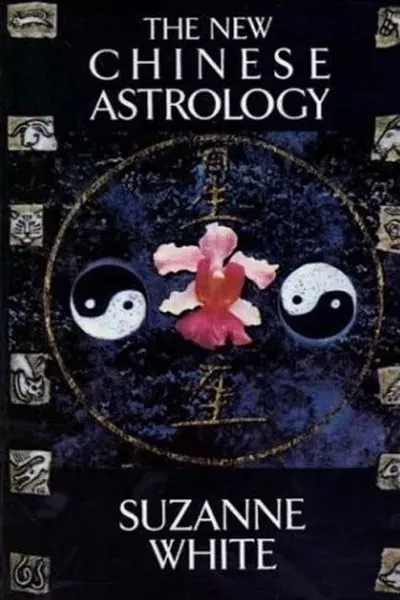
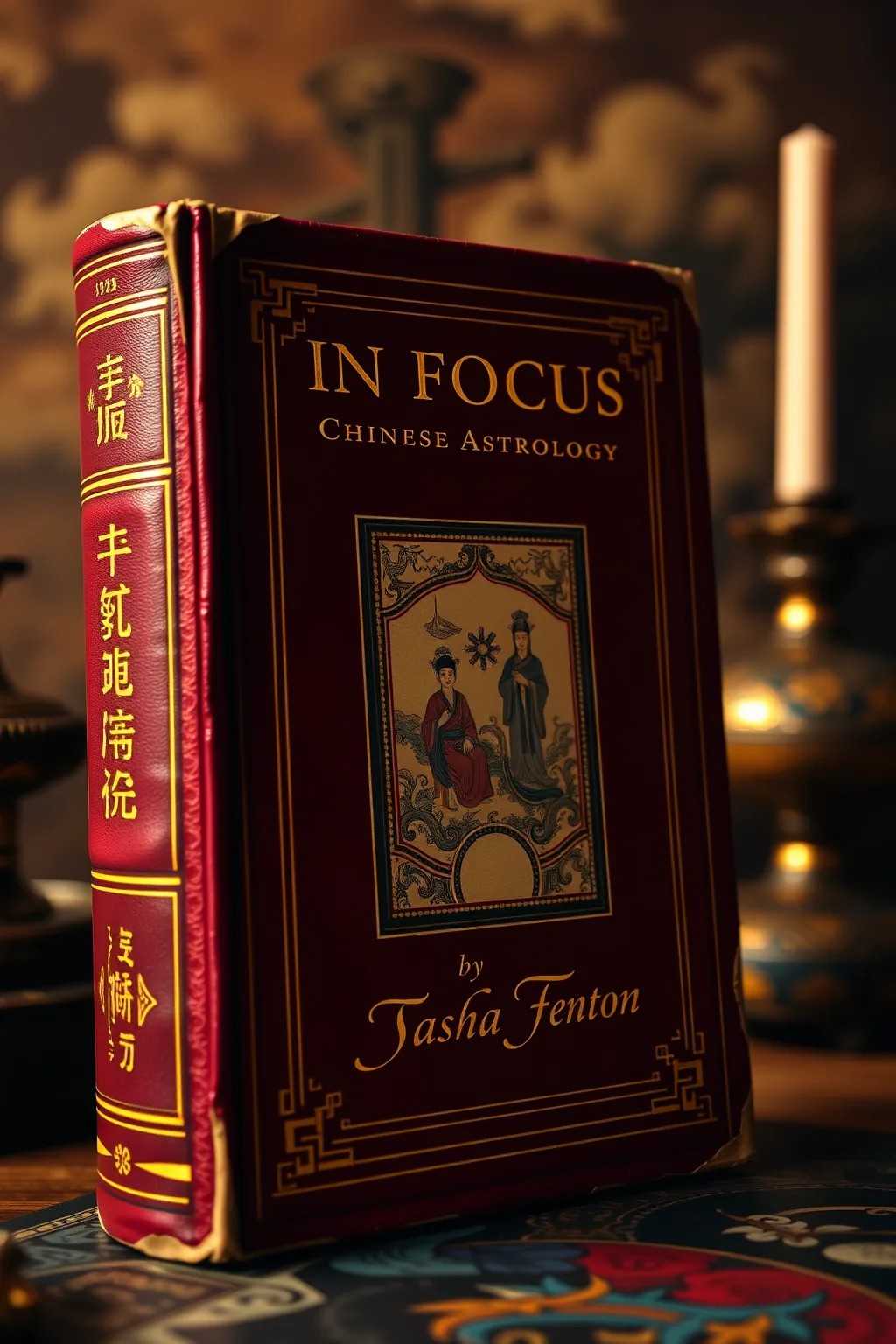
In Focus Chinese Astrology
 76
76

In Focus Chinese Astrology
Sasha Fenton's "In Focus Chinese Astrology" provides a clear, if somewhat conventional, entry into the world of the Chinese zodiac. The book excels in its straightforward presentation of the 12 animal signs and their associated years, making it accessible for beginners. Fenton’s explanation of the Five Elements and their interactions adds a necessary layer of depth, moving beyond simple animal associations. However, the work occasionally leans towards a generalized tone, particularly when discussing personality traits, which can feel somewhat repetitive. A more specific examination of the 2022 publication date and its relation to contemporary astrological discourse would have strengthened its critical standing. Despite this, the book functions effectively as a foundational text, offering practical guidance for understanding the Chinese astrological framework.
📝 Description
76
Sasha Fenton's 2001 book, In Focus Chinese Astrology, details the twelve animal signs and the Five Elements.
This book examines the Chinese zodiac, explaining its twelve animal signs and their cyclical nature. Fenton covers the Five Elements—Wood, Fire, Earth, Metal, and Water—and how they interact with Yin and Yang principles. The text outlines the characteristics associated with each animal sign, offering a way to understand personality, compatibility, and life paths tied to birth years.
It is suitable for newcomers to Eastern astrology and those with some familiarity with the Chinese zodiac. The book provides practical insights for self-awareness and relationships, viewed through the lens of one's birth animal. Readers interested in comparing astrological systems, cultural studies, or applying traditional concepts to contemporary life will find value here. It serves as a guide to understanding the lunar calendar's influence on human events and fate.
Chinese astrology is part of a vast cosmological system that has developed over millennia in East Asia. It is deeply integrated with traditional Chinese medicine, philosophy, and calendrical sciences. The system uses a 12-year cycle of animals, each associated with specific attributes and energies, combined with the five elemental phases (Wu Xing). This framework is used not only for fortune-telling and understanding personality but also for selecting auspicious dates and understanding the flow of cosmic influences on human affairs. Fenton's work places this tradition within a broader context of cyclical time and elemental interaction.
💡 Why Read This Book?
• Gain a clear understanding of the 12 animal signs and their unique characteristics, learning how your birth year influences your personality and potential, as detailed in the book's animal sign descriptions. • Explore the dynamic interplay of the Five Elements (Wood, Fire, Earth, Metal, Water) and their impact on astrological interpretations, a core concept explained throughout the text. • Discover practical applications for understanding compatibility between signs and elements, enabling better interpersonal relationships based on the principles outlined from the Han Dynasty era.
⭐ Reader Reviews
Honest opinions from readers who have explored this book.
❓ Frequently Asked Questions
When was "In Focus Chinese Astrology" first published?
The book "In Focus Chinese Astrology" by Sasha Fenton was first published on October 18, 2022. This recent publication date ensures the content reflects contemporary discussions within the field of Chinese astrology.
What are the 12 animals of the Chinese zodiac?
The 12 animals of the Chinese zodiac, as detailed in the book, are the Rat, Ox, Tiger, Rabbit, Dragon, Snake, Horse, Goat, Monkey, Rooster, Dog, and Pig. Each governs a year in a 12-year cycle.
Does the book explain the Five Elements in Chinese astrology?
Yes, "In Focus Chinese Astrology" thoroughly explains the Five Elements: Wood, Fire, Earth, Metal, and Water. It details their generative and destructive cycles and how they influence the animal signs.
Is this book suitable for someone with no prior knowledge of Chinese astrology?
Absolutely. The book is designed to be accessible to beginners, providing a clear introduction to the core concepts, animal signs, and the elemental system of Chinese astrology.
What is the historical origin of the Chinese zodiac?
The book touches upon the historical origins of the Chinese zodiac, suggesting its development likely occurred during the Han Dynasty (206 BCE – 220 CE), intertwining with ancient Chinese astronomy and folklore.
Can this book help with understanding relationships?
Yes, by explaining the characteristics of each animal sign and the dynamics of the Five Elements, the book provides insights into compatibility and potential dynamics in relationships.
🔮 Key Themes & Symbolism
The Twelve Animal Signs
The core of Chinese astrology, each of the twelve animals—Rat, Ox, Tiger, Rabbit, Dragon, Snake, Horse, Goat, Monkey, Rooster, Dog, and Pig—represents a year in a repeating 12-year cycle. "In Focus Chinese Astrology" elucidates the distinct personality traits, strengths, and potential challenges associated with each sign. It explores how one's birth year animal shapes their character, relationships, and destiny, offering a framework for self-awareness and understanding others based on this ancient system.
The Five Elements (Wu Xing)
Beyond the animals, the book explores the crucial concept of the Five Elements: Wood, Fire, Earth, Metal, and Water. These elements are not static but engage in dynamic cycles of generation (e.g., Wood feeds Fire) and destruction (e.g., Metal chops Wood). Fenton explains how the element associated with a particular year, and its interaction with the animal sign, adds profound complexity and nuance to astrological interpretations, affecting everything from personality to fortune.
Yin and Yang Principles
Complementing the animal signs and elements, the book integrates the fundamental principles of Yin and Yang. These represent complementary opposites—passive and active, dark and light, feminine and masculine—that are essential to the balance of the cosmos in Chinese philosophy. The application of Yin and Yang to the zodiacal animals and elements further refines astrological readings, providing a more holistic understanding of an individual's energetic makeup and life path.
Astrological Compatibility and Cycles
A significant focus of "In Focus Chinese Astrology" is on how the various signs and elements interact, particularly concerning compatibility in relationships. The book maps out harmonious and conflicting pairings, offering guidance for navigating interpersonal dynamics. It also addresses the cyclical nature of the zodiac, explaining how different years and elemental influences affect individuals over their lifetime, providing a lens for understanding personal growth and life transitions.
💬 Memorable Quotes
Direct passages from the work, attributed to the author.
“The year of your birth determines your animal sign, which is said to hold the key to your personality.”
— This statement captures the fundamental premise of the Chinese zodiac: the direct correlation between one's birth year and their inherent characteristics, as dictated by the animal assigned to that year.
“Each element has a generative and a destructive cycle, influencing the energy of the year.”
— This highlights the dynamic nature of the Five Elements theory, emphasizing that these forces are not static but constantly interacting, shaping events and individual destinies in complex ways.
“Understanding the animal signs can illuminate compatibility in relationships.”
— This points to the practical application of Chinese astrology, suggesting that knowledge of the zodiac can provide valuable insights into how different individuals are likely to interact.
“The Chinese zodiac is deeply rooted in ancient Chinese cosmology and folklore.”
— This emphasizes the historical and cultural significance of the system, linking it to a broader framework of traditional Chinese thought and storytelling that has shaped its development over centuries.
“Yin and Yang principles add another layer to interpreting the zodiac.”
— This indicates that a complete understanding of Chinese astrology requires considering the interplay of opposing yet complementary forces, adding depth beyond just the animal and elemental associations.
🌙 Esoteric Significance
Tradition
The Chinese zodiac belongs to the Taoist cosmological tradition, deeply intertwined with concepts of natural cycles, balance (Yin/Yang), and the five phases of transformation (Wu Xing). It represents a practical application of Taoist principles to human life, viewing individuals as microcosms within the macrocosm of the universe. Unlike Hermeticism's focus on correspondence or Kabbalah's emphasis on divine emanations, Chinese astrology is more immanent, focusing on the energetic patterns observable in nature and their direct influence on earthly affairs and human destiny.
Symbolism
Key symbols include the twelve animals, each embodying specific archetypal energies and behaviors—the Dragon symbolizing power and good fortune, the Snake representing wisdom and intuition. The Five Elements (Wood, Fire, Earth, Metal, Water) are also potent symbols, representing fundamental forces of nature and transformation; for instance, Wood symbolizes growth and vitality, while Water signifies flow and adaptability. The cyclical nature of the calendar itself, based on lunar and solar observations, symbolizes the unending rhythm of existence and the interconnectedness of all phenomena.
Modern Relevance
Contemporary practitioners of holistic wellness, mindfulness, and comparative spirituality often draw upon Chinese astrological principles. Thinkers in fields like transpersonal psychology and archetypal studies find resonance in the animal archetypes. Furthermore, the emphasis on natural cycles and elemental balance aligns with modern ecological awareness and the search for sustainable living practices. Schools of traditional Chinese medicine also integrate astrological insights into their understanding of individual constitution and health patterns.
👥 Who Should Read This Book
• Individuals curious about Eastern philosophies and divination systems seeking an accessible introduction to the Chinese zodiac. • Aspiring astrologers looking to expand their knowledge beyond Western traditions and understand comparative astrological frameworks. • Those interested in self-discovery and interpersonal dynamics who wish to explore personality archetypes and compatibility through a culturally rich lens.
📜 Historical Context
Sasha Fenton's "In Focus Chinese Astrology" emerges within a long tradition, drawing from a system that likely coalesced during China's Han Dynasty (206 BCE – 220 CE). This era saw significant advancements in astronomy, philosophy, and the systematization of knowledge, providing fertile ground for the development of complex astrological frameworks. The Chinese zodiac, with its twelve animal signs and integration of the Five Elements (Wu Xing), became a core part of Chinese cultural understanding, influencing everything from governance to personal relationships. While not facing overt censorship, the system has always existed alongside other forms of divination and philosophical inquiry in China, such as I Ching. Its enduring popularity contrasts with the cyclical reception of Western astrology in different historical periods. Fenton's work builds upon centuries of practice and interpretation, making the system accessible to a modern audience.
📔 Journal Prompts
The Rat's adaptability and the Ox's steadfastness: explore a situation where you embodied both.
Reflect on the generative cycle of Wood feeding Fire in relation to your personal growth.
Consider the Snake's symbolic wisdom when facing a complex decision.
Analyze the balance of Yin and Yang in your daily routines.
Map the influence of your birth year's animal sign on a significant life event.
🗂️ Glossary
Earthly Branches
The twelve terrestrial divisions that form the basis of the Chinese zodiac cycle, each represented by an animal sign (e.g., Rat, Ox, Tiger).
Wu Xing
The Chinese concept of the Five Elements: Wood, Fire, Earth, Metal, and Water. They are believed to interact in cyclical patterns that influence the universe and human affairs.
Yin and Yang
Fundamental principles in Chinese philosophy representing complementary, opposing forces (e.g., passive/active, dark/light) whose balance is crucial for harmony.
Animal Signs
The twelve creatures (Rat, Ox, Tiger, Rabbit, Dragon, Snake, Horse, Goat, Monkey, Rooster, Dog, Pig) assigned to years in the 12-year Chinese zodiac cycle.
Generative Cycle
The harmonious sequence in which the Five Elements support and produce one another (e.g., Wood fuels Fire, Fire creates Earth ash).
Destructive Cycle
The sequence in which the Five Elements overcome or control one another (e.g., Water extinguishes Fire, Fire melts Metal).
Lunar Calendar
The traditional Chinese calendar, based on the cycles of the moon, which dictates the timing of the zodiac years and festivals.

![The celestial science of astrology vindicated, from the calumny of those who are biggotted [sic] against what they do not understand, by R. Phillips. 1785](/img/thumb/the-celestial-science-of-astrology-vindicated-from-the-calumny-of-those-who-are-biggotted-sic-against-what-they-do-not-understand-by-r-phillips-1785-phillips-r-astrologer.webp)









![Mrs. Davis, (no. 7.) Crown Court, Little Poultney Street, Wardour Street, Soho, ... name and clock face on the door. Who has studied the occult sciences under the most learned sages after many years studious application; answers all adimssable [sic] questions in astrology, ... 1780](/img/thumb/mrs-davis-no-7-crown-court-little-poultney-street-wardour-street-soho-name-and-clock-face-on-the-door-who-has-studied-the-occult-sciences-under-the-most-learned-sages-after-many-years-studious-applica.webp)