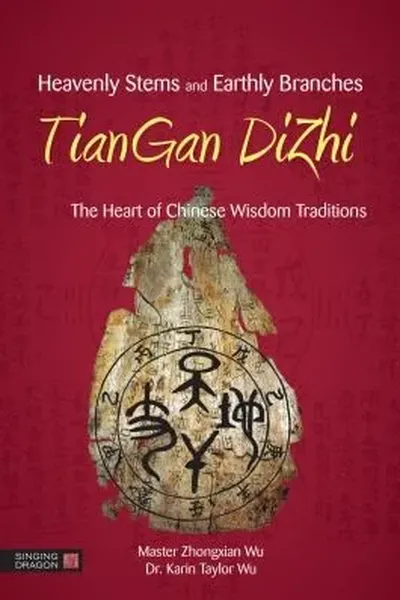
Heavenly Stems and Earthly Branches TianGan DiZhi

 83
83

Heavenly Stems and Earthly Branches TianGan DiZhi
Zhongxian Wu's "Heavenly Stems and Earthly Branches" is a serious undertaking, presenting a foundational pillar of Chinese cosmology with commendable thoroughness. The work distinguishes itself by clearly articulating the often-obscure mechanics of the Gan-Zhi cycle, moving beyond simplistic astrological charts to reveal the energetic and philosophical underpinnings. Wu's methodical approach in detailing the interactions—the cycles of production, control, and opposition—provides an invaluable reference for anyone serious about understanding Bazi or the deeper currents of Chinese metaphysical thought. A particular strength lies in the explicit mapping of elemental qualities and Yin/Yang states to each Stem and Branch, offering a clarity rarely found in introductory texts. However, the sheer density of information, while a virtue for the dedicated scholar, might prove daunting for the absolute novice. The text assumes a certain familiarity with foundational Chinese concepts, and while comprehensive, it does not always offer extensive pedagogical scaffolding for those entirely new to the subject matter. The explanation of the 60-year cycle and its application to personal destiny charts, particularly the discussion of the 'clashes' between specific branches, is exceptionally well-rendered. Wu's "Heavenly Stems and Earthly Branches" is an essential, albeit demanding, text for serious students of Chinese metaphysics.
📝 Description
83
Zhongxian Wu's Heavenly Stems and Earthly Branches details the core cyclical system of traditional Chinese cosmology.
This book examines the TianGan DiZhi, the ten Heavenly Stems and twelve Earthly Branches that form the backbone of traditional Chinese calendars and symbolic thought. Wu explains the relationships and applications of this framework across disciplines like Bazi (Four Pillars of Destiny) and Feng Shui. The work covers not just the calendrical aspects but also the philosophical and energetic dimensions of the system. It functions as both a detailed study and a practical manual for understanding these fundamental components of Chinese metaphysics.
The TianGan DiZhi system's origins trace back to ancient China, possibly developing from early astronomical studies and agricultural needs. By the Han Dynasty (206 BCE – 220 CE), it was integrated into philosophical and divinatory practices. This system became central to Taoism, traditional Chinese medicine, and astrology, shaping the East Asian worldview. Wu clarifies how this cyclical concept, often referenced but seldom fully explained, has influenced cultural thought.
Heavenly Stems and Earthly Branches is placed within the long tradition of Chinese cosmology and divination. This system is a fundamental tool for understanding time, cycles, and human destiny in many East Asian esoteric arts. It connects celestial patterns to earthly events and individual lives, forming a basis for practices that seek harmony and foresight. Wu's work clarifies this ancient structure for those interested in its deeper philosophical and practical implications within traditions like Taoism and Chinese astrology.
💡 Why Read This Book?
• Gain clarity on the cyclical mechanics of the ten Heavenly Stems and twelve Earthly Branches, the bedrock of Bazi, which offers a unique framework for understanding cosmic timing and personal destiny beyond Western astrological models. • Understand the Five Element (Wu Xing) and Yin/Yang correspondences for each Stem and Branch, providing a concrete symbolic language for analyzing energetic interactions that is crucial for Feng Shui and traditional Chinese medicine. • Grasp the principle of the sexagenary cycle, a specific 60-year calendrical system developed in ancient China, and how its inherent cycles of harmony and conflict are interpreted to predict trends and personal fortune.
⭐ Reader Reviews
Honest opinions from readers who have explored this book.
❓ Frequently Asked Questions
What is the primary purpose of the Heavenly Stems and Earthly Branches system?
The TianGan DiZhi system serves as a fundamental calendrical and symbolic framework in Chinese metaphysics. It is used for organizing time, understanding cyclical patterns of energy, and forming the basis for divination systems like Bazi (Four Pillars of Destiny) and Feng Shui.
How does the TianGan DiZhi relate to Bazi (Four Pillars of Destiny)?
Bazi is directly derived from the TianGan DiZhi. Each person's birth year, month, day, and hour are represented by a pair of Stem and Branch characters, forming the 'Four Pillars,' which are then analyzed using the system's principles.
Are the Heavenly Stems and Earthly Branches related to astrology?
Yes, the TianGan DiZhi system is a core component of Chinese astrology, distinct from Western systems. It focuses on the cyclical interplay of Stems and Branches, their elemental associations, and their influence on human affairs and the natural world.
When did the TianGan DiZhi system originate?
The origins of the TianGan DiZhi system are ancient, with evidence suggesting its development and use in calendrical and divinatory practices by the Han Dynasty (206 BCE – 220 CE), though its roots likely extend further back.
What does 'Gan' and 'Zhi' refer to specifically?
'Gan' refers to the ten Heavenly Stems (Gan), and 'Zhi' refers to the twelve Earthly Branches (Zhi). Together, they form the sexagenary cycle, a sixty-unit system used to record dates and understand cosmic influences.
Is this book suitable for beginners in Chinese metaphysics?
While thorough, the book assumes some foundational knowledge. Beginners may find it beneficial to consult introductory materials on Chinese cosmology or Bazi alongside this text for a smoother learning curve, especially regarding the complex interactions described.
🔮 Key Themes & Symbolism
The Sexagenary Cycle
The book meticulously details the formation and significance of the 60-year cycle, a fundamental unit derived from the combination of the ten Heavenly Stems and twelve Earthly Branches. Wu explains how this cycle governs time and energy, influencing everything from historical trends to individual destiny. Understanding the interactions within this cycle, including its generating and controlling relationships, is presented as key to interpreting the flow of Qi and the unfolding of events in traditional Chinese thought and practice.
Elemental and Yin-Yang Dynamics
Central to the TianGan DiZhi is the assignment of Five Element (Wu Xing: Wood, Fire, Earth, Metal, Water) and Yin/Yang attributes to each Stem and Branch. Zhongxian Wu elaborates on these correspondences, demonstrating how they dictate the relationships between these components—whether they support, oppose, or transform each other. This elemental calculus is the language through which the energetic qualities of specific times and their potential influences are understood and applied in fields like Bazi and Feng Shui.
Application in Divination and Esotericism
The text elucidates how the TianGan DiZhi system is practically applied in various Chinese esoteric arts. It focuses particularly on its foundational role in Bazi (Four Pillars of Destiny), where the Stems and Branches of a person's birth time are analyzed. Wu illustrates how the interactions and configurations of these elements are interpreted to understand personality, potential challenges, and auspicious timing, providing a deep dive into the analytical framework used by practitioners for centuries.
Cosmological Framework
Beyond its divinatory uses, the book presents the TianGan DiZhi as a comprehensive cosmological model. It reflects an ancient Chinese worldview where celestial and terrestrial phenomena are interconnected through cyclical processes. Wu explores how this system conceptualizes the dynamic interplay of cosmic forces, offering a framework for understanding natural laws, the passage of time, and humanity's place within the grand cosmic order, deeply influencing Taoist philosophy and traditional Chinese medicine.
💬 Memorable Quotes
Direct passages from the work, attributed to the author.
“The ten Heavenly Stems and twelve Earthly Branches are the fundamental units that organize the flow of time and energy.”
— This statement emphasizes the TianGan DiZhi's role as the bedrock of Chinese calendrical and cosmological systems. It suggests that understanding these components is essential for comprehending the cyclical nature of existence and the energetic forces that shape events.
“Each Stem and Branch possesses inherent elemental qualities and Yin/Yang polarities that dictate their interactions.”
— This highlights the symbolic language of the system. The Five Elements and Yin/Yang are not mere labels but active principles that determine how different parts of the cycle relate to each other, creating patterns of harmony, conflict, and transformation.
“The cycles of generation and control between the Stems and Branches form the basis for interpreting destiny and auspicious timing.”
— This points to the practical application of the TianGan DiZhi in divination. The book explains that the dynamic relationships between these elements are meticulously analyzed to understand potential outcomes and periods of influence in a person's life or a specific endeavor.
“Understanding the 'clashes' between specific Earthly Branches reveals points of potential disruption and transformation.”
— This interpretation focuses on a key concept in Bazi analysis. 'Clashes' represent dynamic tensions within the system, often indicating challenges or significant changes that individuals or situations may face, requiring careful interpretation.
“The sexagenary cycle provides a comprehensive map of cosmic influences over time.”
— This suggests the vast scope of the TianGan DiZhi system. It's not just a calendar but a tool for mapping the ebb and flow of cosmic energies across a 60-year period, offering insights into broader trends and cyclical patterns.
🌙 Esoteric Significance
Tradition
The TianGan DiZhi system is a central to Chinese Taoist cosmology and metaphysical practice. It forms the foundational framework for understanding the dynamic interplay of Yin and Yang and the Five Elements (Wu Xing), core concepts within Taoism. This system provides a method for mapping the cyclical flow of Qi (vital energy) through time and space, influencing practices ranging from internal alchemy and meditation to external arts like Bazi and Feng Shui. It represents a Taoist perspective on cosmic order, emphasizing natural cycles, transformation, and the interconnectedness of all phenomena.
Symbolism
Key symbols include the ten Heavenly Stems (e.g., 甲 Jia as Yang Wood, 丙 Bing as Yang Fire) and the twelve Earthly Branches (e.g., 子 Zi as Yang Water, 寅 Yin as Yang Wood). These are imbued with elemental and Yin/Yang qualities that dictate their energetic relationships. The 'Six Combinations' (Liu He) and 'Six Clashes' (Liu Chong) between Branches are also significant symbolic interactions, representing alliances and conflicts that manifest energetically. The formation of the sexagenary cycle itself symbolizes cosmic completeness and the perpetual renewal of patterns.
Modern Relevance
Contemporary practitioners of Bazi, Feng Shui, and Traditional Chinese Medicine (TCM) rely heavily on the TianGan DiZhi system as detailed in works like Wu's. It is also referenced in academic studies of Chinese philosophy and history. Modern esoteric thinkers interested in comparative cosmology or cyclical time find it a rich source. Its principles are increasingly explored by those seeking alternative frameworks for understanding destiny, environmental influence, and the energetic underpinnings of health and well-being, bridging ancient wisdom with contemporary inquiries.
👥 Who Should Read This Book
• Aspiring practitioners of Bazi (Four Pillars of Destiny) seeking a clear, systematic explanation of the core calendrical and symbolic components required for chart analysis. • Students of Chinese philosophy and cosmology interested in understanding the cyclical worldview that has shaped East Asian culture for over two millennia. • Feng Shui consultants aiming to deepen their understanding of temporal energies and their influence, as the TianGan DiZhi is integral to advanced Feng Shui analyses.
📜 Historical Context
The Heavenly Stems and Earthly Branches (TianGan DiZhi) system is an ancient Chinese method of cyclical calendrical notation and cosmological ordering, dating back at least to the late Warring States period (475-221 BCE) and heavily utilized by the Han Dynasty (206 BCE – 220 CE). It evolved from early astronomical observations and agricultural needs, becoming deeply integrated into Taoist philosophy, traditional Chinese medicine, and various forms of divination. The system's dual structure, combining ten Stems with twelve Branches, generates a sexagenary (60-unit) cycle that has served as the backbone of Chinese timekeeping and esoteric analysis for millennia. Unlike the linear progression often emphasized in Western thought, the TianGan DiZhi embodies a cyclical, interdependent worldview. Its enduring influence is evident in its continued application in Bazi (Four Pillars of Destiny) and Feng Shui, practices that have remained prominent despite significant societal and political changes in China, including periods of skepticism towards traditional practices during the 20th century. The work by Zhongxian Wu, published in 2016, represents a modern synthesis of this ancient knowledge, drawing upon centuries of scholarship and practice.
📔 Journal Prompts
The interaction between the ten Heavenly Stems and twelve Earthly Branches forms the basis of Chinese timekeeping; how does understanding cyclical patterns influence your perception of personal progress?
Reflect on the Five Element correspondences assigned to specific Stems and Branches mentioned in the text.
Consider the concept of 'clashes' between Earthly Branches and how such dynamics might manifest in decision-making.
Analyze the structure of the sexagenary cycle and its potential symbolic representation of life's phases.
Explore the energetic relationships described between different Stems and Branches and their potential application to daily life.
🗂️ Glossary
Heavenly Stems (Tian Gan)
The ten cyclical characters (Jia, Yi, Bing, Ding, Wu, Ji, Geng, Xin, Ren, Gui) that, combined with the Earthly Branches, form the sexagenary cycle. Each has elemental and Yin/Yang associations.
Earthly Branches (Di Zhi)
The twelve cyclical characters (Zi, Chou, Yin, Mao, Chen, Si, Wu, Wei, Shen, You, Xu, Hai), often associated with the twelve zodiac animals. They represent phases of the day and year and have elemental/Yin-Yang qualities.
Sexagenary Cycle
A sixty-unit cycle created by pairing each of the ten Heavenly Stems with each of the twelve Earthly Branches in sequence. It's used for dating and understanding cosmic patterns.
Bazi (Four Pillars of Destiny)
A Chinese astrological system based on the year, month, day, and hour of birth, each represented by a Stem-Branch pair (Pillar), used for fortune-telling and personality analysis.
Wu Xing (Five Elements)
The traditional Chinese philosophical concept of five phases or elements: Wood, Fire, Earth, Metal, and Water. Each Stem and Branch is associated with one of these elements.
Yin and Yang
The fundamental concept of dualistic, complementary forces. Each Stem and Branch is classified as either Yin or Yang, contributing to their energetic interactions.
Clash (Chong)
A specific type of antagonistic relationship between certain Earthly Branches within the TianGan DiZhi system, often indicating conflict, disruption, or significant change.
🔮 Readers Also Liked
Browse all →






More by Zhongxian Wu
All books →




More Free Astrology & Cosmology Books
View all →