Christian Astrology
 76
76

Christian Astrology
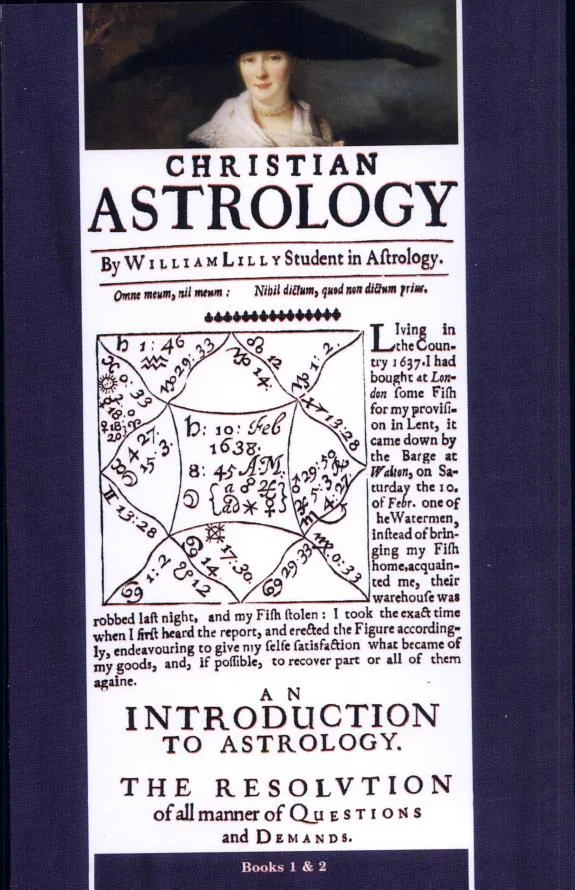
William Lilly's "Christian Astrology" is less a book and more an astrological institution. Its reputation precedes it, and for good reason. The sheer scope of its treatment of Horary astrology, in particular, is staggering. Lilly presents a rigorous system, demanding meticulous attention to detail in chart erection and interpretation. His explanation of the "Moon's application" to the "next satisfying significator" in Horary charts, for instance, is a critical piece of technique that demonstrates the precision he aimed for, elevating it far beyond mere guesswork. However, its density can be intimidating. The prose, while clear for its time, requires significant focus, and the sheer volume of rules and exceptions can feel overwhelming to a modern reader accustomed to more streamlined approaches. Despite this, for anyone serious about understanding the historical practice of astrology and its potential for direct inquiry, Lilly's work remains an indispensable, if challenging, cornerstone.
📝 Description
76
William Lilly published "Christian Astrology" in 1647, a comprehensive guide to horary and natural astrology.
William Lilly's "Christian Astrology," first published in 1647, is a substantial work on Western astrological practice. Lilly divided the book into two primary sections. The first part details the fundamental components of astrology, such as the nature of planets, zodiacal signs, and the twelve houses. The second part focuses on horary astrology, a technique used to answer specific questions by casting a chart for the moment the question is asked. The title itself was a strategic choice, intended to shield Lilly from potential religious or political persecution during a period of significant upheaval in England.
This text is not for the novice. "Christian Astrology" requires sustained attention and a commitment to understanding its complex systems. It is best suited for dedicated students of astrology, especially those interested in the historical roots of the practice and its predictive applications. Individuals aiming to grasp the mechanics of horary astrology, which can yield precise answers to particular queries, will find Lilly's methods thoroughly explained. It is also a valuable resource for those studying the history of occultism and early modern scientific thought.
Published during the English Civil War, "Christian Astrology" emerged when astrology held considerable cultural weight, despite facing criticism. Lilly, known for his almanacs and predictions, strategically titled his work to appease authorities. While the intellectual climate was shifting towards scientific rationalism, astrology remained a significant, though debated, field of study for many. Lilly's book represents a detailed exposition of the traditional Western astrological system, intended for serious practitioners.
💡 Why Read This Book?
• Learn the precise methods of Horary astrology, a system for answering specific questions by interpreting a chart cast for the moment the question is understood, as detailed in Lilly's extensive rules. • Understand the astrological framework of the 17th century, including the significations of the planets, signs, and houses as understood by one of its most famous practitioners, William Lilly. • Gain insight into the historical context of occult practices in England, noting Lilly's deliberate naming of his book "Christian Astrology" to navigate societal pressures in 1647.
⭐ Reader Reviews
Honest opinions from readers who have explored this book.
❓ Frequently Asked Questions
What is Horary Astrology according to William Lilly?
Horary astrology, as detailed by William Lilly, is a branch of astrology used to answer specific questions. A chart is cast for the exact moment the astrologer understands the question, and its interpretation, following strict rules, yields a direct answer.
Why did William Lilly title his book 'Christian Astrology'?
William Lilly titled his seminal work 'Christian Astrology' in 1647 primarily to avoid persecution and censorship from religious and political authorities of the era, who were often suspicious of astrological practices.
Is 'Christian Astrology' suitable for beginner astrologers?
While it contains foundational principles, 'Christian Astrology' is dense and historically specific. It is best suited for intermediate to advanced students of astrology, particularly those interested in traditional or Horary methods.
What are the main sections of William Lilly's 'Christian Astrology'?
The book is broadly divided into two parts: the first covers astrological fundamentals (planets, signs, houses), and the second, more extensively, details the practice and rules of Horary astrology.
Does 'Christian Astrology' discuss predictive astrology beyond Horary?
While the primary focus and fame of the book stem from its comprehensive treatment of Horary astrology, it does lay groundwork in fundamental astrological principles applicable to various branches of the art.
Who was William Lilly and why is he significant?
William Lilly (1602-1681) was a highly influential English astrologer, famous for his almanacs and forecasts during the tumultuous 17th century, particularly the period of the English Civil War.
🔮 Key Themes & Symbolism
The Art of Horary Astrology
This work is foundational for Horary astrology, a practice designed to answer specific questions posed to the astrologer. Lilly meticulously details the process: casting a chart for the precise moment a question is understood and then interpreting the celestial configurations according to a strict set of rules. He emphasizes that a well-posed question, when interpreted by a skilled practitioner using techniques like analyzing planetary aspects, house significations, and the Moon's course, can yield definitive answers. This method was central to astrological practice in the 17th century, providing a direct, almost diagnostic tool for clients seeking guidance on everything from lost objects to legal outcomes.
Foundations of Astrological Doctrine
Beyond its focus on Horary, 'Christian Astrology' serves as a comprehensive primer on the core components of Western astrology as understood in the mid-17th century. Lilly systematically explains the nature and influence of the seven classical planets (Sun, Moon, Mercury, Venus, Mars, Jupiter, Saturn), the twelve zodiacal signs, and the twelve houses of the celestial sphere. He details their traditional rulerships, dignities, and essential qualities, providing the fundamental lexicon required for any astrological interpretation. This systematic presentation makes the book a valuable resource for understanding the building blocks of astrological thought.
Astrology in Early Modern England
The very existence and title of 'Christian Astrology' offer a window into the complex social and religious range of 17th-century England. Published in 1647, during a period of significant political and religious upheaval, Lilly's choice to label his work 'Christian' was a strategic maneuver to avoid the censure often directed at astrological practitioners. The book reflects astrology's pervasive influence, yet also the need for caution and adaptation by its adherents. It stands as evidence of astrology's continued relevance and practice amidst competing intellectual and spiritual currents of the era.
The Astrologer as Judge
Lilly presents the astrologer not merely as an interpreter but as a 'judge' of the celestial testimonies. This highlights a rigorous, almost legalistic approach to astrological diagnosis. The work elaborates on the concept of planetary testimonies – how different celestial bodies and their configurations 'testify' to the outcome of a matter. The astrologer's skill lies in weighing these testimonies, understanding planetary strengths and weaknesses (rulerships, exaltations, retrogradation, combustion), and applying specific rules to arrive at a sound judgment. This emphasis on precise application and logical deduction underscores the intellectual seriousness with which Lilly approached his craft.
💬 Memorable Quotes
Direct passages from the work, attributed to the author.
“The name of the book is Christian Astrology, by reason that the Author doth not practice or approve of that execrable and devilish art, called by some Schoole-dividing, or fortune-telling, which is one of the most abominable and unlawfull arts on earth.”
— This statement, from Lilly's preface, reveals his strategic naming of the book. He distinguishes his 'Christian' astrology from what he considers illicit forms of divination, attempting to legitimize his practice within a religious framework and distance himself from accusations of sorcery.
“In Horary Questions, the Astrologer is bound to give a direct Answer, whether the Thing be likely to come to pass or no, be it never so dangerous.”
— This highlights the core tenet of Horary astrology as presented by Lilly: a commitment to providing a clear, unambiguous answer based on the chart's evidence, regardless of the potential consequences or the nature of the question.
“The Moon is the common significator of all things belonging to women, and also of the common people, or vulgar.”
— This succinctly defines a key astrological principle regarding the Moon's signification. It illustrates how specific celestial bodies are assigned domains of influence, affecting interpretations related to gender, social class, and mundane matters in the chart.
“If the Lord of the Ascendant be afflicted, and the Lord of the 7. house in good estate, the Wife shall have the better.”
— This exemplifies the comparative technique used in Horary astrology, particularly for relationship questions. It shows how the relative strengths and afflictions of planetary rulers assigned to different parties can indicate the balance of power or success in a partnership.
💡 Key Ideas
Editorial paraphrase of the work's core concepts — not direct quotes.
The Sun doth signifie Kings, Princes, Emperors, and all such as are in supreme authority.
This quote outlines the traditional signification of the Sun in astrology, associating it with rulers and figures of high authority. It demonstrates the hierarchical and symbolic language used to map celestial influences onto earthly power structures.
🌙 Esoteric Significance
Tradition
William Lilly's "Christian Astrology" is a central to the Western Hermetic tradition, specifically within the lineage of Renaissance and early modern astrological practice. It draws heavily upon the foundational principles established by earlier figures like Claudius Ptolemy and Abu Ma'shar, synthesized and adapted for an English-speaking audience. While adhering to classical doctrines, Lilly's work represents a pragmatic and systematized application of these principles, particularly in Horary astrology, distinguishing it from more philosophical or mystical interpretations of the stars.
Symbolism
The book is rich with astrological symbolism, treating the planets, zodiacal signs, and houses as a symbolic language. The seven classical planets (Sun through Saturn) function as archetypal forces or actors in a celestial drama. The twelve signs represent modes of expression or environments, while the twelve houses signify specific areas of life, from self and possessions to partnerships and mortality. The complex interplay and relationships between these symbolic entities, particularly through aspects and dignities, form the symbolic grammar Lilly uses to interpret events and answer questions.
Modern Relevance
Contemporary practitioners of traditional Western astrology, especially those focused on Horary and predictive techniques, frequently reference "Christian Astrology." Modern astrologers like Robert Hand and Chris Brennan have extensively studied and promoted Lilly's work, highlighting its enduring value for understanding the mechanics of astrological interpretation. Schools dedicated to traditional astrology often use Lilly's text as a primary source, demonstrating its continued relevance for those seeking to revive and practice astrology as it was understood before the modern psychological and humanistic shifts in the field.
👥 Who Should Read This Book
• Students of Traditional Western Astrology: Those seeking to master the techniques of Horary and predictive astrology as practiced in the 17th century will find Lilly's detailed methodologies indispensable. • Historians of Esotericism and Early Modern Science: Scholars interested in the intellectual and cultural history of occultism, and the role of astrology in society prior to the Enlightenment, will gain crucial insights. • Aspiring Astrologers Focused on Practical Application: Individuals who want to learn how to answer specific questions using astrological charts will benefit from Lilly's rigorous, rule-based approach.
📜 Historical Context
William Lilly's "Christian Astrology," published in 1647, arrived during a period of profound upheaval in England, marked by the ongoing Civil War and intense religious and political debate. Astrology, while still widely consulted, existed in a precarious position, often viewed with suspicion by Puritan factions. Lilly's decision to title his work "Christian" was a deliberate strategy to align his practice with acceptable religious discourse and evade accusations of witchcraft or demonic influence, a fate that befell many contemporaries. The intellectual climate was shifting, with the burgeoning Royal Society beginning to champion empirical observation, yet traditional esoteric arts like astrology retained a significant following among educated elites and the general populace. Lilly himself was a prominent public figure, known for his almanacs and political predictions, engaging directly with the era's anxieties. His work competed not only with other astrological texts but also with emerging rationalist philosophies, yet it became the definitive textbook for English Horary astrology for centuries.
📔 Journal Prompts
The Moon's application to the next satisfying significator in Horary charts.
Lilly's rules for judging the strength and weakness of planetary significators.
The symbolic language of the seven classical planets and twelve zodiacal signs.
The strategic choice of the title 'Christian Astrology' in 1647.
Interpreting the twelve houses as distinct areas of life inquiry.
🗂️ Glossary
Horary Astrology
A branch of astrology concerned with answering specific questions. A chart is cast for the precise moment the astrologer understands the question, and its interpretation provides a direct answer.
Significator
A planet or point in an astrological chart that represents a person, thing, or matter being investigated. Its condition and aspects are crucial for interpretation.
Ascendant
The zodiacal sign and degree rising on the eastern horizon at the moment a chart is cast. It typically signifies the questioner or the general matter at hand.
Aspect
The angular relationship between two or more planets or points in an astrological chart, indicating how their energies interact (e.g., conjunction, opposition, trine).
Dignity
The inherent strength or weakness of a planet based on its placement within a specific zodiacal sign (e.g., domicile, exaltation, detriment, fall).
Lord of the Ascendant
The planet that rules the zodiacal sign on the Ascendant. It is often a primary significator for the questioner or the querent's condition.
Testimonies
The indications or evidence present in an astrological chart, derived from the condition, aspects, and placements of significators, that point towards a particular outcome.
This book appears in 1 collection
🔮 Readers Also Liked
Browse all →






From the “Astrology” Collection
View all →









More Free Astrology & Cosmology Books
View all →