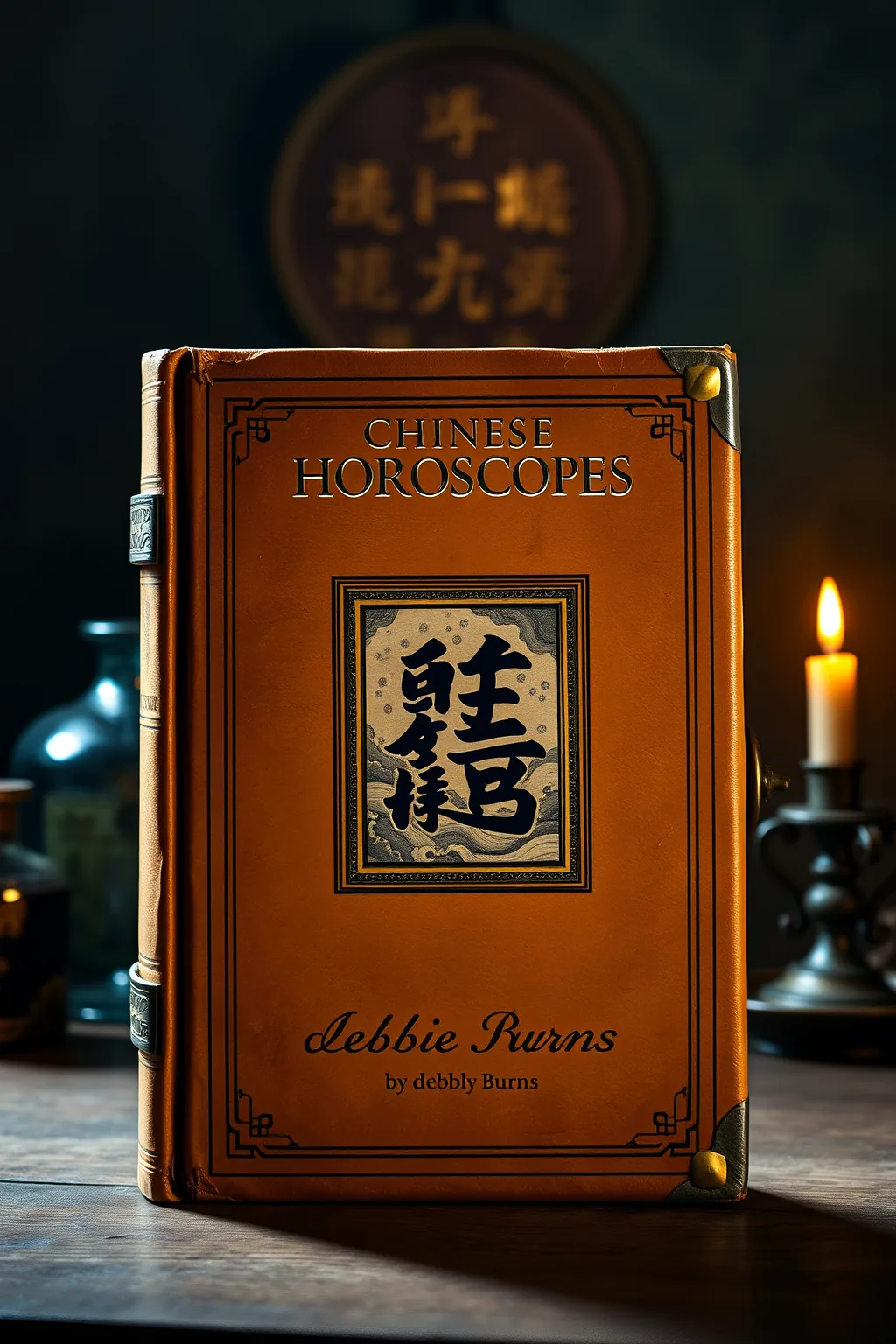
Chinese Horoscopes
 84
84

Chinese Horoscopes
Debbie Burns’s Chinese Horoscopes presents the familiar twelve zodiac animals with a clarity that belies the complexity of the system it attempts to explain. The strength lies in its straightforward presentation of character archetypes associated with each birth year, making it easy for newcomers to grasp the basics. For instance, the description of the Dragon as inherently ambitious and charismatic offers a vivid, if generalized, portrait. However, the book occasionally simplifies the profound philosophical underpinnings of the Chinese zodiac, particularly the intricate calculations involving the Five Elements and Heavenly Stems and Earthly Branches. While it touches upon these, the depth of interaction can feel somewhat reduced for those seeking a more rigorous astrological analysis. Burns provides a functional introduction, offering a gentle gateway into a rich tradition.
📝 Description
84
Debbie Burns's Chinese Horoscopes, published in 2003, demystifies the twelve animal signs of the Chinese zodiac.
Published in 2003, Debbie Burns's Chinese Horoscopes offers a clear introduction to the Chinese zodiac system. The book details the twelve animal signs, their characteristic traits, and the influence of elemental interactions. It also explains the lunar calendar's cyclical nature and how it shapes these astrological associations. Burns aims to give readers practical methods for self-understanding and deciphering relationships through this traditional Eastern framework.
The book is suitable for anyone interested in Eastern astrology, from those new to the subject to those with some existing knowledge. It addresses personality types, compatibility between signs, and potential life directions based on birth year within Chinese cosmology. Readers with an interest in comparative mythology or cultural practices will also find value here. The system itself has roots possibly dating back to the Han Dynasty, with its principles deeply woven into Chinese culture for centuries, affecting personal and even state matters.
The Chinese zodiac system is a core component of traditional Chinese cosmology and astrology, distinct from Western solar systems. Its 12 animal signs, each associated with a year, are believed to influence personality, fortune, and relationships. The system incorporates the Five Elements (Wood, Fire, Earth, Metal, Water) and the principles of Yin and Yang, creating a complex framework for understanding cosmic influences on human life. This cyclical view of time, tied to the lunar calendar, has shaped Chinese culture for millennia, influencing personal decisions and broader societal structures.
💡 Why Read This Book?
• Gain insight into the 12 Chinese zodiac animals (Rat, Ox, Tiger, etc.) and their core personality traits, allowing for self-reflection on your own characteristics as detailed in the book. • Understand the interplay of the Five Elements (Wood, Fire, Earth, Metal, Water) with your animal sign, offering a layered perspective beyond simple birth year astrology, as explained in the text. • Explore relationship dynamics through the lens of Chinese zodiac compatibility, learning how different animal signs are said to interact, a key aspect of the system discussed by Burns.
⭐ Reader Reviews
Honest opinions from readers who have explored this book.
❓ Frequently Asked Questions
When was the Chinese Horoscopes book first published?
Debbie Burns's Chinese Horoscopes was first published in 2003, making it a relatively modern interpretation of ancient astrological principles.
What are the 12 animals of the Chinese zodiac?
The twelve animals are the Rat, Ox, Tiger, Rabbit, Dragon, Snake, Horse, Goat, Monkey, Rooster, Dog, and Pig, each representing a year in a repeating 12-year cycle.
Does the book discuss the Five Elements in Chinese astrology?
Yes, the book explores the influence of the Five Elements—Wood, Fire, Earth, Metal, and Water—and how they interact with the animal signs to create more specific astrological profiles.
Is this book suitable for beginners to Chinese astrology?
Absolutely. The book is designed for those new to the subject, offering clear explanations of core concepts and the zodiac system.
What is the significance of the lunar calendar in Chinese horoscopes?
The Chinese zodiac is based on the lunar calendar, with each animal sign corresponding to a specific lunar year, unlike the solar calendar used in Western astrology.
Can I use this book to understand compatibility with others?
Yes, the book provides guidance on the compatibility between different zodiac signs, helping readers understand potential relationship dynamics.
🔮 Key Themes & Symbolism
The Twelve Animal Archetypes
The core of Chinese Horoscopes lies in the distinct personalities assigned to the twelve zodiac animals: Rat, Ox, Tiger, Rabbit, Dragon, Snake, Horse, Goat, Monkey, Rooster, Dog, and Pig. Each animal is not merely a symbol but represents a complex set of traits, virtues, and potential challenges. For example, the Monkey is often depicted as quick-witted and adaptable, while the Ox is associated with diligence and steadfastness. Burns details these archetypes, offering readers a framework to identify their own birth animal and understand its inherent characteristics, influencing their outlook, behavior, and interactions.
Elemental Influence and Cycles
Beyond the animals, the book studies the crucial role of the Five Elements—Wood, Fire, Earth, Metal, and Water—within the Chinese astrological system. These elements are not static; they cycle and interact, creating a dynamic interplay with the animal signs. A person born in the year of the Dragon might have their inherent traits significantly modified by their elemental association (e.g., a Water Dragon versus a Fire Dragon). This adds a layer of nuance, illustrating how the system accounts for variations within a single animal year and emphasizing the cyclical nature of existence.
Yin and Yang Dynamics
Chinese Horoscopes also touches upon the fundamental concept of Yin and Yang, the complementary opposing forces that govern the universe. In the context of the zodiac, each animal sign is assigned either a Yin or Yang polarity. This duality influences the expression of the animal's characteristics. For instance, Yang signs might be more outwardly expressive and energetic, while Yin signs tend to be more introspective and subtle. Understanding these polarities helps readers appreciate the balance and interplay of energies within the zodiac and their personal astrological profile.
Lunar Calendar and Timekeeping
A critical distinction of Chinese astrology is its foundation on the lunisolar calendar. Unlike the solar-based Western zodiac, Chinese horoscopes are determined by the year of birth according to the cycles of the moon. The start of the Chinese New Year varies each year, typically falling between late January and mid-February. Burns explains how this lunar cycle dictates the progression of the twelve animal years, emphasizing a different perception of time and cosmic influence rooted in natural rhythms.
💬 Memorable Quotes
Direct passages from the work, attributed to the author.
“The year you are born determines your animal sign.”
— This statement highlights the fundamental premise of the Chinese zodiac: that one's birth year is the primary determinant of their astrological identity, linking personal destiny to celestial cycles.
“Each animal possesses distinct strengths and weaknesses.”
— This emphasizes the nuanced nature of the zodiac, suggesting that no sign is inherently 'good' or 'bad,' but rather a combination of potentials and challenges that shape an individual's character.
“The Five Elements add complexity to the animal signs.”
— This points to the sophisticated layering of the Chinese astrological system, where elemental associations modify and refine the basic characteristics of each zodiac animal.
“Compatibility between signs is influenced by their inherent natures.”
— This concept underscores the practical application of Chinese astrology for understanding relationships, suggesting that inherent traits of different animal signs create predictable patterns of harmony or conflict.
“The Chinese calendar follows lunar cycles.”
— This clarifies the foundational difference between Chinese and Western astrology, highlighting the lunar basis that leads to a shifting New Year and a distinct temporal framework.
🌙 Esoteric Significance
Tradition
The Chinese zodiac belongs to a distinct cosmological tradition rooted in ancient Chinese metaphysics, separate from Western Hermetic, Gnostic, or Kabbalistic lineages. It is intrinsically linked to Taoist principles, emphasizing balance (Yin and Yang), cyclical change, and the influence of natural forces (the Five Elements). This work fits within the broader category of Eastern esoteric sciences, focusing on astrological mapping of time and human character through a system that views the cosmos as an interconnected, dynamic entity.
Symbolism
Key symbols include the twelve animals, each representing specific qualities and phases of the cosmic cycle. The Dragon, for instance, is a potent symbol of power, good fortune, and imperial authority. The cyclical interplay of the Five Elements (Wood, Fire, Earth, Metal, Water) is another vital symbolic layer, representing fundamental energies that shape existence and influence the expression of the animal signs. Yin and Yang also act as symbolic representations of duality and balance, crucial for understanding astrological interactions.
Modern Relevance
In contemporary esoteric circles, Chinese astrology continues to be a popular subject for study and personal application. Practitioners of various holistic and spiritual disciplines, including those interested in Feng Shui (which also utilizes elemental and directional principles), often incorporate Chinese zodiac insights into their work. Modern thinkers exploring comparative cosmology and cross-cultural spiritual practices find value in its unique perspective on time, personality, and destiny, offering an alternative to purely Western esoteric frameworks.
👥 Who Should Read This Book
• Individuals curious about Eastern spiritual traditions: Readers seeking to understand a major component of Chinese cultural and philosophical heritage will find this book an accessible introduction. • Aspiring astrologers: Those interested in comparative astrology who wish to learn the foundational principles of the Chinese zodiac, distinct from Western systems. • Self-discovery enthusiasts: Readers looking for new frameworks to explore personality traits, life paths, and relationship dynamics beyond common Western astrological models.
📜 Historical Context
Debbie Burns's Chinese Horoscopes, first published in 2003, enters a field rich with centuries of tradition. The Chinese zodiac system itself has roots stretching back possibly to the Han Dynasty (206 BCE – 220 CE), deeply woven into Chinese culture and philosophy. Its principles were established long before the advent of modern Western astrology as it is widely known today. While contemporary Western astrology, with its solar and planetary focus, gained significant traction globally throughout the 20th century, Chinese astrology offered a parallel, distinct cosmological framework. Its reception in the West has often been as a fascinating cultural artifact or a complementary system, appreciated for its cyclical timekeeping and animal archetypes, rather than a direct competitor to established Western astrological schools.
📔 Journal Prompts
The Rat's adaptability and the Ox's diligence: How do these traits manifest in your own life choices?
Reflect on the interaction between your birth animal and its associated element.
Consider the Yin and Yang polarity of your zodiac animal and its influence on your expression.
Identify a situation where understanding another person's zodiac animal could offer clarity.
How does the cyclical nature of the Chinese calendar differ from your daily perception of time?
🗂️ Glossary
Chinese Zodiac
An astrological system based on a 12-year cycle, with each year represented by an animal sign. It is believed to influence personality and destiny.
Five Elements
In Chinese cosmology, these are Wood, Fire, Earth, Metal, and Water, which interact cyclically and influence the characteristics of the zodiac animals and the environment.
Yin and Yang
Two complementary, opposing forces in Chinese philosophy, representing feminine/passive (Yin) and masculine/active (Yang) principles that govern the universe and are applied to zodiac signs.
Lunisolar Calendar
A calendar system that is based on both the cycles of the moon and the sun, used for traditional Chinese holidays and astrological calculations.
Animal Signs
The twelve creatures—Rat, Ox, Tiger, Rabbit, Dragon, Snake, Horse, Goat, Monkey, Rooster, Dog, Pig—that represent the years in the Chinese zodiac cycle.
Sexagenary Cycle
A larger 60-year cycle formed by the combination of the 12 Earthly Branches (animals) and the 10 Heavenly Stems (elements in Yin/Yang pairs).
Compatibility
The degree of harmony or conflict predicted between different Chinese zodiac animal signs in relationships, based on their inherent characteristics.
🔮 Readers Also Liked
Browse all →








More by Debbie Burns
All books →

More Free Astrology & Cosmology Books
View all →