Chinese Astrology

 84
84

Chinese Astrology
Tung Jen’s "Chinese Astrology" approaches its subject with a clarity that is often missing in popular treatments. The author avoids simplistic pronouncements, instead detailing the mechanics of the sixty-year cycle formed by the Heavenly Stems and Earthly Branches. A particular strength lies in its explanation of how the Five Elements (Wood, Fire, Earth, Metal, Water) interact, creating a dynamic rather than static interpretive framework. However, the book could benefit from more direct engagement with classical Chinese sources, as some explanations feel synthesized for a Western audience without always providing the original context. The section detailing the complex interactions between the elements and animal signs, for instance, is informative but lacks the depth found in primary texts. It serves as a solid entry point, offering a functional understanding of the system's architecture, but doesn't fully capture the philosophical nuances that underpin its ancient origins. Ultimately, it's a competent guide for those seeking a structured introduction to the core principles.
📝 Description
84
Tung Jen's Chinese Astrology, published in 1999, explains the system beyond basic zodiac signs.
Tung Jen's 1999 book offers a thorough introduction to Chinese celestial interpretation. It moves past simple animal sign assignments to detail the complex links between the twelve zodiac animals, the five elements, and Yin-Yang principles. The work explains the lunisolar calendar's view of time and how planetary movements affect events. It is a primary text for grasping the philosophical basis of Chinese divination.
This book is for dedicated students of esoteric traditions, especially those interested in comparing cosmology and calendar systems. It suits individuals wanting to grasp the philosophical structure of Chinese astrology, not just surface-level personality traits. Readers who value detailed accounts of symbolic systems and the connections within nature will find it useful. It also benefits practitioners of other astrological systems who wish to expand their comparative knowledge.
The book appeared during a time of growing global interest in Eastern philosophies. As Western astrology gained popularity, interest in Chinese systems also increased, often through translations of old texts. Chinese Astrology helps by clearly explaining concepts that were less understood in the West. Its 1999 release coincided with rising academic and public attention to comparative religion and non-Western knowledge.
This work sits within the long tradition of Chinese cosmological thought, which seeks to understand the harmony between the heavens and the earth. It connects celestial observations to human affairs through specific symbolic systems like the Earthly Branches and Heavenly Stems. The book grounds these practices in a philosophical framework that sees interconnectedness in all natural phenomena, reflecting a worldview distinct from but often compared to Western astrological traditions.
💡 Why Read This Book?
• Learn the foundational principles of the sixty-year cycle, understanding how the interaction of the Ten Heavenly Stems and Twelve Earthly Branches forms the basis of Chinese astrological calculations, a core concept not found in Western systems. • Grasp the dynamic interplay of the Five Elements (Wu Xing) and their Yin/Yang manifestations, which dictates personality traits and life path influences in a way that offers a unique lens on destiny. • Discover the connections between Chinese Astrology, Feng Shui, and the I Ching, appreciating the holistic worldview that integrates celestial, terrestrial, and human energies as presented in this work.
⭐ Reader Reviews
Honest opinions from readers who have explored this book.
❓ Frequently Asked Questions
What is the significance of the sixty-year cycle in Chinese Astrology?
The sixty-year cycle is a fundamental concept derived from the combination of the Ten Heavenly Stems and the Twelve Earthly Branches. Each year is marked by a unique combination, creating a sophisticated system for understanding temporal energies and their influence on events and individuals, first systematically recorded in the Han Dynasty.
How does the author explain the Five Elements in Chinese Astrology?
Tung Jen explains the Five Elements (Wood, Fire, Earth, Metal, Water) not as static components but as dynamic forces that interact through cycles of creation and destruction. Each element is also associated with Yin and Yang, adding another layer of complexity to their influence on personality and destiny, a concept central to Taoist philosophy.
Is Chinese Astrology based on the solar or lunar calendar?
Chinese Astrology primarily utilizes a lunisolar calendar. The animal signs are determined by the year, which follows the lunar cycles, while the elements and stems are integrated into this framework, reflecting ancient Chinese observations of both celestial bodies.
What are the Twelve Earthly Branches?
The Twelve Earthly Branches are the symbolic animals of the Chinese zodiac: Rat, Ox, Tiger, Rabbit, Dragon, Snake, Horse, Goat, Monkey, Rooster, Dog, and Pig. Each animal represents a different set of characteristics and influences that are crucial in astrological interpretations, forming the basis of the annual cycle.
What is the difference between Chinese Astrology and Western Astrology?
While Western Astrology focuses on the Sun, Moon, and planets in relation to the zodiac constellations based on the solar year, Chinese Astrology is year-based, incorporating the lunisolar calendar, the Five Elements, Yin-Yang, and the animal signs in a cyclical sixty-year system, offering a distinct philosophical framework.
When was Tung Jen's Chinese Astrology first published?
Tung Jen's "Chinese Astrology" was first published in 1999, placing it within a wave of increased accessibility and study of Eastern esoteric traditions in the late 20th century.
🔮 Key Themes & Symbolism
The Sixty-Year Cycle
The work meticulously details the formation of the sixty-year cycle, a central to Chinese cosmology. This cycle is generated by the pairing of the Ten Heavenly Stems (representing Yin and Yang aspects of the Five Elements) with the Twelve Earthly Branches (the zodiac animals). Unlike linear Western timekeeping, this cyclical approach emphasizes recurring patterns and the energetic qualities of each year. Tung Jen explains how this complex interplay influences not only global events but also the destiny and character of individuals born under specific combinations, offering a profound understanding of temporal influence and cosmic synchronicity.
Yin and Yang Dynamics
Central to Tung Jen's exploration is the principle of Yin and Yang, the fundamental duality that underpins all existence in Taoist philosophy. The book illustrates how this duality is applied within the astrological framework, particularly through the Heavenly Stems, which are classified as either Yin or Yang. This binary principle is shown to govern the interactions between elements, the compatibility between individuals, and the overall energetic flow of a given period. Understanding Yin and Yang is presented as crucial for interpreting the subtle forces at play in Chinese Astrology.
The Five Elements (Wu Xing)
Tung Jen dedicates significant attention to the Five Elements: Wood, Fire, Earth, Metal, and Water. These are not merely physical substances but represent phases of energy and fundamental forces in the universe. The book elaborates on the productive (creation) and destructive (control) cycles through which these elements interact, providing a dynamic model for understanding relationships, health, and fortune. The integration of these elements with the Yin-Yang principle and the animal signs forms a sophisticated interpretive matrix for astrological analysis.
Animal Sign Personalities
The book offers detailed descriptions of the personality traits, strengths, and weaknesses associated with each of the twelve animal signs of the Chinese zodiac. These interpretations are not presented in isolation but are shown to be modulated by the individual's birth year's element, Yin/Yang aspect, and position within the broader sixty-year cycle. Tung Jen emphasizes that these archetypes provide a framework for understanding innate tendencies and potential life challenges, encouraging self-awareness and personal growth rather than rigid determinism.
💬 Memorable Quotes
Direct passages from the work, attributed to the author.
“The animal sign is merely the vessel; the element and its interaction determine the true nature of the year's energy.”
— This statement highlights that the popular focus on the twelve animal signs is an oversimplification. The true depth of Chinese Astrology lies in understanding the elemental forces and their dynamic relationships, which modify and define the influence of each animal archetype.
“Yin and Yang are not opposites, but complementary forces in a constant state of flux.”
— This interpretation underscores the Taoist philosophical underpinning of the Yin-Yang concept, emphasizing balance and interdependence rather than conflict. It suggests that understanding this dynamic is key to interpreting astrological influences.
“The sixty-year cycle maps the ebb and flow of cosmic forces, offering a predictive framework based on natural rhythms.”
— This interpretation frames the sixty-year cycle as a sophisticated calendar of energetic shifts. It implies that by understanding these rhythms, one can gain foresight into societal trends and personal opportunities or challenges.
“Each element possesses both a creative and a destructive aspect, governing growth and dissolution.”
— This statement directly addresses the cyclical nature of the Five Elements. It implies that the influence of an element can be both beneficial and detrimental depending on its phase and interaction with other elements, reflecting a natural balance of forces.
💡 Key Ideas
Editorial paraphrase of the work's core concepts — not direct quotes.
Compatibility is not about finding a perfect match, but about understanding the cycles of interaction between different elemental energies.
This paraphrase suggests that relationships in Chinese Astrology are viewed through the lens of energetic exchange and cyclical harmony or discord, rather than static personal traits. It points towards a practical application for understanding interpersonal dynamics.
🌙 Esoteric Significance
Tradition
This work primarily draws from Taoist philosophy and its integration into Chinese folk religion and traditional cosmology. It aligns with the Taoist emphasis on natural cycles, balance (Yin-Yang), and the interconnectedness of all phenomena (Wu Xing). While not strictly part of a singular Western esoteric lineage like Hermeticism or Kabbalah, its cyclical, elemental, and philosophical underpinnings resonate with ancient wisdom traditions worldwide, offering a non-Western comparative perspective on universal energetic principles.
Symbolism
The core symbols are the Twelve Animal signs (Rat, Ox, etc.) representing archetypal energies and qualities, and the Five Elements (Wood, Fire, Earth, Metal, Water) symbolizing fundamental phases of cosmic activity. The Yin-Yang symbol itself is implicitly present, governing the dual nature of the Heavenly Stems and the interactions within the system. These symbols collectively form a rich lexicon for understanding personality, destiny, and the flow of time within a cyclical, naturalistic worldview.
Modern Relevance
Contemporary practitioners of Feng Shui and those interested in holistic wellness often reference the principles of Yin-Yang and the Five Elements detailed in works like Tung Jen's. The book's structured approach to elemental interactions remains relevant for comparative astrologers and cultural historians studying non-Western systems. Its clear explanations also serve modern readers seeking to understand the philosophical basis of traditional Chinese medicine and martial arts, which are deeply intertwined with these astrological concepts.
👥 Who Should Read This Book
• Students of comparative esoteric systems seeking to understand the foundational principles of Chinese Astrology beyond superficial zodiac interpretations. • Individuals interested in the philosophical underpinnings of Taoism and how they manifest in practical divination and calendrical systems. • Aspiring astrologers looking to broaden their knowledge base with a distinct cyclical and elemental framework compared to Western traditions.
📜 Historical Context
Published in 1999, Tung Jen's "Chinese Astrology" arrived during a period of significant global interest in Eastern esoteric traditions, spurred by figures like Fritjof Capra and the ongoing influence of the Theosophical Society's comparative studies. While Western astrology had undergone its own renaissance, there was a growing appetite for understanding non-Western cosmological systems. This work entered a landscape where scholars like Joseph Needham were documenting Chinese science and technology, and popularizers were making concepts like Feng Shui more accessible. The book benefited from this climate, offering a structured approach to a complex system that was often presented in fragmented or overly simplistic ways. It stood in contrast to more academic, yet less practical, translations of classical texts and the more generalized New Age interpretations of the era, providing a middle ground for earnest students.
📔 Journal Prompts
The interaction between your birth animal's element and the current year's element.
How the principles of Yin and Yang manifest in your daily life.
Reflecting on the creative and destructive cycles of the Five Elements in personal relationships.
The significance of the sixty-year cycle in understanding broader historical patterns.
Mapping personal strengths and challenges against the characteristics of your birth animal sign.
🗂️ Glossary
Earthly Branches (Di Zhi)
The twelve symbolic animals (Rat, Ox, Tiger, etc.) that form the basis of the twelve-year cycle in Chinese Astrology. They also represent hours of the day and directions.
Heavenly Stems (Tian Gan)
A series of ten characters, each associated with one of the Five Elements (Wood, Fire, Earth, Metal, Water) in its Yin or Yang aspect. They combine with the Earthly Branches to form the sixty-year cycle.
Wu Xing
The Chinese concept of the Five Elements or Five Phases: Wood, Fire, Earth, Metal, and Water. They are understood in terms of cyclical interactions (creation and control) that influence all aspects of the universe.
Yin and Yang
The fundamental Taoist principle of dual, complementary forces that govern the universe. Yin represents passive, dark, feminine qualities, while Yang represents active, light, masculine qualities.
Lunisolar Calendar
A calendar system that combines elements of both lunar and solar calendars. The Chinese calendar, used for astrological purposes, is primarily lunisolar, with years based on lunar cycles and months adjusted to align with solar progression.
Sixty-Year Cycle
A complete cycle formed by the combination of the Ten Heavenly Stems and the Twelve Earthly Branches. Each year within this cycle has a unique energetic signature.
Animal Sign
The common term for the twelve Earthly Branches, each represented by an animal, determining the yearly cycle of Chinese Astrology.
🔮 Readers Also Liked
Browse all →









More by Tung Jen
All books →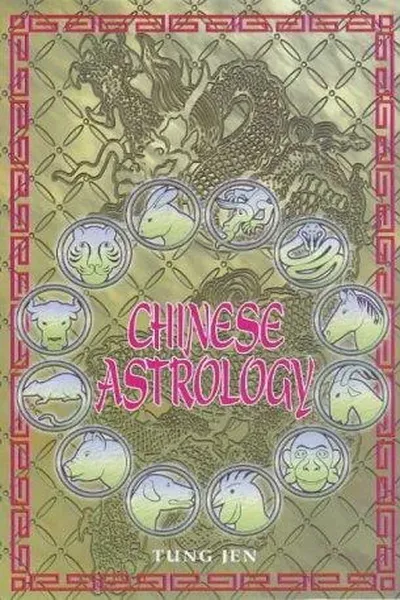


More Free Astrology & Cosmology Books
View all →








![Mr. Patridge's [sic] judgement and opinion of this frost. Foretelling how long it is like to continue, according to the rules of astrology. ... 1709](/img/thumb/mr-patridge-s-sic-judgement-and-opinion-of-this-frost-foretelling-how-long-it-is-like-to-continue-according-to-the-rules-of-astrology-1709-patridge-mr.webp)

