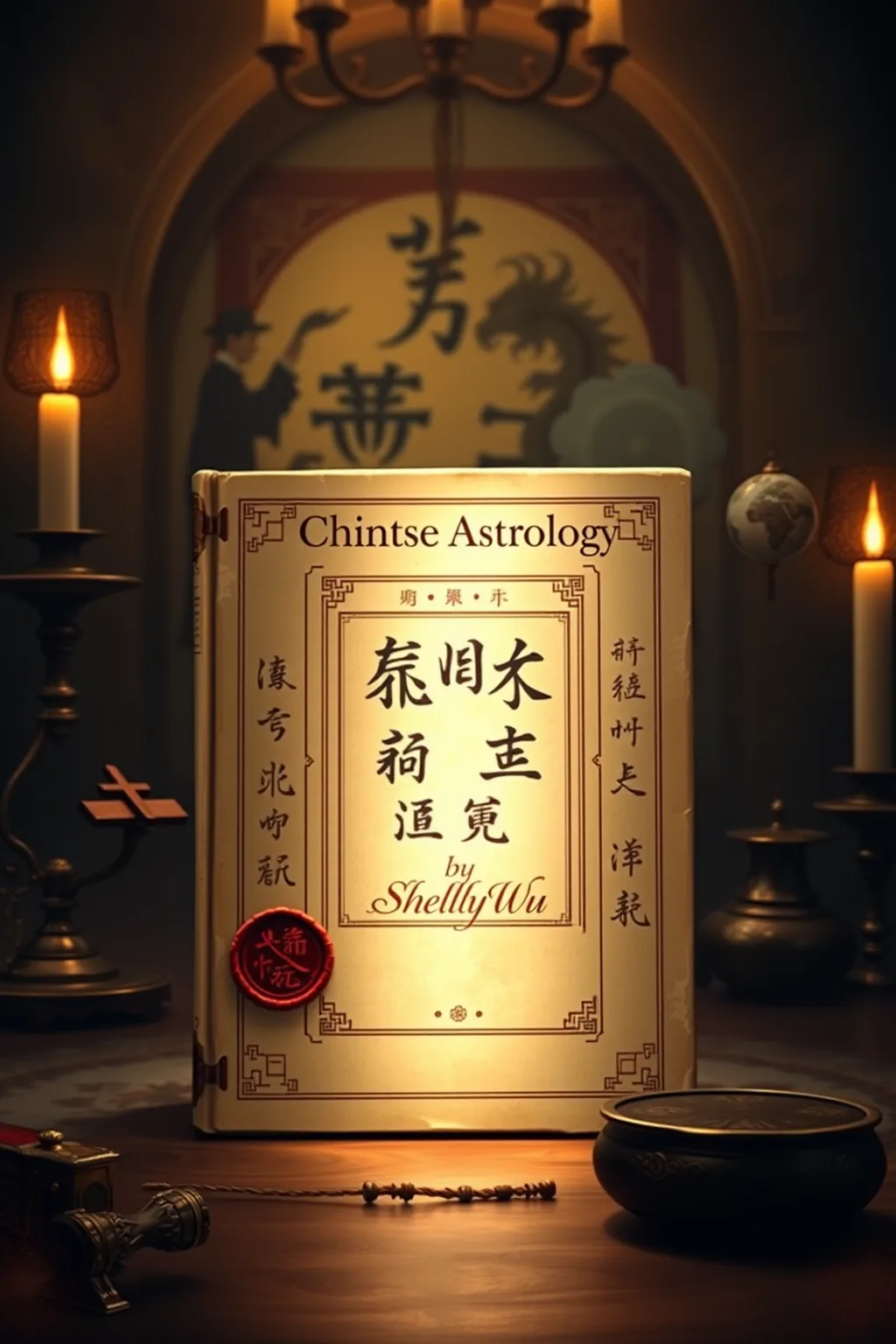
Chinese Astrology
 72
72

Chinese Astrology
Shelly Wu's Chinese Astrology presents the twelve zodiac animals with a clarity that avoids the sensationalism often found in popular almanacs. Wu's strength lies in her systematic presentation of each animal's traits, their interactions, and the subtle influence of the Five Elements. The book notably dedicates significant attention to the concept of 'clashes' and 'combinations' between signs, offering a more intricate view than many introductory texts. However, the narrative occasionally feels a touch dry, perhaps a consequence of its comprehensive, almost encyclopedic, approach. A specific passage detailing the Dragon's inherent power and its potential for both great success and dramatic downfall effectively illustrates the book's balanced perspective. While not groundbreaking, it serves as a solid, well-organized primer on the subject. It is a dependable guide for understanding the foundational principles of Chinese zodiacal cycles.
📝 Description
72
Shelly Wu's 2008 book delves into the Chinese zodiac, moving beyond horoscopes to its philosophical roots.
Published in 2008, Shelly Wu's Chinese Astrology examines the twelve animal signs and their connections to personality, compatibility, and life paths. The book goes beyond superficial horoscopes to investigate the deeper philosophical ideas that shape this ancient tradition. It details the characteristics of each animal sign and how they interact.
This work is useful for those new to Eastern astrology or interested in comparing different cosmological systems. It also offers a structured overview for readers already familiar with the subject. Individuals who appreciate detailed analyses of character archetypes will find much to engage with within its pages. The book presents a complete picture of the Chinese zodiac system.
Chinese astrology is rooted in ancient Chinese astronomy and philosophy, developing alongside the lunisolar calendar. Its structure relies on the 12-year cycle of terrestrial branches, each represented by an animal, and incorporates the Five Elements and Yin and Yang. This contrasts with Western astrology, which primarily tracks planetary movements. Wu's book explains these core components, showing how they form a complete system for understanding human nature and destiny.
💡 Why Read This Book?
• Gain a structured understanding of the twelve Chinese zodiac animals, moving beyond superficial traits to explore their influence on personality and destiny, as detailed in the sign-by-sign analyses. • Discover the intricate interplay of the Five Elements (Wu Xing) with each animal sign, providing a more nuanced interpretive framework than many basic guides offer. • Learn about the compatibility and potential conflicts between different animal signs, offering practical insights into relationships informed by the principles laid out in the text.
⭐ Reader Reviews
Honest opinions from readers who have explored this book.
❓ Frequently Asked Questions
When was Shelly Wu's Chinese Astrology first published?
Shelly Wu's Chinese Astrology was first published on August 21, 2008, offering a contemporary look at this ancient astrological system.
What are the twelve animals in the Chinese zodiac?
The twelve animals are the Rat, Ox, Tiger, Rabbit, Dragon, Snake, Horse, Goat, Monkey, Rooster, Dog, and Pig, each representing a year in a 12-year cycle.
Does Chinese Astrology consider elements?
Yes, Chinese Astrology incorporates the Five Elements: Wood, Fire, Earth, Metal, and Water, which interact with the animal signs to add layers of meaning.
How does Chinese Astrology differ from Western Astrology?
Chinese Astrology is primarily based on the lunar calendar and the 12 animal signs, whereas Western Astrology is based on the sun's apparent movement through constellations and planetary positions.
What is the concept of 'clashes' in Chinese Astrology?
Clashes refer to specific animal sign combinations that are considered naturally antagonistic or challenging, potentially leading to conflict or difficult relationships.
Can this book help me understand compatibility between people?
Yes, the book details compatibility between the twelve animal signs, explaining harmonious pairings and potential points of friction based on their inherent characteristics.
🔮 Key Themes & Symbolism
The Twelve Animal Archetypes
The core of Chinese Astrology lies in the twelve animal archetypes: Rat, Ox, Tiger, Rabbit, Dragon, Snake, Horse, Goat, Monkey, Rooster, Dog, and Pig. Each animal represents a distinct set of personality traits, strengths, and weaknesses that profoundly influence individuals born under its year. The book details these characteristics, exploring how the inherent nature of each animal shapes one's approach to life, relationships, and career. For instance, the Dragon is often associated with power and ambition, while the Rabbit might embody gentleness and diplomacy. Understanding these archetypes provides a framework for self-awareness and interpersonal dynamics.
The Five Elements and Yin/Yang
Beyond the animals, the interplay of the Five Elements (Wood, Fire, Earth, Metal, Water) and the dualistic principles of Yin and Yang adds crucial depth to Chinese Astrology. Each element is associated with specific qualities and energies, and its interaction with an animal sign, combined with its Yin or Yang aspect, modifies the core characteristics. For example, a Metal Rat possesses different attributes than a Water Rat. This complex system allows for a highly personalized astrological reading, moving beyond simplistic categorizations to reveal a more intricate portrait of destiny and character.
Compatibility and Inter-Sign Dynamics
A significant aspect explored in Chinese Astrology is the compatibility between the different animal signs. The book outlines which signs tend to form harmonious relationships, partnerships, and friendships, and which are prone to conflict or misunderstanding. This understanding is based on the inherent qualities and elemental associations of each animal. Recognizing these dynamics, such as the inherent 'clash' between the Rat and the Horse, or the 'combination' between the Monkey, Rat, and Dragon, offers practical guidance for navigating social and romantic connections.
The Lunisolar Calendar Cycle
The foundation of Chinese Astrology is its unique lunisolar calendar, which governs the 12-year cycle of animal signs. Unlike the solar-based Western zodiac, this system tracks both lunar phases and solar progression. Each year is assigned an animal, and the cycle repeats, creating a predictable yet dynamic framework for understanding temporal influences. The book implicitly relies on this cyclical understanding to explain how different years, and the animals that govern them, impact the collective human experience and individual destinies.
💬 Memorable Quotes
Direct passages from the work, attributed to the author.
“The Rat is quick-witted and adaptable, often finding opportunities where others see none.”
— This highlights the Rat's intelligence and resourcefulness, suggesting it can thrive in challenging environments by leveraging its sharp intellect and ability to adjust.
“Ox years are characterized by hard work, determination, and steadfast progress.”
— This points to the Ox's core traits of diligence and perseverance, emphasizing that periods governed by this sign are conducive to building foundations through sustained effort.
“The Dragon possesses immense power, often leading to significant achievements or dramatic reversals.”
— This illustrates the dual nature of the Dragon's influence – its potential for greatness is matched by a volatility that can lead to unforeseen challenges or spectacular failures.
“Compatibility between signs is not merely about harmony but also about understanding potential friction.”
— This suggests that the study of astrological compatibility goes beyond finding easy matches; it involves recognizing and managing inherent tensions between different energies.
“The Five Elements modify the inherent nature of each animal sign.”
— This emphasizes the complexity of Chinese Astrology, indicating that the elemental association (Wood, Fire, Earth, Metal, Water) significantly refines and alters the basic personality profile of each zodiac animal.
🌙 Esoteric Significance
Tradition
Chinese Astrology, while often presented in secular contexts, is deeply rooted in ancient Chinese cosmology and Taoist philosophy. It is part of a broader system of practices aimed at understanding cosmic order (Tianli) and aligning human life with natural cycles. Unlike Hermeticism's focus on macrocosm-microcosm correspondence via planets, or Kabbalah's emphasis on divine emanations through Hebrew letters, Chinese Astrology's framework relies on the cyclical interactions of the Earthly Branches (animals), Heavenly Stems, and the Five Elements (Wu Xing). It seeks to chart destiny and character through observation of celestial and terrestrial patterns, offering a practical method for divination and self-knowledge.
Symbolism
The most prominent symbols are the twelve animals of the zodiac, each representing specific archetypal energies and behaviors derived from their perceived characteristics in nature (e.g., the Horse symbolizing speed and freedom, the Dog loyalty and protection). Equally significant are the Five Elements – Wood (growth, flexibility), Fire (passion, dynamism), Earth (stability, nourishment), Metal (structure, discipline), and Water (flow, wisdom). These elements, along with the Yin and Yang principles, are symbolic representations of fundamental forces that interact to create the unique energetic signature of each year and, consequently, each individual.
Modern Relevance
In contemporary practice, Chinese Astrology continues to be widely consulted for personal guidance, relationship compatibility, and fortune-telling. Modern practitioners and enthusiasts, often influenced by texts like Wu's, utilize its principles to navigate personal development, career choices, and even business decisions. Schools of thought focused on holistic wellness and East Asian traditional medicine often incorporate astrological insights as part of a broader understanding of health and balance. The enduring appeal lies in its cyclical worldview and its detailed, nuanced system for understanding human nature and its relationship to the cosmos.
👥 Who Should Read This Book
• Individuals new to Eastern astrological systems seeking a clear, organized introduction to the twelve zodiac animals and their core meanings. • Those interested in self-discovery and personality analysis who wish to explore an alternative framework to Western astrology, focusing on cyclical time and elemental interactions. • Readers looking for practical insights into relationship dynamics and interpersonal compatibility, informed by the traditional Chinese understanding of sign interactions.
📜 Historical Context
Published in 2008, Shelly Wu's Chinese Astrology arrived during a period of increasing global interest in Eastern philosophies and divinatory systems. The early 21st century saw a surge in accessible texts aiming to clarify complex traditions for Western audiences. Wu's work entered a landscape where numerous books on the Chinese zodiac already existed, yet it distinguished itself through a structured, comprehensive approach. Contemporary authors like Derek Walters had already laid significant groundwork in popularizing Chinese Astrology in the West since the late 20th century. Wu's publication can be seen as contributing to this ongoing dissemination, offering a detailed examination of the twelve animal signs, the Five Elements, and their intricate interactions, without venturing into the more esoteric or arcane practices sometimes associated with older Chinese cosmological texts.
📔 Journal Prompts
The Rat's adaptability and the Ox's steadfastness: How do these contrasting traits manifest in your own decision-making process?
Reflect on the influence of the Five Elements, particularly how Wood's growth energy or Metal's structure might be present in your current life phase.
Consider the concept of 'clashes' between animal signs; identify a personal challenge that mirrors such an energetic opposition.
The Dragon's association with power: In what areas of your life do you feel this potent energy, and how do you manage its potential for both creation and disruption?
Explore the cyclical nature of the 12-year animal cycle: What lessons from a past animal year might be relevant to your present circumstances?
🗂️ Glossary
Animal Signs
The twelve zodiac animals (Rat, Ox, Tiger, Rabbit, Dragon, Snake, Horse, Goat, Monkey, Rooster, Dog, Pig) that each govern a year in a 12-year cycle, imparting specific characteristics.
Five Elements (Wu Xing)
The fundamental forces of Wood, Fire, Earth, Metal, and Water, which interact with the animal signs and Yin/Yang to create complex astrological profiles.
Yin and Yang
The dualistic principles representing complementary opposing forces (e.g., passive/active, feminine/masculine) that are present in all phenomena, including the animal signs.
Lunisolar Calendar
A calendar system that tracks both the moon's phases and the sun's annual journey, forming the basis for the 12-year animal cycle in Chinese Astrology.
Clash
A specific combination of two animal signs that are considered naturally antagonistic, potentially leading to conflict or challenges in relationships or fortune.
Combination
A harmonious grouping of three animal signs that are considered mutually supportive and beneficial when associated, often leading to smoother interactions and outcomes.
Earthly Branches
The twelve symbols (corresponding to the animals) that form the cyclical basis of the Chinese zodiac and are used in astrological calculations.