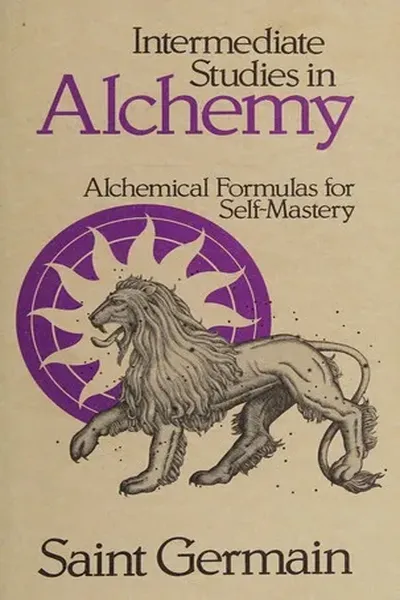
The way of the crucible

 72
72

The way of the crucible
Bartlett's "The Way of the Crucible" offers a meticulously constructed exploration of alchemical principles as a spiritual path. Its strength lies in its systematic presentation, demystifying the often-opaque language of the Great Work by grounding it in sequential stages and symbolic correspondences. The author's clarity in explaining concepts like the *nigredo* and *albedo* provides a solid foundation for understanding the transformative process. However, the book's academic rigor, while commendable, can at times feel dense, potentially requiring significant prior knowledge of esoteric terminology for full comprehension. The section discussing the *prima materia* is particularly illuminating, offering a fresh perspective on the foundational chaos from which all creation arises. This work is a serious, scholarly treatment of alchemy for the dedicated student.
📝 Description
72
Robert Allen Bartlett's 2009 book, The Way of the Crucible, reinterprets alchemy as spiritual discipline.
Published in 2009, Robert Allen Bartlett's The Way of the Crucible treats alchemy not as mere metallurgy but as a path for spiritual and psychological growth. The book equates the physical act of transforming base metals into gold with the inner purification and elevation of the human spirit. Bartlett breaks down the complex stages and principles of the Great Work into explanations that are both accessible and rigorous.
This work is aimed at serious students of esoteric philosophy and Western esotericism. It will appeal to those seeking a deeper understanding of spiritual development through ancient symbolic systems. Readers who value detailed, methodical approaches to occult studies, as well as those interested in the historical and philosophical foundations of alchemical thought, will find this book valuable. It is written for the dedicated practitioner, not the casual observer.
Bartlett's book emerged during a period of growing interest in Western esoteric traditions. It follows a line of alchemical interpretation that views the art as a spiritual science, a perspective seen in the work of Carl Jung and earlier Renaissance alchemists. The book engages with contemporary esoteric currents, offering a grounded view distinct from New Age approaches, often through references to classical alchemical texts and their historical interpretations.
The Way of the Crucible contributes to a long tradition of viewing alchemy as a spiritual science, a perspective notably explored by Carl Jung in his psychological analyses. Bartlett positions his work within this lineage, drawing on classical alchemical texts and their historical interpretations. It offers a grounded approach to Western esotericism, distinct from more recent, less rigorous interpretations, emphasizing the methodical and symbolic nature of the alchemical quest for inner perfection.
💡 Why Read This Book?
• Gain a structured understanding of the alchemical process, moving beyond vague notions to grasp the sequential stages like the *nigredo* and *albedo*, as detailed in the book's methodical approach. • Explore the symbolic meaning of alchemical apparatus such as the *athanor*, understanding its function as a metaphor for inner spiritual refinement and contained transformation. • Comprehend the concept of the *prima materia* not just as a physical substance but as the foundational, undifferentiated potential for spiritual realization, a core tenet explored in the text.
⭐ Reader Reviews
Honest opinions from readers who have explored this book.
❓ Frequently Asked Questions
What is the "Great Work" in "The Way of the Crucible"?
In "The Way of the Crucible," the "Great Work" refers to the alchemical process, understood as a spiritual and psychological discipline aimed at the transmutation of the self, mirroring the physical transformation of base metals into gold.
Who was Robert Allen Bartlett?
Robert Allen Bartlett is the author of "The Way of the Crucible," a work that delves into the esoteric and spiritual dimensions of alchemy, first published in 2009.
What are the main stages of alchemy discussed in the book?
The book explores the primary alchemical stages: *nigredo* (blackening), *albedo* (whitening), *citrinitas* (yellowing), and *rubedo* (reddening), presenting them as phases of spiritual purification and transformation.
Does "The Way of the Crucible" focus on physical or spiritual alchemy?
While acknowledging the historical roots of physical alchemy, the book primarily focuses on alchemy as a spiritual and psychological discipline for inner transformation and self-perfection.
What is the significance of the "philosopher's stone" in this text?
In Bartlett's work, the philosopher's stone represents the ultimate goal of the alchemical quest—a state of spiritual perfection, enlightenment, and complete self-realization, rather than a literal substance.
When was "The Way of the Crucible" first published?
"The Way of the Crucible" by Robert Allen Bartlett was first published in 2009.
🔮 Key Themes & Symbolism
The Alchemical Stages
The text meticulously details the four primary phases of the alchemical process: *nigredo*, *albedo*, *citrinitas*, and *rubedo*. These are not presented as mere laboratory steps but as profound metaphors for the soul's journey through dissolution, purification, illumination, and ultimate integration. Bartlett explains how each stage represents a necessary psychological and spiritual confrontation, from the initial breakdown of the old self in the *nigredo* to the radiant perfection symbolized by the *rubedo*.
Symbolism of Apparatus
Bartlett interprets the tools and vessels of the alchemical laboratory as symbolic representations of internal states and processes. The *athanor*, a slow-heating furnace, signifies the patient, sustained effort required for inner work. The *retort* and *alembic* symbolize the processes of distillation and refinement, where impurities are separated, and essential essences are concentrated, mirroring the purification of consciousness.
Prima Materia and Philosopher's Stone
Central to the work is the concept of the *prima materia*, the undifferentiated, chaotic potential from which all things arise. Bartlett explores this as the raw material of the soul, the starting point for spiritual development. The *philosopher's stone*, the ultimate product of the Great Work, is depicted as the state of perfected consciousness, wholeness, and spiritual attainment, the 'gold' of the inner life.
Alchemy as Spiritual Discipline
The overarching theme is the understanding of alchemy not as a literal pursuit of metallic gold, but as a rigorous spiritual discipline. The book frames the Great Work as a path for the elevation of the human spirit, emphasizing self-knowledge, purification, and the attainment of a higher state of being. This spiritual interpretation aligns with historical esoteric traditions that viewed the alchemical laboratory as a microcosm for the transformation of the practitioner.
💬 Memorable Quotes
Direct passages from the work, attributed to the author.
“The crucible is the place where the impure is consumed and the pure is brought forth.”
— This highlights the central metaphor of the book: the alchemical vessel as a site of purification. It suggests that difficult experiences and internal struggles (the 'impurities') are essential for the emergence of one's true, refined nature (the 'pure').
“Transformation requires both dissolution and synthesis.”
— This captures the dual nature of the alchemical process. True change involves breaking down old structures or beliefs (dissolution) before new, higher forms can be built (synthesis), a principle applicable to psychological and spiritual growth.
“The *nigredo* is the necessary darkness before the dawn of understanding.”
— This emphasizes the symbolic meaning of the blackening stage in alchemy. It's not merely decay but a crucial phase of confronting the shadow, chaos, and the dissolution of ego before any form of spiritual illumination can occur.
“The true gold is not of the earth, but of the spirit.”
— This directly addresses the spiritual interpretation of alchemy. The ultimate goal, the 'gold,' is not material wealth but the perfected, enlightened state of the human spirit, a concept central to the book's esoteric perspective.
💡 Key Ideas
Editorial paraphrase of the work's core concepts — not direct quotes.
The *prima materia* is the potential for all, within all.
This paraphrases the concept of the First Matter as the fundamental, unmanifest potentiality from which everything emerges. It suggests this potential is not external but inherent within oneself, the raw substance for spiritual creation.
🌙 Esoteric Significance
Tradition
This work firmly belongs to the Western Hermetic tradition, specifically the branch focused on spiritual alchemy. It interprets the alchemical Great Work as a symbolic map for the practitioner's inner transformation, aligning with esoteric interpretations that view the physical processes as metaphors for spiritual purification and ascent, a lineage traceable through figures like Heinrich Khunrath and later Theosophical interpretations.
Symbolism
Key symbols explored include the *athanor*, representing the controlled, sustained inner fire necessary for spiritual digestion and transformation; the *philosophical egg*, symbolizing the contained, nascent spiritual potential awaiting development; and the colors of the alchemical process (*nigredo*, *albedo*, *rubedo*), which map the stages of the soul's journey from darkness and dissolution to purity and spiritual illumination.
Modern Relevance
Bartlett's work continues to inform contemporary practitioners and scholars of Western esotericism. Its systematic approach is valued by those seeking a structured understanding of alchemical principles for personal development. Modern ceremonial magicians, hermeticists, and even depth psychologists interested in archetypal symbolism draw upon its detailed explanations of alchemical stages and symbolism in their practices and studies.
👥 Who Should Read This Book
• Students of Western Esotericism seeking a structured, textually grounded understanding of alchemical symbolism and its application to spiritual development. • Practitioners of comparative spirituality who wish to explore the symbolic language of alchemy as a path to inner transformation, distinct from Eastern traditions. • Researchers interested in the historical and philosophical underpinnings of alchemy, particularly its evolution from a physical art to a profound spiritual discipline.
📜 Historical Context
Robert Allen Bartlett's "The Way of the Crucible" emerged in 2009, a period marked by a resurgence of interest in Western esoteric traditions, partly fueled by scholarly work and a growing public fascination with alternative spiritualities. The book situates itself within a long lineage of alchemical interpretation, extending from Renaissance figures like Michael Maier and Paracelsus, and engaging with modern psychological perspectives, notably Carl Jung's extensive writings on alchemy. Bartlett's approach is grounded in classical alchemical texts, offering a counterpoint to more superficial or purely psychological interpretations that sometimes dominate contemporary discourse. While not directly engaging with a specific competing school of thought in a confrontational manner, its rigorous textual exegesis implicitly distinguishes it from New Age approaches. The work matters by providing a coherent, systematic framework for understanding alchemy as a practical spiritual path, contributing to the ongoing scholarly and practitioner-led revival of these ancient arts.
📔 Journal Prompts
The symbolism of the *athanor* as a vessel for sustained inner work.
Reflecting on the *nigredo* stage: what aspects of the self require dissolution?
The meaning of the *prima materia* as the starting point for personal alchemy.
How does the *albedo* process relate to purification in your own spiritual path?
What does the attainment of the *philosopher's stone* symbolize in your personal quest?
🗂️ Glossary
Great Work
In alchemy, the term refers to the entire process of transmutation, both physical and spiritual, culminating in the creation of the Philosopher's Stone and the attainment of spiritual perfection or enlightenment.
Prima Materia
The fundamental, undifferentiated substance from which all matter and spirit are believed to originate; the chaotic starting point for the alchemical transformation.
Nigredo
The first stage of the alchemical process, symbolized by blackness, representing dissolution, putrefaction, and the confrontation with the shadow or base nature.
Albedo
The second stage, symbolized by whiteness or silver, representing purification, washing, and the initial emergence of light and clarity after the *nigredo*.
Citrinatas
The third stage, symbolized by yellow or the color of the sun, representing a further stage of purification and the dawning of spiritual understanding.
Rubedo
The final stage, symbolized by redness or gold, representing perfection, spiritual completion, the attainment of the Philosopher's Stone, and spiritual rebirth.
Athanor
A self-feeding furnace used by alchemists, symbolizing the sustained, controlled inner heat and patience required for the slow, deliberate process of spiritual transformation.
🔮 Readers Also Liked
Browse all →








More by Robert Allen Bartlett
All books →

More Free Alchemy & Hermeticism Books
View all →